


More news on this day
Indonesia has introduced emergency immigration measures for foreign visitors stranded by the Anak Krakatau eruption, waiving overstay penalties and offering temporary stay permits to those affected by widespread flight disruptions.
Get the latest news straight to your inbox!
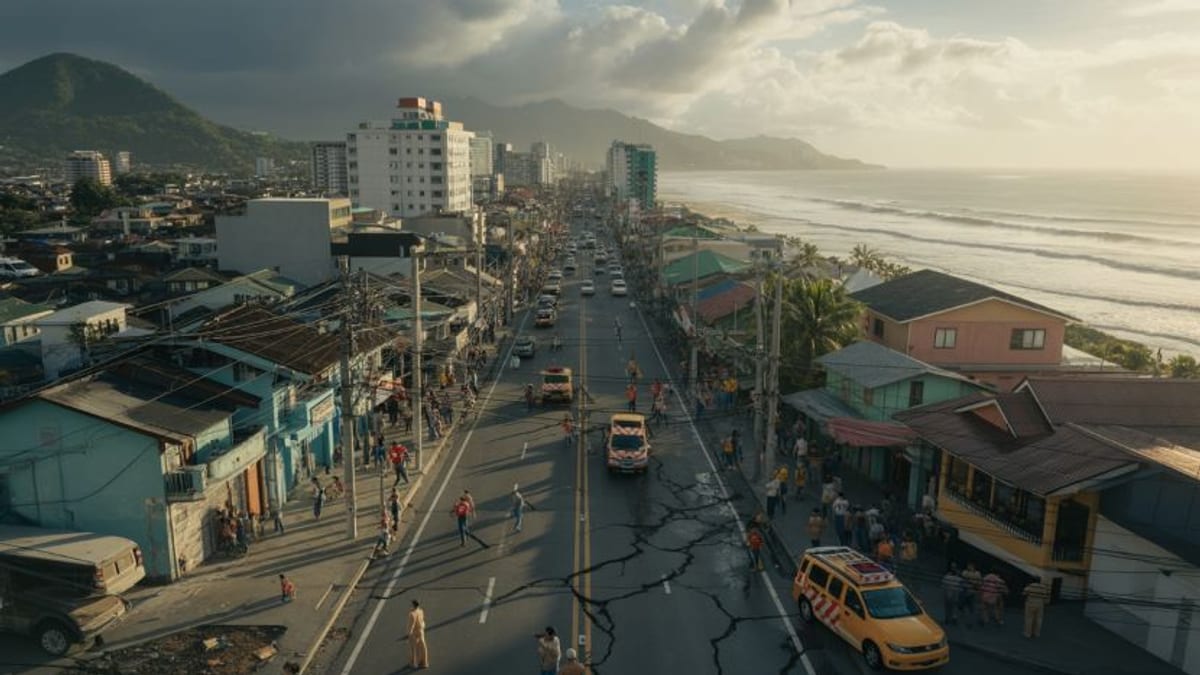
Emergency Policy for Stranded Foreign Travelers
Publicly available information shows that Indonesia’s Directorate General of Immigration has activated special provisions for foreign nationals unable to leave the country after the latest eruption of Anak Krakatau disrupted air travel across western Indonesia.
Reports indicate that foreigners whose visas or stay permits expire while they are stuck in Indonesia due to canceled or diverted flights will not be charged the usual daily overstay fine. Instead, immigration offices are applying a zero-rupiah tariff for overstays that can be directly linked to the eruption and its impact on flight schedules.
In parallel, foreign visitors are being offered an Izin Tinggal Keadaan Terpaksa, or Emergency Stay Permit, designed for situations classified as force majeure. This status allows travelers to remain in Indonesia legally until commercial flights are restored and they can reasonably depart.
Coverage from multiple Indonesian news outlets notes that the measures are framed as a temporary response to the Anak Krakatau event, but are rooted in existing provisions that allow immigration authorities to relax penalties when travelers are stranded by natural disasters and other extraordinary circumstances.
How the Overstay Waiver Works in Practice
According to published coverage, the overstay fee waiver applies to foreign nationals who can demonstrate that their inability to exit Indonesia is caused by flight cancellations, delays, or rerouting linked to volcanic ash from Anak Krakatau. In normal conditions, travelers who remain beyond the validity of their visa or stay permit are subject to a per-day fine that can quickly become substantial.
Under the current policy, immigration offices at affected airports and local immigration branches are instructed to record overstays arising from the eruption as force majeure cases. In these situations, the overstay period is regularized without charging the standard penalty, effectively resetting a traveler’s legal status once the Emergency Stay Permit is granted.
Media reports highlight that the zero-tariff approach is designed to provide legal certainty and reduce stress for visitors who suddenly find themselves unable to travel onward. By removing the financial burden of involuntary overstay, the government aims to prevent travelers from feeling compelled to attempt risky or improvised exit routes while airspace conditions remain uncertain.
Travel industry observers note that clear application of the waiver at frontline immigration counters is critical, particularly at major international gateways where many travelers first encounter the new rules while trying to rebook or replan their journeys.
Air Travel Disruptions Around Anak Krakatau
Since the most recent phase of Anak Krakatau’s activity intensified in early September, ash clouds have affected aviation corridors in the Sunda Strait and surrounding regions. Indonesian and international media report that hundreds of flights have been delayed, diverted, or canceled outright as a precaution against volcanic ash entering jet engines.
Key airports on the islands of Java and Sumatra have experienced temporary closures or restricted operations at various times, with Soekarno-Hatta International Airport near Jakarta and several regional hubs handling waves of stranded passengers. Travelers in transit to other parts of Southeast Asia have also been caught up in the disruption as aircraft and crews are repositioned.
Publicly available data from aviation and disaster-management sources suggest that while Anak Krakatau’s current activity is less catastrophic than the historic Krakatau eruption of the 19th century, ash distribution patterns remain highly dynamic. This creates challenges for airlines, which must adjust routes and schedules at short notice based on evolving safety assessments.
In this context, the immigration waiver is emerging as one of several tools being used to manage the broader impact of the eruption on tourism and international mobility, complementing airspace restrictions and airport contingency plans.
Who Qualifies for the Emergency Stay Permit
Reports from Indonesian media describe the Emergency Stay Permit as being available to foreign nationals whose flights have been canceled, significantly delayed, or diverted as a direct result of the Anak Krakatau eruption. This includes tourists on short-stay visas, longer-term visitors on social or business visas, and certain other categories of temporary residents.
Travelers are generally expected to provide proof of disrupted travel plans, such as airline notifications, rebooking messages, or documentation from airlines and travel agents. Immigration officers then assess whether the case falls within the force majeure category linked to the volcanic event.
Published information indicates that once granted, the Emergency Stay Permit temporarily extends a traveler’s lawful presence in Indonesia without additional visa fees or overstay charges connected to the eruption period. The permit is intended to last until commercial flights stabilize and affected travelers have a realistic opportunity to depart.
Several reports emphasize that the policy is focused on foreigners who were already lawfully present in Indonesia before the disruption began. It is not described as a pathway to long-term stay, but rather as a humanitarian and administrative response to a sudden natural event that has made normal travel impossible for many visitors.
Implications for Indonesia’s Tourism Image
The decision to waive overstay fees and formalize emergency stay arrangements is being interpreted by travel analysts as a signal of Indonesia’s intent to protect its reputation as a welcoming and pragmatic destination, even amid natural hazards.
Indonesia’s tourism sector has been expanding its reach in recent years, promoting destinations across the archipelago beyond well-known hubs. In such a competitive regional landscape, clear, traveler-friendly crisis management policies can play a role in reassuring future visitors that they will be treated fairly if unexpected events arise during their trip.
At the same time, the eruption highlights the geographic realities of travel in a volcanically active country. Industry commentary suggests that the Anak Krakatau episode may prompt airlines, airports, and tourism operators to refine contingency planning, including communication protocols with passengers and coordination with immigration services.
For now, publicly available information indicates that the overstay waiver and Emergency Stay Permit framework remain in effect for those directly impacted by the Anak Krakatau disruption, offering a measure of predictability for stranded travelers as authorities and airlines work to normalize flight operations.
Source: Tirto.id – Imigrasi Bebaskan Denda Overstay WNA Terdampak Erupsi GAK
Source: Liputan6 – Imigrasi Bebaskan Denda Overstay WNA Terdampak Erupsi Krakatau
Source: Antara Banten – Terdampak Erupsi Anak Krakatau, WNA Dapat ITKT
Source: Media Indonesia – Izin Tinggal Terpaksa Gratis bagi WNA Terdampak Erupsi