


More news on this day
One person has died after a collision between a vehicle and a train near the intersection of Pecan Tree Road and U.S. Highway 78 in the St. George area, according to early regional media reports that drew attention to safety at rural rail crossings.
Get the latest news straight to your inbox!
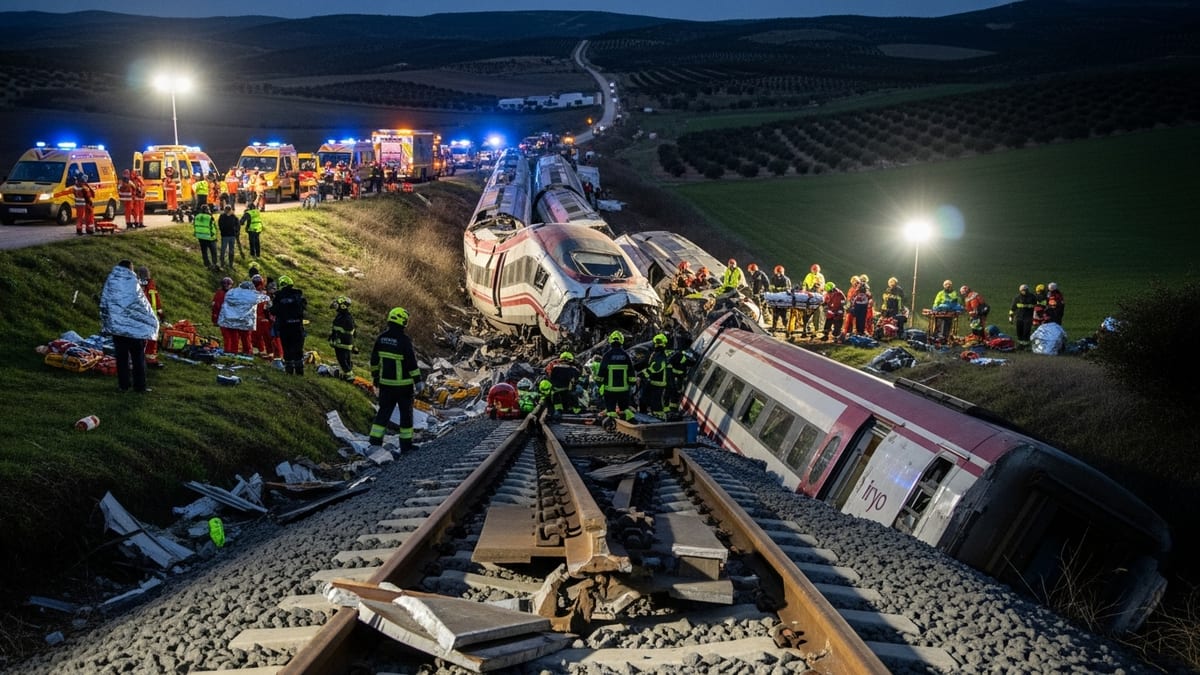
Crash reported near Pecan Tree Road and U.S. 78
Published coverage indicates that emergency crews were called to the vicinity of Pecan Tree Road and U.S. 78 after a vehicle was struck by a train at a rail crossing serving the St. George area. The incident occurred along a stretch of highway where local roads intersect with active freight rail lines, a configuration that is common on rural routes connecting small communities.
Initial reports describe a single vehicle on or near the tracks at the time of impact. Details on the make of the vehicle, direction of travel and number of occupants had not been fully released in early accounts, but one person was reported dead at the scene or shortly afterward. No serious injuries to train crew members were mentioned in preliminary summaries.
The collision drew a significant response from local public-safety agencies, with traffic on U.S. 78 affected as investigators documented the scene. Drivers in the area reported delays and diversions on approaches to the crossing while authorities examined the wreckage and coordinated removal of the damaged vehicle.
Publicly available information did not immediately clarify whether the crossing where the crash occurred is equipped with active warning devices such as gates and flashing lights, or relies primarily on passive signage such as crossbucks and stop signs. That distinction is likely to become a key point of interest as investigators work to understand what happened in the moments before impact.
Investigators focus on sequence of events
Based on standard procedures following road and rail incidents, crash reconstruction teams are expected to examine the precise location of the vehicle when it was struck, the visibility conditions at the crossing, and the approach speeds of both the vehicle and the train. They typically analyze skid marks, data from the train’s onboard recording systems, and any available camera footage from the locomotive cab or nearby surveillance systems.
Early descriptions of the crash near Pecan Tree Road and U.S. 78 have not yet indicated whether the vehicle stalled, attempted to cross after a train signal was activated, or became trapped on the tracks during a turn. These are among the scenarios frequently reviewed in similar cases across the United States, particularly where local roads meet rail lines at angles that can limit a driver’s view.
Weather and lighting conditions at the time of the collision are likely to form part of the inquiry. Railway safety specialists note that dusk and dawn periods can be especially challenging, as drivers may misjudge the distance and speed of an oncoming train or fail to register signals in reduced contrast lighting.
Once initial on-scene work concludes, investigators generally compile a detailed report that includes diagrams of the crossing, accounts from witnesses where available, and information from the railroad operator regarding train speed, horn use and braking. Those findings may later inform any recommendations for changes to signage, warning systems or roadway alignment at the crossing.
Rural rail crossings face ongoing safety concerns
The deadly crash near St. George highlights continuing concerns about safety at rail crossings along highways such as U.S. 78, where through-traffic, local access roads and freight operations intersect. National data show that collisions between trains and motor vehicles remain relatively rare compared with other types of roadway crashes, but the severity of outcomes is often high because of the size and speed of trains.
Transport and safety organizations have long pointed to a combination of engineering improvements and driver behavior as central to reducing rail-crossing deaths. Upgrades can include installing active gates and flashing lights at previously passive crossings, improving approach signage, clearing vegetation that might block sight lines, and realigning curving roads that lead drivers onto tracks at sharp angles.
At the same time, campaigns aimed at motorists emphasize stopping well in advance of the tracks when warning devices are active, never attempting to drive around lowered gates, and remaining alert for trains even at crossings with relatively low rail traffic. Many educational efforts also stress that trains require significant distances to stop and that the safest response when a vehicle becomes immobilized on the tracks is to exit immediately and move away from the path of the train.
The circumstances in St. George are still being clarified, but the fatal outcome adds to a pattern of serious incidents at rural junctions where road design, train schedules and local driving habits intersect. Analysts often use such cases to reexamine whether existing warning systems match current traffic volumes and speeds.
Impact on local travel and community response
The collision near Pecan Tree Road and U.S. 78 affected both road and rail travel in the area as responders worked at the scene. Trains using the line were delayed while inspections were carried out, and motorists were routed around the crossing, adding time to regional trips and commutes.
Residents in communities along U.S. 78 and in the wider St. George area frequently rely on the highway for daily travel, meaning any closure or restriction can quickly create bottlenecks. In similar past events, freight operators have adjusted schedules in the short term to account for investigative work and repairs, before gradually returning services to normal.
Publicly available information suggests that local attention has turned not only to the immediate loss of life but also to what, if any, adjustments might follow at the crossing. These can range from additional signage and pavement markings to requests for more substantial infrastructure funding if the site is deemed to pose elevated risk.
As more details emerge about the victim’s identity and the timeline of the crash, the incident is likely to remain a touchpoint in discussions about how best to balance regional mobility with safety at the many rail crossings that line highways across the region.
Safety messages for drivers using rail crossings
While the investigation into the St. George collision continues, transportation agencies and safety advocates often reiterate several core messages for drivers approaching rail tracks. The first is to treat every crossing as active and to assume a train may be approaching, even if no horn is immediately audible.
Experts advise coming to a full stop when warning lights flash or gates begin to lower, leaving ample space between the vehicle and the tracks. If traffic congestion leaves limited room on the far side of a crossing, drivers are urged to wait until they can clear the tracks completely rather than stopping on top of them.
In rare situations where a vehicle becomes stuck on the rails and a train is visible, guidance typically recommends exiting the vehicle immediately and moving quickly away from the tracks at an angle toward the direction from which the train is approaching. This reduces the risk of being struck by debris if a collision occurs.
The fatal crash near Pecan Tree Road and U.S. 78 underscores how quickly circumstances at a crossing can turn critical. For travelers in and around St. George and beyond, the event serves as a reminder that caution and patience at rail intersections are essential parts of safe driving on routes that share corridors with freight and passenger trains.