


More news on this day
Hundreds of passengers arriving at Orlando International Airport were left waiting for hours to reclaim their bags after a breakdown in baggage handling brought arrivals to a standstill, stranding families in the customs area and turning one of the nation’s busiest leisure gateways into a scene of mounting frustration.
Get the latest news straight to your inbox!
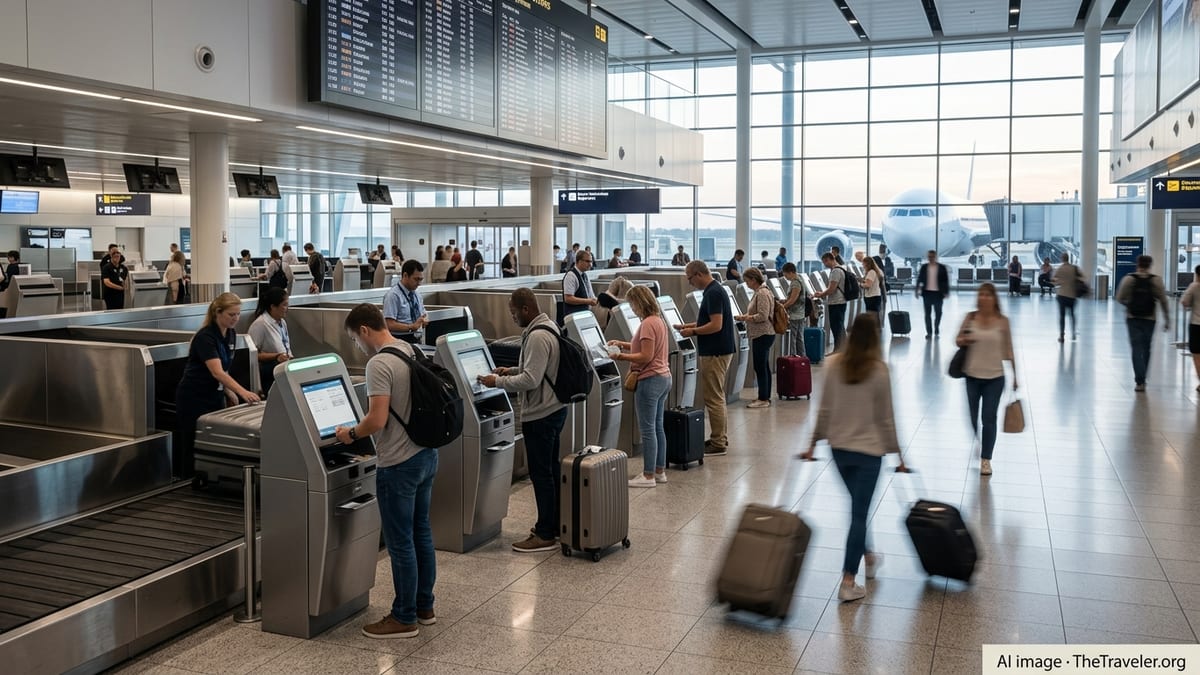
Baggage System Snarls Arrivals For Hours
Recent coverage from local and national outlets indicates that the disruption unfolded as international flights arrived into Orlando International Airport, with automated baggage sorting and delivery slowing to a crawl. Reports describe scenes of travelers from multiple long-haul services waiting three to four hours for luggage that normally appears within minutes of clearing passport control.
Accounts from passengers compiled in published reports describe growing lines in the customs hall as arriving visitors were unable to move on without their belongings. Parents with small children, elderly travelers and visitors with mobility issues were among those forced to remain in the congested space while baggage carousels stayed idle or delivered only intermittent suitcases.
Publicly available information suggests that roughly 800 passengers were affected over the course of the evening and overnight period, spanning several planeloads of international arrivals. While flights themselves were able to land and taxi normally, the collapse in baggage processing created a bottleneck at the very end of the journey, effectively trapping travelers inside the terminal.
The disruption has quickly become another flashpoint in a year marked by operational strain at large U.S. airports, where surging travel demand combines with staffing and technology challenges to turn minor glitches into hours-long breakdowns.
Confusion Over Rules Leaves Travelers Feeling Trapped
Beyond the mechanical problems with the baggage system, published coverage highlights a layer of confusion about what passengers were allowed to do while they waited. Several travelers cited in those reports said they believed they could not leave the secure customs area or walk away from the carousels without risk of penalties if their bags later appeared unattended.
Travelers arriving from abroad typically must present themselves and their belongings together when clearing customs, and publicly available guidance indicates that leaving checked baggage behind can complicate the inspection process. In the absence of clear, repeated announcements, however, many passengers said they felt compelled to remain in place for hours rather than risk missing their luggage or creating further problems for themselves.
As the delays stretched on, images shared across news outlets and social media platforms showed crowded baggage halls, groups of passengers seated on the floor and suitcases lined up in clusters where conveyor belts had stopped. The perception of being unable to leave the area exacerbated tensions, turning an equipment failure into a broader customer service and communication issue.
Observers in the travel industry note that while customs and security rules are designed for normal operating conditions, large-scale baggage disruptions expose gaps in how those rules are explained and managed during unusual events.
Orlando’s Role As A Leisure Hub Raises The Stakes
Orlando International Airport ranks among the busiest airports in the United States by passenger volume, serving tens of millions of travelers each year and acting as the primary gateway to theme parks and cruise departures across Central Florida. That profile means even localized disruptions can ripple outward to affect vacations, tour groups and cruise itineraries.
Reports about the baggage breakdown underline how vulnerable highly seasonal, leisure-focused hubs can be when infrastructure fails at peak times. Families often arrive with larger volumes of luggage than business travelers, including strollers, medical equipment and multiple checked bags, increasing dependence on smooth baggage handling.
In recent months, Orlando has already seen episodes of mass delays and cancellations tied to weather systems and airline scheduling challenges. Publicly available flight tracking and media coverage have documented days with dozens of delayed departures and arrivals, crowded gate areas and extended waits for bags. The latest baggage incident fits into that pattern, reinforcing perceptions that the airport is under sustained pressure as travel demand continues to climb.
For local tourism businesses, any disruption at the airport can translate into late hotel check-ins, missed dinner reservations and rescheduled park days, raising the stakes for reliable ground operations and rapid recovery after an outage.
Technical Strain On Baggage Systems Worldwide
The Orlando baggage breakdown comes against a backdrop of similar incidents at major hubs around the world, where complex, largely automated systems have faltered under heavy loads. In recent weeks, separate coverage has described mechanical or software outages at large European airports that left thousands of checked bags stranded and forced airlines to reunite luggage with customers days after their flights.
Those episodes illustrate how modern baggage systems, while highly efficient under normal conditions, can have single points of failure. When scanners, conveyors or routing software malfunction, entire networks of belts and tugs can grind to a halt, leaving suitcases stacked in back rooms and passengers waiting at empty carousels.
Industry analysts quoted in previous reporting on similar events have pointed to a mix of aging equipment, rapid growth in passenger volumes and staffing turnover as contributing factors. Although each airport has its own configuration and vendors, the underlying challenge is similar: a tightly choreographed chain of mechanical and human steps where a problem in one area can cascade quickly.
For travelers, that means incidents like the Orlando baggage collapse are no longer isolated surprises but part of a broader pattern in which luggage is often the weakest link in an otherwise successful flight.
Calls For Better Communication And Passenger Protections
The latest problems at Orlando are likely to fuel ongoing debate over how airports, airlines and government agencies communicate with passengers when infrastructure fails. Consumer advocates have argued in recent months that travelers deserve clearer information about their rights when baggage is delayed, mishandled or held up by technical problems within the airport itself.
Some travel organizations have pushed for more standardized procedures, including written notices explaining options when bags are delayed, easier pathways for passengers to file claims and track luggage, and more transparent timelines for restoring normal service. In the case of Orlando, the prolonged waits in customs areas and uncertainty about whether travelers could leave without their bags highlighted the cost of unclear communication.
Publicly available commentary from aviation experts suggests that investment in more resilient baggage infrastructure, combined with contingency staffing and manual workarounds, could reduce the likelihood that a single breakdown strands hundreds of people. Redundant routing paths, upgraded scanning technology and better data-sharing between airlines and airport operators are among the measures often cited.
In the meantime, the Orlando baggage crisis serves as a cautionary episode for travelers passing through major hubs. Advisers routinely recommend carrying critical items such as medications, essential documents and a change of clothes in cabin bags whenever possible, recognizing that even a brief collapse of a baggage system can turn an otherwise routine arrival into an hours-long ordeal.