


More news on this day
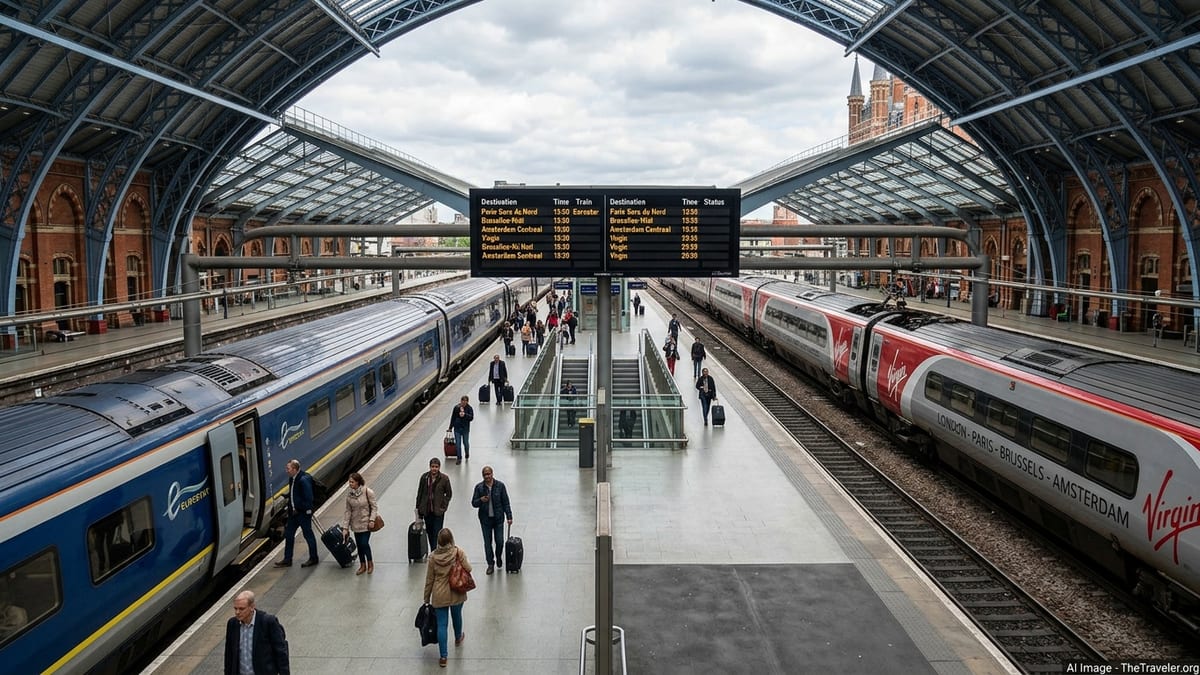
Britain’s rail regulator has pre‑approved Virgin Trains’ access to the High Speed 1 line between London St Pancras and the Channel Tunnel from October 2030, allowing up to 20 new daily return services to Paris, Brussels and Amsterdam through to December 2040 and opening the prospect of a long‑awaited rival to Eurostar on core cross‑Channel routes.
Get the latest news straight to your inbox!
What the ORR has approved – and what it has not
The Office of Rail and Road (ORR) confirmed that on 13 August 2026 it decided to pre‑approve a new framework track access agreement between HS1 Limited, which operates the London St Pancras–Channel Tunnel high‑speed line, and Virgin Trains. The framework would give Virgin access rights on High Speed 1 for a fixed 10‑year window, from 1 October 2030 until 31 December 2040, covering up to 20 international return services per day.
ORR documents and the associated application specify three core international routes that Virgin would be permitted to run: London–Paris, London–Brussels and London–Amsterdam. Within the total cap of 20 daily return services, the application sets out a ramp‑up plan that would see multiple daily trains in each direction on all three city pairs, although exact final timings and stopping patterns remain to be confirmed in future timetables.
The decision is regulatory rather than commercial. ORR’s role is to approve the framework that reserves capacity on HS1; it does not require Virgin to launch services, nor does it set fares or guarantee that every theoretical path will be used. Actual operation will still depend on Virgin securing Channel Tunnel safety approvals, the necessary operating licences and border‑control arrangements, and then choosing to run trains that make commercial sense.
How this changes the current London–Europe rail landscape
Today Eurostar is the only passenger operator running trains through the Channel Tunnel from London, linking the UK directly by rail with France, Belgium and the Netherlands and offering through‑ticketed connections into Germany and other countries via partners. Eurostar Group describes its network as connecting five countries over six rail infrastructures, including the Channel Tunnel, but plans for direct services from London to destinations such as Geneva or Frankfurt remain at the memorandum‑of‑understanding and ambition stage rather than firm, dated routes.
The ORR’s August 2026 decision does not immediately add new countries to London’s direct rail map. Instead it introduces, for the first time, a credible framework for a second operator on the main London–Paris, London–Brussels and London–Amsterdam corridors from 2030, subject to Virgin following through with trains, staff and ticketing. That prospect alone is significant in a market that has been effectively a Eurostar monopoly for high‑speed passenger services since the tunnel opened.
Other potential competitors, including proposals backed by Trenitalia and Gemini, have so far not secured equivalent HS1 access rights. Earlier ORR decisions, including a 2025 approval for Virgin to use the Temple Mills International depot in east London, were seen as a prerequisite for any new cross‑Channel operator because the facility is currently the only UK depot connected to HS1 that can maintain full‑size international trainsets.
What travelers can realistically expect in the short and medium term
For travelers planning trips between 2026 and the late 2020s, the practical impact of the ORR ruling is minimal. Eurostar’s existing schedule, together with flights and ferries, will continue to determine most options and fares for journeys between London and cities such as Paris, Brussels, Rotterdam and Amsterdam. No Virgin services are yet on sale, and there are no confirmed timetables, intermediate stops, on‑board service details or fare structures.
From the early 2030s, if Virgin proceeds as signalled in its application, travelers could see additional frequency on the busiest routes and a broader choice of departure times between London and the three confirmed continental capitals. The framework would make it possible, in principle, for Virgin to offer competitive journey times and city‑centre to city‑centre trips that directly rival Eurostar on these axes.
The same access rights could also support more ambitious itineraries that combine multiple countries in a single overland trip. With two operators potentially serving Paris, Brussels and Amsterdam, travelers might find it easier to piece together longer rail journeys across mainland Europe, using either direct services or one‑change connections onto existing high‑speed and intercity networks deeper into France, Belgium, the Netherlands and Germany.
Limits and unresolved questions
The ORR decision does not confirm any new direct services beyond Paris, Brussels and Amsterdam, nor does it specify a list of additional countries that would be served. While Virgin and HS1 have both alluded in public documents to the wider potential of HS1 as a gateway to more continental destinations, any extension beyond the three named cities would require further commercial agreements and, in some cases, separate regulatory clearances outside the UK.
Several key aspects of the project are still undecided. There is not yet a signed final framework agreement published between HS1 and Virgin, and appeals lodged by rival operators against elements of the HS1 access decision are working through the regulatory process. Rolling stock plans, including the delivery schedule for the trains Virgin has agreed to purchase, and the detailed design of on‑board products and ticketing options, are also evolving and could influence when and how services start.
Border‑control arrangements remain another open issue. Any operator running international services from London through the Channel Tunnel must work within existing passport and security procedures at stations, and there have been separate discussions about potential changes to facilities at locations such as London St Pancras and other possible calling points. Until those arrangements are confirmed, assumptions about new station stops or simplified formalities would be speculative.
What happens next for would‑be passengers
Between now and 4 September 2026, HS1 and Virgin have the window to enter into the pre‑approved framework access agreement. Travelers will not see day‑to‑day changes when that contract is signed, but it is a necessary step before Virgin can progress to publishing timetables and putting tickets on sale. Subsequent milestones will include final regulatory clearances for operations through the Channel Tunnel, confirmation of train delivery dates and any branding or product announcements by Virgin.
Prospective passengers looking toward 2030 should monitor updates from the ORR, HS1 and Virgin for signs that the project is moving from framework rights to committed service plans. Indicators to watch include any revised ORR filings that adjust frequencies or dates, firm announcements of route start dates, and the appearance of Virgin international services in journey planners and booking systems.
Until those elements are in place, London’s cross‑Channel rail market remains a monopoly in practice, with Eurostar as the sole operator. The ORR’s August 2026 decision nonetheless marks a concrete regulatory shift that could, within the next decade, give travelers a genuine choice of operators on the key London–Paris, London–Brussels and London–Amsterdam routes and make more multi‑country European rail journeys achievable without flying.