


More news on this day
Global Affairs Canada has quietly strengthened the fraud and online-meeting sections of its Mexico travel advisory, last updated on November 18, 2026, while keeping the overall warning at “Exercise a high degree of caution (with regional advisories),” a shift that matters for Canadians heading to popular resort areas or travelling to meet someone they first encountered online.
Get the latest news straight to your inbox!
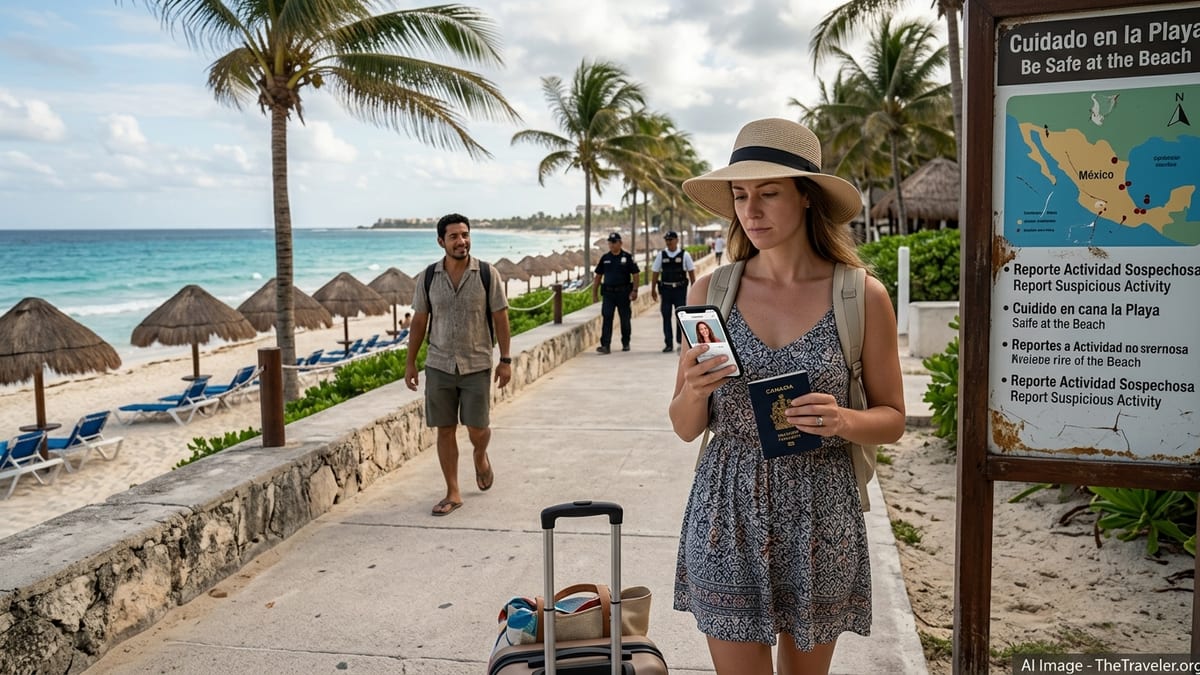
Advisory level unchanged, but wording on scams and strangers grows sharper
The Government of Canada’s Mexico travel advice and advisories page shows a last update timestamp of November 18, 2026, with the headline advice remaining “Exercise a high degree of caution” because of high levels of criminal activity and kidnapping, alongside regional advisories to avoid non-essential travel in several states. The latest revision did not alter the countrywide risk level but adds detail under safety and security and fraud-related headings that is particularly relevant to Canadians planning resort stays or trips to see people they have met on the internet.
Within the safety and security section, Global Affairs Canada now highlights specific incidents in which travellers who used online dating applications were drugged and robbed after inviting new acquaintances back to their accommodation. The advisory urges Canadians to be cautious when using dating apps, to meet any new contact in secure and familiar locations, and to be alert to the possibility that criminals may pose as romantic interests in order to target visitors for theft, extortion or other crimes.
Separate paragraphs on online scams and fraud further spell out that travellers have been caught up in phishing, romance scams and schemes that sometimes coerce victims into acting as drug or money couriers, or lead to kidnapping, forced withdrawals at ATMs or assaults. The government guidance stresses that some scams target seniors and that victims may be drugged, with the clear implication that Canadians should treat unsolicited financial or romantic approaches in Mexico with the same or greater suspicion as at home.
New emphasis on travelling to meet someone first met online
The Mexico advisory now explicitly cautions Canadians who are considering travelling to the country to meet someone they first met online. It warns that criminals can use dating apps and social media to lure foreign visitors and that meetings can escalate into extortion, robbery or sexual assault. Travellers are advised to question requests to carry packages, since drugs may be concealed in apparently harmless objects, and to avoid circumstances in which they would be isolated or intoxicated with people they do not know well.
This country-specific warning is linked to Canada’s broader “Dating outside Canada” guidance, which notes that dating apps and websites used abroad can be tools to attract and then attack foreigners. That general advice recommends meeting in public places, keeping friends and family informed of plans, and watching drinks and belongings closely, and it advises Canadians to review destination-specific advisories for any mention of dating-related risks. The Mexico page now provides a clear example of such tailored wording.
Global Affairs Canada also connects these cautions with wider advice on overseas fraud and cyber security, which underlines that identity theft, financial fraud and social-media-based targeting can intensify while travelling. While the federal anti-fraud statistics on romance scams cover all destinations rather than Mexico specifically, they illustrate why Canadian officials have chosen to expand their language on online relationships and meetings in a destination where violent crime and organized criminal activity are already central elements of the advisory.
Credit card, ATM and tourist card pitfalls for Canadian visitors
Alongside the dating and online-meeting warnings, the Mexico advisory reiterates long-standing alerts about credit card, debit card and ATM fraud. Canadians are told to be cautious when using bank machines, to shield personal identification numbers, to avoid unattended or standalone terminals where possible and to regularly check account statements for unauthorized transactions. The advice reflects cases in which cards have been skimmed or cloned or travellers have been pressured into using particular payment providers.
The updated guidance also arrives amid ongoing confusion about Mexico’s tourist entry formalities. Mexico has been moving away from the paper Forma Migratoria Múltiple, or FMM tourist card, at many international airports, where immigration officers now often record entry details electronically instead of issuing a detachable paper slip. However, official Mexican immigration documents show that the FMM remains part of the legal framework, and some visitors still receive a paper or digital form depending on the airport and mode of entry.
For most Canadian tourists arriving by air, the key requirement remains a valid Canadian passport. Canadian citizens visiting for tourism or other non-remunerated activities for up to 180 days do not need a Mexican visa, and they are not required to purchase a separate visa or tourist card at the airport when arriving on a typical vacation itinerary. Fees linked to entry are usually integrated into airline tickets for air arrivals. Canadian authorities warn travellers to be skeptical of third parties or websites that present themselves as intermediaries for visas or tourist cards and attempt to charge extra for services that are not required, particularly when they are not clearly linked to Mexico’s official immigration or consular services.
What Canadians should check before booking or meeting up in Mexico
The current advisory changes do not amount to a new Mexico-specific “dating app travel advisory,” and the overall assessment for the country has not been raised to “Avoid non-essential travel.” Instead, Global Affairs Canada has chosen to sharpen how it communicates risks that have already been a concern in parts of Mexico and across many destinations: romance scams, criminal exploitation of online meeting platforms and fraudulent intermediaries around entry formalities. For travellers, the practical impact is that activities that once might have seemed routine, such as arranging dates by app or handing over passport details to a so-called visa helper, should now be viewed through a more overt security lens.
Canadians considering travel to meet a romantic interest or social contact in Mexico may want to align their plans with the updated guidance by keeping meetings in public, secure venues, avoiding sharing travel itineraries or financial details with new acquaintances and arranging independent accommodation rather than relying on a host they have only known online. Travellers should also build in time on arrival to go through immigration procedures themselves, without pressure from third parties to pay additional fees or surrender their passports, and to verify that any immigration forms or QR codes they are asked to complete are provided directly by airlines, airports or Mexican authorities.
Because Global Affairs Canada regularly revises wording and regional advisories as conditions change, Canadians planning trips to Mexico should recheck the official travel advice and advisories on the federal travel website close to their departure date, including the sections on safety and security, fraud, regional risk areas and entry and exit requirements. Advisory language, examples of common scams and the list of states subject to regional warnings are all time-sensitive, and decisions on whether and how to travel should be based on the latest available information at the time of booking and immediately before leaving Canada.