


More news on this day
Major Western governments have tightened travel warnings for Saudi Arabia and several airlines have extended or introduced suspensions on routes to Riyadh and Dammam after October 2026 missile and drone attacks on Riyadh’s King Khalid International Airport, even as Saudi airports remain operational and Gulf neighbours keep their airspace open.
Get the latest news straight to your inbox!
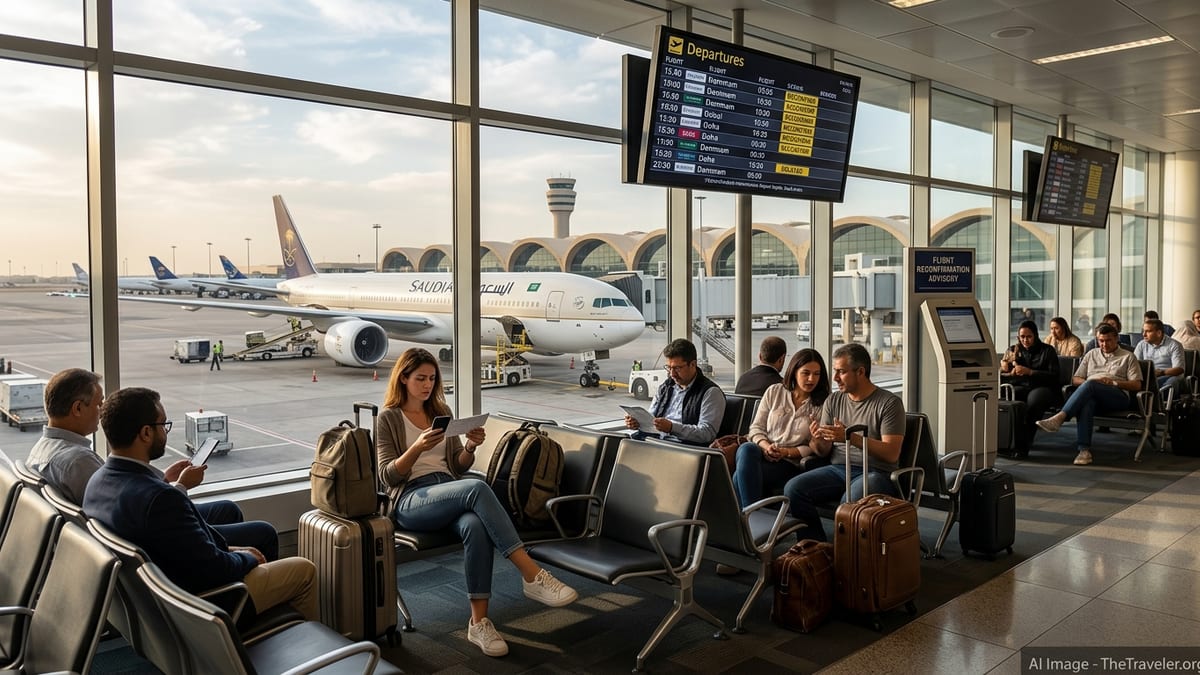
Travel advisories raised after October Riyadh airport strike
The United Kingdom’s Foreign, Commonwealth & Development Office now explicitly cites the 10 October 2026 missile strike on Riyadh’s King Khalid International Airport in its Saudi Arabia travel advice, warning of a heightened threat to airports, ports, military and energy infrastructure in cities including Riyadh, Jeddah, Dammam, Abha, Jizan, Najran and Yanbu, as well as to shipping in the Red Sea.
The United States maintains a Level 3 “Reconsider Travel” advisory for Saudi Arabia and on 23 October ordered the departure of non‑emergency U.S. government employees and their family members, citing the increased risk of missile and drone attacks and wider armed conflict, while stressing that the overall advisory falls short of a full “Do Not Travel” notice.
Canada advises against all travel to King Khalid International Airport in Riyadh and King Fahd International Airport in Dammam due to ongoing military activity disrupting operations, and against non‑essential travel to Saudi Arabia more broadly, while New Zealand currently lists Saudi Arabia as “Do not travel,” reflecting a more restrictive posture than most Gulf partners.
Australia and other states urge travelers to reconfirm flights
Australia’s Smartraveller guidance tells Australians to reconsider their need to travel to Saudi Arabia and notes repeated threats and attacks on locations including Riyadh, Dammam, Jeddah and the Red Sea coast, explicitly advising those who choose to depart by air not to leave for a Saudi airport until they have reconfirmed their flight with an airline or travel provider.
Singapore’s Ministry of Foreign Affairs and several European university and corporate risk bulletins similarly highlight recent strikes on multiple Saudi airports and encourage travelers transiting Saudi hubs to confirm bookings on the day of travel, underscoring the potential for abrupt schedule changes rather than a blanket suspension of civilian aviation.
By contrast, governments in nearby Gulf states such as the United Arab Emirates, Qatar, Bahrain, Kuwait and Oman have so far focused on monitoring the security and air traffic situation rather than issuing Saudi‑style nationwide “do not travel” advisories, although many still carry higher‑level regional warnings related to the broader Middle East conflict.
Airlines trim Saudi schedules but Gulf airspace remains open
Conflict‑zone bulletins from the European Union Aviation Safety Agency and Saudi notices to airmen outline restricted or rerouted segments of Saudi and Jeddah flight information regions following the October airport strikes, instructing operators to exercise caution and use contingency routings without declaring Saudi airspace closed.
Several international carriers have nonetheless reduced exposure to the kingdom: Lufthansa Group has suspended flights to and from Riyadh and Dammam until at least early January 2027, while recent airline and logistics updates show other European and Asian airlines, including some services by KLM and Etihad, cancelling or suspending Riyadh and Dammam flights into November following earlier temporary cuts by carriers such as Air India and IndiGo.
A Reuters factbox published after the Riyadh airport attacks detailed a wave of suspensions and reductions by airlines serving Riyadh, Dammam and at times Jeddah, and at least one U.S. carrier has pushed back the launch of a planned Atlanta–Riyadh route to March 2027, illustrating how security assessments are feeding into network planning without ending Saudi connectivity entirely.
What the disruption means for travelers and what to check next
For travelers, the combination of higher‑level government advisories and selective airline suspensions means both an elevated security risk around specific Saudi airports and critical infrastructure and a materially greater chance of last‑minute cancellations, diversions and delays on routes into Riyadh and Dammam compared with many other regional destinations.
Forwarders and cargo operators still describe Saudi airports as key regional hubs, but note “tactical rerouting” and frequent short‑notice schedule changes, and nearby Gulf hubs continue to handle diverted traffic and overflights even as their own operations adjust to evolving no‑fly and restricted‑airspace notices.
Prospective visitors are advised to monitor travel advisories issued by their own governments on a regular basis, reconfirm flights within 24 hours of departure and again before leaving for the airport, review airline rebooking and refund rules for disruption on Saudi routes, and, where appropriate, consider alternative routings via other Gulf hubs if flying directly into affected airports proves impractical; given the fluid situation, both government guidance and airline timetables are subject to rapid revision in the coming weeks.