


More news on this day
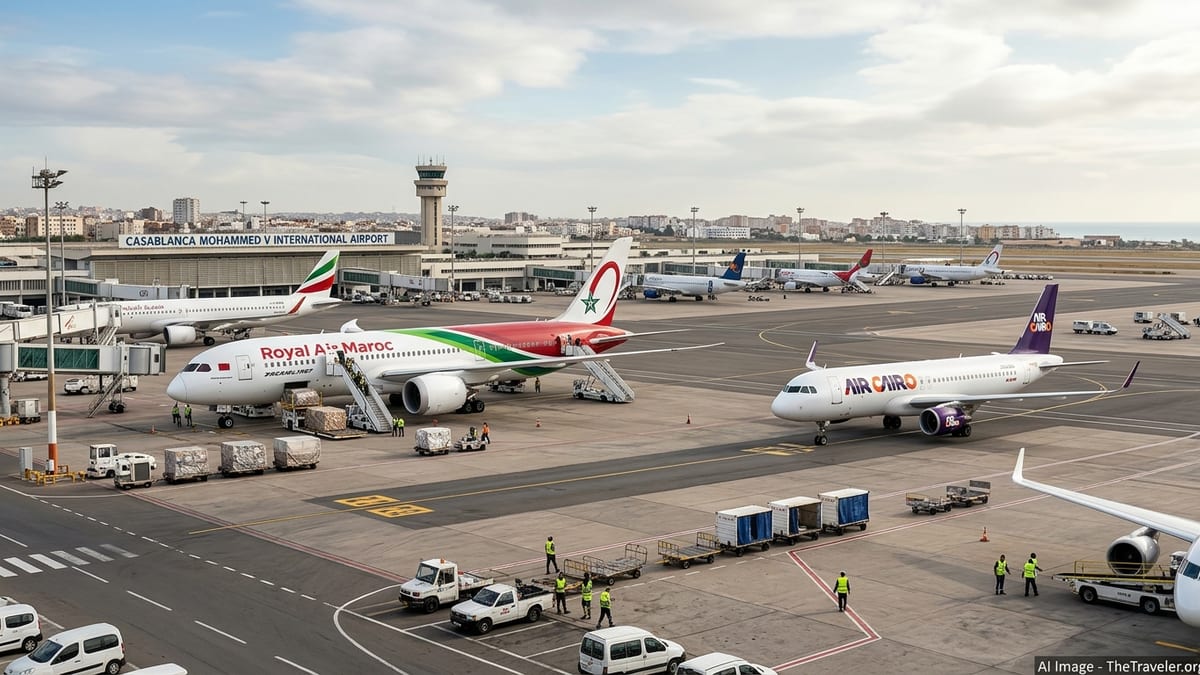
Royal Air Maroc has recorded the fastest capacity growth among Africa’s ten largest airlines this month, with OAG data for November 2026 showing the Moroccan flag carrier increasing its scheduled seats by 22.9% year on year in an African market where Ethiopian Airlines remains the largest carrier by overall capacity and passenger traffic.
Get the latest news straight to your inbox!
Africa’s November seat capacity passes 25 million
Fresh figures from OAG’s African aviation capacity dashboard put total scheduled airline capacity across the continent at about 25.2 million seats in November 2026. That represents a mid‑single‑digit to around 10% year‑on‑year increase, depending on whether analysts use a constant airline sample or the full schedules dataset, but in either case confirms that overall capacity continues to grow rather than contract.
International services account for the majority of those seats, with OAG estimating roughly three‑quarters of African capacity is on cross‑border routes. Mainline carriers still dominate the market by share, although low‑cost operators have been growing their seat counts slightly faster than the network airlines over the past year, according to the same November release.
Within this continental picture, OAG’s November league table of airlines by scheduled seats confirms that Ethiopia’s Ethiopian Airlines is Africa’s largest carrier by capacity, with a little over 2 million seats this month and year‑on‑year growth of about 6%. South African carrier Safair and Egyptair follow on total seats, even though their growth trajectories differ, with Safair trimming capacity slightly while Egyptair adds nearly 9% more seats.
Royal Air Maroc tops growth chart as Air Cairo closes in
Against this backdrop, Royal Air Maroc stands out for its growth rate rather than its absolute size. OAG’s November 2026 table shows the Casablanca‑based airline offering 792,378 scheduled seats this month, up from 644,746 in November 2025, which equates to year‑on‑year capacity growth of 22.9% and is the strongest increase among Africa’s top ten airlines by seats.
Egypt’s leisure‑focused Air Cairo is close behind. The same OAG dataset reports that Air Cairo’s scheduled capacity has risen from 330,226 seats in November 2025 to 404,964 in November 2026, a 22.6% increase. That places the Egyptian carrier in the lower half of the top‑ten list by total seats, but near the top when airlines are ranked by growth rate alone.
It is important to stress that the 22.9% figure for Royal Air Maroc and the 22.6% figure for Air Cairo refer specifically to scheduled seat capacity this November compared with November a year earlier. They do not indicate market share, profitability or passenger numbers, and they do not mean Royal Air Maroc has overtaken Ethiopian Airlines overall. Ethiopian still leads African airlines both in total seats and, based on recent AFRAA traffic reporting, in the number of passengers carried annually.
What Royal Air Maroc’s extra seats mean for travelers
For passengers, Royal Air Maroc’s higher capacity is showing up primarily as more frequencies on existing routes and additional city pairs linking Morocco with Europe, West Africa and the Americas. Timetable data for November 2026 indicate, for example, that the airline is operating a daily service between Casablanca Mohammed V and New York John F. Kennedy, providing seven weekly flights across the Atlantic this month.
On shorter‑haul links into Europe, schedules data show multiple new or reinforced connections from Casablanca and other Moroccan cities into secondary European airports. One current example for the winter period is the Casablanca to Montpellier route, on which Royal Air Maroc and a Moroccan low‑cost competitor together operate several flights per week from mid‑November, widening options beyond the traditional large French gateways for travelers heading to or from Morocco’s Atlantic coast and interior.
Within Morocco and its near‑neighbourhood, Royal Air Maroc is also adding shorter sectors that feed into its Casablanca hub. A recent company notice confirms the launch of a new domestic route between Casablanca and Essaouira from 1 November 2026, which increases seat supply along Morocco’s Atlantic corridor and adds another option for travelers looking to combine long‑haul arrivals with internal tourism circuits.
Air Cairo’s growth focused on leisure links from Egypt
Air Cairo’s 22.6% year‑on‑year capacity growth in November is concentrated on leisure and regional services radiating out from Egyptian airports into Europe and the wider Middle East and North Africa region. While the airline remains smaller than Egyptair and outside the very top tier by total seats, its current schedules show dense flying on routes popular with package holidaymakers and price‑sensitive independent travelers.
Timetables for November 2026 list multiple weekly Air Cairo flights from Red Sea and Mediterranean gateways such as Hurghada and Sharm El Sheikh to cities in Germany, Italy and other European markets, alongside regional services linking Cairo with destinations across the eastern Mediterranean and Gulf. This mix of seasonal charters and scheduled services helps explain why its seat growth rate now ranks just behind Royal Air Maroc within OAG’s top‑ten African carriers.
For travelers, the practical impact is a wider spread of departure points in Egypt for reaching European sun‑and‑sea markets in the opposite season, and more options to use Egyptian hubs as low‑cost stepping stones between parts of Europe and the Middle East. However, because Air Cairo’s growth is heavily leisure‑oriented, frequencies and routes can be more seasonal than those of larger network airlines, so passengers should pay close attention to operating days and end‑of‑season schedule changes when planning trips.
What to watch next when booking in and out of Africa
OAG’s capacity tables for Africa are updated monthly, which means growth rankings and seat totals can shift as airlines adjust winter and summer schedules. Travelers booking months ahead should therefore treat Royal Air Maroc’s and Air Cairo’s November 2026 growth rates as a snapshot rather than a guarantee that capacity will remain at this level on every route through 2027.
Before finalizing an itinerary, passengers should verify current flight days, aircraft types and seasonal end dates directly in airline booking engines or trusted travel agencies, particularly for secondary city pairs that have been added recently. New or expanded routes between Morocco and Europe or the Americas, and between Egyptian leisure airports and Europe, can offer useful alternatives to traditional hubs, but some may operate only a few times per week.
Industry bodies including OAG and AFRAA are expected to publish updated data through early 2027 on both seat capacity and passenger traffic. Those reports will clarify whether Royal Air Maroc and Air Cairo maintain their current growth momentum and how their expanded networks interact with broader constraints such as airport capacity, airspace issues and regional demand. For now, November’s figures confirm that travelers have more seats to choose from on key Moroccan and Egyptian routes than they did a year ago, within an African market still led in scale by Ethiopian Airlines.