


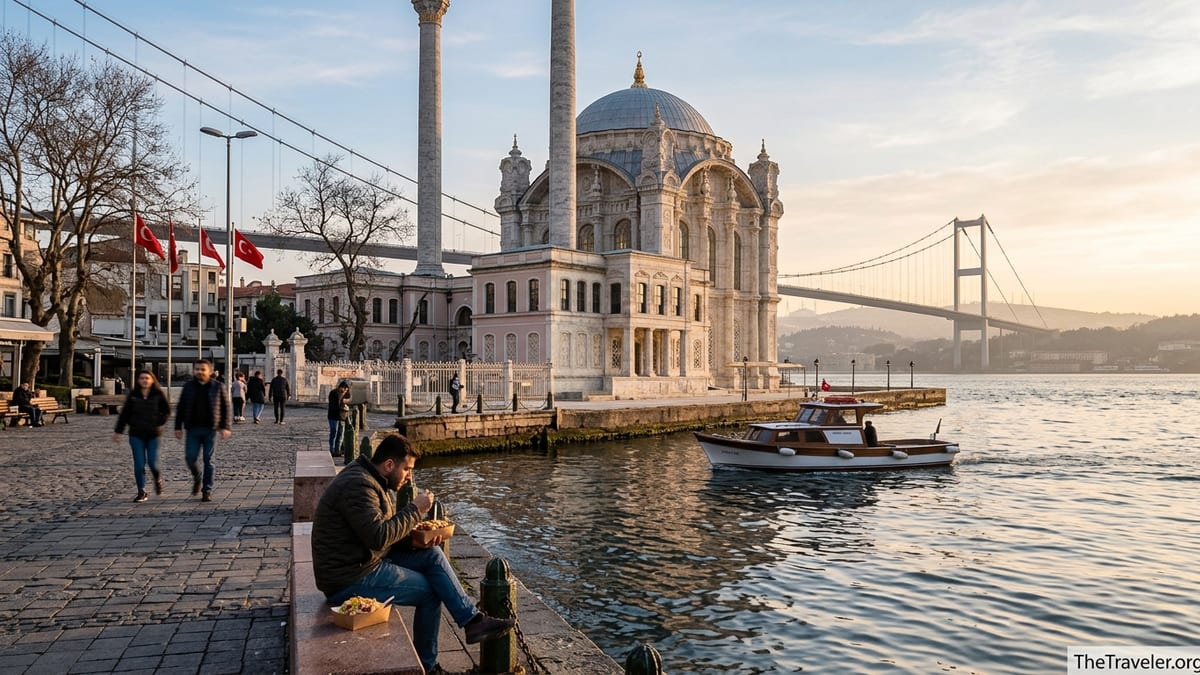
Few Istanbul landmarks capture the city’s mix of tradition and spectacle quite like Ortaköy Mosque, the small waterfront mosque with a giant bridge soaring behind it. Sitting right on the Bosphorus in the Ortaköy neighborhood of Beşiktaş, this 19th century mosque has become one of the city’s most photographed spots, especially at sunset when the sky glows behind the Bosphorus Bridge. This guide explains exactly how to visit, what to wear, the best times and angles for photos, how to pair a mosque visit with street food and cafés, and whether it deserves a place in your Istanbul itinerary.
Get the latest updates straight to your inbox!
Where Ortaköy Mosque Is and Why It Matters
Ortaköy Mosque, officially the Büyük Mecidiye Camii, stands on the European shore of Istanbul in the Ortaköy district of Beşiktaş. It sits right at the edge of the Bosphorus on Ortaköy Pier Square, with the 15 July Martyrs Bridge (often still called the Bosphorus Bridge) rising directly behind it. This compact square, packed with street food stalls and cafés, is what gives the mosque its postcard-perfect setting and makes it one of the city’s most recognisable waterfront scenes.
The mosque was commissioned by Sultan Abdülmecid and completed in the 1850s. Designed in the ornate Ottoman Baroque style, it is relatively small compared with Istanbul’s imperial mosques but rich in detail: tall arched windows filling the prayer hall with Bosphorus light, carved stonework on the façade, and a delicate two-minaret silhouette that contrasts with the heavy steel of the bridge. Even if you have already visited larger mosques like the Blue Mosque or Süleymaniye, Ortaköy’s intimate setting right at the water’s edge offers a different atmosphere.
For many visitors, Ortaköy is as much about the neighborhood as the mosque. On weekend afternoons, locals come to stroll the waterfront, eat kumpir (loaded baked potatoes) from the line of stalls on the square, and sit in tea gardens watching ferries crisscross the strait. Travelers can easily combine a mosque visit with a Bosphorus cruise departing nearby, or with a walk north along the shore toward other waterside neighborhoods like Kuruçeşme and Bebek.
In practical terms, Ortaköy Mosque is a convenient half-day destination from central Istanbul. From Sultanahmet, for example, you can ride the T1 tram to Kabataş, then connect to a bus such as 22, 22RE or 25E that drops you within a short walk of the square. From Taksim, the F1 funicular runs down to Kabataş, where the same buses continue to Ortaköy. Traffic on the coastal road can be heavy at rush hour, so many visitors aim for late morning or late afternoon visits when buses tend to move more smoothly.
Visiting Rules, Dress Code and Prayer Times
Ortaköy Mosque is an active place of worship, so visitors should treat it with the same respect as any working mosque in Istanbul. Entry is generally free, and there is no ticket desk. At the main gate you will find a shoe storage area or plastic bags; all visitors must remove their shoes before stepping onto the carpeted interior. Photography is usually allowed, but it is polite to avoid pointing cameras at worshippers during prayer and to keep your phone on silent.
Dress code is similar to other major mosques in the city. Men should wear long trousers that cover the knees and avoid sleeveless tops. Women are expected to cover their hair, shoulders and knees. If you arrive without a headscarf or with bare shoulders, attendants often provide simple wraps or scarves near the entrance at no charge, though bringing your own shawl is more comfortable and reliable. Inside, keep your voice low and move slowly; this is a small space and groups can easily overwhelm it.
Prayer times follow the standard daily schedule for Istanbul, shifting throughout the year with sunrise and sunset. The five daily prayers are Fajr (pre-dawn), Dhuhr (midday), Asr (afternoon), Maghrib (just after sunset) and Isha (night). For a calmer visit inside, aim to arrive at least 30 to 45 minutes outside these times, particularly on Fridays when the midday prayer draws larger crowds. Many travelers choose weekday mornings around 10:00 or mid-afternoons between Dhuhr and Asr, when tour buses are fewer and the interior is more peaceful.
It is possible to visit during prayer if you are discreet and stand at the back, but most visitors prefer to wait until the congregational part has finished. A simple rule of thumb: if you hear the call to prayer echoing from the minarets as you arrive, give worshippers space to enter and exit, then step inside once the flow has settled. During Ramadan and on religious holidays like Eid, expect thicker crowds both inside the mosque and out on the square as local families gather by the water.
Best Photo Angles and Using the Bosphorus Bridge Backdrop
The classic Ortaköy shot angles the mosque from the left, with the Bosphorus Bridge arcing across the background. To get this photo, stand near the low stone railing at the water’s edge on the left side of the square as you face the mosque. From here, a wide lens around 24 to 35 millimeters on a full-frame camera captures the mosque in the foreground, the bridge tower rising behind the right minaret, and small boats passing between. Smartphone cameras handle this well if you step back slightly and tap to expose for the mosque façade rather than the bright sky.
Another popular angle comes from the small pier where short Bosphorus cruises depart. Walk out toward the ticket kiosks and turn back to frame the mosque front-on with the bridge to the right. In the late afternoon, the sun moves behind the Asian side hills, softening the light on the European shore. On clear days, sunset often throws pastel colors across the sky behind the bridge cables, and a reflection of the minarets appears on the calmer water near the seawall. Tripods are rarely necessary, but a faster lens such as f/2.8 can help if you continue shooting into blue hour.
If you want fewer people in your frame, arrive shortly after sunrise. The first bus from central Beşiktaş or an early morning taxi can have you at the square when cafés are still setting out chairs. At this hour, you can stand directly in front of the mosque steps or on the empty stone square and capture wide shots with almost no crowd, using a 20 to 24 millimeter lens. In contrast, on a warm Saturday around 17:00, your photos will show market stalls, balloon sellers, and clusters of visitors lining the waterfront; this can also be appealing if you want images that convey the area’s energy.
Do not overlook details. The carved stonework around the entrance door, the Arabic calligraphy medallions inside the dome, and the patterns of the carpet can all make compelling close-ups. For interior images, a lens around 16 to 24 millimeters lets you capture the dome and windows from the back of the prayer hall without needing to step into the main prayer area. Use a high ISO or steady hand, as flash is inappropriate inside. When photographing people, always ask permission before taking close portraits, especially of worshippers at prayer or local women sitting along the waterfront.
Nearby Cafés, Street Food and Bosphorus Views
One of Ortaköy’s main draws is its food scene clustered around the square. The stretch behind the mosque is lined with a row of small kumpir counters, each fronted by glass displays of toppings such as black and green olives, corn, Russian salad, sausage slices, pickles and cheese. Ordering is simple: you point at a large baked potato, staff slice and mash it with butter and kaşar cheese, then add your chosen toppings. As of mid 2026, prices here are typically higher than in more local neighborhoods, but many visitors still consider it an essential Ortaköy ritual to eat their kumpir while sitting on the low walls facing the water.
If you prefer a sit-down café, several waterfront tea gardens and coffee spots line the promenade. You can order a tulip-shaped glass of Turkish tea, a Turkish coffee or a simple lemonade and linger while watching ferries, fishing boats and private yachts move along the strait. For example, cafés just north of the mosque toward Kuruçeşme often have slightly calmer terraces with views back toward the bridge. A typical tea might cost the equivalent of only a few US dollars, though exact prices change frequently with inflation, so it is wise to check the menu before sitting.
For something sweet, look out for waffle stands near the kumpir row. These serve hot waffles topped with Nutella, bananas, strawberries and colorful candies. Families from across Istanbul come specifically for this combination of waterfront stroll plus street dessert, especially on Sunday afternoons. A more traditional option is to seek out a patisserie or dessert shop one or two streets inland, where you can try baklava, künefe or sütlaç in a setting less focused on quick-turnover street snacks.
Beyond simple snacks, Ortaköy’s side streets host a mix of meyhanes (traditional taverns), fish restaurants and modern brunch cafés. Many offer second-floor terraces with partial bridge views, making them good choices for a leisurely weekend brunch. Locals often book mid-morning tables for lavish spreads including eggs, olives, cheeses, tomatoes, cucumbers, simit and multiple kinds of jam and honey. If you are on a tighter budget, it is perfectly acceptable to eat a street-side simit bought from a red cart and then nurse a single tea in a café with a good view of the mosque and bridge.
Crowds, Best Times to Visit and Practical Transport Tips
Crowds at Ortaköy vary dramatically by time and day. Weekday mornings outside peak tourist season can be surprisingly calm, with a mix of local residents and a few tour groups. By contrast, Saturday and Sunday afternoons in spring and autumn turn the square into a festival-like scene: buskers playing music, families feeding seagulls, and lines at the most popular kumpir stalls. If you dislike crowds, aim for Tuesday or Wednesday mornings, or come near sunset on a weekday when Istanbul commuters are still in traffic and organized tours have mostly left.
Weather also shapes the experience. In July and August, direct sun on the open square can feel intense, so early mornings and late afternoons are far more comfortable. In winter months like January, the light over the Bosphorus can be beautifully clear but cold winds funnel under the bridge; a warm jacket, hat and gloves make waterfront photo sessions far more pleasant. Rain showers are common in spring and autumn, but a short downpour can briefly clear the square, leaving puddles that reflect the minarets for atmospheric photos once the clouds break.
Reaching Ortaköy almost always involves road transport. From Sultanahmet, many visitors ride the T1 tram to Kabataş and transfer to a bus along the coastal road, such as routes 22, 22RE, 25E or similar services that list Ortaköy on their destination boards. From Taksim, the F1 funicular to Kabataş connects with the same buses. Travel time can be as little as 20 to 30 minutes in light traffic, but during rush hour it can double. Downloading a transit app that covers Istanbul buses and trams can help you time your journey and check live departures.
Taxis are another option, especially if you are traveling as a small group or visiting in the evening when you prefer door-to-door. However, be aware that the coastal road in Beşiktaş often slows to a crawl, and some drivers may try to avoid using the meter or propose flat fares. If you choose a taxi, insist politely on the meter before getting in. On certain days, small Bosphorus boats and private tour operators also offer short cruises that begin or end at Ortaköy, allowing you to arrive or depart by water while enjoying bridge and skyline views along the way.
Is Ortaköy Mosque Worth Visiting Compared to Other Mosques?
Travelers with limited time in Istanbul often wonder whether Ortaköy Mosque is truly essential when the city already offers heavyweights like Hagia Sophia, the Blue Mosque and Süleymaniye. The answer depends on what you value. Architecturally, Ortaköy is more modest and modern than the city’s grand imperial complexes. If your interest lies purely in monumental Islamic architecture, you might find more depth exploring additional time in Süleymaniye’s courtyards or the smaller Rüstem Paşa Mosque with its İznik tiles.
Where Ortaköy excels is in its overall setting and atmosphere. Very few mosques in the world sit directly on a major waterway with a huge suspension bridge rising over them. The contrast of pale stone, blue water and steel cables creates a visual drama that you simply do not get in the historic core around Sultanahmet. If your mental image of Istanbul includes ferries, bridges and waterfront cafés as much as domes and minarets, then Ortaköy delivers that modern postcard in one compact scene.
Ortaköy also gives a glimpse of contemporary Istanbul leisure culture. While the Old City focuses on museums and archaeological layers, here you see how locals actually spend weekend afternoons: eating casual street food, listening to buskers, taking selfies with seagulls and buying trinkets from stalls. Many travelers enjoy pairing an afternoon at Ortaköy with a walk north along the shore or an evening drink at one of the nearby bars, which turns the mosque visit into a broader urban experience rather than a single-site stop.
For a first-time visitor on a 2 to 3 day itinerary, Ortaköy is a rewarding addition if you are already covering the main Old City sights and have at least half a day to spare. On longer stays or return trips, it becomes almost a must, especially if you want varied photographs of the city or enjoy people-watching in lively, non-museum settings. Only those with extremely tight schedules focused solely on historical monuments might reasonably skip it.
The Takeaway
Ortaköy Mosque is less about ornate interiors and more about the interplay of stone, water and steel. Its greatest strength lies in the way it anchors a small, walkable neighborhood right on the Bosphorus, where you can move seamlessly from prayer hall to tea garden to street food stall without ever losing sight of the bridge. For photographers, it offers some of Istanbul’s most recognisable compositions at sunrise and sunset; for casual travelers, it serves as a relaxed counterpoint to the intensity of Sultanahmet’s museum circuit.
Plan your visit with timing in mind: aim for a weekday morning or late afternoon for gentler light and smaller crowds, dress respectfully so you can step inside the mosque without hassle, and budget time to simply sit by the water with a glass of tea. Whether you arrive by bus from Kabataş or drift in on a short Bosphorus cruise, give yourself at least a couple of unrushed hours on the square. If you leave with wind on your face, the taste of kumpir or simit, and a memory card full of bridge-framed minarets, you will have experienced exactly what makes Ortaköy special.
FAQ
Q1. What is the easiest way to get to Ortaköy Mosque from Sultanahmet?
From Sultanahmet, take the T1 tram to Kabataş, then transfer to a bus heading along the Bosphorus toward Beşiktaş and Ortaköy. Routes such as 22, 22RE or 25E commonly serve this stretch. Get off at the Ortaköy stop and walk a few minutes downhill to the square and mosque.
Q2. Is there an entrance fee to visit Ortaköy Mosque?
No, entry to Ortaköy Mosque is generally free for all visitors. There is no ticket desk, though you may find a small donation box near the entrance. Contributions are optional and go toward mosque upkeep, but you are not obliged to pay to enter.
Q3. What should I wear when visiting Ortaköy Mosque?
Dress modestly as you would for any working mosque in Istanbul. Men should wear long trousers and avoid sleeveless tops, while women should cover hair, shoulders and knees. If needed, simple scarves or wraps are often available at the entrance, but bringing your own shawl or light scarf is more convenient.
Q4. When are the least crowded times to visit for photos?
Weekday mornings between roughly 09:00 and 11:00, or late afternoons on non-holiday weekdays, tend to be the quietest. Early sunrise visits are also good if you want near-empty shots of the square. Avoid Friday midday prayers and weekend afternoons if you prefer minimal crowds in your photos.
Q5. Can I take photos inside the mosque?
Yes, photography is usually allowed inside, provided you are respectful. Turn off flash, keep noise to a minimum and avoid photographing worshippers at close range, especially during prayers. Wide-angle lenses work best to capture the small but ornate interior without intruding into the main prayer area.
Q6. Are there good places to eat near Ortaköy Mosque?
Yes. The square behind the mosque is lined with kumpir stalls selling loaded baked potatoes, and there are waffle counters, waterfront tea gardens and sit-down restaurants on nearby streets. You can choose between casual street food eaten on the seawall or higher-priced cafés and fish restaurants with Bosphorus views.
Q7. Is Ortaköy Mosque suitable for a short evening visit?
A short evening visit works well if you combine it with dinner or a stroll. Arrive before sunset to photograph the mosque and bridge in good light, then stay for tea or a meal as the bridge lights come on. Just allow extra time for traffic on the coastal road when returning to your hotel.
Q8. How long should I plan to spend at Ortaköy Mosque and the square?
Most visitors find that 1.5 to 3 hours is enough to look inside the mosque, take photos from different angles, and enjoy a tea or quick bite. If you plan to linger over brunch, explore side streets or join a short Bosphorus cruise, you might comfortably spend half a day in the area.
Q9. Is Ortaköy Mosque accessible for people with limited mobility?
The approach from the main road to the square is downhill on paved streets, and the mosque itself has a few steps at the entrance. Crowds and uneven cobblestones can make navigation slower, but visitors with limited mobility can usually reach the square by taxi and manage a short walk with assistance. If mobility is a major concern, consider visiting during quieter weekday mornings.
Q10. Is Ortaköy Mosque safe to visit at night?
The area around Ortaköy Mosque is generally busy and feels safe in the evening, with many cafés and restaurants open and people walking along the waterfront. As in any large city, keep an eye on your belongings, especially in crowds, and use licensed taxis or reputable ride services when traveling back to your hotel after dark.