


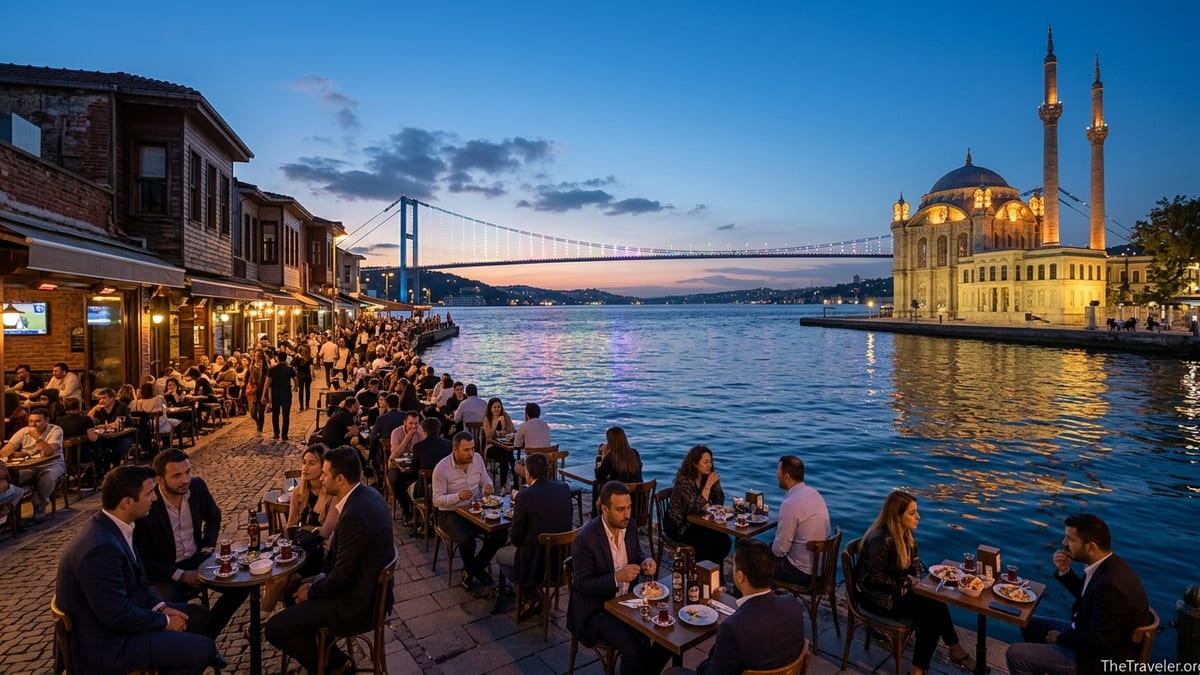
By day Ortaköy feels like a Bosphorus village wrapped around a postcard view. After dark it turns into one of Istanbul’s most atmospheric evening neighborhoods, with the illuminated Ortaköy Mosque and the 15 July Martyrs Bridge hovering above the water. This guide walks you through where to drink, where to snack late, how to link Ortaköy with nearby Beşiktaş nightlife and how to enjoy the area safely after sunset.
Get the latest updates straight to your inbox!
Why Ortaköy Works So Well at Night
Ortaköy sits on the European side of the Bosphorus, almost directly under the 15 July Martyrs Bridge, a few kilometers north of Taksim. In the evening the neighborhood’s small square in front of Ortaköy Mosque fills with a mix of locals and visitors, street-food stalls and waterfront café terraces. The bridge looms directly overhead, cycling through colored lights that reflect in the water, and ferries, fishing boats and tankers slide silently past. It is one of the most photographed night views in Istanbul and the main reason many people come here after dark rather than during the day.
The mood is lively but not as intense as Taksim or Kadıköy. Many visitors come first for dinner or a drink on the water, then wander through the side streets for dessert, tea or a late snack. On warm evenings, families push strollers along the promenade, couples line up for photos with the bridge in the background and small groups cluster around plastic tables with tea glasses and nargile. It feels more like a seaside town festival than a clubbing district.
Because Ortaköy is compact, you can cover most of the area on foot in a short loop: from the mosque square and kumpir stands, along the waterfront terraces, then up into a few streets lined with cafés, bars and dessert shops. Even if you only have one evening in Istanbul to spare, spending a few hours here gives you a concentrated Bosphorus-by-night experience without much planning.
Waterfront Bars and Terraces With Bridge Views
Most visitors come to Ortaköy for a drink with a view, and the prime seats are the waterside terraces between the mosque and the Çırağan Palace direction. Prices are higher here than in backstreets, but you are paying for the bridge and mosque framed together over the water. A classic all-round choice is The House Café Ortaköy, a large, modern café-restaurant with big windows and a multi-level terrace looking straight at the bridge and Ortaköy Mosque. Expect to pay around the equivalent of a mid-range hotel bar for cocktails and slightly above-average café prices for beer and wine, but you can linger over a single drink for quite a while.
Just along the same stretch, the Feriye complex occupies a restored Ottoman building right on the waterfront. Inside it houses restaurants and Kult, a stylish cocktail bar that feels more like a lounge than a loud club. Here you can order signature drinks or a glass of Turkish wine and sit almost level with the waterline, watching ships move under the bridge. Dress is smart casual and there is sometimes a cover charge or minimum spending requirement on busy weekend nights, especially in summer and around sunset.
For a hotel-bar version of the same view, the Cruise Lounge Terrace & Bar on the upper level of the Radisson Blu Bosphorus in Ortaköy offers outdoor seating looking out over the bridge and mosque. It is a polished, international-style setting where you can order classic cocktails, a bottle of wine or bar snacks. Prices are at the higher end by Istanbul standards but still often below what you might pay in major Western capitals for a similar waterfront hotel bar.
If you prefer something more low-key, look for simple tea gardens and small bars right on the square. Some places serve basic beers, Turkish rakı and soft drinks at plastic or metal tables with the same million-dollar view. You lose the crafted cocktails and curated playlists, but you gain a more relaxed, local feel and lower prices, especially if you are content with a bottle of Turkish beer or a glass of tea.
Cafés, Nargile and Slower Evenings by the Water
Even if you are not in the mood for alcohol, Ortaköy offers plenty of evening options. The neighborhood has a strong café culture, and many places stay open late for coffee, tea, desserts and light food. The House Café doubles as a non-alcohol option with a long menu of coffees, fresh juices and mocktails, while other waterfront cafés focus more on Turkish tea served in tulip-shaped glasses and simple pastries or snacks.
Just inland from the main square you will find side streets with nargile (waterpipe) cafés, often with rooftop or upper-level terraces looking out toward the bridge. These spots tend to play pop or soft electronic music, offer a range of flavored tobaccos and bring continuous tea service. For non-smokers, the smoke density can be heavy indoors, so look for outdoor seating or balconies where the air circulates better. Prices for a shared nargile are usually moderate compared with European hookah lounges, but always confirm the price before ordering.
Traditional tea gardens under plane trees, such as the long-established Çınaraltı area, are especially pleasant on summer evenings. Here the focus is on conversation, backgammon and people-watching rather than Instagram. Order a pot of tea or Turkish coffee and a simple dessert, and you can comfortably sit for an hour or two without pressure to keep ordering. It is a helpful option if you are traveling with kids or prefer a sober evening with the same waterfront magic.
Because Ortaköy is visually dramatic at night, many visitors spend a good part of their time simply walking back and forth along the promenade and sitting on benches facing the water. Cafés and tea vendors are used to people ordering one item and then heading out to enjoy it on the public seating, and as long as you treat glasses and cups carefully and return them, this casual style is widely accepted.
Late-Night Food: Kumpir, Waffles and Street Snacks
Ortaköy is almost as famous for its street food as for its bridge view, and the best time to experience it is in the evening. The row of kumpir stalls along the mosque square serves giant baked potatoes split and mashed with butter and kaşar cheese, then piled high with toppings like Russian salad, olives, pickles, corn and sausage. Portions are large enough to count as a full meal, and prices are typically in the mid-range for Istanbul street food rather than bargain-basement, reflecting the location. Stalls often stay open until around midnight on weekends in good weather, slightly earlier on quiet weeknights and in winter.
Next to the kumpir stands you will find waffle counters offering build-your-own creations loaded with chocolate sauce, fruit, nuts and sprinkles. These are particularly popular with younger visitors and families strolling after dinner. Portions are easily shareable between two people, especially if you are also sampling other sweets like Turkish ice cream or lokma (fried dough balls in syrup) from nearby vendors. Expect to queue a little on Friday and Saturday nights, but service moves quickly.
For something more substantial than street food, the streets radiating inland from the square host casual restaurants serving kebabs, pide and seafood. Many have indoor seating and small terraces, and several stay open well into the night, especially on weekends and during the summer season when foot traffic is heavy. Prices are generally mid-range, higher than in non-touristy districts but lower than in pure fine-dining Bosphorus restaurants.
If you find yourself in Ortaköy later than midnight and hungry, options narrow but do not disappear. There are usually one or two dürüm or döner shops and small grills still serving basic meat sandwiches and toast, plus convenience stores selling packaged snacks and drinks. For truly late-night eating after a night out in Beşiktaş or further up the Bosphorus, many locals head to neighborhoods like Beşiktaş Çarşı or Karaköy instead, where late-night kokoreç and burger stands stay open longer.
Linking Ortaköy With Beşiktaş Nightlife
Ortaköy itself offers mostly relaxed evenings, waterside drinks and food-focused nights rather than serious clubbing. If you want to combine the bridge view with a more energetic bar-hopping scene, the easiest option is to start in Ortaköy around sunset and then move on to Beşiktaş later in the evening. Beşiktaş is just a short taxi or ride-share trip away, or about a 30-minute walk along the Bosphorus via Çırağan Caddesi if the weather is good.
Beşiktaş has a dense cluster of pubs, student bars and casual cocktail spots, especially in and around the Çarşı area. Here you will find narrow streets lined with bars playing rock, indie or Turkish pop, many with small outdoor tables and affordable drinks. There are also meyhanes, the traditional Turkish taverns where people linger for hours over rakı, meze and conversation. Compared with Ortaköy’s curated waterfront terraces, Beşiktaş feels louder, more local and less polished, but that is part of its appeal.
A practical evening plan is to book or walk into a waterfront restaurant or bar in Ortaköy for drinks and maybe a light dinner just before or after sunset, watch the bridge lights come on, then take a taxi to Beşiktaş around 10 or 11 pm for a second round in pubs or live-music spots. Return trips to Ortaköy at this hour are easy if you are staying nearby; otherwise, you can head back to central hubs like Taksim or Karaköy from Beşiktaş with a larger pool of taxis and late-night buses.
Do keep in mind that while Ortaköy’s nightlife is fairly concentrated along the waterfront, Beşiktaş covers a larger area and can feel more confusing at first glance. Having one or two bar names in mind or following the foot traffic into the Çarşı backstreets helps. If you prefer to keep things simple, you can also stay in Ortaköy all evening and just enjoy the slower rhythm, accepting that you are here more for the view and food culture than for a high-energy club night.
Getting There, Taxis and Moving Around After Dark
Ortaköy is straightforward to reach in the early evening but can be slow during peak traffic. From central areas like Taksim, Galata or Sultanahmet many visitors choose taxis or ride-share because it is the most direct route. Travel times can range from 15 to 40 minutes depending on traffic. When returning after midnight, traffic usually eases and journey times shorten, although weekend congestion can linger around major intersections.
When using taxis, make sure the meter is running and consider checking your route on a map app to ensure you are moving in the right general direction. Most routes from Ortaköy back toward central Istanbul will follow the coastal road into Beşiktaş and then turn inland. If a driver offers a fixed price that feels high, politely insist on the meter or choose another taxi. Street taxis are plentiful around the mosque square and main road, especially at closing time when restaurants and bars empty.
Public transport is more limited late at night. During the day and early evening, several bus lines pass near Ortaköy on the main coastal road, and there are Bosphorus ferries from nearby piers. After midnight services thin out and schedules can be irregular, so most visitors rely on taxis. If you are staying within walking distance, the coastal sidewalk toward Beşiktaş and Kuruçeşme is well-used until late in the evening, but always stay on the main, well-lit roads rather than cutting up steep side streets you do not know.
Within Ortaköy itself, everything is easily walkable. Streets are cobbled and can be uneven, so comfortable shoes are essential. In wet weather the stones can be slippery, particularly near the water’s edge. Distances are short enough that you can safely move between bars, cafés and food stands on foot without needing any additional transport.
Safety, Scams and Practical Tips After Dark
Ortaköy is generally considered one of the safer parts of Istanbul for an evening out, partly because it is popular with families and couples as well as tourists. The main square, promenade and restaurant-lined streets remain busy until late, especially in good weather. That said, the usual big-city precautions apply. Keep bags and phones close to you, avoid displaying large amounts of cash and be cautious if anyone tries to draw you into an uninvited bar or club with vague promises of “special prices” or “first drink free.”
When choosing where to eat or drink, take a moment to look for visible menus with clear prices at the entrance. In rare cases in touristy areas, visitors have reported being given a different menu with higher prices once seated. If you feel uncomfortable, it is perfectly acceptable to stand up and leave before ordering. Established places along the waterfront and in the main streets rely heavily on repeat business and online reviews, so they tend to be transparent, but it is worth the small extra check.
Alcohol is legal and widely served in Ortaköy, but public drunkenness is relatively uncommon compared with some European nightlife areas. Most people are there to enjoy the view, eat, chat and take pictures. If you plan to drink heavily, it is wise to pace yourself and hydrate, especially on humid summer nights when Bosphorus breezes can make drinks feel deceptively light. Taxis at closing time are used to dealing with late-night passengers, but aggressive behavior or public disturbance could draw unwanted police attention.
Dress codes vary. Waterfront hotel bars and high-end restaurants may expect smart-casual attire, and on weekend nights some might turn away guests in beachwear or sports shorts. Street-food areas, tea gardens and casual cafés are very relaxed, with locals in everything from jeans and T-shirts to slightly dressier outfits for a night out. If you want the flexibility to move between polished bars and laid-back spots, simple neat clothes and closed shoes are usually enough.
Is Ortaköy Better by Day or Night?
Whether Ortaköy is “better” by day or at night depends on what you want from the visit. In daylight you can appreciate more of the architectural and geographical context: Ortaköy Mosque glowing in the sun, the curve of the bridge across the strait, the details of the waterfront houses and the backstreets that feel like a small town. Cafés serve long Turkish breakfasts and lunches, and the small market stalls selling jewelry and handicrafts are easier to browse without the evening crowds.
At night, however, the neighborhood transforms. The mosque and bridge are illuminated, the water picks up reflections from the lights, and the air takes on the smell of grilled meat, waffles and roasted chestnuts. Musicians sometimes play on the square, and the bustle of people queuing for kumpir or gathering on café terraces gives the area an energy it does not quite have during the day. For photography, many visitors prefer the blue hour just after sunset and the first dark hour when lights are brightest.
If you have enough time, the ideal experience is to see Ortaköy in both modes: perhaps arrive in the late afternoon, wander the backstreets and market, visit the mosque if it is open outside prayer times, then settle into a waterfront spot for a drink as sunset begins. Stay long enough to see the bridge lights cycle through colors and the crowds shift toward dessert and late snacks. This way you understand why locals sometimes treat Ortaköy as both a breakfast spot and a night out, depending on the mood and the season.
Travelers on tighter itineraries who need to choose one or the other should think about priorities. If you want peaceful walks, fewer crowds and relaxed café time, daytime may suit you better. If your main goal is that iconic bridge-and-mosque night shot, plus the sensory hit of street food and waterfront lights, then plan your visit for the evening and lean into Ortaköy as a compact, atmospheric nightlife stop rather than a sightseeing checklist item.
The Takeaway
Ortaköy is less a bar district in the traditional sense and more a Bosphorus stage set that happens to come alive in the evening. You come here for the illuminated mosque under the sweeping bridge, for kumpir eaten on a bench with your feet almost in the water, for an hour in a café where tea glasses clink and the city’s traffic feels distant. The nightlife is anchored in food, views and conversation rather than late-closing clubs.
Used well, Ortaköy can be the opening or closing note of a bigger Istanbul night. Start with drinks on a waterfront terrace, move on to a bar crawl in nearby Beşiktaş or simply wander the square with a waffle in hand before taking a taxi back to your hotel. With a bit of awareness about transport, pricing and crowds, it is an easy, rewarding evening that shows off one of Istanbul’s most famous urban views at the time of day when it looks and feels its best.
FAQ
Q1. Is Ortaköy safe to visit at night?
Ortaköy is generally considered safe in the evening, with busy streets and a family-friendly atmosphere, especially around the square and waterfront. Normal big-city precautions still apply: keep valuables close, avoid very dark side streets late at night and use licensed taxis.
Q2. What time does Ortaköy nightlife usually start and end?
Activity builds from late afternoon, with peak evening hours roughly between 8 pm and midnight. Waterfront bars and restaurants may stay open later, especially on Fridays and Saturdays in summer, while street-food stalls and casual cafés often begin winding down around midnight or shortly after.
Q3. Can I get late-night food in Ortaköy after midnight?
After midnight choices narrow but you can usually still find a few döner or dürüm shops, small grills and convenience stores open, particularly on weekends and in good weather. For a wider range of late-night food, many people head to nearby Beşiktaş or other central districts.
Q4. How expensive are drinks at waterfront bars in Ortaköy?
Waterfront bars and hotel terraces are pricier than backstreet cafés, reflecting the bridge and mosque views. Expect mid to high range Istanbul bar prices for cocktails and hotel-level pricing in upscale venues, while beer and wine are more moderate in simpler cafés and tea gardens.
Q5. Is there a dress code for bars and restaurants in Ortaköy?
Most casual cafés and street-food spots have no dress code, and you will be fine in jeans and a T-shirt. Higher-end waterfront restaurants and hotel bars may expect smart-casual clothing in the evening and can be stricter on busy weekend nights, so avoid beachwear and very sporty outfits if you plan to visit them.
Q6. How do I get from Ortaköy to Beşiktaş at night?
The simplest option is a short taxi or ride-share ride along the coastal road, which usually takes 5 to 15 minutes depending on traffic. In good weather and reasonable hours you can also walk for about 30 minutes along Çırağan Caddesi, staying on the main, well-lit seafront route.
Q7. Are there nightclubs in Ortaköy or is it mainly bars and cafés?
Ortaköy is dominated by bars, cafés, waterfront restaurants and a few lounge-style venues rather than large nightclubs. For a concentrated club scene with more live music and late-closing bars, most people combine Ortaköy with a later visit to Beşiktaş, Karaköy or Taksim.
Q8. Can I visit Ortaköy Mosque in the evening?
Ortaköy Mosque is primarily a place of worship and visiting hours can vary. In the evening you usually admire it from outside, where the illuminated façade is one of the neighborhood’s main sights. Interior visits are more practical in the daytime outside of prayer times.
Q9. Is Ortaköy suitable for families with children at night?
Yes, Ortaköy’s evening scene is very family-friendly, especially around the square and waterfront. Children often enjoy the street performers, waffles and ice cream stands, but keep an eye on them near the water’s edge and in busy areas with uneven cobblestones.
Q10. Should I visit Ortaköy by day or at night if I have time for only one?
If you must choose, visiting in the evening gives you the full effect of the illuminated bridge and mosque, coupled with bustling street food and café life. Daytime offers calmer walks, market browsing and breakfast culture, but the night view is what most visitors remember most vividly.