


Oslo has a reputation as one of Europe’s pricier capitals, so it is no surprise that visitors look hard for ways to keep costs under control. The two main strategies for getting around and seeing the sights are buying the Oslo Pass, which bundles public transport and museum entry, or using regular Ruter tickets and paying for attractions separately. In 2026, with recent price rises on both sides, the choice is not always obvious. This guide walks through current prices, typical itineraries and concrete, real-world examples so you can see which option will actually save you money on your trip.
Get the latest updates straight to your inbox!
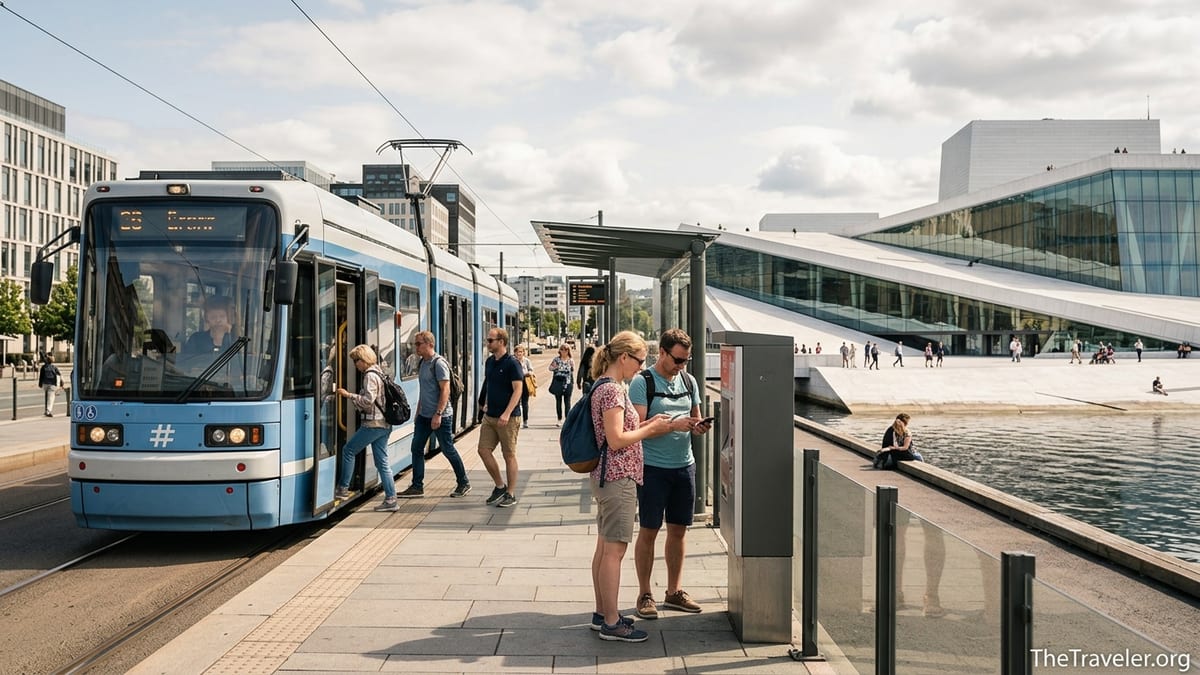
How Public Transport Works in Oslo in 2026
Oslo’s buses, trams, metro, local trains and most city ferries are all run under a single system managed by Ruter. One ticket type covers almost everything within the central Zone 1, which is where most visitors spend the bulk of their time. You can ride the metro from Majorstuen to the Opera House, hop on a tram to Grünerløkka, then board a city bus up to Holmenkollen all on the same ticket type as long as it remains valid.
For tourists, the key products are the single ticket and the short period tickets. A standard adult single in Zone 1 costs around 40 to 45 NOK in the Ruter app and is valid for 60 minutes, including transfers. Recent price tables and traveler reports in 2025 and early 2026 show app tickets for Zone 1 typically a little cheaper than buying from a kiosk machine, so installing the Ruter app is usually worth it if you are not using the Oslo Pass.
If you expect to ride a lot in one day, a 24‑hour Zone 1 ticket can be far better value. Updated guides and official materials in late 2025 and 2026 indicate prices around 105 to 135 NOK for a 24‑hour pass and roughly 250 to 350 NOK for a 7‑day pass for adults, with discounts for children and seniors. These period tickets give unlimited travel within the zones you buy and are ideal if you plan several hops between neighborhoods or want to reach outlying viewpoints such as Holmenkollen or Sognsvann.
Airport travel is a separate question because Oslo Airport lies outside Zone 1. Ruter tickets can cover the regular Vy trains and some buses if you buy the right multi‑zone combination, but they do not cover the dedicated airport express train. For most city sightseeing calculations, though, you can treat airport transport as a separate line item, since neither the basic Oslo Pass nor regular Zone 1 day tickets include the airport express.
What the Oslo Pass Includes in 2026
The Oslo Pass is the city’s official sightseeing card. In 2026 it is still offered for 24, 48 and 72 hours, with adult prices starting at about 580 NOK for 24 hours and rising for the longer durations. The exact amount you pay will vary slightly depending on where you purchase and currency conversion, but you can think of it as roughly 580 NOK for 24 hours, about 860 to 900 NOK for 48 hours, and just over 1,000 NOK for 72 hours for adults, with reduced prices for children, seniors and some concessions.
What you get for that fixed price is substantial: unlimited Ruter public transport in central zones during the validity period and free entry to more than 30 museums and attractions. Popular included venues typically cover the MUNCH museum by the waterfront, the Fram Museum and Kon‑Tiki Museum out on Bygdøy, the Norwegian Maritime Museum, the Holmenkollen Ski Museum and tower, the Natural History Museum in Tøyen, and several art galleries and historical sites. Seasonal ferries to the Bygdøy museum peninsula and the Oslofjord island ferries that fall under Ruter’s Zone 1 system are also included when they are running.
The pass also adds smaller discounts at some restaurants, walking tours and cultural performances. Those savings are real but usually modest compared with the value of museum entries and transport. When you evaluate whether the Oslo Pass pays for itself, it is more accurate to focus on the big‑ticket museums and the Ruter travel you would realistically use over 24 to 72 hours rather than the minor discounts.
One important 2026 feature highlighted in several budget guides is the strong family benefit. Many versions of the pass allow at least one child under a certain age (often 16) to be included for free with a paying adult Oslo Pass. While you should always confirm the exact rule at the time of purchase, this structure can make the Oslo Pass disproportionately attractive for families who want to see multiple museums together in a short window.
Current Oslo Pass Prices Versus Ruter Tickets
To decide which option saves money, you need a working sense of prices on both sides. In 2026, a frequently quoted adult price for a 24‑hour Oslo Pass is around 580 NOK. The 48‑hour and 72‑hour passes scale up from there, roughly in the 860 to 900 NOK range for 48 hours and about 1,040 to 1,100 NOK for 72 hours, depending on where you buy and how exchange rates move. Children’s and senior passes cost less, often about half to two‑thirds of the adult price.
By comparison, recent Ruter information and traveler guides cite a Zone 1 single ticket in the Ruter app at roughly 40 to 45 NOK for adults, and a 24‑hour Zone 1 ticket in the 105 to 135 NOK bracket. A 7‑day pass typically sits somewhere around 250 to 350 NOK. Pricing is periodically adjusted, and there was a notable fare increase in early 2026, but these ranges are representative for planning purposes.
Most central museums in Oslo charge adult entry fees in the region of 140 to 230 NOK. For example, admission to high‑profile attractions such as MUNCH, the Fram Museum or the Holmenkollen Ski Museum is commonly quoted around 170 to 230 NOK in recent 2025 and 2026 visitor guides, while some smaller or more specialized institutions fall a bit lower. A day where you visit three such attractions can therefore add up to 450 to 600 NOK in entry fees alone if you pay individually.
Once you line these numbers up, a pattern emerges. A 24‑hour Oslo Pass costs about the same as four to five single Zone 1 tickets plus two mid‑range museum admissions. If you plan to use more transport than that or add additional paid attractions, the pass quickly becomes competitive. If your day in Oslo is centered on free outdoor sights such as Frogner Park, the Opera House roof or walking along the waterfront, and you only ride public transport two or three times, regular Ruter tickets will almost always be cheaper.
Example 1: A One‑Day “Museum Sprint” in High Season
Imagine you have a single full day in Oslo in July and you want to see as much as possible. You stay near Oslo Central Station and plan the following: morning at the new MUNCH museum, midday ferry to Bygdøy and visits to the Fram Museum and Kon‑Tiki Museum, then late afternoon up to Holmenkollen for views over the city and a quick look at the ski jump museum, before heading back downtown for dinner.
Without an Oslo Pass, your public transport pattern might look like this: one metro or tram ride from your hotel area to MUNCH if you are not already walking distance, one ferry ride from the city center to Bygdøy and back, a bus from the dock up to Holmenkollen with a transfer to the metro, and another metro back into town at the end. That is at least five distinct rides, possibly six or seven depending on exactly where you start. If you buy a 24‑hour Zone 1 ticket rather than singles, you will likely pay around 120 NOK and not have to worry about counting each ride.
Now add museum admissions. MUNCH, Fram, Kon‑Tiki and the Holmenkollen Ski Museum together could easily total somewhere in the 600 to 800 NOK range for one adult when bought separately in 2026. Combine that with the 24‑hour transport pass and your total for this single day of sightseeing lands around 720 to 920 NOK, and that does not include any other smaller attractions you might slip in.
With a 24‑hour Oslo Pass costing roughly 580 NOK for an adult, the math flips. On this “museum sprint” itinerary, the pass gives you unlimited transport for the day and free entry to all four main attractions you visited. Even if individual museum prices are at the lower end of the usual range, you are still likely saving at least 150 to 250 NOK, and perhaps more if you squeeze in an extra gallery or hop on and off public transport for a short break back at your hotel.
Example 2: A Two‑Day Mixed Itinerary With Evenings Free
Consider a longer but more relaxed stay: two full days in Oslo, arriving one evening and leaving the third morning. You enjoy museums, but you also want to leave time for café culture and city wandering. On Day 1 you visit the National Museum and MUNCH, with a detour to the Opera House and the Deichman library nearby. On Day 2 you head out to Bygdøy for one museum, then spend the rest of the day in Grünerløkka’s parks and bars.
If you use individual Ruter tickets, a realistic pattern might be three to four rides per day: one or two in the morning to reach the museums, one in the mid or late afternoon to get back or move neighborhoods, and possibly another in the evening to return to your accommodation. That adds up to six to eight single tickets across two days, costing roughly 240 to 360 NOK total. If your accommodation and main sights line up well, you might even get by with a single 24‑hour ticket on one of the days and a handful of singles, landing somewhere in the 300 NOK transport range.
On the attractions side, the National Museum, MUNCH and one Bygdøy museum might collectively cost you about 450 to 600 NOK, depending on seasonal pricing. Your combined outlay for two days of transport and those three paid attractions is therefore in the region of 750 to 900 NOK per adult with standard tickets.
A 48‑hour Oslo Pass in 2026 costs around 860 to 900 NOK for adults. In this example, the pass probably breaks even at best. If you also decided to climb the Holmenkollen tower, visit an extra gallery or pop into another included museum near your route, then the pass would pull ahead slightly. However, if you trim your museum time or choose free alternatives such as the 22 July Center or simply walking through Frogner Park and the waterfront, individual tickets and pay‑as‑you‑go museum admissions will often work out marginally cheaper.
Example 3: A Long Weekend Focused on Outdoor Oslo
Now imagine a very different traveler: you come to Oslo in late spring for three nights, mainly to experience the city’s outdoor spaces. You plan to walk the harbor promenade from the Opera House past the MUNCH facade to the modern waterfront district, spend half a day in Vigeland’s sculpture park at Frogner, ride the metro up to Sognsvann for a forest and lake walk, and sit in cafés watching daily life. You might duck into a museum if it rains, but it is not central to your plan.
Your likely transport needs are moderate. You might ride from your hotel to Frogner and back, take the metro to Sognsvann and return, and use a couple of trams or buses in the evening if your feet get tired, spread over two or three days. That is maybe six to eight rides in total. Using single tickets bought in the app, your transport cost sits somewhere around 240 to 360 NOK. If you cluster activities cleverly, you could cover many of those rides within a single 24‑hour period and buy just one 24‑hour ticket for roughly 120 NOK plus a couple of singles before and after, still well under 400 NOK.
On the sightseeing side, Frogner Park is free, the Opera House and waterfront walks are free, and simply wandering Grünerløkka’s streets or climbing the library terraces costs nothing. Even if you decide to visit one paid museum, your attraction budget might only reach 150 to 250 NOK for the whole weekend.
Here, a 72‑hour Oslo Pass costing around 1,040 to 1,100 NOK would not come close to paying off. You would be materially overpaying for the convenience of having everything bundled. For outdoors‑focused or slow‑travel itineraries where most highlights are free urban spaces, individual Ruter tickets combined with selective museum visits are almost always the smarter financial choice.
When the Oslo Pass Clearly Wins
While the balance can be subtle on longer, mixed itineraries, there are several scenarios where the Oslo Pass is a clear money saver. The first is a short but intense museum‑heavy visit. If you have just one or two full days in Oslo and plan to visit three or more paid attractions per day while using public transport regularly, the combination of free entries and unlimited Ruter travel will almost always exceed the cost of the pass.
The second strong case is for families. Recent budget breakdowns for 2026 note that an adult Oslo Pass can sometimes include at least one child under a specified age at no extra cost. When you add up full‑price children’s museum tickets and individual Ruter child fares for a busy day of hopping around, the pass can deliver substantial savings. For example, two adults each buying a 24‑hour Oslo Pass and traveling with two children could potentially cover four people’s museum entries and city transport for less than what separate tickets would cost, depending on ages and the exact child policy at the time of travel.
The third situation is during peak season when ferries and outlying attractions are at the top of your list. The Bygdøy ferry included in Ruter’s Zone 1 becomes not only a piece of transport but also a scenic Oslofjord cruise. If you expect to shuttle back and forth between downtown, the museum peninsula, and spots like Holmenkollen, the ease of unlimited rides plus bundled museum admission often tips the scales in favor of the pass.
Finally, some travelers simply value not having to think about individual fares once they activate the card. If mental simplicity is important to you, and your rough plan already contains enough paid sights and rides to make the numbers close, choosing the Oslo Pass can be a psychologically satisfying way to prepay your sightseeing budget.
When Regular Tickets Are the Better Choice
On the other hand, regular Ruter tickets beat the Oslo Pass whenever your plans involve relatively few paid attractions or a lot of walking. Oslo’s compact center and well‑designed pedestrian routes mean you can see major landmarks such as the Opera House, city hall, the new waterfront, Karl Johans gate and parts of Grünerløkka on foot from a central hotel. If you only need one or two public transport rides per day, single tickets or the occasional 24‑hour pass are hard to beat for value.
Extended stays that stretch beyond the 72‑hour Oslo Pass limit also shift the equation. If you are in town for a week or more, especially for business or to visit friends, a 7‑day Ruter pass around 250 to 350 NOK for Zone 1 often represents excellent value. You can then add occasional museum visits at full price and likely still spend less overall than you would by stacking multiple Oslo Pass periods.
Travelers who are primarily interested in free or low‑cost experiences should almost always skip the pass. This includes visitors who focus on architecture and street life, hikers keen on heading into the forested hills, and budget travelers content to admire museum buildings from the outside. Oslo offers many free viewpoints, parks and cultural sites that do not require a ticket, and the Oslo Pass only pays off if you lean into its included attractions.
Lastly, if your days in Oslo are split by activities outside the city such as day trips to the fjords or long hikes that take you out of town, you might not use the Oslo Pass intensively enough during its continuous 24‑, 48‑ or 72‑hour validity window. In those cases, single Ruter tickets on your actual city days give you more flexibility.
Practical Tips to Choose the Right Option
The single best way to decide is to sketch your Oslo days on paper before you buy anything. List the specific attractions you want to see, check whether they are included in the Oslo Pass, and note their current approximate admission prices. Then estimate how many times you will realistically use public transport each day. With those numbers, compare the cost of an Oslo Pass against a combination of Ruter tickets and paid entries.
Be honest about your pace. Many first‑time visitors overestimate how many museums they can truly enjoy in one day, especially in summer when waterfront strolls and outdoor cafés compete for your attention. If you are the type who likes to linger over exhibitions and then relax with a long coffee, you might find that you only visit two major attractions in a day. In that case, the Oslo Pass might be marginal, and regular tickets could be enough.
Timing also matters. Because both the Oslo Pass and Ruter period tickets run on continuous hours from activation, starting a pass early in the morning typically delivers the best value. If you activate at 16:00, you may struggle to squeeze full days of sightseeing into the 24‑ or 48‑hour window. With regular Ruter tickets, you can easily mix a single 24‑hour pass day with single tickets on lighter days to match your actual use.
Finally, keep an eye on small but meaningful savings. Using the official Ruter app instead of buying paper tickets from kiosks often shaves several kroner off each single ride. When you add that up over a few days, the difference can equal the cost of a coffee or even a light meal, which matters in a high‑cost city like Oslo.
The Takeaway
In 2026, the Oslo Pass remains a powerful tool for visitors who want to pack several paid attractions and plenty of public transport into a short stay. For a classic “museum sprint” day that includes MUNCH, multiple Bygdøy museums and Holmenkollen, the pass almost always saves money compared with buying Ruter tickets and individual admissions separately. It is especially compelling for families and for travelers who value the simplicity of having transport and museums bundled into a single product.
Regular Ruter tickets, on the other hand, are the clear winners for longer, slower visits and for itineraries built around free outdoor experiences. With singles and 24‑hour or 7‑day passes available at relatively modest prices by Norwegian standards, you can explore much of Oslo’s urban and natural landscape without needing a bundled sightseeing card. For many visitors, a combination of one intense Oslo Pass day and cheaper ticketing on either side can be the sweet spot.
Whichever option you choose, plan your days with a realistic sense of how much you will move around and how many museums you truly want to see. Oslo rewards both the energetic cultural traveler and the slow stroller, and with a bit of advance thought about tickets and passes, you can keep your transport and attraction costs well under control.
FAQ
Q1. Is the Oslo Pass worth it for just one day in 2026?
It can be, but only if you plan to visit several paid attractions and use public transport heavily. If your day includes three or more included museums plus multiple rides on the metro, bus, tram or Bygdøy ferry, a 24‑hour Oslo Pass is likely to save you money compared with buying a 24‑hour Ruter ticket and separate museum entries.
Q2. Does the Oslo Pass include airport transport?
No, the standard Oslo Pass does not cover the dedicated airport express train to Oslo Airport, and airport trips are usually priced on a separate basis. You may be able to combine Ruter multi‑zone tickets with regular Vy trains and buses to reach the airport, but you should treat that cost as separate from your Oslo Pass or Zone 1 city tickets.
Q3. How many Ruter rides do I need in a day to beat the cost of the Oslo Pass?
There is no single magic number, because the Oslo Pass price also includes museum entries. As a rough guide, if you would already buy a 24‑hour Zone 1 ticket and pay for at least two mid‑priced museums, you are close to the cost of a 24‑hour pass. Add a third museum or more transport, and the Oslo Pass usually comes out ahead.
Q4. Is it cheaper to use single Ruter tickets or 24‑hour tickets?
Single tickets are best for light users making one or two trips in a day. If you expect to make three or more rides within 24 hours, a 24‑hour Ruter pass typically becomes cheaper or at least similar in price, with the added benefit of flexibility to hop on and off without thinking about every fare.
Q5. Do children get good value from the Oslo Pass?
Often they do. In 2026, many Oslo Pass offers allow children below a certain age to be added at a reduced rate or even included with a paying adult. When you compare that with full‑price children’s museum tickets and separate Ruter fares, families who plan a busy sightseeing schedule frequently find that the pass offers strong savings.
Q6. What if I mainly want to enjoy free sights like parks and the waterfront?
In that case, individual Ruter tickets are almost always better value. Oslo’s biggest free attractions, such as Frogner Park, the Opera House roof and city promenades, do not require any pass. You can walk much of the central area and buy only the occasional single or 24‑hour ticket when you need to cover longer distances.
Q7. Can I mix an Oslo Pass on one day with regular tickets on other days?
Yes, and this hybrid strategy often works very well. Many travelers buy a 24‑hour Oslo Pass for their most museum‑heavy day, then rely on single Ruter tickets or a 24‑hour or 7‑day transport pass on lighter days. This way, you extract maximum value from the pass without paying for bundled museum access you will not use.
Q8. How do price rises in 2026 affect the calculus?
Both Ruter fares and some museum tickets have risen in recent years, which actually makes the Oslo Pass slightly more attractive whenever you visit several included attractions. At the same time, day and week transport tickets remain relatively good value. That means careful planning is more important than ever: the more precisely you know your plans, the easier it is to see whether a pass or individual tickets will win.
Q9. Do I need the Oslo Pass if I already plan to buy a 7‑day Ruter ticket?
Probably not, unless you are sure you will visit many paid attractions during a concentrated 24‑ to 72‑hour period. A 7‑day Ruter pass already gives you unlimited local transport at a much lower price than stacking several days of Oslo Pass. In most long‑stay cases it is cheaper to keep your weekly transport pass and pay for museums individually.
Q10. Where should I buy tickets and the Oslo Pass once I arrive?
For regular public transport, the simplest option is to download the official Ruter app, which usually offers the lowest prices and easy validation. You can also buy paper tickets at convenience kiosks in the city. The Oslo Pass is available through its official app or at selected tourist information points and some hotels. In both cases, it is wise to check the latest prices and terms just before your trip, as Oslo updates fares periodically.