


The Oslo Pass can be a smart way to experience Norway’s capital, bundling free public transport with entry to dozens of museums and attractions. Yet many visitors buy it on autopilot, only to discover they have overpaid, activated it on the wrong day, or used it incorrectly on public transport. Before you tap “buy” in the app or at a hotel desk, it pays to understand where travelers typically go wrong and how to decide if the Oslo Pass is genuinely right for your trip.
Get the latest updates straight to your inbox!
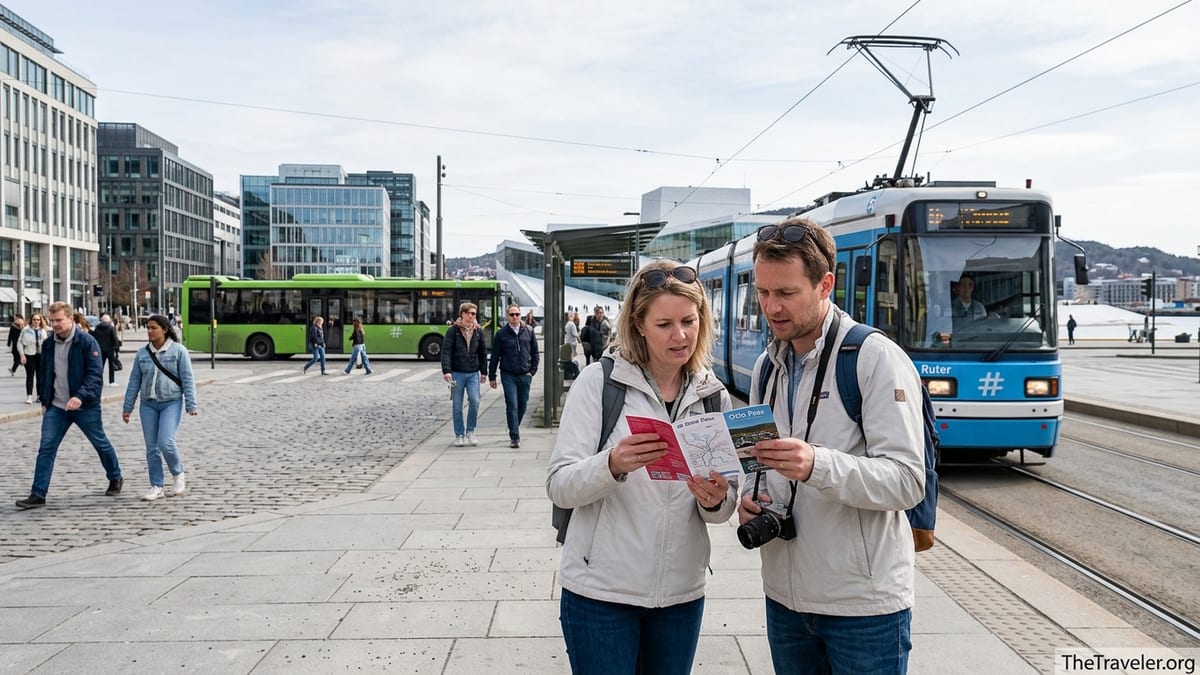
Confusing the Oslo Pass With Regular Ruter Tickets
One of the most frequent mistakes is assuming the Oslo Pass is the same as a normal public transport ticket from Ruter, the company that runs buses, trams, metro and many local trains in the Oslo region. In reality, the Oslo Pass is first and foremost a sightseeing card that happens to include unlimited travel on Ruter’s network in a large zone area, while a standard Ruter ticket or travelcard is purely for transport. This difference matters when you are mainly moving around the city rather than packing your days with museums.
For example, a visitor staying four days in central Oslo might barely leave Zone 1 on public transport: a tram to Vigeland Park, a metro ride to Holmenkollen, and a ferry out to the Oslofjord islands are all within the same core zone. In that case, a 7‑day Ruter ticket for Zone 1 is typically cheaper than a multi‑day Oslo Pass, and it offers the same unlimited rides but no museum entries. If you only plan to visit one museum such as the new MUNCH museum or the National Museum, it is often better value to buy a separate entry ticket and rely on Ruter’s own passes instead of buying an Oslo Pass just for the transport benefit.
There is a second trap within this confusion: some travelers buy the Oslo Pass and then still purchase additional single Ruter tickets because they are not sure how the pass works on buses and trams. They end up paying twice for the same journey. In practice, once your Oslo Pass is active and valid, it serves as your ticket for eligible Ruter services in the included zones. You simply show the digital pass in the official app or the physical card to inspectors when asked, just as you would show a Ruter ticket.
Misunderstanding Zones, Airports and What the Pass Really Covers
Another classic error is not checking exactly which areas the Oslo Pass covers and how this relates to the city’s zone system. The pass includes unlimited travel on Ruter buses, trams, metro, ferries and many local Vy trains across several zones that cover all of Oslo and a wide surrounding region. However, not every transport service in and around the city is included. Visitors often assume that “free public transport” means every possible option, especially airport trains and tourist ferries.
One of the biggest points of confusion concerns Oslo Airport Gardermoen. The express airport train, Flytoget, is a separate premium service and is not included in the Oslo Pass or in regular Ruter tickets. Instead, the pass works on standard Vy regional and local trains that run between the airport and Oslo, provided your pass is valid in the necessary zones. Travelers who hop onto Flytoget using only an Oslo Pass are likely to face an expensive fine because they are effectively riding without a valid ticket, even though they technically “have a pass.”
The ferries cause similar misunderstandings. The everyday commuter ferries in the Oslofjord that are part of the Ruter system are covered by the Oslo Pass, which makes island‑hopping to places like Hovedøya and Gressholmen very convenient. By contrast, certain seasonal museum and sightseeing ferries, such as private boats to the Bygdøy museum peninsula or narrated fjord cruises, may not accept the pass as payment even though they look like regular public boats. Visitors who assume “all boats are included” can end up scrambling for tickets on the pier or, worse, being turned away.
Finally, some regional trains and buses that reach well beyond central Oslo are included only within the specific Ruter zones listed for the pass. If you plan a day trip to nearby towns, you need to confirm whether your route is inside the covered zones or whether you must buy extension tickets for the extra zones. Treat the Oslo Pass as a powerful but defined transport product, not a magical key that unlocks any train or bus in southern Norway.
Overestimating How Many Museums You Will Actually Visit
The Oslo Pass offers free entry to many of the city’s headline attractions, including the MUNCH museum on the Bjørvika waterfront, the National Museum, the open‑air Norsk Folkemuseum on Bygdøy, the Fram Museum with its famous polar exploration ship, and the neighboring Kon‑Tiki Museum dedicated to Thor Heyerdahl’s Pacific raft. It also covers smaller spots such as the Norwegian Maritime Museum and various local collections. On paper, this makes it easy to “do everything.” In practice, most travelers underestimate how much time they need at each place and overestimate how many they will realistically see in one or two days.
A 24‑hour pass might look like a bargain if you pencil in four or five museums in a single day. But once you account for travel time, café breaks and the sheer mental fatigue of absorbing new exhibits, squeezing in more than two or three substantial museums is ambitious. For example, spending a morning at the Norsk Folkemuseum, wandering through 19th‑century wooden houses and the stave church, already takes several hours. Adding the Fram Museum and the Kon‑Tiki Museum on the same peninsula can easily fill the rest of the day without time for much else.
Travelers on shorter trips often buy a 48‑hour Oslo Pass imagining they will see “all the big names” in that period: MUNCH, the National Museum, Bygdøy’s cluster of museums, the Holmenkollen ski jump tower and a city history museum. Once jet lag, weather and opening hours come into play, they might manage three or four of those. In hindsight, simply paying individual admission to the few museums they did visit would have cost less than the pass, especially when combined with a regular Ruter transport ticket.
A more realistic approach is to draft a concrete, hour‑by‑hour plan before buying the pass. Estimate how long you really want to spend at each attraction and leave space for meals and occasional detours. If your schedule includes at least three major paid museums within a 24‑hour period, or four to five over 48 hours, the pass is more likely to pay off. If not, consider skipping it and buying separate tickets instead.
Activating the Pass at the Wrong Time
Because the Oslo Pass is sold in fixed durations, commonly 24, 48 or 72 hours, activating it at the right moment is crucial. Many visitors purchase a digital pass in advance and activate it at the airport or as soon as they check in to their hotel, even if their first afternoon is mostly for resting, strolling around the harbor and perhaps an early dinner. As a result, they “use up” valuable hours of their pass without stepping inside a museum or taking any significant public transport journeys.
A typical scenario looks like this: you land in Oslo in the early afternoon, take a regular train into the city using a separate ticket, and then tap your Oslo Pass on your phone as soon as you arrive at your hotel. That evening you only wander along the Opera House and the waterfront and then go to bed early. By the time you start your main sightseeing day the next morning, eight or more hours of your 24‑hour pass have already expired. You effectively paid for a full day but received only part of it in meaningful value.
The same mistake happens at the end of a trip when travelers activate a new 24‑hour pass late in the afternoon “just to cover” a couple of tram journeys and one museum visit, even though they will leave Oslo early the next morning. Often a single Ruter ticket or a simple day ticket would have been cheaper than starting another full pass period. Locking yourself into fixed time windows only pays off when you can concentrate your most expensive museum visits and long public transport days inside that window.
The better strategy is to hold off activation until you are genuinely ready for an intensive sightseeing block. For many visitors, this means activating their 24‑hour or 48‑hour pass on the morning of their first full day in the city, after they have settled in and slept. Until then, rely on single Ruter tickets or a low‑cost transport day pass to cover light movement around town.
Ignoring Opening Hours, Reservation Needs and Seasonal Closures
Another costly oversight is not aligning your pass validity with when attractions are actually open. While major venues like MUNCH, the National Museum or the Fram Museum usually keep generous hours in peak season, they may close one day a week or operate with shorter hours in winter. Smaller museums included in the pass can have limited opening days or reduced winter schedules. Travelers who activate a pass on a Monday, for instance, sometimes discover that a museum they wanted to visit in Oslo’s historical center is closed that day.
Winter darkness and weather further complicate timing. In January, daylight hours in Oslo are short, and many outdoor attractions like the Viking‑era farm buildings at the Norsk Folkemuseum are less appealing in heavy snow or icy rain. Meanwhile, some seasonal services that complement pass usage, such as specific ferries or ski lifts, can operate on restricted timetables. Using a 24‑hour pass during a period when key attractions are either shut, partially open, or unpleasant to linger in drastically lowers its value compared with a summertime visit.
A related but subtler issue is ignoring potential crowding or reservation systems for special exhibitions. Popular shows at MUNCH or the National Museum sometimes involve timed entry slots or long queues on weekends and holidays. If you must wait in line for ages or cannot get a suitable timeslot during your pass validity, your carefully constructed museum list may fall apart. Although many Oslo museums are still walk‑in friendly, it is wise to check in advance whether any major exhibition you care about requires or benefits from a reservation.
To avoid these problems, match your pass period with days when your must‑see attractions are open for a full range of hours, and consider shifting activation by a day if several places you want to visit are closed or restricted. Check at least the opening days and typical timeframes for headline museums, then cluster them intelligently inside your pass window.
Using the Pass Inefficiently on Public Transport
Because the Oslo Pass includes generous transport coverage, some travelers fall into the trap of unnecessary back‑and‑forth journeys “because it’s free.” They choose long detours instead of walking short, pleasant distances through compact central neighborhoods. Not only does that eat into precious sightseeing time, it also adds stress when you must keep track of multiple transfers between trams, buses and metro lines. The true value of included transport is not the number of rides you can squeeze in, but the strategic journeys it makes possible.
An efficient use of the pass might be to take the metro up to Holmenkollen ski jump for panoramic views over the city, then continue a little higher to Frognerseteren for a forest walk, before descending by metro back to the center. Another smart pattern is to combine a ferry ride from the city center out to the Bygdøy peninsula, visit two or three of the clustered museums such as the Fram Museum, Kon‑Tiki and the Norsk Folkemuseum, and then return on the same ferry, rather than commuting back and forth multiple times.
By contrast, some visitors under‑use the transport part because they simply forget that more remote attractions are included in the zones covered by the pass. They spend their entire time within a tight downtown loop, never venturing to vantage points like Ekebergparken sculpture park or to neighborhoods slightly beyond the central grid that are still easily reached with trams and buses. They leave Oslo feeling they barely saw more than the waterfront, even though their pass offered far more mobility than they realized.
Before buying, sketch out a few specific public transport journeys that you would not take without the pass: perhaps a full afternoon in Bygdøy’s museums, an evening ride up to Holmenkollen, and a ferry trip to one of the Oslofjord islands. If your plans remain mostly walkable and you have no firm intention to use ferries or metro lines much beyond the central area, a regular Ruter ticket might again be more cost‑effective than the Oslo Pass.
Forgetting About Family, Student and Senior Realities
Families, students and seniors often assume that the Oslo Pass automatically represents the best deal for their group because it covers so many things and seems straightforward. However, when you break down the math, the picture can be more nuanced. Children’s ticket prices for individual museums and public transport are often significantly lower than adult prices, especially under certain ages, and families might benefit more from tailored Ruter transport tickets and selective museum entries than from buying a pass for every person.
Imagine a family of four planning one intensive sightseeing day, with two adults and two children interested mainly in the Fram Museum and the Norsk Folkemuseum. The adults might find value in a 24‑hour Oslo Pass if they also plan a ferry trip and a metro ride. The children, however, could be cheaper on individual discounted museum tickets combined with low‑cost Ruter fares, depending on their ages. Buying four passes “for simplicity” can add up quickly and sometimes overshoots the cost of simply buying what each person really needs.
Students and seniors face similar decisions. Some may be eligible for reduced‑price public transport tickets or museum entries by showing a valid ID or student card at each venue. That can erode the relative advantage of an all‑inclusive pass, especially if they tend to travel more slowly and visit fewer attractions per day. On the other hand, a pass can still be valuable if it helps them avoid frequent ticket purchases or offers specific discounts that beat the standard concessions.
The key is to compare real‑world numbers for your group composition and pace, not just assume that “more included equals cheaper.” Look at how much a typical museum visit or day transport ticket costs for each age category, then estimate how many of those you realistically use within a 24‑ to 72‑hour window. Sometimes the pass still wins comfortably. Other times, a mix of individual tickets and a single pass for the most enthusiastic museum‑goer in the family works better.
The Takeaway
The Oslo Pass is neither a tourist trap nor an automatic bargain. It is a tool that can unlock great value when aligned with a clear, realistic plan for museums and public transport. Where travelers most often go wrong is not in the small print, but in assumptions: believing it covers every train including the airport express, expecting to race through half a dozen major museums in a day, activating it the moment they land, and buying passes for an entire group without comparing alternatives.
Before you purchase, sketch out a simple schedule of the exact museums you want to see, when they are open, and how many substantial public transport journeys you are likely to make in a tight 24‑ or 48‑hour block. Check which services the pass includes, particularly around the airport, ferries and regional trains, and think through your family or group’s specific discounts. If the numbers and the rhythm of your trip line up with what the pass offers, it can be a relaxed and convenient way to explore Oslo. If not, you may be better served by ordinary Ruter tickets and paying individual admission where it matters most.
FAQ
Q1. Does the Oslo Pass include the express train from Oslo Airport Gardermoen to the city?
The Oslo Pass does not include the express airport train service. It generally covers standard local and regional trains that are part of the Ruter and Vy system within the specified zones, but the premium airport express requires a separate ticket.
Q2. Can I use the Oslo Pass on all ferries in the Oslofjord?
The pass is valid on Ruter’s regular public ferries that operate like city buses on the Oslofjord, but not on every private or tourist ferry. Some seasonal museum boats and sightseeing cruises are separate services and require individual tickets.
Q3. How many museums should I plan to make the Oslo Pass worthwhile?
As a rough guide, if you can realistically fit at least three major paid museums into a 24‑hour period, or four to five over 48 hours, plus some public transport use, the pass is more likely to offer good value.
Q4. Is the Oslo Pass the same as a regular Ruter transport card?
No. The Oslo Pass is a sightseeing card that includes unlimited travel on certain Ruter services within defined zones, while a Ruter ticket or travelcard is purely for public transport. They are different products and are sold through different channels.
Q5. When is the best time to activate my Oslo Pass?
For most visitors, the best moment is the morning of your first full sightseeing day, once you are ready to visit several attractions and use public transport. Activating it on arrival day, when you are tired or only strolling, often wastes valuable hours.
Q6. Does the Oslo Pass cover attractions on the Bygdøy peninsula?
Yes, many major museums on Bygdøy, such as the Fram Museum, Kon‑Tiki Museum and Norsk Folkemuseum, are typically included in the Oslo Pass, and the Ruter ferry to the peninsula is covered when it operates as part of the regular network.
Q7. Is the Oslo Pass good value for families with children?
It can be, especially if you plan an intensive museum day. However, children often receive discounted entry and lower transport fares, so you should compare the cost of individual tickets versus passes for each family member.
Q8. Can I pause or extend the validity period of my Oslo Pass?
No. Once activated, the Oslo Pass counts continuously for 24, 48 or 72 hours, depending on the version you bought. You cannot pause or extend it, so good timing is essential.
Q9. Do I still need the Ruter app if I have the Oslo Pass?
You do not strictly need the Ruter app to ride covered services when your pass is valid, but the app remains useful for journey planning, live departure times and buying any extra tickets for trips outside the pass zones.
Q10. Should I buy the Oslo Pass in advance or wait until I arrive?
Buying in advance can be convenient, especially in busy seasons, but you should delay activation until your main sightseeing window begins. Some travelers prefer to wait until they see the weather and confirm opening hours before committing.