


More news on this day
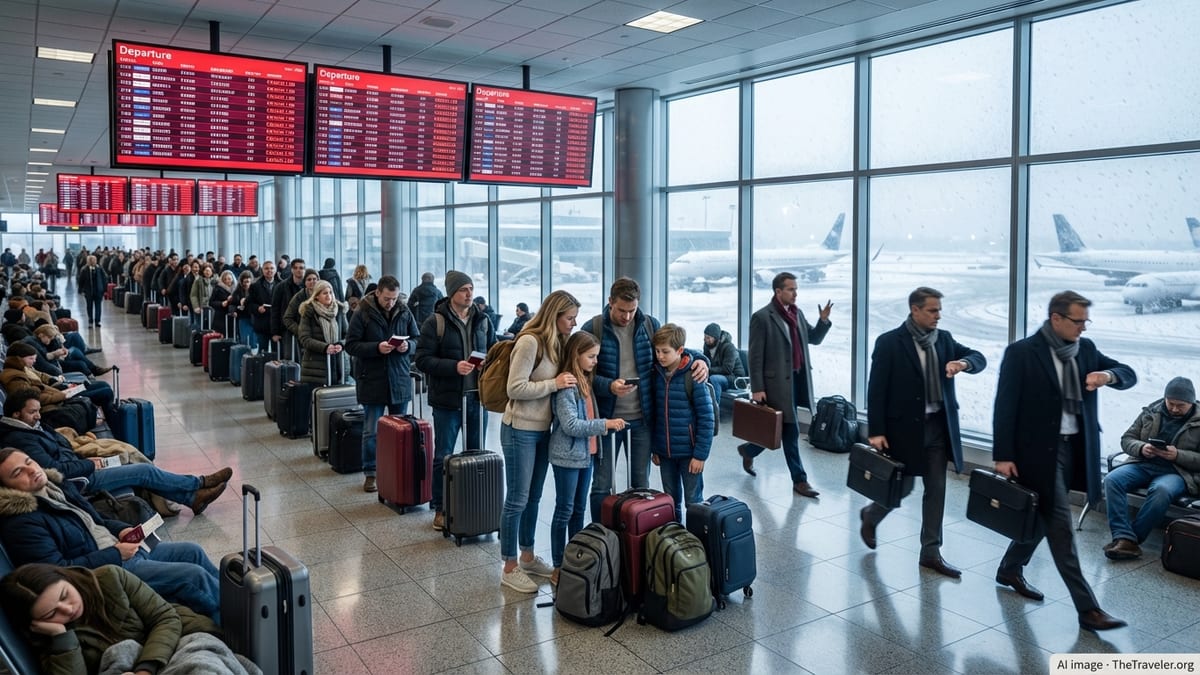
Travelers moving through Ottawa Macdonald-Cartier International Airport on Monday faced mounting disruption as a cluster of flight cancellations and delays affecting Air Canada and Porter Airlines triggered hours of congestion, missed connections, and frayed tempers across the terminal.
Get the latest news straight to your inbox!
Chain Reaction of Disruptions at Ottawa Airport
Operational data compiled from public flight-tracking dashboards indicates that Ottawa’s main airport saw at least six flight cancellations and around 25 significant delays centered on short-haul routes on Monday, notably services linking the capital with Toronto and Montreal. These routes are among the country’s most heavily used corridors and even modest schedule changes can produce a cascading impact across multiple departures and arrivals.
Several Air Canada flights between Ottawa and major hubs were listed as cancelled or heavily delayed, with one Ottawa to Montreal service scrubbed entirely from the day’s schedule after being listed for operation. Delays on other short-haul flights stretched into hours, creating a knock-on effect for travelers hoping to connect to longer-haul services elsewhere in Canada, the United States, and Europe.
Porter Airlines, which has been rapidly expanding its Ottawa operations with new domestic and leisure routes, was also caught in the turbulence. While some Porter flights managed to depart close to schedule, others saw extended waits at gates, with passengers reporting tight or missed connections and last-minute gate changes as crews and aircraft were repositioned.
Reports shared by travelers describe crowded departure areas and long rebooking lines as airlines worked within limited spare capacity to find alternative options. The relatively small size of Ottawa’s terminal compared with larger hubs meant that even a few dozen disrupted flights translated into a visibly congested operation during peak periods.
Pressure Points on Air Canada and Porter Networks
Publicly available industry analysis has highlighted Ottawa’s central role in Air Canada’s and Porter’s domestic networks, particularly on short-haul business routes that rely on tight turnarounds and high aircraft utilization. When even a handful of these flights are disrupted by operational constraints, crew availability issues, or weather downstream in the network, the impact can quickly spread.
Recent commentary on Canadian air travel performance has noted ongoing punctuality challenges on trunk routes such as Ottawa to Toronto and Ottawa to Montreal. Data-driven assessments of airline operations in 2026 point to clusters of delays and cancellations on these corridors during busy periods, reflecting the sensitivity of regional schedules to congestion and air traffic control restrictions in larger hub cities.
Porter’s rapid expansion out of Ottawa, including new links to Atlantic Canada and sun destinations, has added both choice and complexity to the local market. On days like Monday, the interplay between legacy carriers and a fast-growing competitor magnifies pressure on shared airport infrastructure, from gates and baggage systems to ground handling resources.
Travelers caught in the latest Ottawa disruption reported a mix of experiences: some were automatically rebooked onto later flights or rerouted through alternative hubs, while others faced long overnight gaps before the next available seat. Reaccommodation options were further complicated by high summer-season demand and limited spare capacity on key domestic routes.
Passenger Frustration Highlights Fragile Travel Plans
The Ottawa disruption unfolded against a backdrop of growing frustration among Canadian travelers over flight reliability. In recent months, travelers have taken to online forums to describe a pattern of cancellations and extended delays on both Air Canada and Porter, particularly in peak travel windows and during weather-related slowdowns at major hubs.
Some Ottawa-area passengers have indicated they now plan extra buffer days around important trips or even choose to drive several hours to larger airports rather than risk last-minute cancellations on regional links. Others report building in long layovers on connecting itineraries in anticipation of schedule slippage on short-haul flights to and from the capital.
Monday’s wave of disruptions at Ottawa appeared to validate these concerns for many travelers. Accounts shared publicly spoke of missed family events, scrapped work meetings, and expensive last-minute hotel stays, with some passengers weighing whether to seek compensation under Canada’s Air Passenger Protection Regulations or through credit card insurance policies.
Consumer advocates have noted that, while regulations governing compensation for delays and cancellations have been strengthened over recent years, the process of documenting eligibility and submitting claims can be confusing. The distinction between issues within an airline’s control and those categorized as weather or safety-related remains a central point of contention for many affected passengers.
Regulatory Context and Compensation Questions
Under Canadian rules, travelers departing from Ottawa may be entitled to compensation when cancellations or long delays are considered within an airline’s control and result in arrival times that significantly exceed original schedules. Public guidance from carriers such as Air Canada emphasizes that final decisions on compensation eligibility can take several days as operations teams review the root cause of each disruption.
Travel advisory resources and passenger rights groups encourage affected travelers to keep detailed records, including boarding passes, notifications from airlines, and receipts for extra expenses such as meals, hotels, and ground transportation. These documents can be essential when seeking reimbursement or statutory compensation after the fact.
In the Ottawa case, the patchwork nature of Monday’s cancellations and delays may lead to a mosaic of outcomes for passengers. Some itineraries will likely be classified as impacted by broader network or weather-related issues, while others could fall into categories where compensation is possible because the events were within airline control, such as maintenance planning or crew scheduling.
Legal specialists following Canadian aviation trends have pointed to a rise in third-party services that assist passengers with claims in exchange for a fee or commission. The growing visibility of such services, combined with repeated high-profile disruption days at airports like Ottawa, suggests that compensation disputes are likely to remain a prominent feature of the travel landscape.
Ottawa’s Growing Role and the Risk of Future Gridlock
The Ottawa disruption comes as the city seeks to expand its profile as a “hub of choice” for both business and leisure travelers. Recent route announcements from Porter and other carriers underscore the airport’s ambitions to leverage its geographic position and available terminal capacity to attract more airlines and frequencies.
Airport-focused analysis has described Ottawa as an operation with room to grow, especially compared with crowded mega-hubs that routinely face runway and gate constraints. However, Monday’s meltdown illustrates how quickly that capacity advantage can be eroded when several airlines experience overlapping disruptions on the same day.
Travel industry observers note that as more carriers add Ottawa to their networks and increase frequencies, the redundancy and flexibility that once made the airport relatively resilient may diminish. Without parallel investment in staffing, ground services, and contingency planning, even modest spikes in cancellations and delays can overwhelm the system, as witnessed this week.
For travelers, the latest episode at Ottawa serves as a reminder that careful itinerary planning, awareness of passenger rights, and a willingness to adapt on short notice remain essential parts of navigating Canada’s changing airline landscape. As Air Canada and Porter continue to compete and expand in the capital, how they handle days of severe disruption may shape passenger loyalty as much as new destinations or onboard amenities.