


More news on this day
More than 1,358 flights were delayed and at least 85 were canceled Monday as disruptions centered on the Northeast’s busy airspace spread across U.S. networks, compounding routine weather slowdowns and operational knock-on effects.
Get the latest news straight to your inbox!
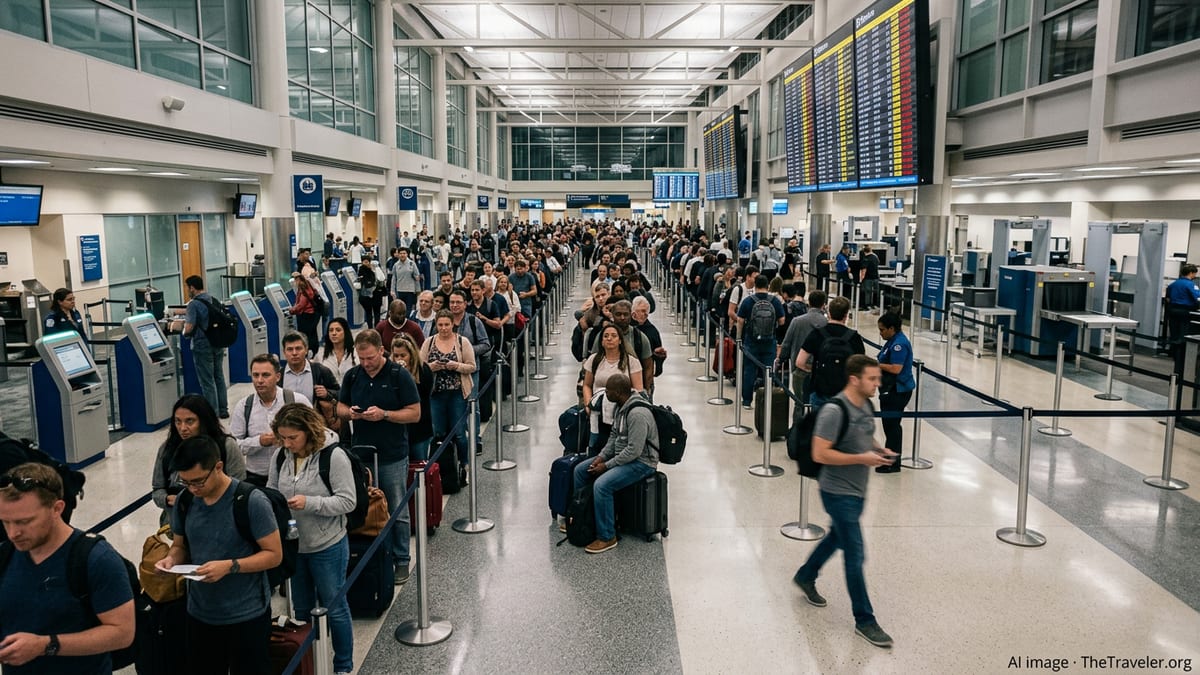
Fiber-line failure triggers ground stops in the Northeast corridor
Published coverage indicates the day’s most significant disruption began with a communications and data failure linked to the Federal Aviation Administration’s regional air-traffic operations serving the New York City area and Philadelphia. The problem forced temporary ground stops and traffic restrictions affecting key hubs including Newark Liberty International, John F. Kennedy International, LaGuardia, and Philadelphia International, with ripple effects extending to other airports as aircraft and crews fell out of position.
Reporting described a sequence in which a primary circuit failed and the backup line could not take over because fiber optic cable had been severed at a construction site in New Jersey. The incident drew attention because the affected airspace is among the nation’s densest, where even short suspensions can quickly cascade into missed connections, aircraft diversions, and late-arriving inbound planes that push back departures hours later.
Several outlets reported that Boston Logan also saw disruption tied to the Northeast slowdown. Publicly available tracking showed hundreds of delays and dozens of cancellations at Logan during the afternoon, with additional FAA traffic management measures layered on because of weather.
What the numbers show: delays pile up beyond the airports at the center
Flight-tracking data and published reporting made clear that the incident was not confined to one airport, or even one metro area. Airline networks rely on tight aircraft turns, shared crews, and connecting banks, meaning a pause in the New York-Philadelphia corridor can quickly affect flights far from the Northeast, especially later in the day.
Public dashboards from flight-tracking services showed thousands of delays and hundreds of cancellations across the United States on Monday, suggesting that while the telecom failure was a major driver for the East Coast, other factors were also weighing on operations. Separate FAA traffic-management postings during the day also reflected routine constraints at other airports, including programs triggered by volume or low ceilings in parts of the country.
For travelers trying to interpret the numbers, it is worth noting that flight-tracking platforms typically count delays and cancellations “within, into, or out of” the United States and may not attribute a specific operational cause to each disrupted flight. That means total national disruption can look higher than the number directly connected to a single outage, even on days when one incident dominates headlines.
Why disruptions can linger after service resumes
Even after flights begin moving again, the recovery phase can stretch late into the evening. When ground stops are lifted, air-traffic managers often meter arrivals to prevent gridlock on taxiways and at gates, which can keep delays elevated long after the original technical issue is addressed.
Airlines also face practical constraints that slow recovery: aircraft may be parked at outstations without available crews, crews may time out under duty limits, and inbound delays can strand the equipment scheduled for later departures. In the Northeast, where airports operate near capacity for much of the day, there is limited slack to absorb a multi-hour disruption.
Published coverage also indicated that the outage occurred on a high-visibility travel day for New York City, with the United Nations General Assembly drawing international delegations. That added pressure on already busy airspace and airport operations, particularly around peak arrival and departure waves.
What travelers can do right now if their flight is delayed or canceled
For passengers dealing with rolling delays, the most useful immediate step is to monitor the flight’s status directly with the airline and confirm whether the aircraft assigned to the flight is already at the departure airport. In systemwide disruptions, a flight can appear “on time” until the inbound aircraft or crew assignment changes, at which point the departure time may move abruptly.
Travelers who decide not to fly after a cancellation should understand that U.S. Department of Transportation policy generally requires a refund to the original form of payment for a canceled flight if the passenger does not accept an alternative itinerary offered by the airline. For delays that are not cancellations, compensation is less standardized and often depends on the carrier’s contract of carriage and the reason for disruption.
Because the Northeast outage affected multiple major hubs, passengers were often competing for limited rebooking inventory on later nonstop flights. In practice, travelers may find faster options by accepting routings through less congested gateways or by shifting departure times, but availability can change minute to minute as airlines rebalance their networks and protect later connections.