


More news on this day
Philippine Airlines’ tentative plan to bring back flights to Doha while keeping its Dubai services on hold is underscoring the fluid, often confusing reality for travelers navigating a Middle East aviation network reshaped by conflict, safety concerns and rising fuel costs.
Get the latest news straight to your inbox!
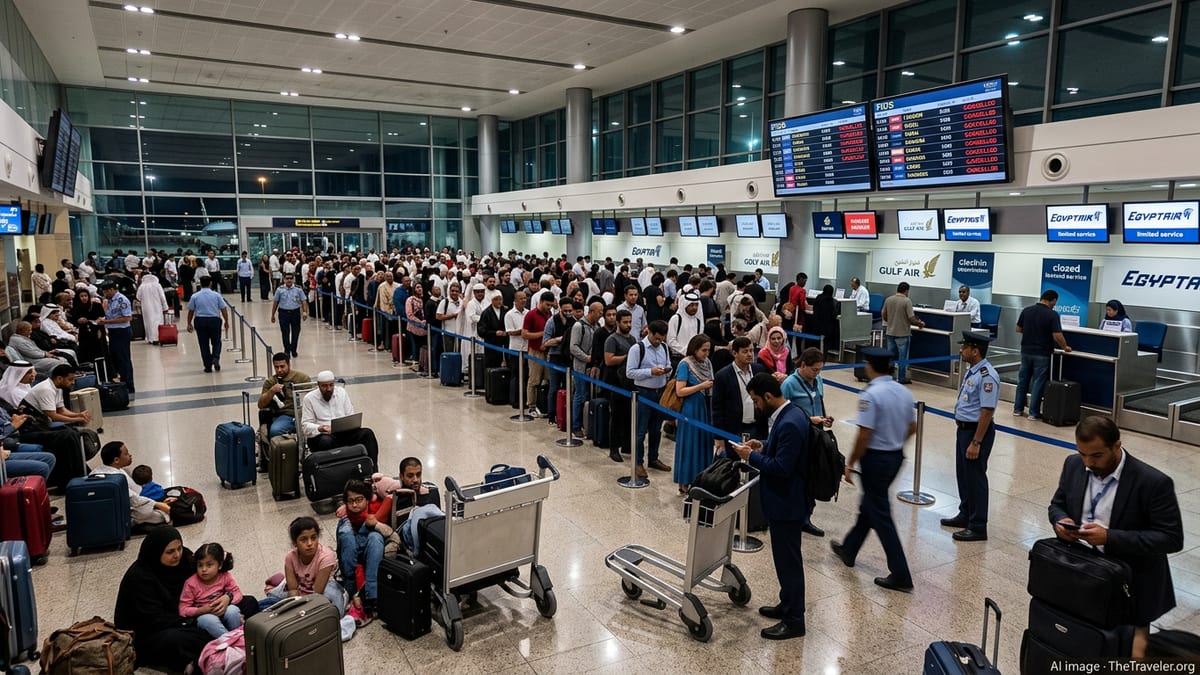
Doha Route Edges Toward Restart as Dubai Stays Grounded
Publicly available advisories from Philippine Airlines show that flights between Manila and Doha are scheduled to resume after June 30, 2026, when a temporary suspension tied to security risks and airspace restrictions is due to lapse. The carrier has framed the pause as a precaution driven by regional instability and operational constraints on key corridors serving the Gulf.
At the same time, guidance to passengers indicates that flights between Manila and Dubai will remain suspended for a longer window, currently listed through at least August 2, 2026. Industry reports describe the Dubai route as still “under review,” with no firm restart date announced, despite rising demand from overseas Filipino workers and leisure travelers who rely on the link as a primary gateway to the United Arab Emirates and onward connections.
The result is a patchwork picture in which Doha is gradually being brought back into the schedule while Dubai, historically one of Philippine Airlines’ most important Middle East destinations, remains offline. Travel analysts note that this divergence highlights how individual airports and routings are being assessed separately as airlines weigh security, overflight permissions and commercial viability on a route-by-route basis.
The shifting timelines are adding to the perception of a “surprise comeback” for the Doha route, compared with the continued standstill for Dubai services. Passengers following earlier advisories that grouped the two destinations together under a broad suspension are now confronted with differing expiry dates and conditions, adding another layer of complexity to their planning.
Conflict, Airspace Closures and High Fuel Costs Reshape Networks
The uneven recovery of Philippine Airlines’ Middle East network is unfolding against a wider backdrop of disrupted aviation across the region. Reports from aviation data providers and regional media describe waves of airspace closures affecting parts of Iran, Iraq, the Gulf and the eastern Mediterranean since early 2026, prompting mass cancellations, diversions and protracted schedule overhauls for carriers based in the Middle East, Europe and Asia.
Major hubs such as Dubai and Doha have experienced rolling constraints, from full shutdowns to partial reopenings with limited arrival and departure slots. Airlines have had to route around closed or high-risk airspace, lengthening flight times and squeezing already tight operating margins. These detours have collided with a spike in global oil prices linked to the same geopolitical tensions, pushing jet fuel costs higher and forcing carriers to reassess the economics of long-haul routes.
Philippine Airlines is among several Asian carriers that have scaled back or suspended services to the Gulf while they monitor the security picture and negotiate alternative routings where possible. Analysts point out that flights to cities like Doha can sometimes be structured in ways that minimize exposure to the most problematic airspace, while Dubai-bound services may require more extensive detours or face greater congestion, making them less attractive to restore quickly.
The combination of safety considerations, overflight permissions and fuel costs has effectively turned the Middle East into a patchwork of “green,” “amber” and “red” zones for airlines. Doha’s status as a route now edging back toward operation, contrasted with Dubai’s extended pause, reflects how carriers are mapping that risk and cost matrix in real time.
Filipino Travelers Face Rebookings, Longer Journeys and Uncertain Timelines
For travelers, particularly the large Filipino workforce based in the Gulf, these strategic route decisions translate into very immediate concerns: missed homecomings, rearranged contracts and rising travel bills. Publicly available advisories from Philippine Airlines and guidance carried in regional news coverage outline various options for passengers affected by the continuing suspension of Dubai services and the still-limited Doha schedule.
Common measures include free rebooking to future dates once flights resume, conversion of unused tickets into travel credits with added value, and refund options processed over several weeks. While these policies offer financial relief, they do little to shorten disrupted journeys. Many passengers trying to reach the United Arab Emirates or nearby states are now piecing together itineraries via alternative hubs operated by other carriers, such as connections through Europe or Southeast Asia, often at higher overall cost and with longer total travel time.
Online travel forums and passenger advisories describe a landscape in which a flight may operate outbound to one Gulf city but lack a secure return date, or where a connecting segment remains canceled even after a main trunk route has restarted. This fragmented situation is particularly challenging for overseas workers who must align flights with employer schedules, visa rules and contract start or end dates, and who may have limited flexibility to absorb unexpected delays.
Uncertainty over exact restart dates also complicates decisions about whether to wait for a preferred Philippine Airlines route to reappear or to shift immediately to other airlines serving the Gulf. While some travelers value the familiarity of the flag carrier and its direct connectivity to Philippine provincial cities, others are opting to lock in alternative routes rather than risk further timetable changes.
Middle East Turbulence Sends Ripples Across Global Aviation
The difficulties facing Philippine Airlines are mirrored by broader turbulence for international carriers that depend on the Middle East as a transit bridge between Asia, Europe and Africa. Published industry assessments describe thousands of flights canceled or rerouted during initial airspace closures in early 2026, followed by a slower, uneven resumption as regulators and airlines tested revised paths and safety protocols.
Global network carriers such as Emirates, Qatar Airways, Etihad Airways and various European and Asian airlines have all had to rework traditional east–west corridors that typically funnel through hubs in the Gulf. Even where airports have reopened with limited operations, residual restrictions and heightened insurance and security requirements are maintaining pressure on schedules and fares.
Travel and hospitality consultants are warning that elevated fuel prices and route detours could remain a feature of long-haul flying for months, even if headline tensions ease. Airlines facing higher operating costs are likely to prioritize the most profitable routes or those viewed as strategically critical, which could mean a slower return for secondary city pairs or point-to-point services that rely heavily on migrant worker traffic and price-sensitive leisure demand.
For Philippine Airlines, that calculus may help explain why a carefully controlled Doha reboot is emerging ahead of a broader Middle East restoration that includes Dubai. The carrier’s decisions are being watched closely by other airlines that serve large Filipino communities, as they, too, balance safety, cost and competitive positioning in a region where conditions remain fluid.
What Travelers Can Expect in the Months Ahead
With June and August 2026 flagged as key dates in Philippine Airlines’ current advisories for Doha and Dubai, the coming months are set to test how quickly travel patterns can normalize across the Gulf. Aviation observers note that even if the Doha route resumes close to its published timeline, it may start with reduced frequencies or capacity as the airline gauges demand and operational reliability.
Dubai’s outlook is more uncertain. Industry reporting suggests that any restart will depend not only on the security environment and airspace stability, but also on how competitive the market appears once Gulf-based carriers fully restore their own networks. Philippine Airlines will have to contend with rival services and changing passenger preferences shaped by months of disruption and rerouting.
Travel experts emphasize that flexibility will be essential for passengers planning trips through the region in the near term. Schedules remain subject to change at relatively short notice, and routings that look straightforward on paper may be vulnerable to knock-on effects from events elsewhere in the Middle East. Travelers are being encouraged by public advisories and consumer advocates to monitor airline announcements closely, build longer connection windows, and have contingency plans in case of sudden timetable shifts.
For now, the contrasting fortunes of Philippine Airlines’ Doha and Dubai routes encapsulate a wider reality: Middle East aviation is still in a period of adjustment, and for many Filipinos whose lives and livelihoods are tied to these air corridors, predictability remains in short supply.