


More news on this day
Aviation’s race to reach net zero by 2050 is encountering fresh turbulence, as evidence of sustainable aviation fuel shortages, patchy carbon markets and diverging regional policies raises doubts about whether climate targets at 35,000 feet can be met on schedule.
Get the latest news straight to your inbox!
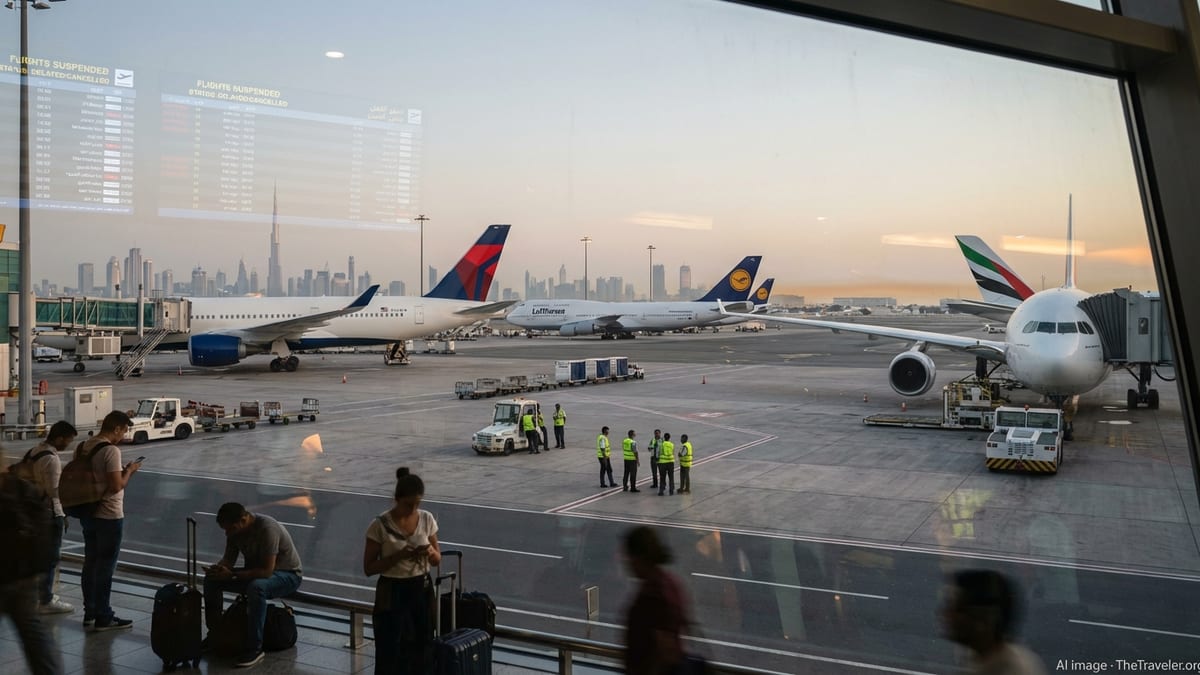
SAF Supply Trails Ambitious Net-Zero Roadmaps
Global aviation plans to rely heavily on sustainable aviation fuel, or SAF, to cut emissions, with industry roadmaps projecting it could deliver roughly two thirds of the reductions needed for net zero by mid century. Yet current production remains a fraction of projected demand, and scaling new plants is proving slower and more expensive than early forecasts suggested.
Industry assessments indicate that certified SAF volumes, while growing from a low base, still represent well under 1 percent of global jet fuel use. Aviation bodies and climate think tanks note that, even if every announced SAF project were built on time, capacity this decade would fall short of the volumes implied by airline net-zero strategies and national climate plans.
Investors and developers cite high capital costs, feedstock constraints and uncertain long term policy support as obstacles to unlocking the multi billion dollar buildout required. Many first generation facilities depend on limited supplies of used cooking oil and other waste lipids, pushing policymakers and manufacturers toward more complex technologies such as alcohol to jet and power to liquid fuels that are still moving through demonstration and early commercial phases.
The result is a widening gap between what airlines are promising travelers and what fuel markets can realistically deliver in the near term. Analysts increasingly describe SAF targets for 2030 as “stretch” or “aspirational,” warning that unmet expectations could trigger public and regulatory backlash if emissions from flying continue to rise.
Mandates Tighten in Europe as Global Policy Splits Widen
Regulatory pressure is rising most visibly in Europe, where the ReFuelEU Aviation regulation entered into force with binding SAF blending mandates for fuel supplied at major Union airports from 2025. The law sets an initial 2 percent SAF share requirement, increasing stepwise to 6 percent in 2030 and aiming for 70 percent by 2050, alongside specific sub targets for synthetic fuels later in the period.
European institutions describe ReFuelEU as a cornerstone of the bloc’s Fit for 55 climate package, designed to prevent competitive distortions and fuel tankering by applying harmonized rules to airports and fuel suppliers across member states. The regulation also obliges airlines to uplift at least 90 percent of their annual fuel needs at each covered European hub, an anti tankering measure intended to stop carriers from avoiding SAF mandates by fueling elsewhere.
Elsewhere, approaches are less uniform. The United Kingdom has set its own SAF mandate trajectory, while other regions lean more on voluntary commitments, tax incentives and participation in global schemes such as the International Civil Aviation Organization’s CORSIA offsetting framework. This patchwork creates differing cost structures and compliance obligations for airlines that operate across multiple jurisdictions, complicating long term fleet and route planning.
Industry groups warn that increasingly divergent regional policies risk shifting traffic and investment rather than reducing total emissions. Some airlines have called for closer alignment between national measures and international frameworks to avoid duplicative obligations that could divert capital away from the SAF production and new aircraft technologies needed to decarbonize at scale.
SAF Tax Credits and Incentives Face Uncertain Timelines
In the United States, sustainable aviation fuel has been supported by a dedicated tax credit introduced under recent federal climate legislation. Guidance released by the Treasury Department links the value of the credit to the lifecycle emissions performance of the fuel, with per gallon support varying depending on how deeply a given SAF pathway cuts greenhouse gas output compared with conventional jet fuel.
However, the current SAF blender credit is time limited, applying to qualifying fuel sold or used from the start of 2023 through the end of 2024, before a different regime is expected to take over. Policy briefs and industry commentary highlight concern that any gap or perceived weakening in incentives after this period could slow investment decisions on new plants, particularly for advanced pathways that depend on long payback periods.
Developers are also responding to evolving technical rules that determine which models and feedstocks qualify for maximum support. Recent guidance on lifecycle analysis tools and the treatment of climate smart agricultural practices, for example, has drawn close scrutiny from both fuel producers and environmental groups, who argue over how to balance emissions accuracy with investment clarity.
For airlines planning fleet strategies that span decades, near term uncertainty around support levels for SAF and related infrastructure introduces additional risk. Many carriers are signing long term offtake agreements with emerging producers, but observers note that these contracts often contain price review clauses and depend heavily on the assumption of stable public policy backing.
Carbon Credit Markets Struggle to Plug the Emissions Gap
Alongside SAF, airlines have leaned on carbon credits to address emissions that cannot yet be eliminated through technology or operational changes. Under CORSIA, international flights between participating states are subject to a system in which carriers must purchase approved offsets to cover growth in emissions above a baseline derived from pre pandemic traffic.
Publicly available information shows that CORSIA’s design was adjusted after the collapse in air travel during the COVID 19 crisis, shifting the baseline from a 2019 to 2020 average to 2019 only. Analysts say this has modestly tightened requirements for airlines as traffic recovers, but the overall volume of offsets demanded by the scheme remains relatively limited in its early phases.
At the same time, voluntary carbon markets, where many airlines offer customers the option to offset flights directly, have undergone intense scrutiny. Investigations and academic studies have raised doubts about the climate integrity of some nature based credits, including projects tied to avoided deforestation and certain renewable energy schemes, prompting concerns that offset purchases may not deliver the emissions reductions claimed.
Market observers report growing pressure on carriers to prioritize high quality, independently verified credits and to be more transparent about the role of offsets relative to in sector emissions cuts. Some climate advocates argue that heavy reliance on carbon credits could delay necessary investment in cleaner aircraft and fuels, turning offsets into a safety valve rather than a bridge to genuine transformation.
Travel Demand Growth Collides with Climate Constraints
Underlying these policy and market tensions is the continued growth in global air travel, particularly in emerging economies where rising incomes are driving first time demand for international flights. Long term forecasts from industry bodies still anticipate passenger numbers climbing markedly through 2050, even as airlines pledge deep cuts in net emissions over the same period.
This dynamic makes aviation one of the most challenging sectors to decarbonize. Unlike road transport, where electrification is already reshaping fleets, long haul flights have few near term alternatives to liquid hydrocarbon fuels. Electric and hydrogen aircraft concepts are progressing, but are expected to play a limited role in commercial service before the 2030s and 2040s and may be confined to shorter routes for years.
Analysts note that without stronger measures to manage demand growth, such as carbon pricing, alternative transport incentives or corporate travel policies, the volume of flying could outpace the sector’s ability to cut emissions per passenger. That would leave a larger burden on SAF and offsets to square the climate ledger, even as each faces its own constraints.
For travelers, the emerging picture is one in which airfares may face upward pressure in markets with strict SAF mandates or carbon costs, while airlines in less regulated regions could retain a price advantage in the short term. Over time, the tension between competitive dynamics and climate imperatives is likely to shape not only how often people fly, but also which routes, hubs and carriers dominate the skies in a net-zero constrained world.