


More news on this day
As Europe’s new Entry/Exit System beds in, Paris Charles de Gaulle is emerging as a flashpoint, with June 2026 travelers reporting sharply contrasting experiences at border control, from near-empty lines to lengthy queues triggered by system glitches and peak-hour surges.
Get the latest news straight to your inbox!
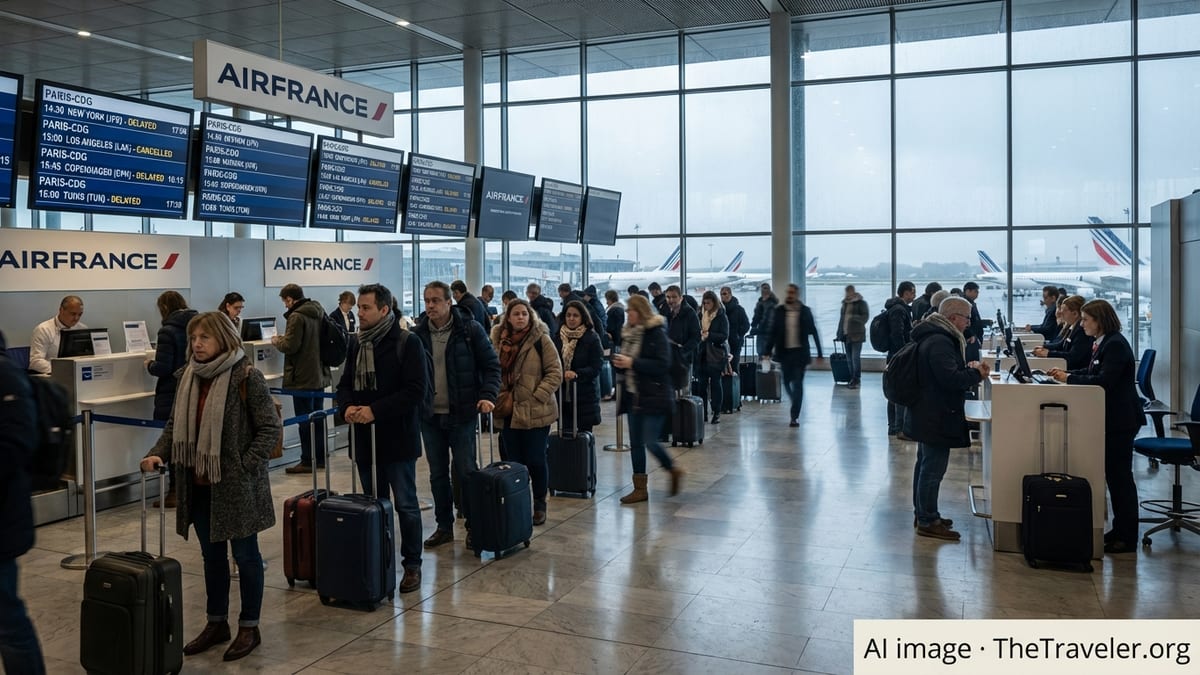
EES Is Now Fully Live at CDG, But Operations Remain Uneven
The European Union’s Entry/Exit System is now fully operational at external Schengen borders after a phased rollout that culminated in spring 2026. Publicly available information from EU institutions and the French government explains that the system records biometric and travel data for most non-EU nationals entering or leaving the Schengen area, replacing manual passport stamping at airports such as Paris Charles de Gaulle.
For passengers at CDG, this means every first-time EES registration involves fingerprinting and facial image capture at kiosks or manned desks, in addition to standard passport checks. Once a traveler has a file in the system, later crossings typically require only verification and data updates, which is intended to accelerate flows over time.
In practice, early June 2026 accounts from frequent travelers and aviation-focused publications suggest that the transition period is still in progress. CDG is handling a mix of fully EES-enrolled passengers and newcomers, and the balance between them is shaping how long people spend in the border queue on any given day.
Industry groups and airport analysts have repeatedly warned that EES could lengthen border-control times during its first major summer season. Their commentaries point to CDG’s heavy long-haul schedule and complex transfer patterns as particular stress points as more non-EU travelers encounter the system for the first time.
Real-World Wait Times: From 15 Minutes to Well Over an Hour
Recent traveler reports from early to mid-June 2026 depict a highly variable picture at Paris CDG’s border posts. Some passengers describe clearing passport control and security in roughly 30 minutes during weekday afternoons, even with EES in place. Others recount being through in under 20 minutes when landing at off-peak times, especially if they had already been enrolled in the system on a previous trip.
At the other end of the spectrum, accounts from May and early June refer to gridlocked departure passport halls when automated kiosks were out of service or running slowly. Several travelers describe “sea of red” screens on machines and long lines snaking through departure zones, with total processing times stretching beyond one hour and, in a few cases, up to two hours when combined with security and airline check-in queues.
Transit passengers appear particularly exposed. Recent narratives include missed afternoon connections at CDG after passport-control queues stalled due to technical faults and insufficient manual counters. Travel forums show repeated warnings that one-hour Schengen-to-non-Schengen layovers are now risky, especially where a fresh EES registration is required between flights.
On social platforms dedicated to Paris travel, some June contributors report relatively smooth morning or late-evening crossings, while others recount substantial waits at similar times a few days apart. The pattern suggests that day-to-day operations at CDG’s various terminals are inconsistent, with technical reliability, staffing levels, and flight banks exerting a stronger influence on wait times than any fixed average.
Holiday Peaks and System Glitches Drive the Longest Queues
CDG’s most severe crowding so far appears linked to a combination of EES teething problems and France’s spring and early-summer holiday peaks. Reports from the May bank-holiday period describe passport-control times spiking to 40 minutes and beyond at Paris airports, as public-holiday traffic combined with a high share of first-time EES users.
By mid-May, individual traveler accounts from CDG speak of malfunctioning kiosks, partial system outages, and manual fallback procedures that slowed all lines, including those for EU nationals. In those instances, queues reportedly stretched through rope mazes and into adjacent concourses, with airlines delaying some departures to accommodate passengers stuck in border-control bottlenecks.
French and European transport briefings have previously signaled that member states can temporarily relax or stage EES use in exceptional circumstances during an initial adjustment window. Specialist analyses note that this flexibility, along with local decisions to route some flows back through traditional booths, may partly explain why some travelers encounter classic passport stamping while others are directed to full biometric capture.
Observers of airport performance emphasize that EES is arriving at a time when CDG is also dealing with routine operational constraints, including runway and taxiway works, peak summer schedules, and staffing pressures. That broader context makes it difficult to attribute every delay solely to the new border system, even when passengers experience the impact most acutely at the EES kiosks.
Guidance Emerging for June and Summer 2026 Travelers
With no stable pattern yet at CDG, many travel advisories and airline communications are converging on similar practical recommendations. Carriers serving Paris generally advise non-EU passengers to arrive at the airport at least three hours before departure, with some travelers reporting that this buffer has proved essential when EES-related slowdowns coincide with long check-in lines.
For arrivals and transits, anecdotal guidance from recent passengers suggests that travelers with short connections should treat minimum connecting times as optimistic rather than guaranteed. Travel discussion boards increasingly recommend avoiding tight layovers at CDG if a first-time EES registration is expected, especially during late-morning and late-afternoon banks when multiple long-haul flights arrive in quick succession.
French government portals and airline help centres highlight that EES applies only to most non-EU, non-Schengen nationals on short stays. EU citizens, as well as third-country nationals holding long-stay visas or residency permits, are generally processed under separate rules, which can sometimes translate into faster or more predictable lanes at busy periods.
Some airport-technology and passenger-flow consultancies also draw attention to the possibility that authorities may temporarily streamline or partially suspend EES checks if border queues become unmanageable during peak summer weekends. However, analysts caution that such measures would likely be short-lived and localized, and travelers should still plan on the assumption that full EES procedures will be in use at CDG throughout June and the main vacation months.
What to Expect Next at Paris CDG’s Borders
Looking ahead to the rest of June 2026 and the core summer season, aviation analysts expect a gradual improvement in average wait times as more repeat visitors enroll in EES and border officers become more familiar with the technology. Yet they also warn that sharp spikes are likely to persist whenever system outages, staffing gaps, or bank-holiday traffic coincide.
Commentary from European air-travel groups notes that CDG’s role as a global hub will keep it under particular pressure. High volumes of long-haul arrivals in short windows, together with large flows of British, North American, and Asian passengers who fall under EES rules, mean that relatively minor disruptions can quickly magnify into extended queues.
Observers also point out that later in 2026, the planned introduction of the European Travel Information and Authorisation System for visa-exempt nationals is expected to add another step to pre-travel formalities, although it is designed to shift some checks away from airport counters. For now, the focus at Paris CDG remains on consolidating the Entry/Exit System and smoothing the experience at border control in time for the peak holiday rush.
For June travelers, the most consistent message emerging from recent experience is to build in extra time and flexibility. While many passengers are still clearing EES checks at CDG quickly, others continue to find that a single malfunctioning bank of kiosks or an unexpectedly busy wave of flights can turn an ordinary queue into a daunting wait.