


More news on this day
Passengers traveling through Tweed New Haven Airport in Connecticut reported delays tied to what they described as a runway-related issue, adding to a growing list of operational disruptions that can ripple quickly through the small coastal airport’s tight flight schedule.
Get the latest news straight to your inbox!
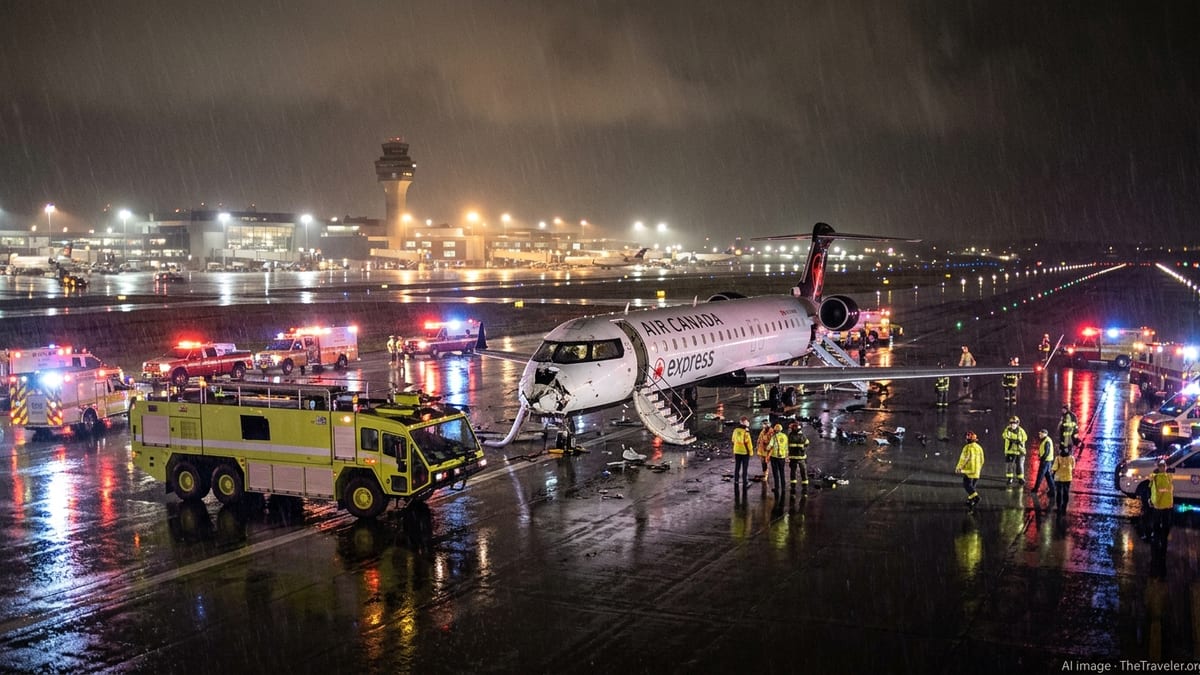
What travelers said happened at Tweed New Haven Airport
Multiple passenger accounts posted publicly described delayed departures and shifting boarding timelines at Tweed New Haven Airport (HVN), with some travelers attributing the disruption to a runway issue. Publicly available postings did not uniformly describe the same exact technical problem, but they converged on the idea that airfield conditions were affecting flight movement.
Because Tweed is a compact airport with limited gates and ramp space, even brief constraints on the airfield can stack up quickly. When arrivals or departures fall behind schedule, later flights often inherit the delay, especially when aircraft rotations depend on a single incoming plane to operate the next segment.
Separately from runway-specific reports, published coverage in recent months has shown that passengers at Tweed have faced a range of stoppages and slowdowns, including congestion-related problems and weather-linked disruptions that forced the terminal to manage crowds in unusual ways.
Why runway and airfield disruptions can hit Tweed harder than larger airports
Tweed’s commercial operation has expanded rapidly in recent years, but the airport’s physical footprint remains constrained compared with major regional hubs. Publicly available airport materials and local coverage have described limited gate availability and space for aircraft parking, which can make it difficult to absorb irregular operations.
One example documented in Connecticut business coverage involved passengers remaining on an aircraft after landing because the airline’s contracted gate was occupied and other gates were in use. The reporting described how overlapping arrivals and equipment availability contributed to the delay, illustrating how quickly bottlenecks can form when schedules are compressed.
When passengers describe a “runway issue,” the underlying cause can range from weather-related runway conditions to temporary airfield equipment or operational restrictions. In a small facility, those restrictions can reduce the number of aircraft that can safely sequence in and out, and the effects can spread to later flights with little buffer time.
Recent disruptions around the airport have included weather and terminal crowding
Recent regional weather has also interfered with operations. In mid-September 2026, heavy rain and flash flooding across coastal Connecticut led to a temporary closure of Tweed’s departures terminal, with guidance posted publicly advising departing travelers not to come to the airport until further notice.
Earlier in 2026, local reporting linked dense fog and Transportation Security Administration staffing shortages to significant service disruptions at Tweed, including a situation in which hundreds of passengers were moved into holding areas outside the terminal when the building reached capacity.
In January 2026, local television coverage reported that Tweed temporarily closed due to a winter storm, with runway clearing cited as part of the airport’s operational response and flights rescheduled beyond the immediate closure window.
What flight options exist at Tweed and how delays can ripple through schedules
Tweed New Haven’s commercial schedule is largely built around low-cost and leisure-focused service, with Avelo Airlines as a major operator and Breeze Airways also serving the airport. With fewer daily flights than a large hub, cancellations and multi-hour delays can be more disruptive for travelers who have limited same-day rebooking alternatives.
When an aircraft operating one route is delayed arriving into Tweed, the next outbound trip that uses the same plane may be delayed as well. This kind of “downline” impact is common in airline operations, but it can feel more acute at a smaller airport because there are fewer spare aircraft, fewer gates, and fewer alternative departures.
For passengers trying to decide whether to wait out a delay or change plans, airline disruption policies vary based on the cause. Avelo’s publicly posted disruption guidance, for example, outlines options for affected travelers while also distinguishing between issues within and outside the airline’s control, such as weather or air traffic restrictions.
Expansion plans aim to address constraints, but timelines extend years ahead
Tweed has been pursuing a broader modernization and expansion effort intended to increase capacity and improve passenger flow. Publicly available airport statements in 2026 described continued progress through federal and state channels related to a long-planned project, including a longer runway and a new terminal.
Local coverage in June 2026 described a public meeting where proposed upgrades included a new terminal, additional parking, and a bigger runway intended to support larger aircraft, while residents raised concerns about neighborhood traffic and congestion near the airport.
Even with plans moving forward, construction timelines discussed publicly suggest changes will take years to materialize. In the meantime, passenger-reported disruptions such as the latest runway-related delays underscore how quickly operational hiccups can translate into missed connections, extended waits, and difficult rebooking choices at a small but fast-growing airport.