


Montenegro’s Bay of Kotor has become a fixture on Adriatic wish lists, cruise itineraries and Instagram feeds. But when you only have a few days to play with between Dubrovnik, Budva and the Montenegrin mountains, it is fair to ask: is Kotor actually worth visiting, and is a quick day trip enough? This guide uses on-the-ground examples from 2024 and 2025 to help you decide if Kotor fits your style, budget and tolerance for crowds, and whether you should see it in a single day or sleep inside the bay’s famous fjord-like curve.
Get the latest updates straight to your inbox!
Why Kotor Divides Travelers: Postcard Bay vs Real-World Logistics
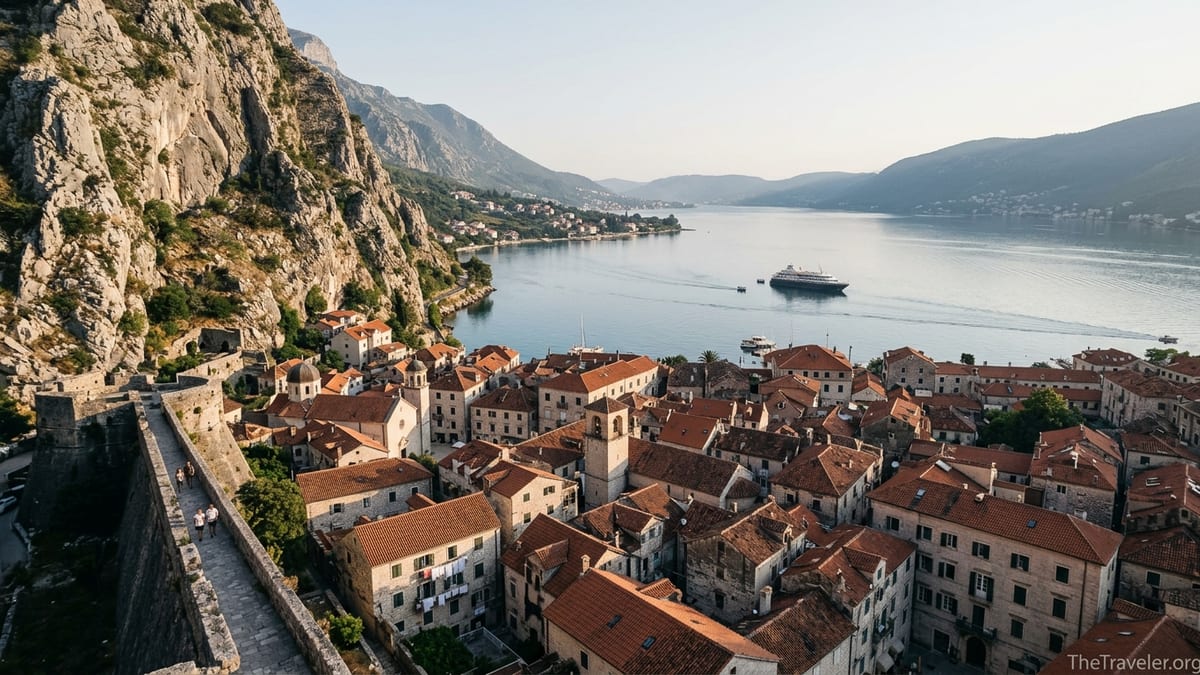
The first thing that strikes most visitors is the setting. Kotor sits at the innermost tip of the Bay of Kotor, a steep-sided inlet that looks like a Norwegian fjord transplanted to the Adriatic. Arriving by road from Dubrovnik, you spend the last half hour hugging stone villages like Morinj and Orahovac before the road finally curves and reveals Kotor’s medieval walls pressed between the water and a sheer limestone cliff. For many travelers, that first view alone justifies the detour.
Yet behind the photos, Kotor is a small town handling very large visitor numbers. In summer, one or two cruise ships often anchor in the bay, unloading thousands of passengers into streets designed centuries ago for horses and hand carts. Accommodation and restaurant prices have risen with that popularity, and August afternoons can feel more like a theme park queue than a medieval maze. If you only skim headlines or social media, it is easy to either over-romanticize Kotor or write it off as hopelessly overtouristed.
The reality sits in the middle. Kotor rewards travelers who time their days carefully, understand what the town can and cannot offer, and use it as a base for the broader bay rather than a box to tick between two bus rides. An early-morning walk through the old town, a late-afternoon swim off a stone jetty in Dobrota, and a sunset drink overlooking the bay can feel like a different destination than a rushed three-hour cruise excursion.
That is why the most important question is not “Is Kotor worth visiting?” so much as “Is Kotor worth visiting for the way I like to travel?” The answer depends on whether you value scenery over beaches, can handle steep stone steps, how sensitive you are to crowds, and whether you are willing to stay at least one night inside the bay.
UNESCO Old Town: Atmospheric Maze or Overhyped Stop?
Kotor’s old town is one of the best preserved medieval centers on the Adriatic and is part of two separate UNESCO World Heritage listings: the Natural and Culturo-Historical Region of Kotor and the Venetian Works of Defence. In practical terms, that means you step through the Sea Gate and find yourself in a tight grid of stone lanes, small squares and churches that largely follow a layout set by the Venetian Republic centuries ago. There are no cars inside the walls, just polished cobbles, laundry lines above, and an occasional cat sunning itself in a doorway.
For many visitors, one of the surprises is how compact the old town feels. You can slow-walk from the Sea Gate to the North Gate in roughly ten minutes, yet still need an hour or two to get your bearings as lanes twist and double back. Landmarks include the Cathedral of Saint Tryphon, with its twin towers and modest interior, the Orthodox Church of Saint Nicholas, and the small square in front of the Maritime Museum, which gives context to Kotor’s centuries as a trading and naval port. A typical first-time visit might combine a 90-minute walking tour, a stop for coffee on the main square, and a museum visit if the heat or rain drives you indoors.
The trade-off is that the historic core is also where cruise excursions concentrate. On days when a large ship anchors, you may see dozens of groups, each following a raised umbrella or paddle, threading the same narrow streets between 9 am and 3 pm. In July and August it can feel like everyone stops at the same gelato counter at once. If you are picturing empty, contemplative alleys, you will need to set your alarm. Visiting between 7 am and 9 am or after 6 pm, especially outside the absolute peak weeks, the same stones feel closer to the romantic image that draws people here in the first place.
If you are mostly interested in architecture and history and you dislike crowds, think of Kotor’s old town as a strong half-day destination. Combined with the fortress steps above it, you have a full day’s worth of activity, but not a week’s. Travelers who want a large range of museums and nightlife might be better served by splitting time with Dubrovnik, Split or Tirana, using Kotor as the quieter, atmospheric contrast.
Bay Views and the Fortress Hike: How Much Effort for the Classic Panorama?
The single most famous image of Kotor is taken from above, looking down on the old town’s terracotta roofs and the curve of the bay behind them. That view comes from the Kotor Fortress, also called St John’s Fortress or San Giovanni, perched about 260 metres above sea level on the cliff behind town. Reaching it means tackling roughly 1,300 to 1,400 stone steps, depending on which source you read, with an official entrance from the old town and a ticket that in recent seasons has been around the high single digits in euros per person.
In practice, the fortress “hike” is better described as a long, steep stair climb than a mountain trail. Most reasonably fit visitors reach the top in 45 to 75 minutes, stopping at the small church of Our Lady of Remedy partway up for photos. The steps are uneven in places and can be slippery in the rain. In July and August, the stone bakes; by late morning the wall can feel like an oven, and people without hats and water frequently turn back halfway. If you have knee issues, a fear of heights on open stairways, or are visiting with a stroller, this is likely not the highlight for you.
The reward on a clear day, however, is substantial. From the ramparts you see the whole bay’s inner basin, including Dobrota stretching along the water, the cruise pier, and often a ship anchored in the deeper section of the bay. Many travelers rank it among the most memorable viewpoints in Europe, comparing it to classic Mediterranean panoramas in Cinque Terre or Amalfi. Practical timing matters: locals frequently recommend starting before 7:30 am in summer to avoid both heat and excursion crowds, or going up about 90 minutes before sunset for softer light and fewer people.
Since 2024, a cable car has linked Kotor’s outskirts with a viewpoint on the edge of Lovćen National Park in around 11 minutes. A round-trip ticket costs in the mid-twenties in euros, significantly more than the fortress steps, but it delivers fast access to higher viewpoints and cooler air. The cable car does not replace the fortress hike, because it starts outside the old town and ends on a different ridge, but for travelers who cannot or do not wish to climb 1,300 steps, combining a gentle stroll through the old town with the cable car gives another way to experience the bay from above.
Cruise Crowds, Summer Heat and Timing Your Visit
The biggest complaint you will hear about Kotor is not about the scenery or even the prices. It is about crowds compressed into a very small space for a few hours each day. Between roughly May and October, cruise calls are frequent. Schedules for 2026, for example, show a busy pattern in August and September with multiple days where two or even three ships visit the bay. When a large vessel tenders passengers rather than docking directly, the effective time in town gets even more squeezed, making the mid-morning and early afternoon particularly intense around the Sea Gate and main squares.
The good news is that these crowds are predictable. You can easily find up-to-date cruise schedules for Kotor and plan around them, or simply adjust your rhythm once you arrive. A common strategy used by local guides is simple: old town before 8:30 am or after 5:30 pm, bay villages and boat trips in the middle of the day. On a typical July day you might step through the Sea Gate at 7:15 am, enjoy mostly empty alleys and a quiet coffee in the shadow of Saint Tryphon, then leave just as the first excursion groups arrive, spending late morning on a boat to Perast or at a quiet swimming spot in Dobrota.
Summer heat adds another layer. Kotor’s position at the end of a sheltered bay means air can feel more stagnant than on open-coast resorts like Budva or Ulcinj. Afternoon temperatures in July and August regularly sit in the low to mid-30s Celsius, and the stone surfaces amplify the effect. In practical terms, that means siesta hours are real. Visitors who try to force nonstop sightseeing from noon to 4 pm in August will remember Kotor as a furnace. Those who plan an early fortress climb, late-morning swim, and a shaded lunch or nap during peak heat often come away with a far more positive impression.
If you are sensitive to heat or crowds, consider visiting in May, early June or late September instead of high summer. In those shoulder months, cruise traffic is still significant, but both air temperatures and overall visitor numbers are usually more forgiving. Prices for accommodation also tend to be lower than in August, helping budget-conscious travelers.
Prices, Eating and Sleeping: What Does Kotor Really Cost?
Compared with Western Europe or neighbouring Croatia, Kotor is still relatively affordable, though it is noticeably more expensive than much of inland Montenegro. As a broad guide, recent cost-of-living data shows a basic meal at an inexpensive restaurant in Kotor averaging around 10 euros, with simple dishes like grilled fish or pasta on waterfront promenades running closer to 12 to 18 euros and higher-end options more. A cappuccino in a central old town cafe might sit around 2 to 3 euros, while a 0.5 litre draft beer often lands in the 3 to 4 euro range.
Accommodation varies by location and season. In July and August, expect simple guesthouse rooms within or just outside the walls to start in the range of 70 to 100 euros per night for two people, with mid-range boutique hotels pushing upwards from there. Look a few kilometres north along the bay in Dobrota or Prčanj and you can often find waterfront apartments with kitchenettes and swimming platforms starting around 80 to 120 euros per night in high season, and significantly less in May or October. Budget travelers sometimes base themselves in Podgorica or inland towns and visit Kotor on a day trip to save on lodging, but that comes at the cost of early-morning bay light and late-evening ambience.
For food, you will find everything from tourist-oriented menus heavy on pizza and pasta to family-run konobas serving grilled local fish, octopus salad and Montenegrin wines. Prices in the old town squares skew higher for the same dishes than on the bay road in Dobrota, where you can still find casual places with mains close to 10 or 12 euros. A realistic budget for a mid-range traveler might be 40 to 60 euros per person per day for meals, coffee and a drink or two, assuming you mix simple breakfasts, a light lunch and a full dinner.
Transport also factors into your decision. Buses from Dubrovnik to Kotor typically cost in the 20 to 30 euro range one way depending on season and operator, and the ride can take three hours or more with a border crossing. Shared boat trips to Perast or the Blue Cave marketed on the waterfront commonly start around 25 to 40 euros per person for a few hours, with private boat hire significantly more. When you add up accommodation, meals and excursions, Kotor is not a rock-bottom budget destination, but for many visitors it still feels like reasonable value compared with more famous Mediterranean resorts.
Beaches, Swimming and Day-Trip Limits: What Kotor Can and Cannot Offer
One of the most common misconceptions is that Kotor itself is a classic beach destination. The old town sits at the very end of the bay, and while there are small patches of pebbles and concrete swimming platforms near town, you will not find long sand beaches in Kotor proper. The water is calm and usually clear, but you swim beside stone quays and moored boats, not in a big open Adriatic horizon. Anyone picturing something like the long sands of Ulcinj or the curves around Budva may be disappointed if they only stay inside the bay’s innermost corner.
The good news is that better swimming options are nearby. North along the shore, Dobrota offers a long string of private and public swimming spots where steps lead directly into the bay from stone terraces. Farther out, villages like Orahovac and Morinj have more open-feeling water and, in Orahovac’s case, a small pebbly beach popular with locals. On the outer coast, reachable by car or organised trip in under an hour or so, you find classic Montenegrin beaches such as Jaz and Mogren near Budva, with deeper, more refreshing water and beach clubs renting loungers and umbrellas.
Day trips from Kotor are plentiful, but each comes with time and heat considerations. A typical first-timer’s plan might include a half-day boat tour to Perast and the islet of Our Lady of the Rocks, a full or half-day loop drive or bus ride around the bay to Tivat and back via the Kamenari ferry, and a mountain day to Lovćen National Park or the old royal capital Cetinje. Ambitious travelers sometimes squeeze a Blue Cave tour, a fortress hike and a Perast visit into a single cruise stop, only to find themselves rushing from dock to dock.
This is where Kotor’s limits become clear. If you have only one day, you will need to choose. A realistic cruise-day plan might be a walking tour plus a fortress climb, or a walking tour plus Perast by boat, but probably not both at a relaxed pace. Overland travelers with a car can comfortably link Kotor with Budva’s beaches in a single day, but traffic and parking in high season cut into beach time. Using Kotor as a base for three or four nights allows you to distribute these experiences sensibly instead of treating them as a checklist.
Should You Stay Overnight or Just Visit for a Day?
For many travelers, the decision that matters most is not whether to see Kotor at all but whether to sleep there. Cruise passengers and day-trippers from Dubrovnik commonly experience the town between about 10 am and 3 pm, precisely when it is hottest and busiest. Overnight visitors, by contrast, get the early-morning calm and the evening glow when the cruise ships have sailed and the old town’s stones finally breathe again.
If you are on a tight schedule and already have several coastal stops planned, Kotor can be a worthwhile day trip. A typical Dubrovnik-based traveler might catch an early bus or tour, arrive mid-morning, take a guided walk, enjoy lunch just outside the walls where it is a little quieter, and then return in the late afternoon. You will see the setting, understand the basic layout of the old town, and capture the classic bay photos. For some, especially those who prioritize bigger cities or long beach days, that is enough.
However, if you are the kind of traveler who values atmosphere over checklists, staying overnight transforms Kotor. Imagine checking into a simple stone-walled room in the old town, then slipping out after dinner when tour groups have gone and the lanes echo with only the sound of cutlery and conversation from a few outdoor tables. Or renting a small apartment in Dobrota where you can swim off the jetty at 7 am while the bay is glassy and silent, then walk or taxi into the old town for coffee. Those moments are what many repeat visitors remember most, and they are simply not available to day-trippers.
A good rule of thumb: choose at least one night, preferably two or three, if Kotor will be your main base in the Bay of Kotor or if you plan to do the fortress hike and at least one major day trip such as Perast or Lovćen. Treat it as a day trip only if your itinerary is already dense with coastal towns and you are comfortable seeing the bay at its busiest. Families with young children, people sensitive to heat, and travelers who enjoy slow mornings all tend to appreciate the overnight option.
Who Will Love Kotor and Who Might Prefer Somewhere Else?
Kotor works best for travelers who appreciate scenery, history and a slower rhythm more than nightlife or wide beaches. Photographers, hikers and road-trippers often rate it highly. You can spend sunrise on the fortress walls, late morning driving or boating along the bay to villages like Perast and Risan, afternoon reading under a fig tree beside the water, and evening tasting local wine in a stone alley. Solo travelers commonly report feeling safe in the old town at night, and couples often choose Kotor as a quieter base than Budva while still reaching the coast easily.
On the other hand, if your ideal holiday centers on long sandy beaches, resort pools and a big choice of late-night bars, you may be happier basing yourself in Budva, Ulcinj or even across the border in Croatia, visiting Kotor as an excursion. Families looking for shallow, sandy stretches where children can play for hours might find the bay’s stone jetties less practical, although some families do enjoy the calm water and limited waves. Travelers seeking cutting-edge food scenes or major art museums will likely find more to engage them in larger regional cities.
Budget backpackers may need to think carefully too. While Kotor still has hostels and modest guesthouses, high summer pricing has crept upward. Shared dorm beds can cost as much as private rooms in inland towns, and cheap late-night eats are not as abundant as in some bigger cities. That said, outside July and August, Kotor can be an excellent shoulder-season base, with gentler prices, lighter crowds and weather still warm enough for outdoor dining and even swimming.
Finally, anyone with mobility challenges should consider the old town’s physical realities. The streets are mostly flat but paved in shiny, sometimes uneven stone. There are steps into many buildings, and the fortress climb is not suitable for everyone. If you or your companions use a stroller or mobility aid, you may still enjoy a few hours in the flatter parts of the old town and the promenade outside the walls, but basing yourself in a modern apartment in Dobrota with easier access and then visiting Kotor for short stretches might be the more comfortable choice.
FAQ
Q1. Is Kotor worth visiting if I am already going to Dubrovnik?
Kotor is still worth visiting even if you are based in Dubrovnik, especially if you are drawn to dramatic mountain-and-bay scenery. The old town is smaller and quieter than Dubrovnik’s walled core, and the bay setting feels more enclosed and fjord-like. If you are short on time, a long day trip can give you a good taste, but staying one night lets you enjoy Kotor after day-trippers have left.
Q2. How many days should I spend in Kotor?
For most travelers, two to three nights is an ideal stay. That allows one full day for the old town and fortress hike, another for a boat trip to Perast or a bay road drive, and possibly a third for a mountain day to Lovćen or a beach run to Budva. If you only have one day in total, you can still see the old town and bay views, but you will need to limit side trips.
Q3. Is Kotor too crowded in summer?
July and August can feel very crowded around mid-day, especially when large cruise ships are in port. However, mornings before about 8:30 am and evenings after 6 pm are noticeably calmer, and nearby villages along the bay like Dobrota or Orahovac remain more relaxed even on busy days. If you dislike crowds, consider visiting in May, June or late September instead of peak summer.
Q4. Is the Kotor Fortress hike suitable for beginners?
The hike is essentially a long stair climb: around 1,300 to 1,400 uneven stone steps gaining about 260 metres. Many beginners complete it in under 90 minutes with breaks, but it can be demanding in summer heat. Good shoes, water, a hat and an early start make a big difference. People with serious knee or mobility issues may find it uncomfortable and might prefer the cable car up to the Lovćen viewpoints instead.
Q5. Are there good beaches in Kotor?
The old town itself does not have classic sandy beaches. You will find small pebbly spots and stone swimming platforms along the bay, especially in Dobrota and nearby villages. For larger, more open beaches, most visitors day-trip to the Budva area, where places like Jaz and Mogren offer fuller beach facilities and open-sea swimming.
Q6. Is Kotor expensive compared with the rest of Montenegro?
Kotor is generally more expensive than inland towns but still cheaper than many Western European coastal cities. A simple restaurant meal might cost around 10 to 15 euros, with more for seafood on the waterfront. Accommodation inside or next to the old town commands a premium, particularly in July and August, while staying a little further along the bay in Dobrota or Prčanj often brings better value.
Q7. Should I stay in Kotor Old Town or in a nearby village?
Staying in the old town gives you immediate access to the historic atmosphere, cafes and night-time ambience, but also more noise and higher prices. Villages like Dobrota or Prčanj offer quieter waterfront apartments, easier swimming access and often lower costs, with a short walk, taxi or bus ride into the old town. Many repeat visitors prefer sleeping in a bay village and treating the old town as their evening and sightseeing destination.
Q8. Is Kotor safe for solo travelers and at night?
Reports from recent visitors consistently describe Kotor as feeling safe for solo travelers, including solo women, especially in and around the old town and main bay promenade. Normal city precautions still apply: keep an eye on your belongings in crowded alleys, avoid very dark or isolated areas late at night, and use registered taxis for late returns from other towns.
Q9. Can I see Kotor properly on a cruise stop or day trip?
You can get a solid first impression of Kotor on a cruise stop or day trip if you focus your time. A realistic plan for a short visit is either a walking tour plus some free time in the old town, or a shorter walk combined with a boat trip to Perast. Trying to fit the fortress hike, Perast, a Blue Cave tour and a full old town visit into a few hours usually leads to a rushed experience.
Q10. Who should consider skipping Kotor or keeping it brief?
Travelers whose top priorities are wide sandy beaches, big-city nightlife or extensive museum-hopping might choose to keep Kotor as a short stop rather than a long stay. Those very sensitive to heat and crowds in July and August may also prefer to visit only in the shoulder seasons or to base themselves in quieter coastal towns, visiting Kotor for a single carefully timed day.