

More news on this day
Rail passengers across parts of England are facing major disruption after two trains collided near Bedford, prompting emergency responses, service suspensions and widespread warnings not to travel unless absolutely necessary.
Get the latest news straight to your inbox!
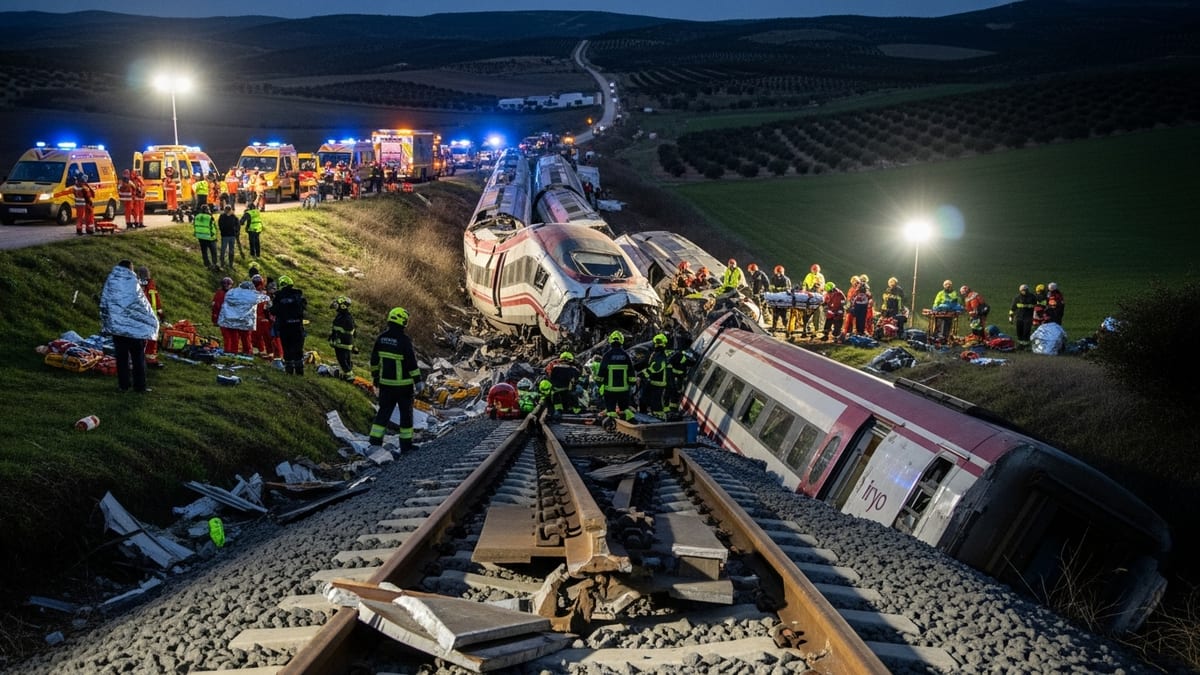
Collision Near Bedford Brings Services to a Standstill
Published coverage indicates that two trains were involved in a collision on the Midland Main Line in the Bedford area, north of London, on Thursday. Images shared by broadcasters and on social media show the crumpled front of at least one East Midlands Railway service, with rail crash investigators and emergency crews at the scene.
Initial reports suggest one train had been brought to a stop on the line before being struck by another service. The incident occurred on a busy stretch of railway used by East Midlands Railway and Thameslink services linking London St Pancras with key destinations including Leicester, Nottingham, Sheffield and Corby.
Publicly available information points to significant damage to rolling stock and infrastructure in the immediate area of the collision. However, the trains involved do not appear to have been travelling at full line speed, which rail commentators note may have reduced the severity of the impact compared with higher-speed crashes seen elsewhere.
Reports circulating on national news channels and rail-focused forums describe an extensive emergency response, including multiple air ambulances. Some passengers and staff are reported to have sustained serious injuries, though full details of casualties had not been confirmed in early updates.
Passengers Urged Not to Travel on Key Routes
Travel alerts from train operators indicate that passengers are being urged not to attempt journeys on routes running through Bedford in the immediate aftermath of the collision. East Midlands Railway has highlighted severe disruption on its London St Pancras to Nottingham and Sheffield services, as well as on the London to Corby route.
According to service updates summarised by UK news outlets, trains into and out of London St Pancras on the affected lines have been suspended while emergency teams work at the scene and infrastructure checks are carried out. Some services are being started and terminated short of the affected section, while others are cancelled outright.
Passengers with tickets for the disrupted routes are being advised via operator communication channels to postpone travel, seek alternative routes where available, or defer journeys to another day. Those already en route are being directed to use other train operators and connections where ticket acceptance arrangements can be put in place.
Travel information shared by rail operators suggests that disruption is expected to continue for many hours and is likely to extend into the following day, given the need to remove damaged trains, inspect signalling systems and repair any track damage before normal operations can resume.
Impact on Commuters and Long-Distance Travelers
The collision has occurred on one of the main rail arteries linking the East Midlands with central London, affecting both daily commuters and long-distance leisure and business travellers. Morning and evening peak services on this corridor normally carry large numbers of passengers heading into and out of the capital.
On the day of the incident, many travellers found themselves stranded on platforms or held on trains that were unable to proceed. Social media posts from passengers describe long waits, diversions and uncertainty over arrival times as services were rapidly curtailed or rerouted.
Disruption at London St Pancras has had a knock-on effect across the wider network, with train diagrams, crew rosters and rolling stock allocations all needing rapid adjustment. Industry commentators note that the highly interlinked nature of the timetable means that the loss of a key corridor such as the Bedford section can quickly cascade into delays and cancellations far beyond the immediate area.
For travellers planning to use the route for onward international connections or time-sensitive appointments, the advice from publicly available travel updates is to check journey planners frequently, consider alternative departure points, or postpone non-essential trips until operators issue clearer forecasts on service restoration.
Early Focus on Rail Safety Systems and Investigation
Rail industry reports indicate that an initial focus of the investigation will be on the signalling and train protection systems in the area, as well as the operational circumstances that led to one train colliding with another. Early coverage has noted references to the Automatic Warning System, which alerts drivers to signals and can automatically apply brakes if certain warnings are ignored or not acknowledged.
Specialist investigators from the national rail accident investigation body are reported to be on site, gathering data from train event recorders, signalling logs and driver statements. Their task will be to determine whether the collision was due to human error, technical failure, infrastructure issues, or a combination of factors.
While the United Kingdom’s rail network is generally regarded as one of the safer passenger rail systems in Europe, previous incidents have led to significant overhauls of procedures and technology. Observers note that any recommendations arising from the Bedford collision are likely to feed into ongoing work to further strengthen protection against rear-end collisions on busy, mixed-traffic corridors.
Infrastructure managers and operators are also expected to review the resilience of their emergency response and communication processes, in particular the speed and clarity with which passengers on trains and at stations receive information during fast-moving incidents.
Advice for Affected Travelers in the Coming Days
Travel organisations and rail information services are advising passengers who must travel through the Bedford corridor to build in significant extra time and to remain flexible about routes. Depending on the progress of recovery work, some services may be restored in stages, potentially starting with limited shuttle operations around the damaged section before full through services resume.
Passengers holding advance tickets for cancelled services are generally being encouraged, via operator guidance, to use their tickets on later trains once lines reopen, or to seek refunds or fee-free changes. Season ticket holders and regular commuters are being asked to monitor operator announcements for any compensation arrangements relating to prolonged disruption.
For travellers unfamiliar with the area, alternative routes may involve using other London termini, such as King’s Cross, and connecting via different regional lines, although capacity on those alternatives is likely to be constrained. Journey planners and station departure boards are expected to be updated frequently as the situation evolves.
With rail crash investigators still in the early stages of their work and recovery operations ongoing, there is currently no firm indication of when a full timetable will be reinstated. Passengers planning to travel in the coming days are being advised, in publicly available information, to assume continuing disruption and to confirm the status of their specific services on the day of travel.