


More news on this day
Philippine Airlines has temporarily suspended its flights to Doha and Dubai as heightened security risks and volatile airspace conditions across parts of the Middle East reshape travel plans for thousands of passengers this summer.
Get the latest news straight to your inbox!
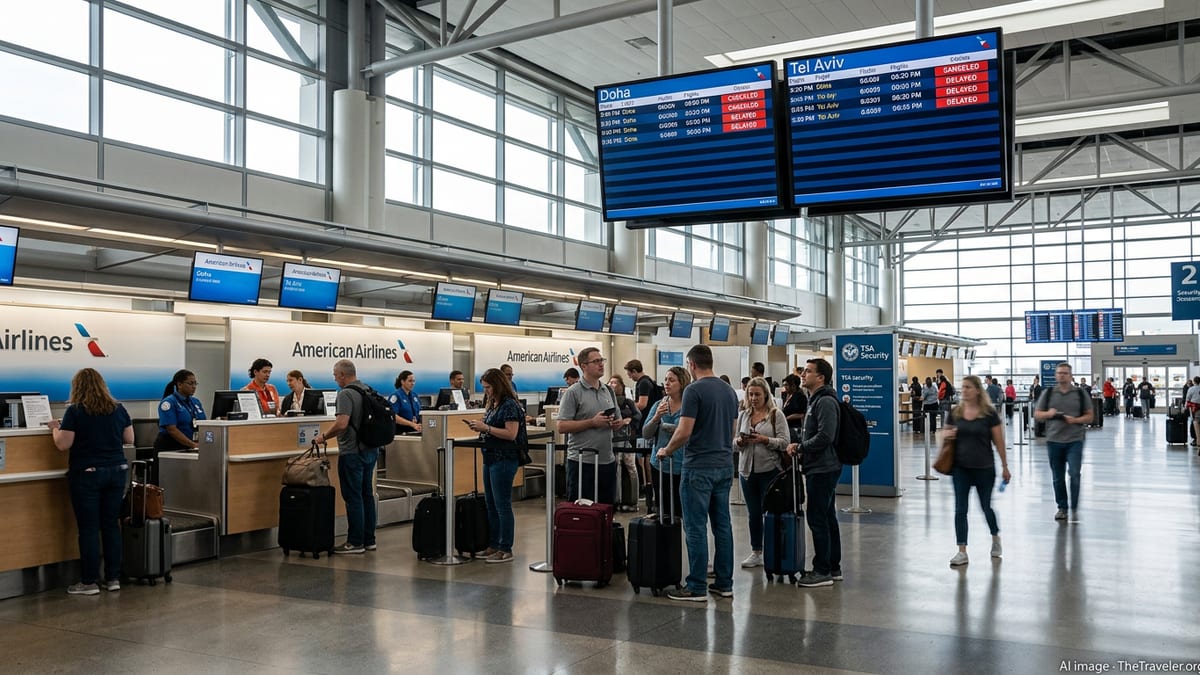
A Flag Carrier Takes a Cautious Route
Publicly available information from Philippine Airlines and industry reports show that the flag carrier halted its Manila services to Doha and Dubai in late March, as conflict-related restrictions tightened access to key air corridors over Iran, Iraq and parts of the Gulf. The move followed a wave of cancellations and rerouting decisions by major airlines worldwide after fresh military activity triggered new safety notices for overflying the region.
Recent disclosures and advisories indicate that Philippine Airlines has since extended the suspension several times, reflecting an ongoing assessment that operating direct Manila to Doha and Manila to Dubai flights would require complex detours or fuel stops that undermine both safety margins and schedule reliability. In a regulatory filing dated early May, the airline described a network-wide review in response to global aviation disruptions affecting Qatar, Saudi Arabia and the United Arab Emirates, among other markets.
Travel industry trackers now show Philippine Airlines services between Manila and Doha cancelled through at least June 30, with some Doha to Manila sectors at the start of July also withdrawn from schedules. Manila to Dubai flights are listed as suspended into August, with no firm restart date published. The carrier has framed the measure as precautionary and aligned with similar steps taken by other Asian and European airlines exposed to the same risk corridors.
The decision underlines a conservative operational stance from a carrier whose long-haul fleet does not always have the flexibility to absorb multi-hour diversions around closed or restricted airspace. In practical terms, Philippine Airlines has opted to pause some of its most lucrative Gulf routes rather than operate with thinner fuel reserves, additional technical stops or irregular timings that could compound risk and erode passenger confidence.
Why Doha and Dubai Are So Exposed
The focus on Doha and Dubai reflects the central role these hubs play in East–West air traffic and their proximity to conflict-affected skies. Aviation analysis published in recent weeks points to extended closures or severe limitations on portions of Iranian and Iraqi airspace, along with episodic restrictions around the Gulf, which directly affect routes linking Southeast Asia with the Middle East and Europe.
Before the latest crisis, many Manila to Doha and Manila to Dubai flights relied on relatively direct tracks across or near these regions. With those corridors now subject to tighter controls and new risk assessments, airlines are forced to consider southern detours via Saudi Arabia, Egypt or the Arabian Sea. Long-haul aircraft with larger fuel margins can sometimes absorb these changes, but carriers operating at the edge of range on dense, point-to-point routes face a tougher trade-off between payload, fuel and schedule integrity.
Specialist airspace monitoring platforms note that other airlines have shifted to longer routings that add 30 to 60 minutes of flying time into Dubai and Doha, while some have suspended services entirely until regulators signal a more stable security picture. The broader environment is marked by fast-changing notices to airmen, intermittent missile-defense activity and concerns about stray projectiles, all of which push safety professionals to err on the side of caution.
For Philippine Airlines, the calculus is sharpened by the importance of Gulf routes to its network and the financial pressures from elevated fuel prices at home. Corporate and government disclosures on the 2026 Philippine energy emergency describe how rising fuel costs and constrained supply have already forced local airlines to streamline their schedules. Adding uncertain, fuel-intensive detours through sensitive airspace on top of that equation has made a pause on Doha and Dubai flights more likely than a risky continuation.
Stranded Workers, Rerouted Tourists and Higher Fares
The suspension of Philippine Airlines services to Doha and Dubai comes at a sensitive moment for overseas Filipino workers and leisure travelers who rely on the Gulf as a gateway to jobs and destinations further afield. Philippine media reports estimate that tens of thousands of workers have already been affected by wider deployment bans and airline reductions across the Middle East, with knock-on effects for families waiting on remittances and reunions.
Doha and Dubai in particular are key transit points for Filipinos traveling to Europe, Africa and the Americas via partner airlines. With nonstop links from Manila now off the table, many passengers are being rerouted through alternative hubs such as Istanbul, Singapore, Hong Kong, Taipei or Tokyo. This often means longer total journey times, more connections and, in some cases, higher fares as demand concentrates on a smaller number of long-haul options.
According to recent travel-industry coverage, seat capacity into and out of the Gulf has fallen sharply since late February, even as demand for summer travel continues to build. Some Gulf-based carriers have resumed limited operations using contingency routes, but the overall system remains fragile, with last-minute cancellations and rolling timetable adjustments common. For workers tied to fixed deployment or contract start dates, this unpredictability can translate into missed opportunities and extended periods without income.
Domestic pressures in the Philippines compound the challenge. Regulators have kept fuel surcharges near the upper end of allowed levels through the second half of May, citing high jet fuel costs on international markets. That, in turn, raises ticket prices on remaining routes and reduces the room airlines have to offer generous rebooking or promotional fares for displaced Middle East passengers.
What Affected Passengers Can Expect
Passenger rights organizations tracking the situation note that Philippine Airlines is generally offering a mix of refunds, rebookings and travel credits to those booked on suspended Doha and Dubai flights. While exact options can vary by ticket type and point of purchase, publicly posted guidance and third-party summaries indicate that affected travelers may typically request a full refund, move their travel to a later date or reroute through an alternative destination served by the airline or its partners.
Consumer advocates stress the importance of checking the most recent advisory for each specific flight number, as timetable systems may show a mix of outright cancellations and “equipment changes” or schedule shifts that effectively amount to the same thing. Passengers holding separate tickets for onward legs from Doha or Dubai are being encouraged, in public advisories, to contact their other airlines promptly, since connection protections are not automatic when itineraries are split across multiple bookings.
Given the fluid security environment, travelers are also being urged by industry groups and government agencies to monitor official travel advisories for the Middle East, as these documents often foreshadow changes in airline operations. Shifts in threat levels or airspace restrictions may prompt carriers to extend suspensions, shorten them or modify routings with relatively little warning, particularly when new military activity occurs.
Experts in aviation risk management highlight that Philippine Airlines’ stance reflects a broader pattern among carriers that lack deep fleets or multiple daily frequencies into the Gulf. For such airlines, suspending a small number of high-risk routes and consolidating capacity elsewhere can be more sustainable than maintaining skeleton services that risk repeated cancellations and stranded customers.
How Long Could the Suspension Last?
The key question for many travelers and overseas workers is how long Philippine Airlines’ Doha and Dubai suspensions will remain in place. As of mid-May 2026, published schedule data and travel advisory roundups suggest that Manila to Doha flights are off the board through June 30, while Manila to Dubai services are paused until at least early August.
However, those dates should be treated as provisional, shaped by both the security trajectory in the Middle East and the airline’s evolving commercial priorities amid the Philippine energy crisis. Analysts writing in regional aviation outlets emphasize that most carriers now review their Middle East schedules on a rolling basis, typically in two- to four-week blocks, to align with new airspace guidance and military developments.
Comparative experience from other airlines suggests that a full restoration of services may lag behind initial improvements in the security picture. Carriers such as Malaysia Airlines, Cathay Pacific and several European groups have already pushed their own Gulf or Levant suspensions forward multiple times this year, wary of declaring a definitive restart only to reverse course after new incidents.
For Philippine Airlines, the path back to normal operations in Doha and Dubai will likely require not only more predictable conditions in surrounding airspace but also assurance that fuel supplies and costs at home can support long-haul flying without further strain. Until then, the carrier appears set to prioritize a cautious approach, even as the ripple effects of its decision continue to be felt by Filipino travelers across the Middle East corridor.