


More news on this day
Jet fuel prices have surged to levels not seen since the late 2000s, colliding with signs of physical shortages and pushing airlines worldwide into a new era of higher costs, tighter capacity and structural change that is reshaping how, where and how often the world flies.
Get the latest news straight to your inbox!
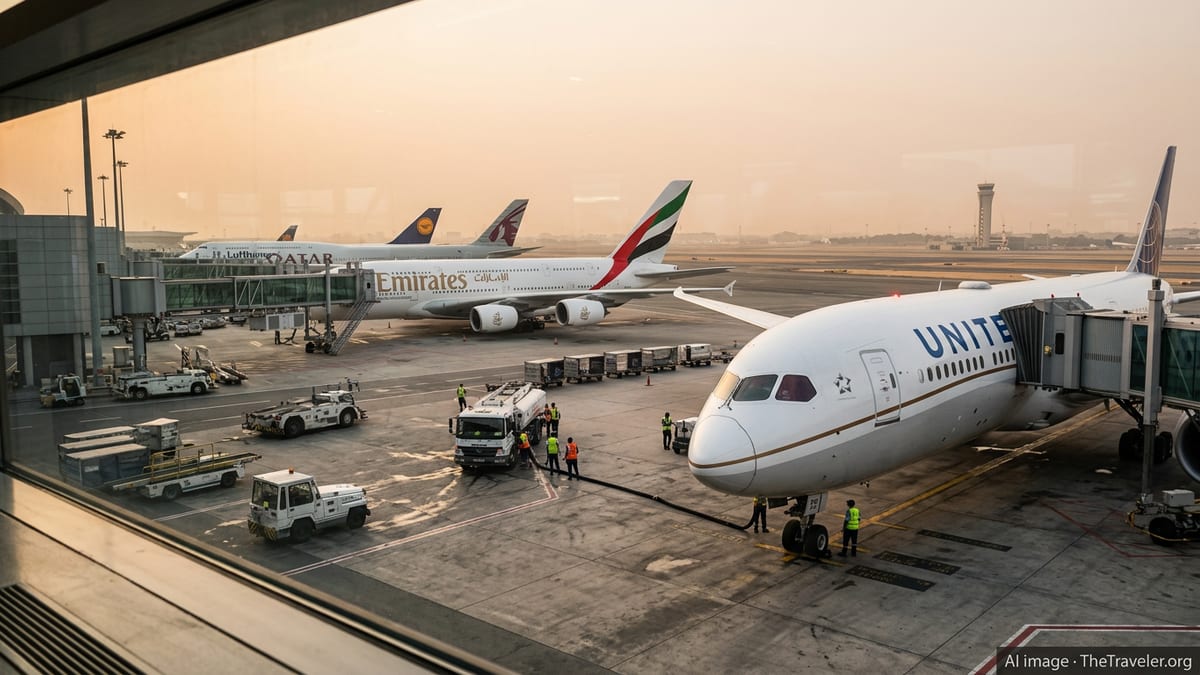
A perfect storm pushes fuel back to center stage
After several relatively calm years for energy markets, jet fuel has re-emerged in 2026 as the dominant risk factor in global aviation. Industry analyses indicate that spot jet fuel benchmarks have roughly doubled since early spring, with some assessments putting prices in the range of 150 to 200 dollars per barrel, near peaks last seen before the global financial crisis. The shock is tied to disruption in crude and refined product flows linked to conflict in the Middle East and bottlenecks in key shipping corridors.
Publicly available data from international aviation bodies show fuel once again edging toward the upper end of its historic share of airline operating costs, rising from roughly a quarter of expenses in more benign periods to closer to half in the most exposed markets. That swing is squeezing an industry that still operates on thin net margins and is simultaneously investing in new aircraft and low emission fuels.
The situation is being described in expert commentary as a twin crisis of price and availability. Analyses focused on Europe and parts of Asia highlight airports and fuel suppliers warning of tight inventories, prompting regulators to temporarily relax fuel specifications to allow alternative grades to be used. This has introduced added operational complexity, including the need to adjust cruising altitudes or segregate fuel types on certain fleets, even as carriers struggle with mounting costs.
Research from industry groups suggests that, even if oil markets stabilize, the additional cost burden from sustainable aviation fuel mandates will keep overall fuel bills elevated through 2026. Sustainable fuels typically trade at several multiples of conventional kerosene, amplifying the impact of the current price spike just as airlines are required to blend more of them into their tanks.
Air New Zealand, Lufthansa and others trim flying and add surcharges
Airlines are responding with a mix of higher fares, new surcharges and capacity cuts, with strategies varying sharply by region and business model. In Europe, reports indicate that Lufthansa has begun selectively removing flights from its schedules over the next six months in a bid to conserve fuel for higher yielding routes, while also communicating that fuel surcharges and higher base fares will be needed to offset the jump in costs.
In the Asia-Pacific region, coverage from regional travel outlets describes Air New Zealand raising ticket prices and rebalancing capacity away from the longest intercontinental sectors toward regional services where demand is robust and aircraft spend less time burning fuel in cruise. Analysts following the carrier expect further optimization through the Southern Hemisphere winter as fuel markets remain volatile and inventories tight at several airports.
North American airlines, including American Airlines, are under particular scrutiny because many large US carriers reduced or abandoned fuel hedging programs during the period of lower prices in 2024 and 2025. Ratings agency assessments and bank research suggest that 2026 fuel cost estimates for American and its peers have been revised sharply higher, in some cases by high double digits for peak travel quarters, leaving them more exposed to daily movements in jet fuel and refining margins.
Industry commentary notes that carriers with more extensive hedging or vertical integration, such as those that own or contract directly with refineries, have been able to cushion part of the blow. European groups like Lufthansa, as well as selected Asian airlines, entered 2026 with hedges that cover a portion of their fuel needs, softening the near term financial impact even if those protections eventually roll off at higher forward prices.
Travelers face higher fares, new fees and less choice
For passengers, the jet fuel crisis is translating quickly into higher prices and fewer options. Consumer price data in major markets show airfares rising faster than overall inflation since late 2025, and recent weeks have brought a wave of announcements of fare increases, added fuel surcharges and new ancillary fees across full service and low cost airlines alike.
Analyses of European and transatlantic flying patterns indicate that carriers are prioritizing routes with strong premium demand and dense leisure flows while trimming secondary city pairs that are more fuel-intensive relative to the revenue they generate. Travelers are already seeing thinner schedules to smaller regional airports, longer connection times and fewer off-peak departure choices, particularly on long haul flights that consume large volumes of fuel.
Low cost carriers, which rely on high volume and tight cost control, appear especially vulnerable. Recent financial disclosures and court filings from ultra low cost operators in North America highlight jet fuel as a key factor tipping already fragile balance sheets into distress. Commentators point out that these business models have limited ability to pass on large fuel increases to highly price-sensitive customers, and lack the cushion of premium cabin revenue or large loyalty programs that help legacy airlines absorb shocks.
Travel industry analysts warn that if today’s fuel price environment persists through the peak northern summer season, the era of ultra cheap fares that characterized much of the 2010s and immediate post pandemic recovery could give way to a structurally higher price floor. That would have far-reaching implications for discretionary travel, particularly for long haul leisure trips and spontaneous short breaks that were supported by abundant low fare capacity.
Fuel hedging, SAF and fleet plans are being rewritten
Behind the scenes, the current crisis is forcing airlines to rethink some of the financial and strategic choices made during the years of relatively stable fuel prices. Studies from aviation consultancies and financial institutions suggest that minimal hedging activity through 2024 left many carriers fully exposed to the latest spike. As a result, unhedged airlines are now exploring a return to more robust fuel risk management, even as they weigh the cost and complexity of hedging in a volatile environment.
At the same time, the surge in conventional jet fuel prices is colliding with the cost of meeting new mandates for sustainable aviation fuel. Industry forecasts indicate that global SAF production will increase in 2025 and 2026 but still represent well under 1 percent of total fuel demand, at a price that is several times higher than fossil alternatives. Airlines are therefore facing a double squeeze, paying more both for traditional kerosene and for the cleaner fuels that regulators are requiring them to adopt.
Fleet planning is also being affected. With fuel again the single largest variable cost, airlines are accelerating retirement of older, less efficient aircraft where possible and re-evaluating which new models to prioritize in their order books. Widebody jets with strong fuel efficiency and high seat density are becoming more attractive on trunk long haul routes, while some carriers are rethinking ultra long range services that consume disproportionate amounts of fuel per passenger.
Industry outlooks published in late 2025 and early 2026 still foresee global airline profits in nominal terms, but with margins constrained by higher energy and financing costs. The current fuel shock is reinforcing that picture, suggesting a sector that may generate record revenues yet remain heavily exposed to commodity cycles and policy-driven changes to its fuel mix.
A long tail for the jet fuel crisis
While any easing in crude prices or regional tensions would help, aviation economists caution that the jet fuel crisis of 2026 is unlikely to be resolved quickly. Analyses referencing previous episodes of geopolitical disruption show that refined product prices and airline fuel bills often remain elevated for months after a ceasefire or supply adjustment, as inventories are rebuilt and refiners recalibrate output.
Industry groups describe the current episode as a wake up call for governments and airlines alike on the need for more resilient aviation energy supply chains. That includes diversifying sources of conventional jet fuel, accelerating investment in low emission fuels, and improving fuel efficiency through technology, operations and air traffic management reforms. For now, however, those are medium term solutions to an immediate and pressing cost shock.
For travelers, the practical consequences will be felt in the coming seasons through higher average fares, more crowded aircraft on popular routes and reduced connectivity to marginal destinations. For airlines such as Air New Zealand, American Airlines and Lufthansa, the challenge is to navigate the crisis without sacrificing the network breadth and service levels that underpin their brands.
The jet fuel crisis of 2026 is therefore emerging as a defining test of how the global airline industry balances its dependence on volatile energy markets with the enduring demand for affordable, reliable air travel. The outcomes will shape not only ticket prices and route maps this year, but also investment decisions and policy debates that will determine how the world flies for decades to come.