


More news on this day
The Philippines is moving to anchor its tourism ambitions on a new five-billion peso cruise hub in Manila, a high-stakes bet that improved port infrastructure and a refreshed waterfront experience can turn the capital into a regional gateway for sea-borne travelers and help the country catch up with Southeast Asia’s post-pandemic tourism boom.
Get the latest news straight to your inbox!
A High-Value Bet on Manila Bay
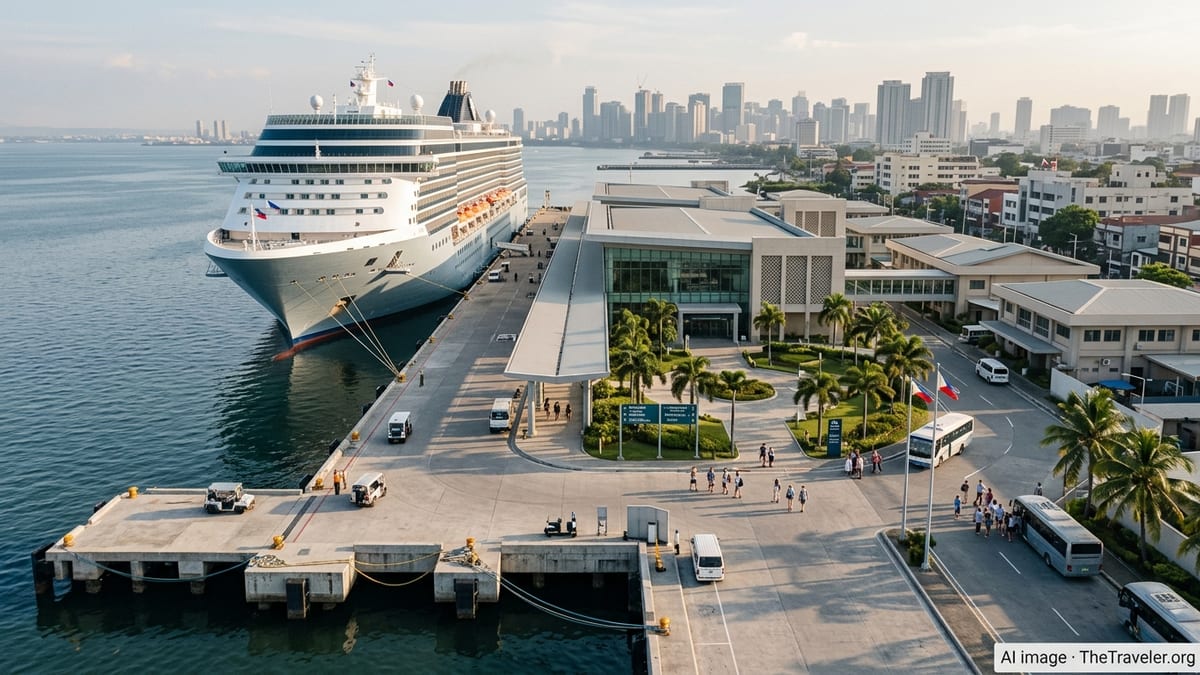
Publicly available planning documents and recent transport and tourism reports indicate that a dedicated cruise complex worth around five billion pesos is being advanced on the Manila Bay shoreline. The project is framed as a modern hub designed to handle large international liners, streamline passenger processing and integrate land and sea transport in one purpose-built facility.
The proposed hub is expected to feature expanded berthing capacity, multi-level passenger halls and enhanced security and baggage systems compared with older terminals that were not originally designed for high-volume cruise calls. Industry coverage suggests that the goal is to receive several cruise ships simultaneously, with flexible berths that can serve both regional and long-haul itineraries calling at Manila.
Planning narratives position the project as a catalyst for broader bayfront renewal, sitting within a corridor that already includes major malls, entertainment complexes and integrated resorts. By concentrating cruise activity in a new, higher-capacity node, planners aim to relieve pressure on existing ports while giving visitors a more polished first impression of the capital.
The investment level places the Manila hub among the more significant cruise developments in Southeast Asia in recent years. Analysts note that while neighboring destinations have invested heavily in cruise-ready terminals, the Philippines has largely relied on retrofitted ferry or cargo facilities, limiting the country’s share of regional cruise itineraries.
Chasing Asia’s Cruise and Travel Upswing
Regional tourism data show that cruise travel in Asia has rebounded strongly alongside the wider post-pandemic travel recovery, with several Southeast Asian nations reporting new records for ship calls and passenger numbers. According to published coverage, the Philippines has regained visitors but continues to trail competitors such as Thailand, Vietnam and Indonesia in overall international arrivals, despite comparable coastal and island attractions.
Tourism briefings describe cruise tourism as a relatively underdeveloped but high-potential segment for the country. Cruise passengers typically spend on shore excursions, dining, retail and cultural experiences during port calls, often within a compressed timeframe that can generate concentrated revenue in gateway cities. A purpose-built Manila terminal is therefore being promoted as a way to increase visitor volume and per-capita spending without relying solely on additional air connectivity.
The hub is also being presented as a means to diversify source markets. Industry commentary notes that cruise itineraries can attract older travelers, families and first-time visitors who might be hesitant to navigate a multi-flight, multi-island itinerary on their own. By positioning Manila as a marquee call on regional routes that link Hong Kong, Singapore, Vietnam and Japan, planners hope to tap into existing cruise demand rather than building it entirely from scratch.
At the same time, observers point out that cruise infrastructure alone will not resolve long-standing gaps in Philippine tourism, from complex domestic connections to perceived cost and service inconsistencies. The Manila hub is being described as a flagship symbol of renewal that still needs to be matched by improvements in ground transport, visitor information and destination management.
Designing for Hope, Joy and Visitor Experience
Promotional materials surrounding the project emphasize themes of “hope” and “joy,” framing the new cruise hub as both an economic stimulus and a morale boost for a sector that endured deep losses during the pandemic. Visuals and early concept descriptions point to open, airy terminal spaces, landscaped promenades and viewing decks intended to connect passengers more directly with Manila Bay’s skyline at arrival and departure.
Experience-driven design is seen as central to the project’s branding. Reports indicate that planners are exploring ways to incorporate local art, music and food into terminal interiors and adjacent public spaces, aiming to create an immediate sense of place for visitors stepping off a ship for only a few hours. There is also discussion of aligning the hub with existing cultural circuits in the city, so that shore excursions can efficiently link the waterfront with historic districts and museums.
Digital integration is another priority highlighted in tourism and transport briefings. Concepts for the Manila cruise hub include app-based wayfinding, cashless payments and real-time information screens that would connect passengers to shuttle buses, taxis, ride-hailing services and possible hop-on, hop-off circuits. The focus on seamless movement reflects feedback from travelers who describe Manila as logistically challenging without clear, coordinated transit options.
Stakeholders in the hospitality and retail sectors are watching the project closely, with several hotel and mall operators around Manila Bay described in business media as preparing to tailor packages and promotions to cruise calls. The expectation is that a predictable calendar of ship arrivals would allow local businesses to schedule staffing, inventory and events to coincide with surges in foot traffic.
Economic Promise and Infrastructure Questions
Economic projections cited in local business coverage suggest that a fully operational Manila cruise hub could support thousands of direct and indirect jobs in port operations, ground transport, retail, food service and tours. Additional tax revenues from visitor spending and port fees are cited by analysts as potential benefits for both city and national budgets.
However, policy commentators also highlight key questions. Environmental groups and urban planners have raised concerns in public forums about cumulative impacts on Manila Bay, including dredging, reclamation and increased ship traffic in already stressed coastal ecosystems. They argue that shore power, stricter emissions standards and robust wastewater controls will be critical to ensuring that growth in cruise calls does not come at the expense of water quality and local fisheries.
Transport specialists also point to congestion as a central challenge. Manila’s road network around the bayfront is already prone to bottlenecks, particularly during rush hour and major events. To avoid cruise passengers spending much of their limited time in traffic, observers recommend prioritized access routes, expanded public transport links and better coordination between port schedules and city mobility plans.
Questions of inclusivity are also being discussed. Some tourism advocates argue that resources devoted to the Manila hub should be balanced with investments in smaller ports and community-based tourism across the archipelago, so that benefits are not concentrated solely in the capital. They note that well-managed regional cruise calls could distribute income more evenly and showcase lesser-known islands beyond established hotspots.
Positioning Manila in a Competitive Region
Across Southeast Asia, cities from Singapore to Penang and Da Nang have used cruise infrastructure to position themselves as gateways to wider national tourism offerings. Commentaries in regional trade publications note that Manila enters this competitive field with both advantages and vulnerabilities: a dramatic natural harbor and cultural depth on one hand, and infrastructure gaps and a crowded urban environment on the other.
The five-billion peso hub is therefore seen as both a statement of intent and a test. If it delivers smoother arrivals, compelling shore experiences and reliable connections to other Philippine destinations, it could help shift perceptions of Manila from a necessary transit point to a highlight in its own right. Success stories elsewhere in the region suggest that such a repositioning can have spillover effects for domestic travel, encouraging repeat visits and longer stays.
Conversely, if operational standards fall short of expectations or if surrounding transport bottlenecks are not addressed, analysts warn that the hub risks becoming an expensive missed opportunity. Cruise lines closely monitor passenger feedback when deciding which ports to include or drop from itineraries, and travelers encountering long queues or confusing logistics may be less inclined to return.
For now, the planned Manila cruise hub has become a focal point for hopes of a more joyful, confident tourism chapter for the Philippines. As design work advances and timelines are refined, the project will be closely watched as an indicator of how far the country is prepared to go in leveraging its maritime geography to compete in an increasingly crowded regional travel market.