


More news on this day
Air travelers moving through Phoenix Sky Harbor International Airport on May 14 faced mounting disruption as publicly available tracking data showed 365 delayed flights and six cancellations, with Southwest, Envoy Air, SkyWest, and Frontier among the carriers most affected and services to Chicago, San Francisco, Austin, and Denver experiencing notable schedule upheaval.
Get the latest news straight to your inbox!
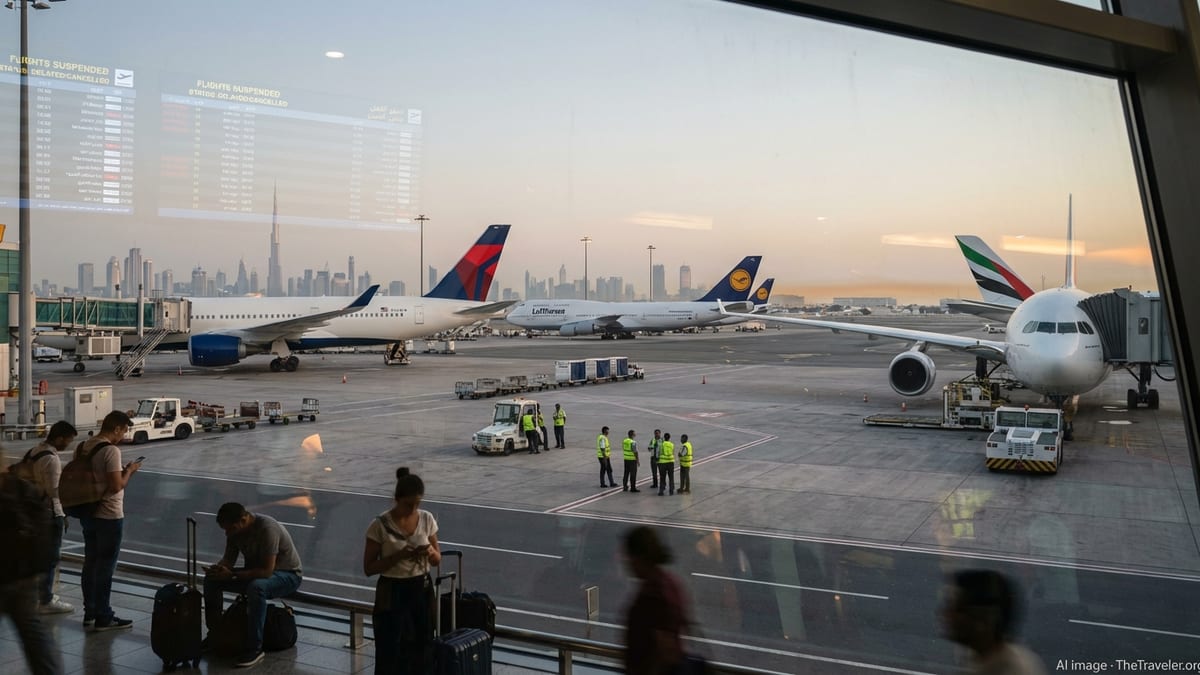
Delays Mount at One of the Nation’s Busiest Hubs
Published coverage and real time aviation tracking platforms indicate that Phoenix Sky Harbor emerged as a significant trouble spot in a wider national wave of air travel disruption on May 14. By mid to late afternoon, the airport had logged 365 delays and six cancellations, affecting both departing and arriving traffic.
Southwest, the largest carrier at Phoenix, appeared prominently in the disruption data, alongside regional operators Envoy Air and SkyWest and ultra low cost carrier Frontier. While operations continued, rolling schedule changes across these airlines created knock on effects for connections and evening departures.
Industry wide statistics for the same day show more than 1,600 delays and dozens of cancellations across the United States by midday, underscoring that Phoenix’s difficulties were part of a broader pattern impacting several major hubs. Phoenix’s role as a key connecting point for the Southwest and Mountain West meant that relatively small schedule shifts quickly cascaded through the network.
Observers note that the total number of disruptions at Phoenix, while significant, still represented a fraction of the airport’s daily operations. However, the concentration of delays around peak connection periods was enough to ripple through itineraries and increase crowding at gates and customer service counters.
Chicago, San Francisco, Austin, and Denver Routes Hit Hard
Route level data shows that flights between Phoenix and Chicago, San Francisco, Austin, and Denver were among the most impacted pairings. These city pairs are important business and leisure corridors, and they link Phoenix with other large domestic hubs that were also experiencing elevated delay counts.
Chicago O’Hare and San Francisco International both recorded triple digit delays on May 14, according to operational summaries, which contributed to late arriving aircraft and tighter turnaround windows for flights operating to and from Phoenix. Services on these routes are operated by a mix of mainline carriers and regional affiliates including Envoy Air and SkyWest, increasing the number of individual flights susceptible to knock on effects.
Connections between Phoenix and Denver, served by airlines such as Southwest and Frontier, also faced disruption as weather and traffic constraints in the central Rockies region interacted with capacity pressures in Arizona. Even modest ground holds or flow restrictions along this busy corridor were enough to create rolling pushbacks in departure times.
The Phoenix to Austin market, which has grown in recent years, contributed its share of delayed departures as aircraft and crew rotations were squeezed by schedule changes elsewhere in the network. Travelers connecting onward through Austin and Denver in particular encountered heightened risk of missed connections and same day rebooking challenges.
Southwest, Envoy Air, SkyWest, and Frontier Under Pressure
Southwest’s dominant presence at Phoenix meant that any operational strain was quickly visible to passengers, with a steady series of delay notifications across short and medium haul routes. Publicly available flight boards showed multiple Southwest departures pushed back in stages, a pattern consistent with earlier disruptions at origin or en route traffic management measures.
Regional carriers Envoy Air and SkyWest, which operate flights under the brands of several major airlines, were also notably represented among the delayed services affecting Phoenix on May 14. Their role in feeding passengers from smaller cities into large hubs such as Chicago and San Francisco made them particularly vulnerable when those hubs experienced congestion.
Frontier, which runs point to point services from Phoenix to several domestic destinations including Denver, saw selected departures subject to protracted delays. Budget carriers tend to operate tighter aircraft utilization patterns, and analysts note that a single late arriving aircraft can impact several subsequent flights when there are fewer spare planes available for substitution.
Recent performance analyses of US airlines have highlighted that carriers such as Frontier and Southwest can experience comparatively elevated delay rates during peak travel periods, while SkyWest has historically recorded stronger on time statistics. On a day of system wide strain, however, all four airlines faced similar operational headwinds at Phoenix.
Weather, Airspace Constraints, and Knock On Effects
While a single, clearly defined cause did not immediately emerge for all of the delays at Phoenix, a mix of regional weather, busy spring schedules, and national airspace management measures likely contributed. Industry guidance points to how even localized thunderstorms near major hubs can cause ground stops or slow departure rates that then propagate delays hundreds of miles away.
Air traffic capacity constraints in busy corridors linking the West Coast, the Mountain West, and the Midwest often require flow control programs that slow the rate of arrivals and departures. When these are layered on top of already full schedules, late arriving aircraft can quickly accumulate, shrinking the buffer time that airlines build into their operations.
Operational data and expert commentary show that airlines typically classify disruptions into categories such as carrier related, weather related, or national aviation system related. On days like May 14, all three factors can be present simultaneously, making it difficult for travelers to pinpoint a single explanation for their delayed flight.
Once a critical mass of flights at a hub like Phoenix falls behind schedule, recovery can take several hours, especially during late afternoon and evening peaks. Turnaround tasks including cleaning, fueling, baggage loading, and crew changes must still be completed, which limits how fast airlines can compress intervals between flights without compromising safety.
What Travelers Through Phoenix Should Expect
The latest disruption at Phoenix Sky Harbor serves as a reminder that high volume connecting hubs remain sensitive to wider national conditions, especially during busy travel periods. Passengers booked on routes linking Phoenix with Chicago, San Francisco, Austin, Denver, and other major cities may see more frequent day of travel schedule adjustments when the broader system is under strain.
Consumer advocates and travel analysts frequently recommend that passengers monitor their flights closely through airline channels and airport information screens, particularly when weather systems or congestion are affecting multiple hubs. Allowing extra connection time on complex itineraries and traveling with flexible plans can reduce the stress created by rolling delays.
Published guidance also notes that travelers whose flights are significantly delayed or canceled may have specific rights to assistance or compensation depending on the circumstances and the airline’s policies. Understanding those rules in advance can help passengers make quicker decisions about rebooking or seeking alternate routes when disruption arises.
For Phoenix itself, the day’s 365 delays and six cancellations fit into a broader pattern of episodic strain at one of the country’s busiest airports. As airlines continue to fine tune schedules and staffing for the peak summer season, observers will be watching to see whether similar pressure points emerge again on the high demand routes that connect the Valley of the Sun with the rest of the United States.