


More news on this day
Pakistan International Airlines (PIA) has secured short-term approval to operate chartered Saudia aircraft on routes between Pakistan and Saudi Arabia, allowing the carrier to redeploy its Boeing 777 fleet to the United Kingdom after wet-lease partner Norse Atlantic Airways abruptly halted operations and filed for bankruptcy, causing cancellations on key UK–Pakistan services.
Get the latest news straight to your inbox!
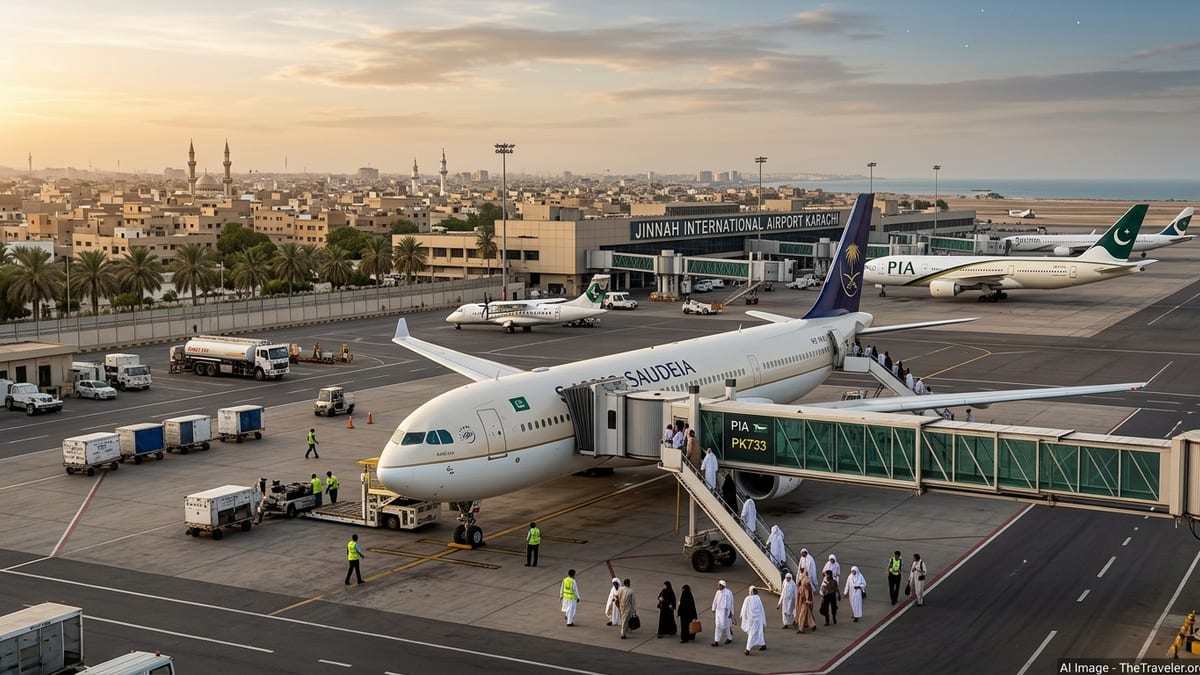
Charter deal keeps Pakistan–Saudi links running
Pakistan’s Civil Aviation Authority has granted PIA special permission to use aircraft from Saudia, the Saudi national carrier, on a charter basis for passenger flights between Pakistan and the Kingdom. The authorization took effect on 23 November 2026 and is valid for 15 days, subject to operational conditions and safety oversight by the regulator.
According to regulatory and local media reports, the arrangement covers three Saudia-operated Airbus A330 aircraft that PIA is using primarily on high-demand routes to Jeddah and Madinah from Pakistani gateways. Saudia’s own scheduled services to Pakistan are continuing independently alongside the charter operation, meaning both airlines remain present in the Pakistan–Saudi market during the temporary arrangement.
PIA is selling and honoring its own tickets on these flights, with passengers traveling on Saudia-operated aircraft but under PIA’s flight program. Authorities and the airline have emphasized that customers holding PIA tickets for Saudi destinations during the charter window should continue to follow PIA schedules and check-in guidance, as their bookings remain valid and are being accommodated on the substitute aircraft.
UK flights resume after Norse Atlantic collapse
The decision to free up capacity on Saudi routes followed severe disruption on PIA’s United Kingdom services earlier in the week, after Norse Atlantic Airways unexpectedly suspended operations under an ACMI, or wet-lease, agreement covering two Boeing 787-9 aircraft. The Norwegian long-haul carrier had been operating select UK–Pakistan flights on PIA’s behalf since the start of November under a partnership announced in October 2026.
On the evening of 25 November, two PIA flights from Britain were cancelled when Norse Atlantic halted flying and ticket sales at short notice, citing an acute liquidity crisis. The cancellations affected at least flight PK786 from London to Islamabad and PK710 from Manchester to Lahore, leaving passengers to rebook or await re-accommodation as PIA worked to reorganize its long-haul schedule.
Norse Atlantic formally filed for bankruptcy on 27 November after failing to secure emergency financing, confirming that its services would not resume in the near term. The development immediately ended PIA’s access to Norse’s 787-9 capacity, but also removed uncertainty around whether the wet-lease might restart. PIA responded by shifting all its UK operations onto its own Boeing 777 fleet from 26 November, restoring scheduled flights between Pakistan and London and Manchester without reliance on the failed partner.
Operational impact on PIA’s network and fleet
PIA’s current fleet comprises a mix of Boeing 777 widebodies, Airbus A320 narrowbodies and ATR turboprops, with only a portion of the total aircraft regularly in service due to maintenance, age and previous underinvestment. By chartering three Saudia A330s for religious and labor traffic to Jeddah and Madinah, the airline has been able to reassign several of its own 777s to long-haul European services, including the UK, where widebody capacity is essential.
Within Saudi Arabia, PIA is focusing the chartered Saudia aircraft on core pilgrimage and expatriate flows while continuing to operate its own aircraft to Riyadh and Dammam. This split allows PIA to maintain coverage across its main Saudi destinations despite the temporary loss of Norse-operated capacity, and reduces the risk of further cancellations on either the Saudi or UK sectors during the 15-day permit window.
The arrangement also illustrates the way PIA is currently balancing a constrained fleet with renewed access to European skies. The airline only regained permission to operate to the European Union in late 2024 after a multi-year ban related to pilot licensing concerns. With demand from Pakistan’s large diaspora in Britain and continental Europe, the carrier has been under pressure to rebuild long-haul services while still coping with an aging and partially grounded fleet.
Privatization and longer-term fleet renewal plans
The short-term reliance on Saudia charters comes as PIA undergoes one of the most significant restructurings in its history following privatization. In December 2025 a consortium led by Pakistan’s Arif Habib Group won a 75 percent stake in the airline with a bid valued at around 135 billion Pakistani rupees, as part of a broader economic reform program tied to international lending. Subsequent disclosures and official presentations in 2026 indicate that the consortium has since moved to acquire the remaining government stake, paving the way for full private ownership of the carrier.
Public statements by the new owners and supporting documentation outline an ambition to expand and modernize the fleet substantially over the next several years. Early outlines refer to an initial phase that would grow the operational fleet from under 20 active aircraft to around the high 30s, followed by a second phase that could take the total to between 50 and 60 aircraft if financing and market conditions allow. These figures remain targets rather than firm orders, and the precise mix of widebody and narrowbody aircraft has not yet been finalized.
For now, PIA is exploring a combination of additional leases and eventual direct purchases to replace some of its oldest jets and add capacity on profitable routes. Industry reports suggest that the carrier is evaluating new-generation widebodies and narrowbodies from both major manufacturers, but it has not publicly announced signed contracts or delivery schedules beyond existing lease arrangements. The airline has indicated that any modernization program will also involve upgrades to cabins, in-flight entertainment and maintenance systems, as well as expanded training for flight and technical crews.
What travelers should know in the coming weeks
For passengers with near-term bookings between Pakistan and Saudi Arabia, the most immediate change is that some services are being operated by Saudia under charter to PIA, particularly on routes to Jeddah and Madinah, at least until early December when the current 15-day authorization expires. Travelers should check their flight status with PIA before departure, but tickets issued by PIA remain valid and check-in is still handled according to PIA’s instructions, even where the aircraft and onboard crew belong to Saudia.
On UK routes, PIA is now flying with its own Boeing 777 aircraft following the termination of the Norse Atlantic arrangement. Passengers traveling between Pakistan and London or Manchester should expect PIA-operated flights rather than Norse-branded 787s, and may notice differences in seating configuration, onboard services and entertainment compared with the briefly operated leased aircraft. Anyone whose flight was cancelled on 25 November due to Norse’s suspension should contact PIA or their travel agent to confirm rebooking options and any applicable refunds or vouchers.
Looking ahead, PIA’s management and new owners have signaled that further announcements on long-term fleet plans and network development are expected in 2027 as financing structures are firmed up and aircraft negotiations progress. Until concrete orders and delivery dates are confirmed, travelers can expect the airline to continue using a mix of its own fleet and selective short-term leasing or charter arrangements to manage seasonal peaks and unexpected capacity gaps. Those planning trips involving PIA services over the next few months should monitor schedules regularly and allow extra flexibility around connection times, particularly on routes linking Pakistan with Saudi Arabia, the United Kingdom and other long-haul markets affected by the recent disruption.