


More news on this day
A powerful Thanksgiving nor’easter that swept across Massachusetts on November 26 and 27 triggered dozens of flight delays and cancellations at Boston Logan International Airport, complicating one of the busiest travel periods of the year for passengers flying to and from New England.
Get the latest news straight to your inbox!
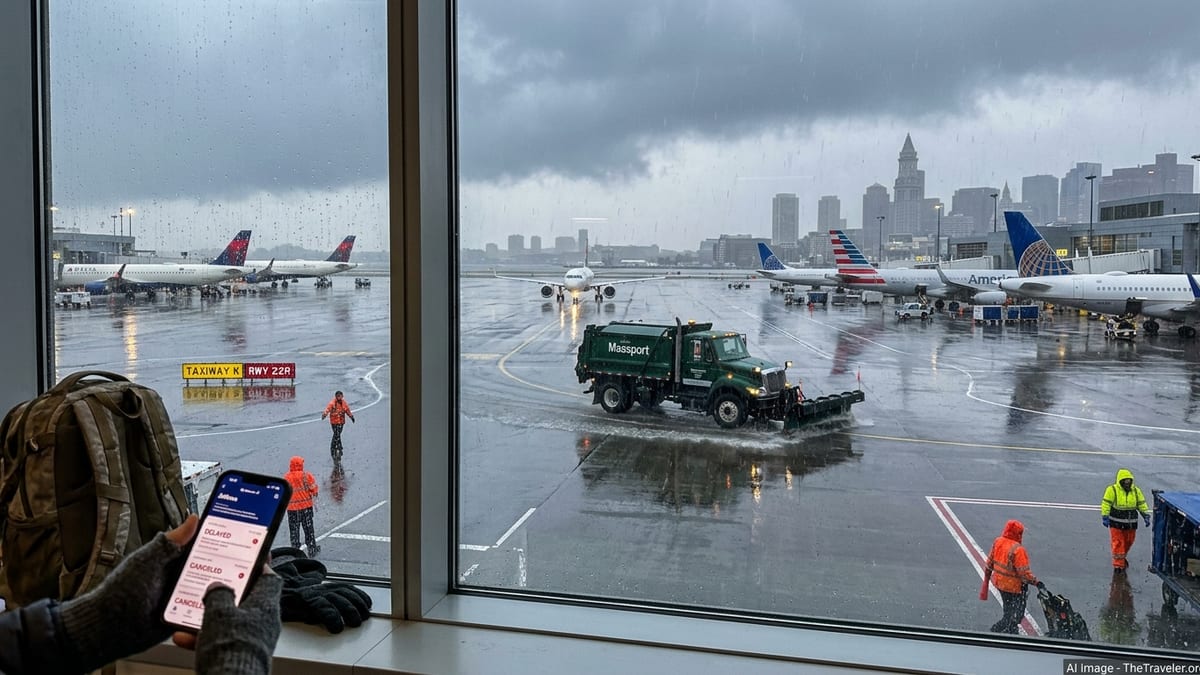
Storm brings high winds, heavy rain and operational disruption
The coastal storm that intensified along the Eastern Seaboard on Thanksgiving Day delivered periods of heavy rain, strong winds and coastal flooding across Massachusetts, including the Boston area. The National Weather Service had warned ahead of the holiday that a developing nor’easter would bring gusty winds and hazardous conditions to much of southern New England late on Thursday and into Friday, with impacts likely to coincide with peak travel hours at Boston Logan International Airport.
As the worst of the weather moved through on November 26, Logan saw a steady build-up of operational disruption rather than a single ground stop. According to data compiled by flight-tracking service FlightAware and reported by local media at the time, 49 flights at Logan were canceled on Thanksgiving Day and 63 were delayed, as airlines adjusted schedules in response to deteriorating conditions along the Eastern corridor. Those figures sat within a broader national picture of more than 2,200 delayed flights and over 400 cancellations across the United States that day as the nor’easter’s rain and wind affected multiple major hubs.
The storm’s effects did not end with the holiday itself. On Friday, November 27, Logan continued to experience weather-related disruption, with around 69 delays and 12 cancellations reported by mid-afternoon. While those numbers were lower than the Thanksgiving Day totals, they highlighted how coastal storms can create lingering knock-on effects for aircraft and crew positioning, particularly when they coincide with a period of near-peak demand at a major regional hub.
How the 2026 Thanksgiving nor’easter evolved over New England
Meteorologists began flagging the potential for a significant Thanksgiving storm several days in advance. Forecast discussions from the National Weather Service office serving the Boston area pointed to a low-pressure system organizing off the Southeast coast on November 25 and tracking northward along the Eastern Seaboard. By Thanksgiving afternoon, the system had intensified into a nor’easter, drawing in Atlantic moisture and producing widespread rain across New England, with the heaviest bands expected overnight into early Friday.
In the Boston metro area, rain began during the day on Thursday before strengthening into the evening, coinciding with many outbound and returning holiday flights. Wind gusts along the Massachusetts coast increased as the storm deepened, contributing to choppy approaches and departures and prompting periodic adjustments to runway configurations at Logan. Although snowfall was not a major factor in eastern Massachusetts during this storm, the combination of low clouds, poor visibility and crosswinds was sufficient to slow operations.
Across the broader Northeast, the nor’easter produced coastal flooding, power outages and transportation disruption from the mid-Atlantic into New England. Power companies reported hundreds of thousands of outages at the height of the storm along the East Coast, with Massachusetts among the states experiencing scattered blackouts. On the roads, standing water and reduced visibility complicated driving, while rail operators issued warnings about potential weather-related delays on key intercity routes. For air travelers with connections through multiple affected hubs, these regional impacts translated into an elevated risk of missed connections, rolling delays and last-minute schedule changes even if the weather at a specific airport had already begun to improve.
Holiday travel demand amplified the impact at Logan
The nor’easter struck at a time when Boston Logan was already operating near full capacity because of the Thanksgiving travel surge. In its holiday advisory issued earlier in the week, the Massachusetts Department of Transportation highlighted Massport’s expectation that roughly one million passengers would pass through Logan during the Thanksgiving travel period, with the single busiest days anticipated on Wednesday, November 25, and Sunday, November 29. That forecast reflected both strong leisure demand and a rebound in business and family travel patterns compared with previous years.
Leading up to the storm, Massport and state transportation officials had urged passengers to arrive early, build in extra time for parking, security and ground transportation, and to monitor airline apps or websites for schedule changes. Those warnings took on added weight as the nor’easter’s track became clearer. Local outlets noted that while Wednesday operations at Logan were relatively smooth, forecasters and airport officials cautioned that Thursday’s developing weather could produce delays, particularly on routes along the Eastern Seaboard and at downline connection points.
The Thanksgiving disruption came on the heels of a nationwide Federal Aviation Administration ground stop earlier in November that had already tested airlines’ and airports’ resilience ahead of the holiday. While Massport said it did not expect that earlier outage to have a direct impact on Thanksgiving itself, residual crew and aircraft imbalances across some carriers meant that schedules were less forgiving of new weather shocks. For some travelers, this translated into tighter rebooking options once the nor’easter forced cancellations or extended delays on key routes into and out of Boston.
Airline responses, waivers and what travelers experienced
As forecasts solidified, major airlines serving Logan adjusted their operations and customer policies. In the days leading up to Thanksgiving, several large U.S. carriers issued weather waivers covering parts of the East Coast for travel dates spanning the holiday period. These waivers typically allowed passengers with affected itineraries to change flights within a specified date and fare range without paying change fees, provided that seats were available in the same cabin. In some cases, airlines encouraged travelers with flexible plans to move their flights earlier in the week to avoid the worst of the storm.
On Thanksgiving Day itself, carriers used a combination of preemptive cancellations and rolling delays to manage the impact of the nor’easter. Preemptive cancellations, while disruptive, can give passengers more time to rebook or arrange alternative plans compared with last-minute cancellations at the gate. For Logan travelers, this sometimes meant receiving cancellation notices several hours before departure, along with rebooking options on later flights or different routings. Others experienced extended ground delays as airlines waited for safe operating windows between heavier bands of rain and wind or for connecting aircraft to arrive from other affected airports.
In Massachusetts and across the Northeast, traveler experiences varied widely depending on airline, route and timing. Some passengers flying early in the day, particularly on routes less exposed to the core of the storm, reported only minor delays. Others saw their itineraries significantly disrupted when a cancellation at a hub like New York or Washington triggered missed connections. Because the storm affected such a large section of the Eastern corridor, alternative options such as driving or same-day rail travel were limited for long-haul routes, leaving many passengers reliant on airlines’ rebooking systems and available seat inventory through the weekend.
What the disruption means for travelers planning future Thanksgiving trips
While the 2026 Thanksgiving nor’easter was a distinct weather event, it underlined several recurring themes for late-November air travel to and from Boston. Historical data analyzed this month by public and private sources show that roughly one in four flights at Logan arrived late during the combined November and December holiday period last year. That figure covers all causes of delay, not just severe weather, but highlights that tight schedules and full flights can leave little room for recovery when storms or operational problems arise.
For future Thanksgiving periods, travelers using Logan may want to factor in both the typical holiday congestion and the likelihood of at least one impactful weather system affecting the Northeast during the extended weekend. Flights scheduled earlier in the day are often less vulnerable to knock-on delays, though they can still be affected by overnight disruptions or arriving aircraft problems. Nonstop flights, where available, reduce exposure to cascading interruptions at downline hubs. Building extra time into itineraries, particularly for those connecting to international departures or important family events, remains a pragmatic response to the combination of high demand and late-autumn storm risk.
The recent nor’easter also underscored the importance of real-time information. Airlines and airport operators consistently emphasized the use of mobile apps, text alerts and website status tools before and during the storm. For travelers, regularly refreshing flight status beginning at least 24 hours before departure, confirming gate information upon arriving at the airport, and staying alert for rebooking prompts can make it easier to respond quickly if schedules change. Those planning future Thanksgiving trips through Boston may wish to monitor long-range forecasts in the week before the holiday, sign up for carrier alerts, and consider flexible booking options where possible, especially on routes along the East Coast that are more directly exposed to nor’easters.