


More news on this day
Thanksgiving travelers across the United States are facing a patchy but persistent wave of delays and cancellations in 2026, as a powerful East Coast storm, lingering fallout from recent technology outages and heavy holiday demand strain airline and rail operations during one of the busiest travel weeks of the year.
Get the latest news straight to your inbox!
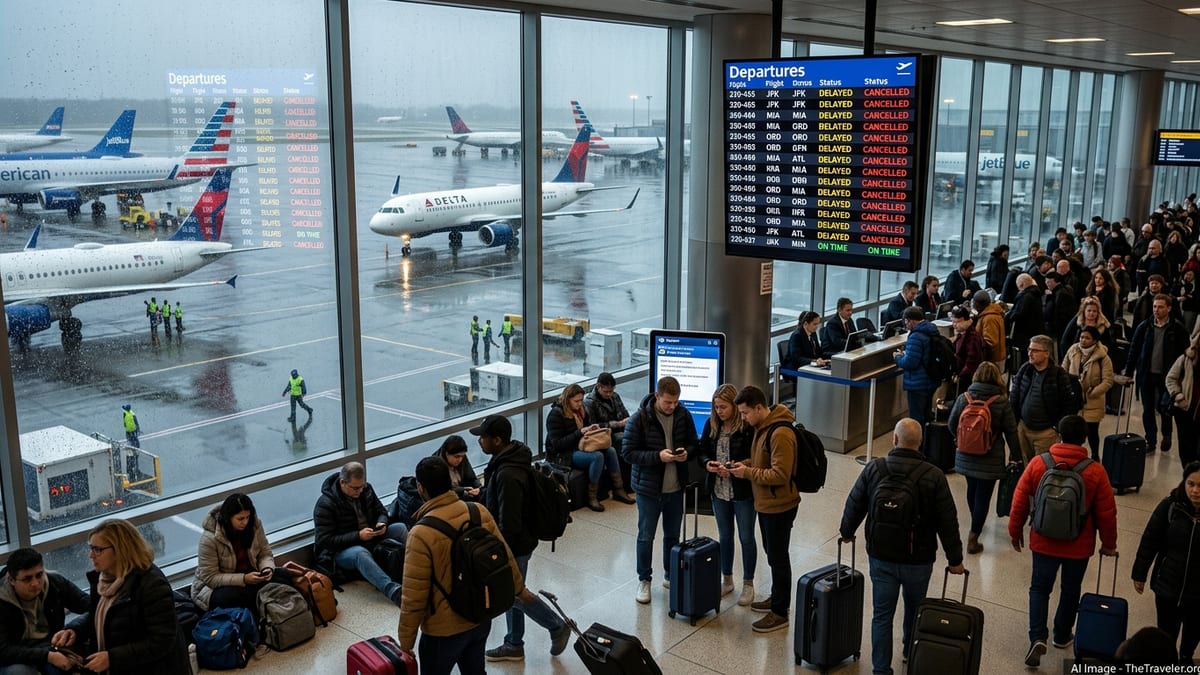
Holiday rush meets rough weather and recent tech trouble
The current disruption comes at the intersection of several pressure points for the U.S. transport system. AAA projected that around 81.5 million Americans would travel at least 50 miles from home for the Thanksgiving period between November 24 and November 30, 2026, with just under 6 million expected to fly. At the same time, airlines have been recovering from a series of technology problems and a rare nationwide Federal Aviation Administration ground stop earlier in November that triggered extensive cancellations and left aircraft and crews out of position heading into the holiday peak.
Weather added an extra layer of complexity as the main travel days approached. Forecasters had warned that heavy rain, coastal flooding and high winds could disrupt journeys along both coasts, including major air corridors in the Northeast. By Thanksgiving Day itself, a powerful storm had soaked much of the East Coast, with wind gusts reaching more than 50 miles per hour in New York City and strong winds recorded at LaGuardia Airport. Those conditions contributed to air traffic control initiatives and airport-specific delays even as national cancellation tallies remained well below the worst levels seen during historic holiday meltdowns.
The days immediately before Thanksgiving were already challenging for some flyers. On Sunday November 22 a computer problem affecting Delta Air Lines’ automated weight and balance system briefly forced flights at its Atlanta hub onto manual procedures, delaying more than a thousand services nationwide before operations stabilized. The outage followed closely after an FAA air traffic control network issue on November 13 that had temporarily grounded flights across the country, with residual disruption persisting for days. That combination of earlier events left little slack in the system as millions of passengers streamed into airports for the holiday.
Flight delays and cancellations: what the numbers show
While the 2026 Thanksgiving period has not produced the nationwide collapse some travelers feared, disruption has been significant on key days and at specific hubs. According to data compiled from flight tracking and disruption services, U.S. airports recorded around 1,449 disrupted flights on Thursday November 26, including approximately 396 outright cancellations and more than a thousand delayed departures or arrivals. A separate aggregation of U.S. operations on the same day put the cancellation rate at just over 2 percent of scheduled services, a relatively modest figure in percentage terms but still affecting hundreds of flights and tens of thousands of passengers.
Miami International Airport was among the hardest-hit hubs on Thanksgiving after a runway incident compounded the weather and traffic pressures affecting Florida and the Southeast. With only two runways available for part of the day, Miami’s average departure delay climbed to more than three and a half hours during the morning peak before gradually improving. Elsewhere, a mix of wind restrictions, low clouds and congestion led to intermittent ground delay programs and arrival metering at large coastal airports, particularly around New York and Boston, where tight runway and gate capacity can magnify even short-lived constraints.
By Friday November 27 the national picture had started to improve, although problems had not fully cleared. Real-time trackers that ingest FAA data reported that no major U.S. airport was subject to a full ground stop or long-running ground delay program early on Friday afternoon, and national cancellation counts were trending lower than the previous day. Even so, travelers at busy hubs such as Boston Logan continued to see extended queues and late departures after at least one formal delay program earlier in the morning, and airlines were still working to reposition aircraft and crews that had been knocked off schedule by Thursday’s storms and earlier November outages.
Trains, roads and other modes feel the strain
Air travel has not been the only part of the transport network under stress. Amtrak reported record Thanksgiving holiday demand in 2025 and entered the 2026 season warning that many trains would sell out, especially on the Northeast Corridor and other popular intercity routes. The railroad added extra Northeast Regional departures between Washington and New York around the peak travel days and urged passengers to book early and check train status before leaving for the station. Live delay dashboards on Friday showed a number of Northeast Regional and other corridor services running late by more than an hour, reflecting both heavy ridership and the knock-on effects of shared infrastructure constraints.
On the roads, forecasters and traffic analysts had flagged particularly heavy congestion on the Wednesday before Thanksgiving and the Sunday after, with some metropolitan areas expecting peak travel times to last several hours on major interstates. Early indications suggested that while overall Thanksgiving travel volumes were slightly below last year’s levels, road traffic remained intense on the busiest corridors, especially where heavy rain reduced visibility and prompted speed restrictions. For many travelers facing flight disruptions or priced out by higher airfares, driving remained an attractive fallback, further increasing pressure on key highway routes.
Regional rail, commuter agencies and bus operators also adjusted schedules for the holiday period. Some systems added capacity on the Wednesday outbound rush and the Sunday return, while others warned of potential weather-related delays on coastal and river-adjacent lines vulnerable to flooding. Ferry operators in storm-affected regions, including parts of the East Coast, had to monitor wind thresholds closely and in some cases temporarily suspend or curtail services when gusts exceeded safe operating limits. While those suspensions were generally brief and localized, they added complexity for travelers stitching together multi-leg journeys that combined ferries, trains and flights.
Passenger rights and how disruption is reported
For travelers caught in the middle of the Thanksgiving disruptions, an important distinction is emerging between what airlines must do by law and what they choose to offer as a matter of policy. Under longstanding Department of Transportation rules, if a carrier cancels a flight or makes a significant schedule change and the passenger chooses not to travel, the customer is entitled to a refund of the unused portion of the ticket to the original form of payment. The DOT formalized that "significant" typically means a delay of at least three hours for domestic itineraries or six hours on international trips, although the new regulations detailing disruption categories and reporting obligations are not scheduled to become fully effective until February 1, 2027.
There is currently no U.S. law that guarantees automatic cash compensation purely for inconvenience when a flight is delayed or cancelled, even during a major holiday period. Instead, airlines publish customer service commitments that may include meal vouchers, hotel rooms or rebooking assistance when the disruption is within the carrier’s control, such as a mechanical issue or crew scheduling problem. Weather and air traffic control restrictions are normally treated as outside the airline’s control, which limits what passengers can demand, although many carriers still opt to waive change fees and fare differences when large storms or systemwide events force schedule overhauls.
Behind the scenes, airlines and regulators are collecting more granular data on why flights are delayed or cancelled, but those statistics are not yet available in real time. Under existing reporting rules, large U.S. carriers must file monthly breakdowns of the causes of reportable disruptions with the Department of Transportation several weeks after the fact. A final rule updating the categories and definitions that airlines must use was issued in September 2026, but its effective date was postponed to early 2027 to give carriers more time to adapt their systems. That means assessments of whether this year’s Thanksgiving problems stemmed more from weather, staffing, infrastructure issues or technology failures will rely for now on preliminary operator statements and third-party analyses rather than definitive government data.
What travelers should expect through the return rush
Looking ahead to the remainder of the Thanksgiving travel window, operational metrics and forecasts suggest a mixed but manageable picture. Live FAA-based dashboards on Friday afternoon showed no widespread ground stops across the 20 busiest U.S. airports and generally moderate departure delays. At the same time, both historical data and forward-looking models indicate that the Sunday after Thanksgiving, November 29, is likely to be the most challenging single day for flight punctuality, with a significantly higher proportion of services leaving at least 15 minutes late than on Thanksgiving Day itself. Friday November 27 and Saturday November 28 are generally expected to remain busy but somewhat less delay-prone than Sunday, although localized weather systems could still alter conditions at short notice.
Major operators are advising customers to monitor flight, train and road conditions closely and to build more buffer time into their plans than they might during a normal week. Airlines recommend using mobile apps or online tools to confirm departure times, gate assignments and aircraft changes before leaving for the airport, particularly for early-morning and late-evening flights that are more vulnerable to crews "timing out" after a long day of rolling delays. Amtrak is urging passengers on sold-out or near-capacity trains to arrive at stations early, expect crowded platforms and luggage racks, and verify any last-minute schedule adjustments prompted by infrastructure work or congestion on shared tracks.
Travelers who experience severe disruption have several levers they can pull beyond standard rebooking. Those whose flights are cancelled or significantly rescheduled can request a refund instead of accepting vouchers or alternative itineraries, then choose whether to drive, take a train or book with another carrier. Some third-party services and travel insurance products offer limited compensation or assistance for extended delays, but coverage varies and often excludes weather events, so passengers are advised to read the fine print. With storms, technology systems and high demand still intersecting over the long weekend, flexible plans, contingency options and up-to-date information remain the most reliable tools for navigating the 2026 Thanksgiving travel crunch.