


More news on this day
A powerful Thanksgiving nor’easter sweeping up the East Coast has brought heavy rain, gusty winds and coastal flooding to New England, leading to significant, though not systemwide, flight delays and scattered cancellations at Boston Logan International Airport on Thursday, November 26, and into Friday, November 27, as airlines work to keep holiday traffic moving through one of the country’s busiest travel weekends.
Get the latest news straight to your inbox!
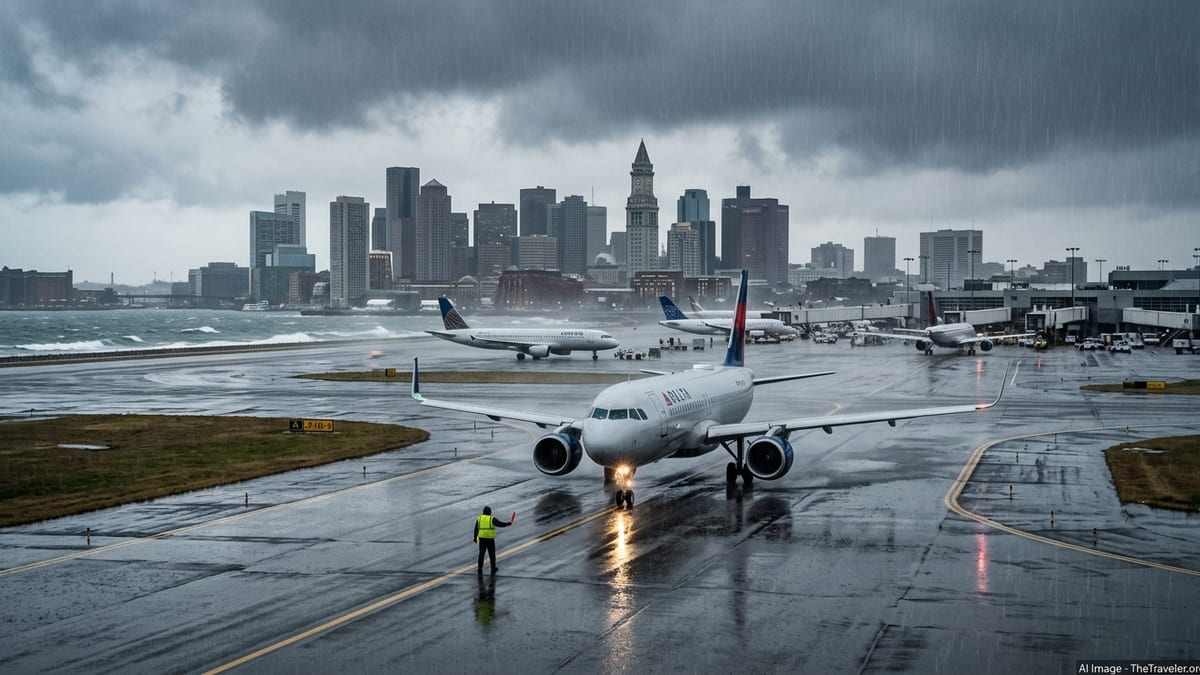
Storm conditions over New England slow holiday air traffic
The nor’easter affecting Thanksgiving travel developed off the Southeast coast midweek and moved north into the Mid‑Atlantic and New England on Thursday, bringing bands of heavy rain and strong winds to the Boston area. Forecasters had warned earlier in the week that the system would likely intensify around the holiday itself, with particular concern about low clouds, turbulence and crosswinds for airports along the Interstate 95 corridor. Boston’s Logan Airport spent much of Thursday under low ceilings and periods of reduced visibility, conditions that often require increased spacing between aircraft and slower overall operations.
Regional and national weather briefings for November 26 and 27 highlighted New England as one of several trouble spots for holiday travelers, alongside coastal Mid‑Atlantic hubs and parts of the Southeast. While temperatures remained well above freezing around Boston, which limited snow and ice hazards, the combination of heavy rain and onshore winds produced localized flooding, slick runways and choppy approaches that required more conservative landing and departure rates. National tracking data indicated that more than 2,000 flights within, into or out of the United States were delayed on Thanksgiving Day and several hundred were canceled, with Logan contributing to those totals as the nor’easter passed overhead.
By early Friday, November 27, conditions at Logan had begun to improve, but the airport was still listed as operating under marginal visual flight rules, with clouds and breezy conditions lingering behind the departing low‑pressure system. At that point, live feeds from federal airspace status systems and independent trackers showed no ongoing FAA ground stop at Boston, yet some residual flight delays persisted as airlines repositioned aircraft, crews and passengers following Thursday’s disruptions.
Delays and cancellations at Logan remain localized but noticeable
Through Thursday afternoon and evening, Logan saw a familiar pattern of weather‑related disruption: individual airlines trimmed schedules in advance of the worst conditions, some departures were held for improving winds or storm bands to move through, and a smaller number of flights were canceled outright when crews or aircraft could not be repositioned on time. Publicly accessible disruption dashboards that pull from FAA National Airspace System data and flight status providers showed Boston fluctuating between normal operations and moderate delay levels as the nor’easter’s rain bands crossed the region.
Those same trackers, which compare real‑time cancellations and delays to recent baselines, indicated that by the morning of November 27 there was no “cancellation wave” at Logan comparable to what can occur during severe winter storms or systemwide technology outages. Instead, the operational picture was one of ongoing but manageable disruption: late‑arriving aircraft from other parts of the country, crews bumping up against duty‑time limits after a turbulent fortnight in U.S. aviation, and scattered cancellations that largely affected short‑haul and regional routes where schedules are more flexible.
Massport, the authority that runs Boston Logan, had forecast roughly one million passengers to pass through the airport over the Thanksgiving period, with Wednesday, November 25, and Sunday, November 29, expected to be the heaviest traffic days. That level of demand meant that even modest weather‑related reductions in takeoff and landing capacity translated into crowded gate areas, longer lines at check‑in and security, and ripple effects on subsequent departures. Local broadcasters reporting from the terminals on Wednesday described overall smooth operations with pockets of delay, while updating viewers on Thursday and Friday that the storm had produced more pronounced, but still localized, flight disruptions rather than a full shutdown.
Context: a busy holiday week following earlier nationwide disruption
This Thanksgiving travel period was already expected to be challenging before the nor’easter arrived. Earlier in November, the Federal Aviation Administration ordered a rare nationwide ground stop following an outage tied to an air traffic control system upgrade, temporarily halting departures across the United States. Although that systemwide restriction was lifted the same day, major airlines, including those with large operations at Logan, continued working through residual delays and equipment imbalances for days afterward. Local coverage from Boston highlighted that delays related to that event were still being felt on some routes well into the week before Thanksgiving.
Industry and government data from last year’s holiday season also underscore how sensitive Logan is to disruption during peak travel. An analysis of federal on‑time performance figures for November and December 2025 found that nearly one in four U.S. flights arrived at least 15 minutes late, with Boston ranking in the lower half of major airports for punctuality during the Thanksgiving and Christmas rush. That historical backdrop informed both Massport’s and airlines’ preparations this year, from staffing and de‑icing readiness to passenger communications emphasizing the importance of checking flight status before heading to the airport.
Weather forecasts issued for New England earlier in the week called for largely quiet conditions in the days leading up to Thanksgiving, followed by a more “impactful” storm around the holiday itself as the coastal low strengthened. Local meteorologists warned that even if Boston’s worst weather came in the form of rain and wind rather than snow, the combination of saturated runways, variable ceilings and turbulence aloft would likely trigger ground delay programs and knock‑on effects at Logan and along key connecting corridors. Thursday’s nor’easter and Friday’s lingering delays largely matched those expectations, demonstrating how advance weather guidance can help airlines pare schedules and mitigate, though not fully avoid, holiday disruption.
How the nor’easter is affecting different types of travelers
The impact of the Thanksgiving nor’easter on individual passengers at Logan has depended heavily on itinerary and timing. Travelers with non‑stop flights between Boston and other major East Coast hubs such as New York, Washington and Philadelphia faced some of the highest risks of delay as the storm swept up the shoreline, creating poor conditions at both departure and arrival airports. Short‑haul flights to smaller New England fields were also vulnerable, particularly where strong crosswinds or limited instrument approaches constrained operations. In contrast, many long‑haul departures to the Midwest, West Coast and Europe were able to operate with only minor timing adjustments once crews had sufficient weather windows for safe departure and routing.
For passengers connecting through Logan, the main challenge on Thursday and early Friday was schedule reliability. A late inbound from a storm‑affected airport elsewhere on the East Coast could easily compress or eliminate connection times, even when the Boston leg itself was operating close to schedule. Airlines attempted to alleviate some of this strain by offering flexible rebooking options around the peak of the nor’easter and by proactively waiving change fees on certain routes and dates. However, the exact scope and terms of those waivers varied by carrier, meaning travelers needed to consult individual airline advisories rather than assuming a uniform policy across the board.
On the ground, the storm’s heavy rain and wind added further friction to the travel experience in and around Logan. Coastal flooding and standing water on approach roads occasionally slowed vehicle traffic, while blustery conditions at the curbside made for challenging waits at ride‑share zones and shuttle stops. Public transportation links, including buses serving the airport from regional hubs, largely continued to run on their holiday timetables, although surface‑level congestion and weather‑related slowdowns made actual travel times less predictable than usual.
What travelers through Boston Logan should do next
With the core of the Thanksgiving nor’easter now exiting New England and the FAA reporting no active ground stop at Logan as of Friday, November 27, the main focus for travelers is managing residual delays and preparing for another surge in passenger volumes over the weekend. Airlines are working to restore aircraft and crew rotations to normal patterns, but tight holiday schedules mean that individual delays can still cascade into missed connections or late‑night arrivals, especially on routes that rely on specific aircraft types or have limited daily frequencies.
Passengers scheduled to fly into or out of Boston through Sunday, November 29, should continue to monitor their flight status regularly, using airline apps, text alerts or the carriers’ websites rather than relying solely on third‑party trackers. Given that some flights were canceled outright during the height of the storm, anyone whose itinerary was disrupted on Thursday or early Friday should confirm that all segments have been properly rebooked and that seat assignments remain intact. Where airlines have issued weather‑related travel waivers, affected customers may still have options to move flights within a defined date and city pair window, subject to seat availability.
At the airport itself, Massport and airlines recommend arriving earlier than usual throughout the Thanksgiving weekend, particularly on Sunday, when outbound passenger volumes are expected to peak. Extra time allows for potential queues at parking facilities, check‑in counters, bag drops and security checkpoints, all of which can lengthen when even a small portion of the day’s flights are delayed. Travelers should also be prepared for gate changes and equipment substitutions as carriers reshuffle aircraft and crews to recover from the storm’s disruption. While operational data suggests that Boston Logan has avoided the most severe levels of holiday meltdown this year, the Thanksgiving nor’easter has underlined how quickly conditions can change and how important it is for passengers to stay informed right up to departure.