


Barcelona offers two heavyweight modern art experiences that tempt almost every culture‑minded visitor: the Picasso Museum in the medieval streets of El Born and the Joan Miró Foundation high on the green slopes of Montjuïc. Both are world‑class, both can easily fill a morning or afternoon, and both tell very different stories about two giants of 20th‑century art. If you only have time or budget for one, which one will leave the bigger impression on your Barcelona trip?
Get the latest updates straight to your inbox!
Setting the Scene: Two Very Different Corners of Barcelona
The Picasso Museum sits in a warren of narrow lanes in the El Born neighborhood, housed in a cluster of Gothic palaces along Carrer de Montcada. Stepping inside after weaving through wine bars and boutiques feels like entering a stone‑walled refuge. The courtyards, vaulted staircases and inner galleries are compact and often crowded, especially in peak months, which creates an intense, almost tunnel‑vision focus on the paintings.
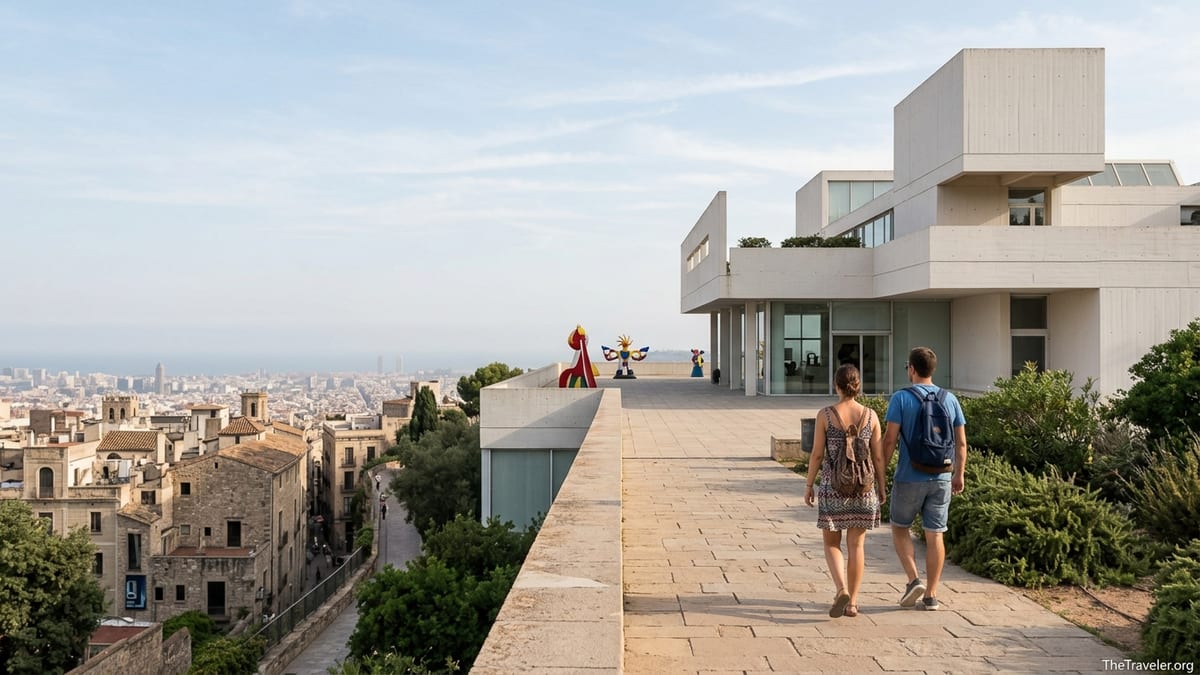
The Joan Miró Foundation, by contrast, rises from the greenery of Montjuïc park. Designed by architect Josep Lluís Sert, its stark white volumes, roof terraces and big picture windows are bathed in Mediterranean light. Visitors often arrive after a cable car ride or a stroll from Montjuïc Castle, so the experience begins outdoors. The building opens to views over the city and sea, and many travelers remember not just Miró’s bold shapes and colors but the feeling of air and space around them.
In practice, this means that a visit to the Picasso Museum folds easily into a day of exploring the medieval core, from Santa Maria del Mar to the Gothic Quarter. The Miró Foundation naturally pairs with a day on Montjuïc, combining the museum with the Olympic facilities, the Botanical Garden or the nearby National Art Museum of Catalonia at the Palau Nacional.
For many travelers, the question of which museum is more impactful starts with this setting: do you imagine yourself stepping straight out of a museum into tapas bars and wine, or finishing your visit on a hilltop terrace watching the sun slide down behind Barcelona’s skyline?
Collections Compared: Early Picasso vs Lifelong Miró
The Picasso Museum is dedicated mainly to the artist’s formative years and his deep relationship with Barcelona. It holds more than 3,800 works, but the permanent display focuses on his early academic studies, his Blue and Rose Periods, and a few later series such as the full 57‑piece Las Meninas reinterpretation from 1957. Visitors often come expecting Guernica or the greatest Cubist canvases and are surprised to instead meet a teenage virtuoso drawing plaster casts and painting moody portraits of Barcelona’s bohemian crowds.
One concrete example: in the early rooms you can stand inches from "Science and Charity," painted when Picasso was about 15, and compare it with the free, fractured brushwork of the later Las Meninas series further along the route. In under an hour, you trace a leap from an almost old‑master realism to a radical rethinking of how space and figures can be broken apart. The museum is strongest when you are interested in process, development and biography rather than a greatest‑hits collection.
The Joan Miró Foundation offers a more complete arc of Miró’s career. The collection runs from early figurative works to the distilled symbols and floating constellations of his mature style, along with tapestries, large sculptures and ceramics. Many visitors remember pieces like the vast wool tapestry that once hung in New York or the triptych "Painting on white background for the cell of a recluse," where almost empty canvases hum with tension. The foundation also cares for thousands of drawings and preparatory notes, some of which rotate into view in temporary displays.
If you prefer to see how a single artist explores one visual language over a lifetime, Miró’s museum can feel more coherent. Picasso’s museum, on the other hand, is powerful if you enjoy the drama of transformation, watching a prodigy shed academic constraints and move toward something new. In terms of emotional impact, travelers who like psychological intensity tend to side with Picasso, while those who connect with poetic abstraction and color often leave Montjuïc more moved.
Visitor Experience: Layout, Crowds and Atmosphere
The Picasso Museum is one of Barcelona’s most popular attractions, with over a million visitors a year in recent counts. In practical terms, that means timed tickets, queues at security, and galleries that can feel shoulder‑to‑shoulder between late morning and mid‑afternoon. The layout of five linked medieval palaces creates a journey through small rooms and stone corridors. It is atmospheric and historically rich, but it also funnels people in a single direction, which can exaggerate the sense of crowding.
Recent ticket information for 2026 shows standard collection plus temporary exhibition tickets around the mid‑teens in euros when bought online, with a slight surcharge at the on‑site ticket office. Reduced tickets for students and seniors drop to roughly half that, and under‑18s enter free. Free admission windows, such as the first Sunday of the month and some Thursday evenings, are widely used by both locals and budget‑minded visitors, which makes the museum particularly busy at those times.
The Joan Miró Foundation, though also popular, spreads visitors out more easily. The Sert building offers higher ceilings, larger rooms and outdoor terraces, and many spaces are naturally lit. Even at busy times, you can usually step aside to look at a sculpture in the courtyard or a painting near a window without feeling rushed. Standard tickets typically hover just above 10 euros, with reduced fares for students and seniors and free entry for children under 15, making it slightly less expensive for many families than the Picasso Museum.
In guest feedback, Miró’s museum is often described as "calm" or "contemplative," while the Picasso Museum gets labeled "essential but crowded." If atmosphere is a major factor in what leaves an impression on you, the choice is clear: for intensity and energy, head to Picasso; for space, light and a slower rhythm, Miró tends to win.
Highlights That Stay With You: Signature Works and Moments
At the Picasso Museum, a few specific rooms shape most people’s memories. The early galleries, with academic nudes and austere portraits of his family, are a revelation for anyone who only knows Picasso through Cubism. Many visitors comment on the shock of realizing that the painter of fragmented faces could draw and paint like a traditional master in his teens. The Blue Period works, with their gaunt figures and melancholy blues, often resonate deeply with travelers who arrive in Barcelona during winter or after visiting the city’s less polished corners.
The biggest anchor, though, is the Las Meninas room. Here, dozens of Picasso’s reinterpretations of Velázquez’s 1656 masterpiece hang together. Some are close to the original layout; others explode the royal family into shards of color. Spending 15 or 20 minutes in this single room can be one of Barcelona’s most intense art experiences, as you watch an artist argue with history painting in real time. Even travelers who do not love Picasso’s style tend to remember this room years later.
At the Joan Miró Foundation, highlights are as much architectural as they are pictorial. Visitors step onto rooftop terraces dotted with Miró’s bright, almost playful sculptures, framed by blue sky and the city far below. Seeing a monumental organic form like "Woman and Bird" echoing the shapes of the distant Sagrada Família or the port cranes is an experience photography rarely captures fully. Indoors, the big canvases with floating signs and constellations often grab children and adults alike, who find their own stories in the dots, lines and simplified figures.
One real‑world moment that many visitors describe is turning a corner into a gallery of Miró’s late works where the paint is scraped, splattered or burned, and realizing how radical he remained even in his seventies. Coupled with the ambient light of the Montjuïc building, these pieces can feel unexpectedly physical, almost like landscapes of pigment. Where Picasso’s museum pushes your attention onto evolution and intellect, Miró’s often pushes you into a sensory, almost bodily response to color and space.
Practicalities: Opening Hours, Tickets and Getting There
Both museums operate with broadly similar visiting hours. As of mid‑2026, the Picasso Museum generally opens from 10:00 to 19:00 from Tuesday to Sunday, closing on Mondays except for special holidays. Last entry is typically 30 minutes before closing, and because capacity is limited, the museum sometimes cuts off same‑day sales earlier on very busy days. Buying timed tickets online is strongly recommended, both to secure a slot and to avoid queuing at the main entrance on Carrer de Montcada.
Recent price examples put online adult tickets for Picasso’s collection plus temporary exhibitions at around 14 to 15 euros, with collection‑only tickets slightly cheaper. Youth and senior discounts bring prices down to about half that, and young children go free. Free slots on the first Sunday and certain late afternoons can be attractive if you are controlling costs, but keep in mind that saving 15 euros may mean sharing rooms with dense crowds.
The Joan Miró Foundation keeps seasonal hours: in the cooler months it typically closes around 18:00, extending to about 19:00 during longer‑day periods. It is also closed on most Mondays, with a few exceptions on major holidays. Current standard tickets hover around 13 euros for adults, with a clear reduced category for students and seniors, free admission for children under 15 and separate, cheaper tickets if you only want to see a temporary exhibition or the experimental Espai 13 gallery. As with Picasso, last entry is about 30 minutes before closing.
Getting to each institution shapes the day. The Picasso Museum is easily reached on foot from central neighborhoods like the Gothic Quarter or Eixample, and is a short walk from metro stops such as Jaume I and Barceloneta. The Joan Miró Foundation is perched in Parc de Montjuïc, reachable by bus, funicular and then a short uphill walk, or by the red line of the hop‑on hop‑off tourist bus, which stops right by the entrance. Many visitors make a half‑day loop combining the foundation with the cable car to Montjuïc Castle or a stroll down to the Magic Fountain area.
Which Museum Suits Which Traveler?
For first‑time visitors with only a light interest in art, the more famous name of Picasso often tips the scales. If you recognize key works like "Guernica" from textbooks and want to deepen your sense of the artist behind them, the Barcelona museum provides a vivid backstory. It can be particularly rewarding if you enjoy narrative experiences: seeing how a precocious teenager grows into an innovator, set against the backdrop of early 20th‑century Barcelona.
Travelers who care about architecture, modern design and atmosphere, however, frequently report that the Joan Miró Foundation left the deeper emotional mark. The combination of Sert’s luminous building, the open terraces, the surrounding park and Miró’s playful yet enigmatic language of signs invites reflection in a way that many find restorative rather than draining. Families with children often find Miró more accessible because the bold forms and primary colors are easier for younger visitors to engage with than the sometimes heavy themes of Picasso’s early work.
If you are on a tight budget or short visit, consider what else you plan to do that day. A morning at the Picasso Museum plus a long lunch in El Born and an evening stroll to Barceloneta beach makes sense if you want to stay in the city’s historic core. A Montjuïc day that strings together the Miró Foundation, the Olympic area and sunset views over the harbor is perfect if you prefer greenery and open horizons.
In conversations with frequent Barcelona visitors, a recurring pattern appears: people who love art history, biography and the drama of genius tend to call the Picasso Museum unmissable. Those who seek a gentler, more spatial and light‑filled experience often name the Joan Miró Foundation as the place that stayed with them long after individual paintings blurred together.
The Takeaway
So which Barcelona art experience leaves a bigger impression, the Picasso Museum or the Joan Miró Foundation? The answer depends on what kind of imprint you want your museum visit to leave on your memory. Picasso offers intensity, narrative and the thrill of watching a young artist break away from tradition. It resides in atmospheric medieval palaces and often feels like the city pressing in all around you. Miró offers spaciousness, color and a dialogue between art and landscape, framed by white concrete, sky and the distant sea.
If your trip to Barcelona is short and you have never explored Picasso’s early work, the museum in El Born makes a compelling, almost obligatory stop, especially if you book ahead to avoid the worst crowds. If you have more time, or if you know you respond strongly to light, space and abstraction, a half‑day at the Joan Miró Foundation on Montjuïc may stay with you in quieter but longer‑lasting ways.
For many travelers, the ideal solution is not "either or" but "both in balance": Picasso for the intensity of genius in cramped stone galleries and Miró for the release of bold color in open air. Taken together, they offer a powerful portrait of Barcelona itself, a city defined by old stones and new ideas, by tight medieval streets and wide horizons over the Mediterranean.
FAQ
Q1. If I only have time for one museum, should I choose the Picasso Museum or the Joan Miró Foundation?
The Picasso Museum is the better choice if you are particularly interested in Picasso’s biography and early work, or if you want a museum that fits easily into a day in the historic center. The Joan Miró Foundation is preferable if you value architecture, light and a calmer atmosphere, or plan to spend time exploring Montjuïc.
Q2. Which museum is usually more crowded?
The Picasso Museum is typically more crowded, especially late mornings, weekends and on free entry days. The Joan Miró Foundation can be busy in peak season but usually feels less congested thanks to its larger, airier galleries and outdoor terraces.
Q3. Are ticket prices very different between the two?
Current prices are in a similar range, with standard adult tickets at both museums usually in the low to mid‑teens in euros, and reduced fares for students and seniors. Children enjoy generous free entry policies at both, with Miró slightly more advantageous for families with kids under 15.
Q4. Which museum is better for visitors with limited mobility?
Both institutions offer lifts and accessible routes, but the Joan Miró Foundation’s modern, single complex building and wide corridors often make it a bit easier to navigate than the Picasso Museum’s linked medieval palaces. In both cases, staff can advise you on the best accessible path.
Q5. Is either museum free on certain days?
Both museums periodically offer free or reduced admission windows, often tied to specific days of the month or cultural events. These policies can change, so it is wise to check current conditions when planning. Free slots are popular and usually involve larger crowds.
Q6. How much time should I plan for each visit?
Most visitors spend about 1.5 to 2 hours at the Picasso Museum, especially if using the audio guide or focusing on key rooms like the Las Meninas series. At the Joan Miró Foundation, two hours is comfortable for the permanent collection and terraces, with more time if you want to explore temporary exhibitions or linger on Montjuïc.
Q7. Which museum is better for children and teens?
Families often find the Joan Miró Foundation more immediately engaging for children, thanks to bright colors, simple shapes and outdoor sculptures. The Picasso Museum can work well for older kids and teens, particularly those curious about how an artist develops from childhood prodigy to innovator.
Q8. Can I combine either museum with other nearby sights in one day?
Yes. The Picasso Museum pairs naturally with exploring El Born, the Gothic Quarter and the waterfront. The Joan Miró Foundation combines well with the Montjuïc cable car, the Olympic Stadium area, the Botanical Garden or the National Art Museum of Catalonia, making for a full day without crossing the entire city.
Q9. Do I need to book tickets in advance?
Advance booking is strongly recommended for the Picasso Museum, particularly from spring through autumn, to secure a time slot and avoid queues. For the Joan Miró Foundation, buying ahead is helpful in busier months but same‑day tickets are more often available, especially earlier in the morning.
Q10. Which museum offers a better sense of Barcelona itself?
The Picasso Museum reflects the dense, historical side of Barcelona, with its medieval palaces and ties to the bohemian Born district. The Joan Miró Foundation reflects the city’s modern, outward‑looking character, tying art to light, landscape and contemporary architecture. Together they provide a remarkably complete artistic portrait of the city.