


More news on this day
PKP Intercity is stepping up investment in technical and maintenance facilities in eastern Poland, a move that observers see as crucial to keeping pace with rising passenger demand and expanding long-distance services toward Ukraine and beyond.
Get the latest news straight to your inbox!
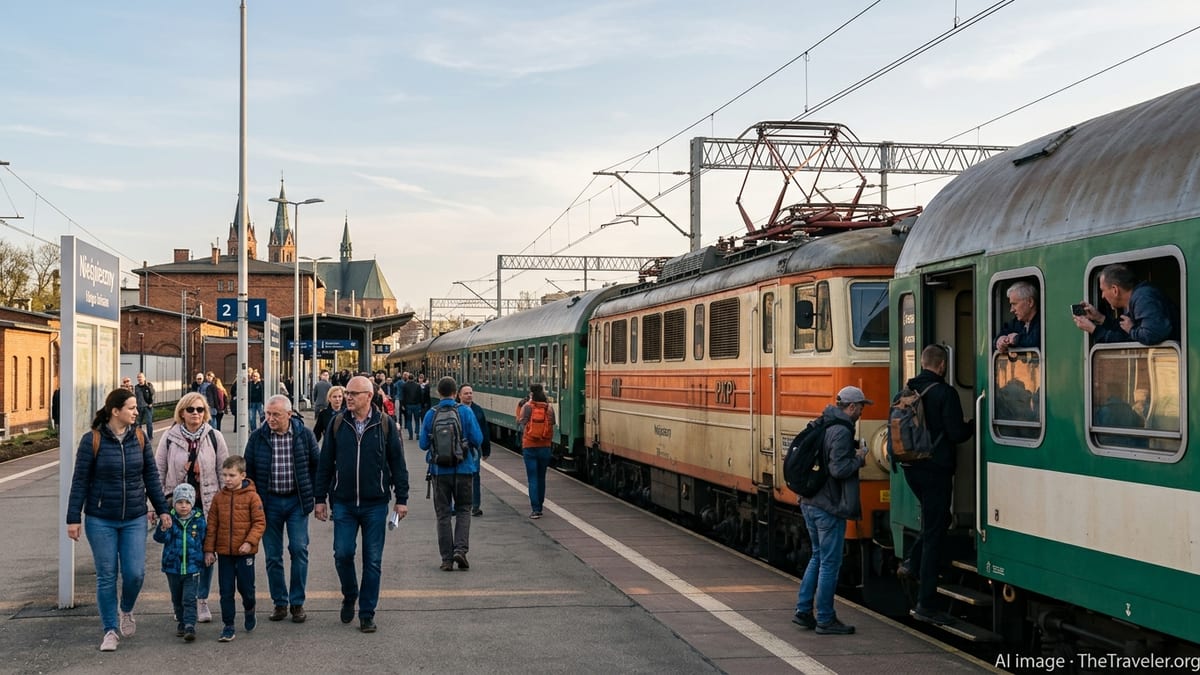
New service hub in Przemyśl targets border traffic
Publicly available information shows that one of the flagship projects is a new rolling stock service center in Przemyśl, a strategic border city in south-eastern Poland. The facility is being developed near the Przemyśl Bakończyce station and is described in sector analyses as a modern hub dedicated to day-to-day servicing of intercity trains terminating or turning back close to the Polish–Ukrainian border.
Reports indicate that the center is designed to handle routine inspections, light repairs and cleaning, helping PKP Intercity shorten turnaround times for long-distance services arriving from central and western Poland. It is also expected to improve resilience on routes affected by intensifying cross-border passenger flows since 2022, by allowing trains to be prepared for the return journey locally instead of being sent back to depots further west.
According to published coverage, the Przemyśl site will be equipped with diagnostic equipment, facilities for interior servicing and exterior washing, as well as systems to supply trains with electricity and compressed air while they are stabled. Industry commentators note that this configuration mirrors solutions in larger western depots and is intended to reduce the number of empty, non-revenue trips that rolling stock must make for maintenance.
Analysts add that the location in the Podkarpackie region also fits wider transport policy goals of strengthening rail connectivity across eastern Poland, historically perceived as less well served by high-standard infrastructure than the country’s central corridor.
Upgraded siding and technical base in Lublin region
Further north, efforts to increase technical capacity are visible in plans for a modernized siding and maintenance back-up area for PKP Intercity near Lublin, a key academic and regional capital in eastern Poland. Parliamentary documents discussing the state of the project describe an upgrade of the local siding layout alongside the creation of a new technical base to support intercity services.
The investment is presented as a way to give PKP Intercity its own dedicated tracks and servicing points in the area, which should ease pressure on shared infrastructure and facilitate more flexible timetable planning for long-distance trains running through the Lubelskie region. With renewed tracks, service pits and improved access for staff and equipment, the facility is expected to handle inspections and smaller-scale interventions between scheduled major overhauls elsewhere.
Observers point out that Lublin has seen a growing number of long-distance and higher-standard connections in recent years, including services routed toward Warsaw and the western part of the country. Strengthening the technical backbone in and around the city is therefore seen as a precondition for sustaining that growth without compromising reliability.
Sector commentary also links the Lublin works to broader EU-supported investments aimed at improving rail accessibility in eastern Poland, where new or upgraded lines have been prioritized to balance regional development.
Locomotive depot projects support new fleets
The expansion in eastern regions forms part of a wider program in which PKP Intercity is renewing its rolling stock fleet and pairing new vehicles with dedicated maintenance depots. Publicly available company materials and European procurement documents describe orders for modern locomotives and multiple units that include long-term maintenance provisions and, in several cases, the creation or expansion of specialized workshops.
In this context, industry reports highlight the role of a new locomotive facility being developed to serve recently ordered electric locomotives and push–pull sets, including routes that traverse eastern voivodeships. Although some of these workshops are located outside the strict boundaries of eastern Poland, analysts note that additional heavy-maintenance capacity in the network indirectly benefits eastern routes by freeing up day-to-day technical slots in regional depots.
Rolling stock contracts signed with major manufacturers in recent years typically bundle purchase, servicing and staff training, which observers see as a way to standardize maintenance procedures across PKP Intercity’s network. This, in turn, is expected to improve fleet availability on demanding long-distance diagrams, including those linking Warsaw and other major cities with hubs like Przemyśl and Lublin.
Experts on rail operations say that the combination of new trains and expanded technical facilities reduces the risk of cascading delays when faults occur, since more work can be performed closer to where the problem arises. For passengers using eastbound services, this may translate into fewer cancellations and shorter disruptions during peak holiday and weekend travel periods.
Eastern Poland’s role in PKP Intercity’s growth strategy
Industry data show that PKP Intercity has recorded record passenger numbers in recent years, with growth particularly visible during the summer season and on routes to major regional centers. While much of the company’s capacity still converges on corridors between Warsaw, the Baltic coast and the industrial south, there is an evident strategic shift toward strengthening the long-distance offering in the east.
Analysts argue that new technical infrastructure is one of the less visible but most crucial elements of this strategy. Modern depots and sidings in eastern Poland increase the number of trains that can be serviced overnight, allow for more complex rotations, and give planners greater freedom to add or lengthen services when demand spikes.
The focus on Przemyśl and Lublin also reflects changing patterns of mobility. Since 2022, cross-border travel toward Ukraine and onward to other countries has grown significantly, often channeling through eastern Polish hubs. Enhanced maintenance capacity along these corridors makes it easier to run additional relief trains or adjust formations at short notice.
From a tourism and business travel perspective, more reliable and frequent long-distance services are likely to make eastern Polish destinations more attractive for domestic visitors and international travelers arriving via Warsaw or Kraków. Tour operators and regional tourism boards have been emphasizing better rail connectivity as a selling point, particularly for environmentally conscious travelers choosing trains over domestic flights or car journeys.
Operational impact for long-distance travelers
For passengers, the expansion of technical capacity in eastern Poland is not immediately visible in station architecture or timetable posters, yet it underpins many of the service improvements now being marketed on long-distance routes. More robust maintenance facilities can help ensure that newly delivered carriages and locomotives remain in service longer between breakdowns, and that defects are addressed more quickly when they do occur.
Travel reports in recent seasons already point to a gradual refresh of interiors, the introduction of better climate control and power sockets, and more consistent cleanliness on selected intercity services operating to and from eastern cities. While such improvements depend on rolling stock investments, they are sustained by the presence of well-equipped local depots capable of handling daily servicing tasks.
Rail observers caution that upgrading technical capacity is a long-term process and that older infrastructure and legacy rolling stock still pose challenges, particularly at smaller stations. Nevertheless, the direction of investment suggests that PKP Intercity intends to anchor its growth not only in headline train orders but also in the less publicized, technical side of operations.
As the carrier continues to implement its investment programs, travelers heading to eastern Poland may encounter more modern trains, longer formations and a higher likelihood that their service runs to schedule. Behind those changes is a network of new and upgraded depots, sidings and maintenance centers designed to keep an expanding fleet moving across some of the country’s fastest-developing regions.