


Elia Beach is one of Mykonos’s longest, most versatile stretches of sand, popular with everyone from families and cruise day-trippers to LGBTQ+ travelers and nudists. Planning ahead can make the difference between a blissful, feet-up day by the Aegean and a frustrating hunt for sunbeds, parking or shade. Here is what you should know before you commit your precious island time to a full beach day at Elia.
Get the latest updates straight to your inbox!
Getting Your Bearings: What Elia Beach Is Really Like
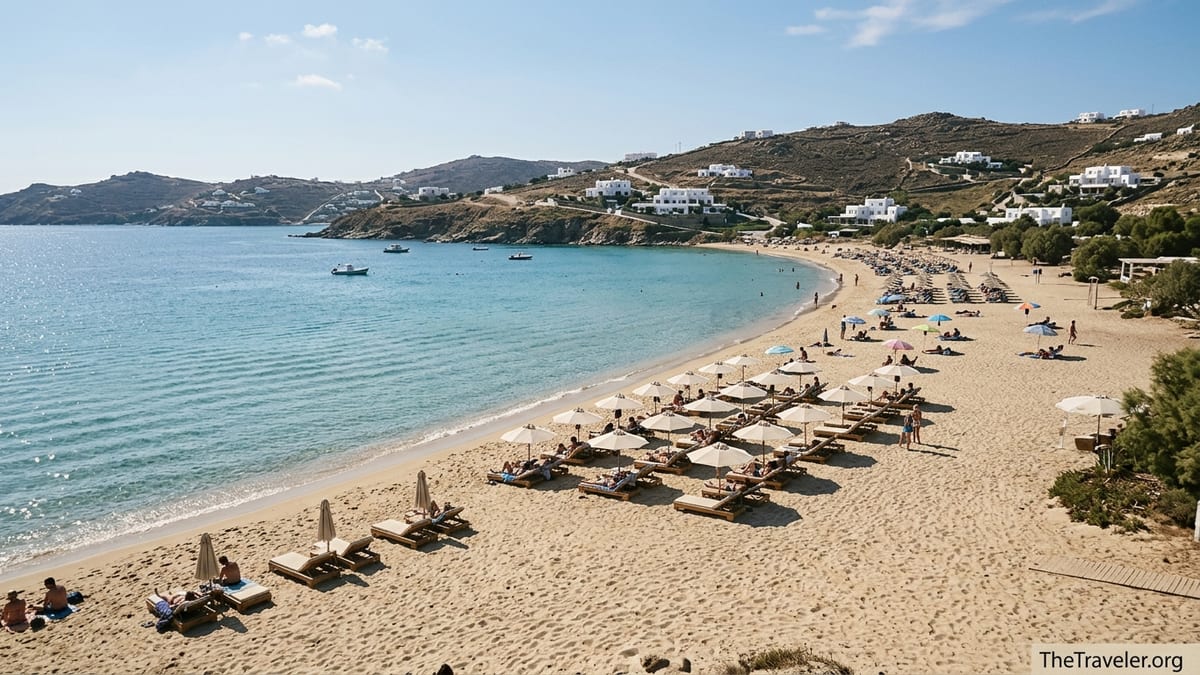
Elia sits on the south coast of Mykonos in a broad, protected bay, around 20 minutes by car from Mykonos Town. It is one of the island’s longest beaches, with a wide belt of golden sand, relatively shallow, clear water and views across to neighboring islands on a clear day. Compared with compact south-coast spots like Psarou or Paradise, Elia feels more open and less claustrophobic, even when most of the organized sections are full.
The atmosphere is mixed. Families tend to cluster around the central, well-organized sections where sunbeds, umbrellas and waiter service are concentrated. Couples and small groups spread out along the sand, while LGBTQ+ visitors gravitate to the right-hand side of the beach when facing the sea, where the rainbow flag usually signals the more gay-popular area. Behind the loungers, low hills shelter the bay, so it generally feels less wind-battered than some north-coast beaches when the meltemi is blowing.
What differentiates Elia from other Mykonos beaches is how it manages to be several things at once. There are polished beach-restaurant zones with neatly arranged loungers and music, quieter pockets where you can simply throw down your towel, and a more clothing-optional, gay-frequented area beyond the rocks at the far right-hand end. If you are visiting with a mixed group, it is one of the easiest places on the island for everyone to find their own comfortable corner.
Noise levels are noticeable but not overwhelming in most of the main areas. You will hear a background soundtrack from the beach restaurant and neighboring setups, but this is not typically a full party beach in the way Paradise or Super Paradise can become by late afternoon. On busy August days, though, expect a steady hum of conversation, music and boat arrivals rather than a secluded, castaway vibe.
Getting to Elia: Bus, Car, Taxi or Boat
Reaching Elia Beach requires a bit of planning, especially in high season when roads are busy and taxis are in high demand. By public bus, the main seasonal route runs from the Old Port bus station to Elia, typically with multiple departures through the late morning and afternoon. As of the 2026 summer timetable, daytime buses from the Old Port to Elia generally start around 10:30 and run roughly hourly or better into the early evening, with a similar pattern for returns. Services and times can change during the season, so always check the latest schedule locally once you arrive on the island.
If you are driving, the route from Mykonos Town takes about 20 minutes under normal conditions. You will follow the main inland road toward Ano Mera, then branch off toward Elia as you approach the eastern side of the island. The final descent to the beach is a winding road with some tight curves, so take it slowly, especially if you are unfamiliar with Greek island driving. There is parking behind the beach, but on peak July and August afternoons it can fill up. Many regular visitors aim to arrive by late morning, around 10:30 or 11:00, to avoid circling for a space.
Taxis are convenient but limited on Mykonos, and demand spikes when multiple cruise ships are in port. If you are relying on a taxi from Mykonos Town to Elia, budget that the fare can easily run to several tens of euros each way, depending on traffic and the island’s current pricing. Pre-booking through your hotel or a local transfer service the day before is common, particularly for return trips from the beach in the late afternoon when many people leave at once.
Another option in high season is the network of southern coast water-taxis that shuttle between beaches like Platis Gialos, Super Paradise and Elia. On a typical summer day, boats run a circuit every 30 to 60 minutes, and Elia is often one of the last stops. This can make for a scenic ride but also means the last return boats can be crowded. If you arrive by boat, factor in the walk from the landing point to whichever section of the beach you are targeting, especially if you plan to head to the far right-hand, clothing-optional area.
Sunbeds, Costs and How to Avoid Surprises
The single biggest shock for many first-time visitors to Mykonos is the cost of organized sunbeds, and Elia is no exception. Prices vary by section, row, and season, but it is wise to expect a premium. In recent summers, travelers have reported that front-row pairs of sunbeds with an umbrella at some organized sections of Elia can reach or exceed around 70 to 80 euros per day in peak season, sometimes with a minimum spend requirement for the very first row. Slightly farther back, prices tend to drop, and scattered independent operators may offer more modest rates, especially if you arrive later in the afternoon.
To avoid misunderstandings, always ask clearly for the total price for the set of loungers you are renting and whether there is any minimum consumption attached. For example, if a staff member offers you a front-row double sunbed, clarify if the quoted amount is per bed or per set, and whether that includes the umbrella. Ask whether food and drinks you order are counted toward any minimum or charged on top. Many negative experiences shared by visitors come from failing to pin down these details before sitting down.
If budget is a concern, consider bringing a lightweight beach mat or towel and setting up on one of the free-sand stretches between organized sections. At Elia, there is usually at least some unclaimed space, particularly closer to the far ends of the bay. On busy August days, you may need to walk farther along the beach to find it, but it is still often possible. Travelers have also noted that negotiating for sunbeds later in the afternoon, once the most lucrative part of the day has passed, can sometimes yield more reasonable rates, although this is never guaranteed.
For cruise passengers on four- or five-hour beach excursions, remember that you are paying a premium for limited time. If you are booked on a ship-organized tour that includes transport and a reserved lounger at Elia, compare the convenience with going independently by bus or taxi and renting beds on arrival. Independent travelers can sometimes secure cheaper loungers farther from the main restaurant, while those on tours enjoy the security of transfers timed to their ship’s schedule.
Food, Drinks and Facilities on the Beach
Elia offers more than just loungers and sea. Several beach restaurants and bars line the sand, with menus that typically feature Greek and Mediterranean dishes such as grilled fish, salads, pasta and seafood, alongside snacks like club sandwiches and burgers. Prices are generally in line with Mykonos’s upscale reputation rather than mainland Greece averages. A simple lunch of a salad and soft drink can easily reach a few tens of euros, while a shared seafood platter with wine for two in the main restaurant will quickly climb higher.
Waiter service to the sunbeds is widely available in the organized zones. It is very common for visitors to spend most of the day without leaving their loungers, ordering iced coffees, fresh juices, bottled water and cocktails. Factor in service charges and consider asking to see a menu before ordering anything beyond basics. Stories of unexpectedly high bills anywhere on Mykonos almost always involve guests who did not ask to see prices in advance, especially for cocktails, premium spirits or fresh fish priced by weight.
Facilities are generally good for a Greek island beach. Where you rent loungers, you will usually have access to restrooms, showers and changing cabins. Many visitors staying in nearby hotels along the Elia hillside use these facilities even when they are not on a lounger, though some venues may reserve restrooms for paying customers. If you are using only the free-sand area, it is still polite to buy a drink or snack from a beach bar when you need the toilets.
There are some small minimarkets and kiosks in the wider Elia area, but choice on the beach itself is focused on the restaurant and bar offerings. If you are budget-conscious, it can be smart to bring a reusable water bottle and perhaps some fruit or snacks from Mykonos Town or Ano Mera. Just remember that glass on the sand is unsafe and frowned upon, so choose cans or plastic and always pack out your rubbish.
Beach Layout, Gay and Nudist Sections, and Etiquette
Understanding the informal zoning of Elia will help you choose where to spread your towel or book a lounger. Facing the sea, the central stretch is the most mixed and family-friendly, with dense rows of sunbeds and the largest restaurant behind them. As you walk to the right, the scene gradually becomes more LGBTQ+ focused, with a visible rainbow flag often marking the gay-popular section. This area is known internationally in the gay travel community and attracts both locals and visitors, especially in July and August.
Beyond a rocky outcrop at the far right-hand end of the bay, the beach becomes more clothing-optional. Here you will find a mix of gay and straight visitors, many of whom sunbathe nude on the sand and swim without swimwear. This nudist zone is not officially designated by the municipality, but over time it has become widely recognized. If you decide to visit, respect the unspoken etiquette: no intrusive staring, no photography, and no drones. Even in the main, clothed sections of Elia, it is good practice to avoid pointing cameras at people on neighboring loungers without their clear consent.
Topless sunbathing is common across most of the beach for women, and swim briefs are commonplace for men. Elia is generally relaxed about beachwear, but it remains courteous to cover up a little when walking into restaurants or bars. A simple shirt, dress or sarong will do. If you are with children and prefer a more conventional family setting, staying closer to the central and left-hand sections usually feels more comfortable, especially in mid-afternoon when the right-hand side can feel busier and more adult.
Over the course of a summer day, the crowd composition shifts. Late morning often sees a mix of families and couples arriving to claim loungers. Early afternoon brings more groups of friends and LGBTQ+ visitors. During major LGBTQ+ events on Mykonos, especially in late August, Elia can become significantly busier and livelier, with beach parties and DJ sets spilling over from nearby venues. If you are looking for a quieter experience, consider visiting in June or September, or arriving early in the day when the beach has a more relaxed feel.
Weather, Wind and Safety Considerations
Like the rest of Mykonos, Elia is shaped by the seasonal meltemi winds that blow from the north, typically strongest in July and August. Because Elia is on the south coast in a broad bay, it is more sheltered than some of the island’s north-facing beaches, but gusty days are still common. On those days, expect choppy surface water, stronger currents and occasional blowing sand. If strong wind is forecast during your stay, some visitors choose to prioritize more protected beaches closer to Ornos or Agios Ioannis, while others still enjoy Elia but choose loungers set a little farther back from the shoreline.
The water at Elia usually shelves gradually, making it suitable for confident children under supervision. In many areas, the seabed is sandy, though visitors have reported scattered small rocks and pebbles, especially toward the ends of the bay. Simple beach shoes or sandals can make getting in and out of the water more comfortable. As on most Greek beaches, there can be occasional small waves on windier days, but there are usually no large surf conditions on the south coast suitable for board surfing. Strong swimmers still need to pay attention to changing wind and chop during the afternoon.
Lifeguard coverage can vary by season and by year, so do not assume there will always be a lifeguard on duty. Look for flags, signage or a lifeguard station before swimming far out. Children should stay within a safe distance from shore, and inflatable toys should be kept close to the beach when the wind picks up, as offshore breezes can carry them quickly into deeper water. Basic first-aid support is often available from the organized beach facilities, but for anything more serious, you will be relying on the island’s main medical services back in town.
Sun exposure is another consideration. On clear summer days, UV levels are intense from late morning through mid-afternoon. Even seasoned travelers to Greece are occasionally caught out by the combination of clear water, reflective sand and cooling sea breezes that can mask how quickly you are burning. Apply high-factor sunscreen before you arrive, reapply after swimming, and do not rely solely on the shade of a single umbrella at midday. Lightweight shirts, hats and sunglasses are as important as your swimsuit.
Timing Your Visit and Managing Crowds
When you choose to visit Elia will shape your experience almost as much as how you get there. Early in the season, in late May and June, the beach clubs and restaurants are usually fully open, but crowds are lighter and prices can be a little softer than the July and August peak. The sea temperature is cooler but still swimmable, and it is often easier to find front-row loungers without advance arrangements. Many regulars consider late June and early September the sweet spots for enjoying Elia with a balance of energy and space.
By contrast, high summer from mid-July through late August is intense. Large numbers of visitors on holiday join cruise passengers and those traveling specifically for Mykonos’s party and LGBTQ+ events. On a typical August weekday, the prime loungers at central Elia can be fully occupied by late morning, parking spots fill quickly, and there may be short waits for restaurant tables around peak lunch hours. If you are set on visiting in this period, consider making your beach day a priority: leave town early, have a plan for how far along the beach you want to base yourself, and understand that prices for front-row loungers are unlikely to be negotiable.
Time of day also matters. A late-morning arrival around 10:30 or 11:00 often strikes a good balance between having a choice of loungers and not waking up at dawn on holiday. By early afternoon, the sun is at its strongest, music is up a little louder, and the beach is at its busiest. Many visitors linger until 17:00 or 18:00, then either head back to town or stay for a quieter early evening dip as the sun softens and day-trippers leave. If you are relying on the public bus or a boat taxi back, pay close attention to the schedule and do not count on an extra late departure that may not exist at the very start or end of the season.
For those who dislike crowds altogether, consider pairing Elia with less-frequented neighboring beaches. Agrari, which is accessible by a path or short drive west of Elia, is often calmer and less organized, while still sharing much of the same coastline. Some travelers choose to spend the morning at Elia for the facilities and people-watching, then walk or drive to Agrari for a quieter swim in the late afternoon. This strategy also spreads the cost of loungers if you only rent for part of the day.
The Takeaway
A beach day at Elia can be one of the highlights of a Mykonos trip, provided you arrive informed and with realistic expectations. This is not a low-key, budget hideaway, but a polished, multi-layered beach where you can choose between family-friendly loungers, more adult-oriented zones, free sand and a well-established gay and nudist section. Costs for sunbeds and food are high by broader Greek standards, but the water quality, views and range of facilities attract loyal visitors summer after summer.
To get the best from Elia, think through the practicalities before you go. Check the latest bus schedule or pre-book a transfer, arrive early enough to secure a spot you like, and always confirm sunbed and food prices clearly before ordering. Decide whether you want to base yourself in the central, mixed zones, on the right-hand gay and clothing-optional side, or in neighboring Agrari for part of the day. Pack sunscreen, water, and at least some cash or a functioning card, and accept that on windy days, the meltemi will shape your experience.
Most importantly, match Elia to the kind of beach day you actually enjoy. If you want quiet reading under a pine tree, you might be happier on another island. If you like a blend of clear water, comfort, people-watching and a spectrum of atmospheres all on one long arc of sand, Elia rewards those who plan ahead. With a bit of forethought, it can offer exactly the kind of Aegean beach day many travelers imagine when they first picture Mykonos.
FAQ
Q1. Is Elia Beach suitable for families with children?
Yes, the central sections of Elia are popular with families. The sand is wide, the water generally shelves gradually, and there are organized loungers with access to toilets and restaurants. Parents should still supervise children closely, especially on windier days when small waves and currents are stronger.
Q2. How expensive are sunbeds at Elia Beach?
Prices vary by section, row and season, but in peak summer you should be prepared for premium rates. In recent years, travelers have commonly reported around several dozen euros or more for a pair of loungers and an umbrella, with front-row sets at some venues significantly higher. Always confirm the exact price and any minimum spend before sitting down.
Q3. Can I visit Elia Beach by public transport from Mykonos Town?
Yes. In the main summer season, buses usually run from the Old Port bus station to Elia several times a day, often starting late in the morning and continuing into the early evening. Schedules change from year to year, so check the latest timetable locally or through your accommodation once you arrive on the island.
Q4. Is there a nudist area at Elia Beach?
There is an unofficial clothing-optional area beyond the rocky outcrop at the far right-hand end of the beach when facing the sea. Here, many visitors sunbathe and swim nude. It is not an officially designated nude beach, but it is well established in practice. Be discreet, avoid taking photos and respect other visitors’ privacy.
Q5. Is Elia Beach a gay beach?
Elia is mixed, but it has a well-known gay-popular section on the right-hand side, often marked by a rainbow flag, and the nudist zone beyond the rocks is especially popular with LGBTQ+ visitors. The central and left-hand parts of the beach remain very mixed, with families, couples and groups of friends of all kinds.
Q6. Are there restaurants and bars directly on Elia Beach?
Yes. Several beach restaurants and bars line the sand, serving Greek and international dishes, snacks, coffee and cocktails. Most organized sunbed areas offer full waiter service to your lounger. Prices are in keeping with Mykonos’s upscale profile, so checking menus in advance is a good idea.
Q7. What should I bring for a day at Elia Beach?
Bring high-factor sunscreen, a hat, sunglasses, swimwear and a light cover-up for restaurant visits. If you plan to avoid renting loungers, bring a beach towel or mat and perhaps simple beach shoes, as some areas have small rocks underfoot. A reusable water bottle and some snacks can help keep costs down.
Q8. Is Elia Beach very windy?
Elia is on the more sheltered south coast, but it is still affected by the meltemi winds, especially in July and August. On windy days, expect choppier water and some blowing sand. If you are sensitive to wind, consider visiting earlier or later in the season or sitting slightly farther back from the shoreline.
Q9. Can I find free space on the sand without renting a sunbed?
Yes. Although much of Elia is occupied by organized loungers, there are usually stretches of open sand between and beyond the main sections where you can lay your own towel. In high season, you may need to walk farther along the beach, especially toward the ends of the bay, to find a comfortable spot.
Q10. Is it necessary to book sunbeds or restaurants in advance?
For peak July and August dates, particularly during major events and weekends, advance reservations for specific beach clubs or front-row loungers can be helpful, especially if you want a particular section or are visiting as a group. At quieter times or if you are flexible about where you sit, arriving earlier in the day is often enough to secure a spot without a booking.