


More news on this day
A freight train derailment in suburban Bensalem, just northeast of Philadelphia, triggered a shelter-in-place alert and hazmat response this week as overturned cars carrying chemicals and consumer goods left residents on edge across one of the busiest rail corridors in the United States.
Get the latest news straight to your inbox!
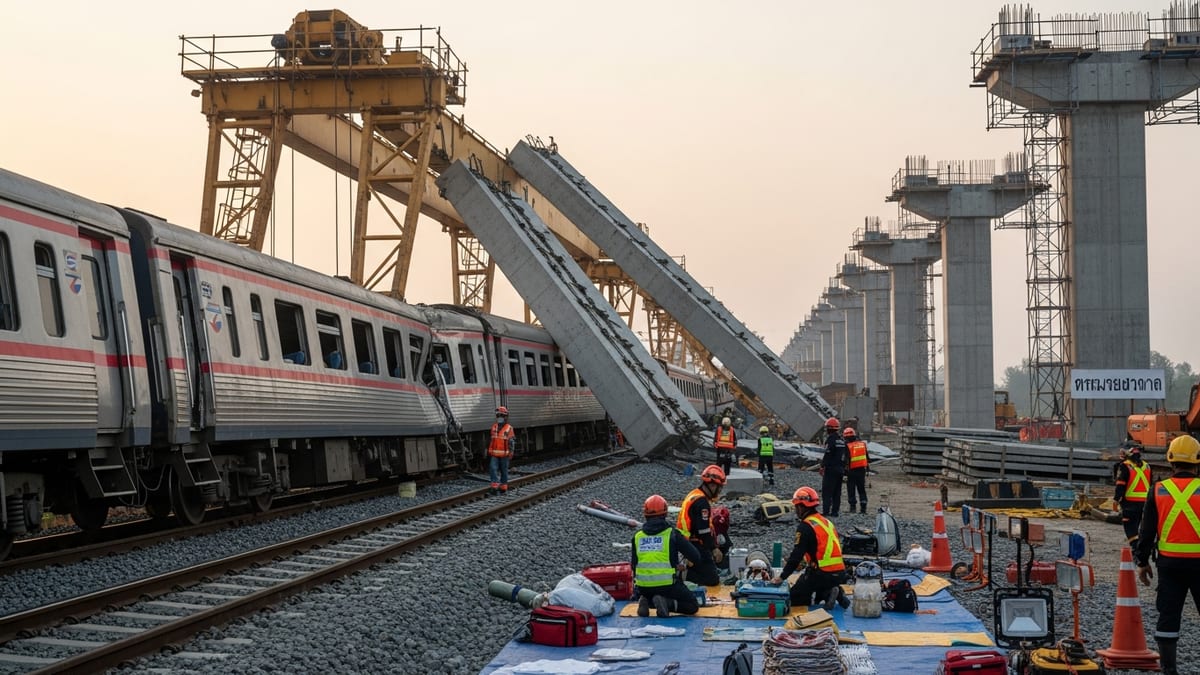
Derailment near Neshaminy Falls rattles busy commuter belt
Publicly available reports indicate that the derailment occurred on Tuesday afternoon between Street Road and the Neshaminy Falls regional rail station in Bensalem Township, Bucks County, a dense suburban area bordering Northeast Philadelphia. A CSX freight train left the tracks near East Bristol Road and Grove Avenue, sending more than a dozen cars into disarray along a corridor that also carries commuter and intercity passenger services.
Initial images and aerial footage published by local broadcasters showed multiple freight cars on their sides or jackknifed along the right of way, some visibly marked with hazardous-material placards. The incident unfolded within the Northeast megalopolis, a narrow strip of communities where housing, warehouses and shopping centers sit close to heavy rail infrastructure.
While no passenger trains were reported to have been involved, the visual scale of the wreckage sharpened local anxiety. The derailment came at a time of heightened public awareness around freight rail safety following several high-profile incidents across the United States involving hazmat cargo.
According to regional coverage, there were no immediate reports of injuries among train crew or nearby residents. Rail operators began rerouting or slowing nearby traffic as emergency teams converged on the scene to secure the site.
Hazmat response and shelter-in-place order heighten concern
Local television stations and radio outlets reported that police, fire, emergency medical services and specialized hazmat units were dispatched within minutes of the first calls. The presence of tank cars and placards indicating flammable materials led responders to treat the crash as a potential hazardous-material incident until they could fully verify the contents and integrity of each car.
Out of caution, Bensalem Township issued a shelter-in-place directive for neighborhoods surrounding the tracks, advising residents to remain indoors, close windows and limit outdoor activity while teams assessed the risk. Messages shared through municipal alert systems and news coverage underscored that the order was precautionary but necessary while the extent of any leak or spill was being evaluated.
As inspections progressed, television and online reports noted that at least one derailed car was labeled as carrying isopropyl alcohol, a highly flammable substance commonly used in manufacturing and household products. Other cars were believed to contain mixed freight, including consumer goods. Air monitoring and visual checks continued into the evening as responders sought signs of vapor, pooling liquid or fire risk.
By later in the day, regional outlets including NBC10, 6ABC and Fox 29 reported that teams on site had not detected any hazardous-material leaks from the overturned cars. The absence of visible spills and negative readings from air-monitoring equipment allowed officials to gradually relax the most stringent protective measures.
Shelter order lifted as monitoring continues at scene
According to subsequent updates from local newsrooms, the shelter-in-place advisory was lifted after emergency crews completed an initial sweep of the wreckage and surrounding neighborhoods. Reports indicated that monitoring continued around the site, but with no confirmed release of hazardous cargo, residents were allowed to resume normal activities.
Travel disruptions, however, remained an issue. Portions of nearby roads were closed for several hours to accommodate emergency vehicles and heavy equipment required to stabilize and clear derailed cars. Commuter rail users were warned to expect delays or schedule changes while rail operators coordinated with freight and emergency personnel.
In this part of Bucks County, freight tracks run close to residential blocks and major arterials, making any rail incident a logistical challenge. The need to balance safety, access for responders and the movement of people and goods turned the derailment into a wider test of emergency plans in a heavily traveled corridor linking Philadelphia with Trenton and New York.
Clean-up and rerailing operations are expected to take days, with crews working to cut up or crane-lift damaged rolling stock, repair track and inspect signaling equipment. Rail safety specialists will also be tasked with assessing whether any underlying track defect, equipment failure or operational factor contributed to the crash.
Rail safety in spotlight along Northeast corridor
The Bensalem derailment has quickly become part of a broader conversation about freight safety in and around major U.S. cities. The Philadelphia region hosts a dense network of freight and passenger lines, and recent history includes several derailments and near-misses that have drawn scrutiny from residents and policymakers.
Published commentary from local and national outlets notes that communities along the corridor have long been concerned about the mix of hazardous materials, aging infrastructure and growing train lengths. In neighborhoods where backyards back directly onto the tracks, the latest incident has renewed calls for clearer information on what moves through suburban rail lines and how risks are managed.
Rail industry representatives and regulators have in recent years promoted a series of safety initiatives, including expanded use of wayside detectors, improved tank car standards for certain dangerous commodities and more rigorous inspection regimes. Yet for residents, a highly visible wreck with hazmat placards, even one without a confirmed leak, can feel like a reminder that low-probability events have high-consequence potential.
In the wake of the Bensalem derailment, attention is likely to focus on how quickly and clearly information reached the public, whether alert systems covered all affected neighborhoods and how well rail operators coordinated with municipal emergency agencies. For travelers and commuters moving in and out of the Philadelphia area, the episode underscores the often-invisible role freight rail plays in the broader transportation ecosystem.
Implications for travelers and future planning
For visitors and regular travelers in greater Philadelphia, the derailment serves as a reminder that freight incidents can reverberate across passenger mobility. Even where passenger trains are not directly involved, shared corridors and nearby road closures can translate into delays, missed connections and temporary schedule adjustments.
Travelers using regional rail or intercity services through Bucks County are advised, based on current public information, to monitor schedule updates and allow extra time while recovery work continues. Those driving to and from Philadelphia’s northern suburbs may encounter detours near the Neshaminy Falls area as heavy machinery remains in place along the right of way.
From a planning perspective, the incident is likely to feed into ongoing debates about rail investment, land use and emergency preparedness in corridor communities. Municipal planners, emergency managers and transportation agencies are expected to review how the derailment unfolded, identify any communication gaps and consider additional resilience measures such as upgraded alert systems or revised evacuation and shelter protocols.
As rail operators and investigators work through the wreckage in Bensalem, the episode offers a stark illustration of how closely freight and everyday life intersect in the Philadelphia region. For residents and travelers alike, the sight of toppled cars and hazmat crews at a familiar station is a pointed reminder that the smooth flow of goods across the Northeast depends on infrastructure and safeguards that are rarely noticed until something goes wrong.