


More news on this day
As India prepared for the high-stakes NEET-UG re-examination on June 21, reports from Varanasi indicated that Prime Minister Narendra Modi delayed his airport departure by close to 45 minutes to ease city traffic and help candidates reach their test centres on time.
Get the latest news straight to your inbox!
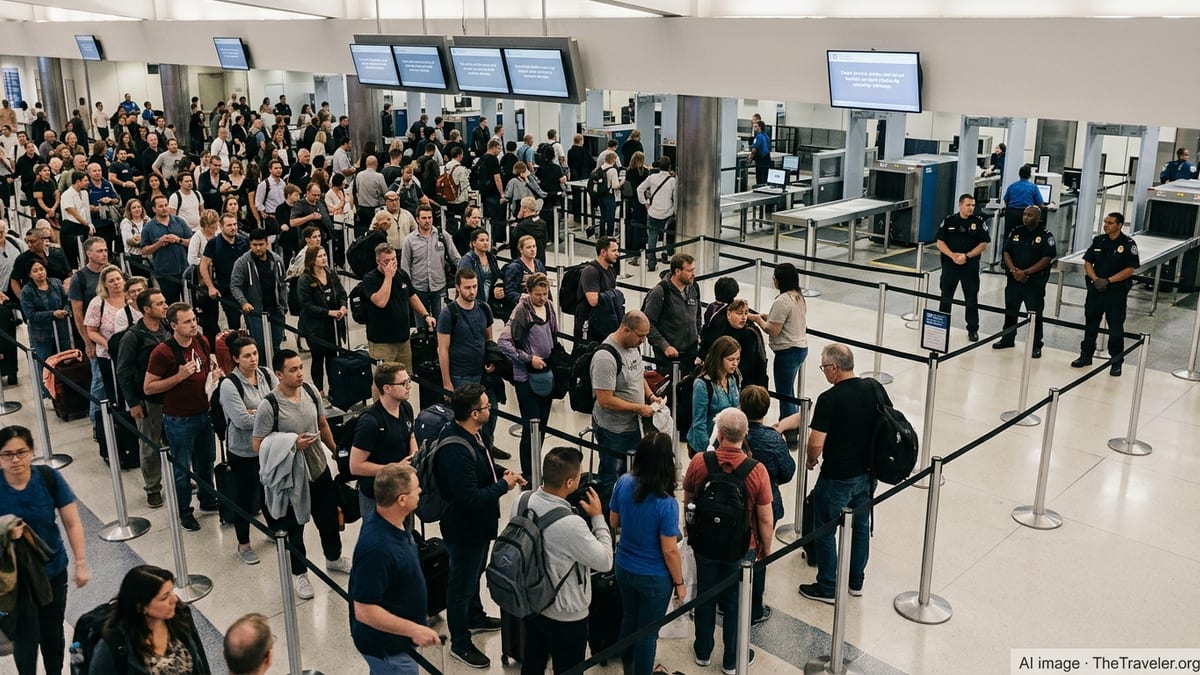
Traffic Curbs Eased Around Varanasi Airport
According to Indian television coverage and online reports, the decision was taken on Saturday afternoon as the prime minister was due to leave his parliamentary constituency of Varanasi, where he had been on an official visit. Security protocols typically require extensive traffic restrictions when a prime ministerial convoy moves to or from an airport, often bringing surrounding roads to a standstill.
With the NEET-UG re-examination scheduled nationwide from 2 pm to 5:15 pm, Varanasi’s main approach roads to test centres were expected to be especially busy around midday and early afternoon. Reports indicate that local authorities had initially prepared for routine security lockdowns along the airport route, which risked slowing or halting civilian traffic.
Publicly available information suggests that, in view of the exam, the prime minister’s departure was held back for around 45 minutes so that traffic restrictions could be relaxed until most NEET candidates had already passed through key junctions. Television visuals showed normal vehicular flow on major roads as students made their way to exam centres in the hot afternoon conditions.
The adjustment effectively shifted the most disruptive phase of security-related traffic control to a slightly later window, after the main rush of students had already crossed the airport corridor. For many anxious examinees and their families, this meant a more predictable journey time to centres at a moment when delays could have had serious consequences.
NEET-UG Re-Examination Puts Spotlight on Logistics
The NEET-UG re-examination, ordered after the cancellation of the May 3 test following allegations of irregularities and paper leaks, has intensified scrutiny on every aspect of logistics surrounding the country’s largest undergraduate medical entrance exam. More than 22 lakh candidates were registered to sit the retest at thousands of centres across India and at select venues abroad.
In the lead-up to June 21, the National Testing Agency highlighted a multi-layered security plan that included CCTV coverage, signal jammers and tight control over the movement of question papers. Reports also noted the use of air transport and guarded convoys to move confidential materials to regional hubs, underscoring the scale of the operation required for a single national examination slot.
Local administrations in several cities introduced additional measures aimed at keeping access routes clear. Media coverage from Gurugram and other urban centres described temporary curbs on gatherings near test venues, restrictions on loudspeakers and directions to minimise construction traffic during reporting hours. The stated aim across jurisdictions was to reduce disruptions on the roads at least for the critical pre-exam window.
Within this broader context, the Varanasi decision has been interpreted by commentators and social media users as a symbolic acknowledgement of the pressures NEET candidates face, particularly regarding punctuality at centres where gate-closing times are strictly enforced.
Student Stress and the Risk of Delays
The focus on traffic management reflects a persistent anxiety among exam candidates about delays and late arrivals. Accounts shared in recent weeks by students preparing for NEET and other national entrance tests have highlighted how even minor disruptions, including congestion around key junctions, can translate into missed reporting deadlines.
Reports about earlier examinations, including university entrance tests, have pointed to incidents where candidates reached centres just minutes after gates closed and were turned away despite long journeys and extensive preparation. Such cases have fed an ongoing debate over how flexible systems should be when candidates are delayed by factors beyond their control, such as roadblocks, accidents or sudden diversions.
For NEET-UG in particular, the combination of high competition, a single national paper and strict time windows heightens the stakes. Publicly available guidance from exam authorities has repeatedly advised students to allow extra time for travel, plan for potential congestion and arrive at centres well before entry cut-offs.
In this environment, the decision to postpone a high-security VIP movement in Varanasi until a significant volume of student traffic had passed is being read in some quarters as an attempt to reduce one more layer of uncertainty on a day already charged with tension for families.
Political Optics and Public Reaction
The reported delay to the prime minister’s departure has also generated political and public discussion, with supporters highlighting it as an example of sensitivity to student concerns at a time when the central government is under pressure over exam management. In recent months, opposition parties and student groups have strongly criticised the handling of the initial NEET-UG session, the subsequent cancellation and the organisation of the re-test.
Television segments and online commentary framed the Varanasi choice as a small but visible gesture aimed at demonstrating that student convenience was being considered alongside security requirements. Some analysts noted that it aligns with broader messaging about improving the “ease of living” for citizens, particularly the youth, in high-stress situations such as national entrance examinations.
At the same time, travel and urban-mobility observers have pointed out that such ad hoc adjustments, while welcome for those immediately affected, also underscore the degree to which normal city traffic can be reshaped by VIP movements. The episode has renewed calls from civic planners and citizen groups for more systematic approaches that insulate critical public activities such as exams, hospital access and emergency services from sudden road closures.
Social media responses from NEET aspirants and their families have been mixed in tone but broadly appreciative of any step that reduces obstacles on exam day. Many users shared personal accounts of long-distance journeys to centres and the precautions they took to avoid last-minute surprises, from arriving in cities a day early to booking accommodation close to venues.
Travel Management on Exam Days Under Scrutiny
For travel planners and city authorities, the NEET-UG re-exam has functioned as a stress test of urban infrastructure on a national scale. The combination of severe summer heat, afternoon exam timing and large crowds converging on educational institutions has put public transport networks and road systems under unusual pressure.
Reports from multiple states described additional bus services, coordination with local rail schedules and advisories encouraging candidates to set out well in advance. Some districts publicised traffic diversion plans and temporary parking zones near centres to prevent bottlenecks at campus gates, especially in dense urban neighbourhoods.
The Varanasi episode fits within a wider pattern of exam-day adjustments in India, where large-scale testing windows are now recognised as significant travel events in their own right. As national entrance systems expand and more candidates travel across districts or even state lines to sit a single paper, questions of mobility, last-mile connectivity and crowding around hubs such as airports, railway stations and bus terminals are increasingly central to public planning.
Observers suggest that documenting how measures such as staggered VIP movements, targeted traffic relaxations and enhanced public transport services affect exam-day outcomes could inform more formal protocols in future. For millions of students whose educational pathways hinge on a single afternoon in crowded cities, marginal improvements in travel conditions can make the difference between a smooth arrival and a life-altering setback.