


More news on this day
Prime Minister Narendra Modi delayed his departure from Delhi airport on June 21, the day of the NEET UG 2026 re-examination, in a reported bid to prevent additional traffic congestion and ensure medical aspirants could reach their test centres on time.
Get the latest news straight to your inbox!
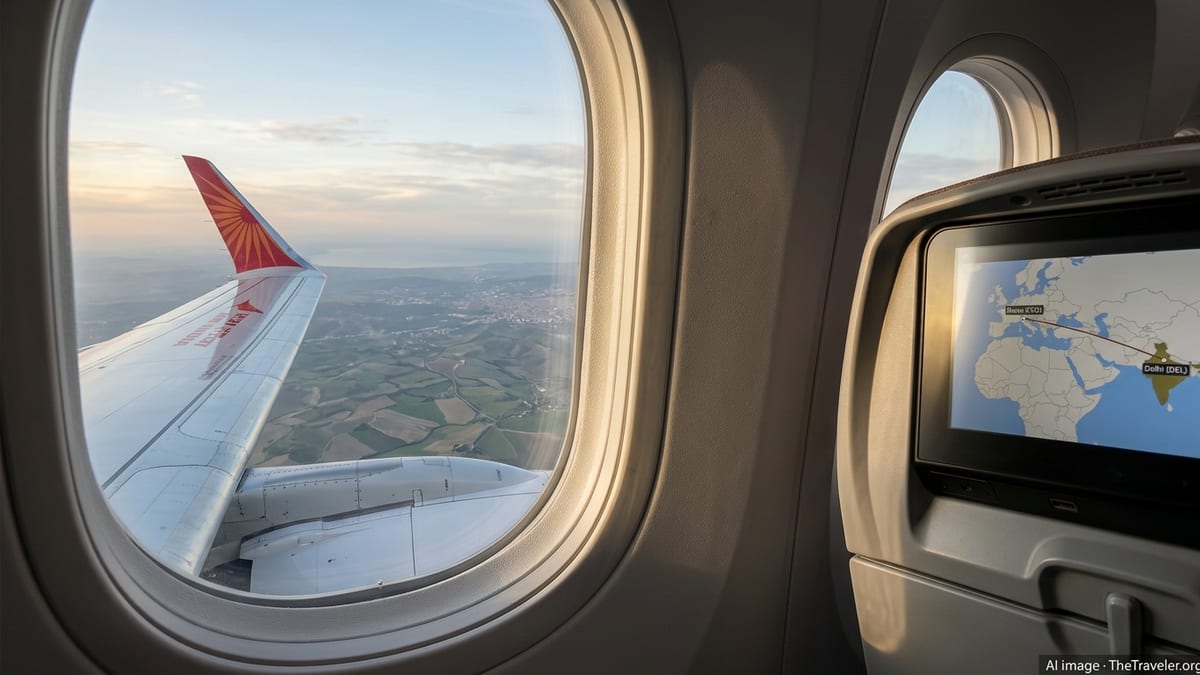
Departure Rescheduled Amid High-Stakes NEET Re-Exam
According to national media coverage, the prime minister’s aircraft remained on the ground at Delhi airport for several minutes beyond the originally planned schedule, with reports indicating the adjustment was made to avoid any additional bottlenecks on city roads at a time when student movement was peaking. The decision was framed in the context of easing conditions for aspirants headed to examination centres across the capital and surrounding regions.
The re-exam window for NEET UG 2026 was fixed between 2 pm and 5:15 pm, and Delhi authorities had already warned of heavier than normal traffic near major routes and test locations. Publicly available information shows that the prime minister’s team coordinated departure timings so that security-related traffic restrictions linked to VVIP movement did not overlap with the critical reporting period for students.
While the precise delay duration has varied across reports, the episode has been widely highlighted in Indian media as a symbolic gesture in a year when tensions around national entrance tests have been unusually high. The focus, commentators note, has been on the optics of reducing any perception that official movement might worsen what was already a stressful day for examinees and parents.
The Delhi airport, one of the busiest hubs in Asia, often experiences cascading delays when VVIP movements trigger temporary closures of certain lanes or approaches. On a day marked by a nationwide paper-and-pen re-test for more than 22 lakh candidates, even short disruptions or diversions risked compounding anxiety for those racing to reach their assigned venues.
NEET Re-Exam Unfolds Under Tightened Security
The prime minister’s adjusted departure came against the backdrop of a re-exam that has drawn intense scrutiny. Public data from test administrators indicates that the National Testing Agency deployed extensive security arrangements, including CCTV coverage, jamming equipment and enhanced frisking at thousands of centres within India and at select locations abroad.
The re-test itself followed the cancellation of the original May 3 sitting after allegations of a question paper leak and irregularities in some centres. The controversy placed additional pressure on public agencies to demonstrate that the June 21 exercise would be more tightly managed, with reduced scope for malpractice and clearer communication to candidates.
Media reports note that city and state-level authorities across India introduced a range of measures to ease the experience for examinees, from cooling zones outside exam halls to special public-transport arrangements. In Delhi, for instance, information carried by education-focused outlets pointed to cooling facilities and relaxed bus travel provisions, intended to help students cope with heat and long commutes.
In this environment, any further constraints on road movement arising from VVIP convoys were likely to attract criticism. The visibility of the NEET protests in recent weeks, including demonstrations in the national capital, has sharpened public sensitivity around the gap between official messaging and students’ day-to-day exam experiences.
Symbolism of Easing VIP Movement on Exam Day
The decision to hold back a prime ministerial departure, even briefly, has been interpreted by some commentators as a response to wider debate about India’s VIP culture. For years, complaints about road closures and diversions during motorcades have been a staple of urban discourse, particularly in megacities such as Delhi where traffic volumes are already high.
In the context of a high-stakes test like NEET, any perception that convoys are delaying ordinary commuters can quickly turn into a flashpoint. Publicly available commentary around the June 21 decision has emphasised the contrast between routine protocol-driven closures and a rare instance where the schedule was tweaked to accommodate the needs of students.
Observers note that the move also serves a political communication function, aligning national leadership with the anxieties of aspirants who have already seen their exam calendar upended once. With student groups and opposition parties criticising exam management and demanding greater accountability, steps that are framed as being “for students’ convenience” carry clear narrative weight.
At the same time, the practical impact on overall traffic conditions is difficult to quantify, given that multiple factors from local congestion patterns to weather can influence travel times. Nonetheless, the episode adds to a growing catalogue of attempts by public figures in India to be seen moderating the most disruptive aspects of VIP security arrangements, especially on sensitive dates.
Students Grapple With Logistical Hurdles Nationwide
Despite efforts to smooth exam-day logistics, many NEET aspirants across India have continued to report challenges related to centre allocation, travel distance and communication gaps. Education portals and regional outlets have described instances where students were assigned centres far from home, including unusual international allocations that were later attributed to technical issues.
Reports also indicate that administrative updates, such as changes to admit card download procedures or revised instructions on reporting times, have often arrived close to key deadlines, adding to stress. For families making long intercity journeys or arranging last-minute accommodation, even small shifts in timing and venue details can carry financial and emotional costs.
Within this broader landscape, any initiative to minimise disruption, whether in the form of reduced roadblocks for VVIP movements or additional public-transport support, becomes part of the larger story of how the re-exam was handled. Many education analysts have argued that restoring confidence in entrance tests now depends as much on visible concern for student welfare as on technical safeguards within examination halls.
The experience of NEET UG 2026 is likely to inform future debates on how Indian cities manage simultaneous large-scale events, from elections and religious gatherings to flagship exams. For governments, the challenge lies in balancing security, protocol and logistical efficiency in ways that do not deepen the sense of unpredictability that many young aspirants already face.
Implications for Governance and Public Perception
The narrative around the prime minister’s delayed departure from Delhi fits into a wider discussion of how governance is perceived in moments of public strain. When competitive exams are disrupted or rescheduled, trust in institutions can erode quickly, particularly among younger citizens who view these tests as gateways to limited educational and professional opportunities.
Analysts following developments in India’s examination ecosystem point out that administrative gestures have begun to carry greater symbolic weight. In this context, high-profile decisions related to travel schedules, security protocols or last-minute infrastructure support can influence how citizens judge official responsiveness, even when the material effect is modest.
For NEET candidates sitting a re-exam after weeks of uncertainty, the emphasis now shifts toward timely result processing, clarity around counselling timelines and assurances that similar disruptions will be less likely in future cycles. The events of June 21, including the attention paid to how VVIP movement intersected with exam logistics, underline how closely such operational details are now watched and debated.
As the immediate focus moves from test centres back to policy and political arenas, the episode at Delhi airport will likely remain a reference point in conversations about the responsibilities of those occupying high office on sensitive national dates. For students and families navigating India’s competitive exam landscape, it becomes one more marker of how public life adapts, or fails to adapt, to their concerns.