


Germany remains a central player in Europe’s economy and politics, but the country has entered a prolonged period of slower growth, fiscal constraint, and political polarization. Individuals and companies considering relocation need to understand how these political and economic risk factors could affect employment, business continuity, and long term prospects. The following briefing outlines the main risk dimensions as of early 2026, focusing on issues that matter most to internationally mobile professionals and corporate decision makers.
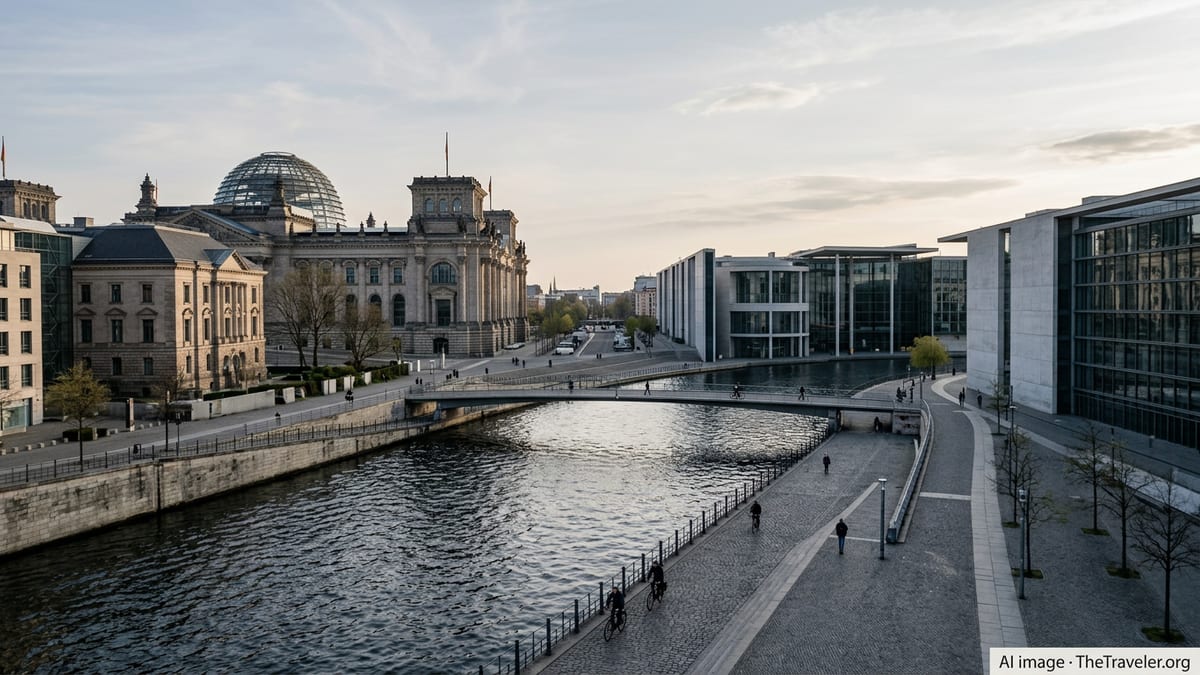
Current Political Landscape and Government Stability
Germany’s political environment has become more fragmented, with frequent coalition tensions and changing majorities. The collapse of the previous “traffic light” coalition in late 2024 and the subsequent federal election in 2025 underlined how difficult it has become to form durable, consensus based governments. The current government led by the center right alongside a major center left partner operates in a context of heightened parliamentary opposition and narrower legislative room to maneuver.
For relocators, this fragmentation translates into higher policy uncertainty. Budget negotiations have been protracted, and major reforms related to energy, digital infrastructure, and social systems face lengthy bargaining between coalition partners and opposition parties. While Germany’s constitutional framework, strong institutions, and independent judiciary limit the risk of abrupt regime style shifts, frequent political stand offs can delay decisions that affect taxation levels, business regulation, and public investment.
Another notable trend is the rising influence of protest parties and movements, including a strengthened far right and a smaller but vocal radical left. Large demonstrations against extremism and counter protests have become more common since 2024. These dynamics create episodic domestic tensions and can complicate coalition arithmetic at federal and state levels, though day to day security in most cities remains high by international standards. The principal political risk lies less in instability on the streets and more in slower, harder to predict policymaking and shifting coalitions around key issues such as migration, climate policy, and Europe’s fiscal rules.
Despite these challenges, Germany continues to rank as a low risk democracy in global governance indices. The real issue for relocation planning is not systemic breakdown, but the likelihood that important reforms or incentives may be delayed or diluted, making the medium term policy trajectory harder to forecast.
Rise of Populism and Policy Direction Risks
Support for the far right has increased markedly, particularly in eastern federal states where one party has become the strongest force in several regional parliaments. This development has two main implications for relocation decisions. First, there is a higher probability of sharper rhetoric and tougher proposals on immigration, asylum, and integration policy, especially at regional level. Second, mainstream parties sometimes harden their own positions in response, generating less predictable negotiation outcomes in federal legislation.
At the same time, mass protests against extremism have mobilized millions of people across major cities. This large pro democratic counter mobilization suggests that a substantial share of the population and civil society organizations are actively working to defend constitutional norms. For internationally mobile workers, this reduces the risk of a rapid, unopposed drift toward illiberal governance, but the resulting polarization can shape public discourse around migration and social benefits.
Policy risk is particularly relevant in three areas. Migration and residency rules may be adjusted more frequently, with debates about tightening benefits and eligibility. Climate and energy policies are under pressure both from industry lobbies seeking relief from high costs and from environmental groups demanding faster decarbonization. Finally, fiscal policy is constrained by constitutional debt rules, but political actors increasingly debate whether and how to soften those rules for defense and infrastructure spending, potentially altering the balance between austerity and stimulus.
Overall, the probability of radical institutional change in Germany remains low, but the probability of incremental policy shifts in areas impacting foreign workers and companies is significantly higher than a decade ago. Relocating professionals should anticipate periodic changes in regulatory frameworks rather than a fully predictable long term trajectory.
Macroeconomic Performance and Growth Prospects
Germany has experienced an unusually long period of weak performance relative to its past reputation as a high growth “economic engine.” After a contraction in 2023 and 2024, various international and domestic institutions forecast essentially zero or very low growth for 2025, with gross domestic product expected to expand by around 0 to 0.3 percent. Several private and official forecasts describe 2025 as another year of stagnation rather than a clear recovery.
Looking ahead to 2026, some forecasters project a modest acceleration, with growth of roughly 1 percent or slightly above, assuming that increased public spending on defense and infrastructure begins to stimulate demand and that global trade conditions stabilize. Even in these more optimistic scenarios, Germany is expected to underperform many other advanced economies, reflecting structural headwinds such as high energy costs, tight labor markets, slow digitalization, and subdued private investment.
For potential relocators, slow aggregate growth has ambiguous implications. On the one hand, it can translate into more cautious hiring, limited salary growth in some sectors, and a more competitive environment for career advancement outside high demand niches. On the other hand, stagnation has not yet translated into a sharp rise in unemployment, which remains relatively moderate by international standards, although edging upward compared with pre 2020 lows. Skilled workers in engineering, IT, healthcare, and certain trades continue to face strong demand despite the weaker macro backdrop.
The main macroeconomic risk is that Germany could remain trapped in a low growth equilibrium for several more years. This would constrain wage dynamics, limit fiscal space for public investment, and intensify debates about redistribution and social spending. Professionals relocating for long term career prospects should factor in the likelihood of modest real income growth rather than expecting rapid economic expansion.
Fiscal Constraints, Social Systems and Long Term Sustainability
Germany’s fiscal framework is dominated by a constitutional “debt brake” that limits structural deficits at the federal and state level. After several years of emergency suspensions during the pandemic and energy crisis, the country is attempting to normalize its finances while simultaneously ramping up defense expenditure and infrastructure investment. Political compromises have emerged that partially loosen the constraints for specific priorities such as defense and transport, but broad consensus still favors cautious borrowing.
This combination of rising demands and legally constrained borrowing has led to intense political disputes about the sustainability of Germany’s welfare state. Demographic trends are unfavorable. The working age population is shrinking as large cohorts born in the 1960s retire, and labor market experts estimate that the gap between labor supply and demand could reach several million workers by the mid 2030s if unaddressed. At the same time, pension and healthcare costs are increasing, and federal transfers to pension funds already account for a significant share of the budget, with projections suggesting that this support could multiply by the 2040s without reforms.
For relocators who value long term social stability and reliable public services, these structural issues represent a medium to long term risk. If growth remains weak while age related spending increases, future governments may have to choose between higher taxes, further debt brake adjustments, or reductions in certain benefits and services. Political debates about cutting basic benefits and tightening eligibility criteria have already intensified, although large, abrupt reductions in core social protections remain unlikely in the near term given public resistance.
The fiscal squeeze also affects investment in infrastructure, education, and digitalization. Underinvestment in these areas can indirectly influence relocation decisions by shaping productivity, commuting times, quality of public services, and the attractiveness of certain regions for knowledge intensive sectors. Corporate relocations that depend on world class digital infrastructure or rapid permitting processes should pay close attention to how federal and state budgets prioritize these investments over the coming years.
Energy Transition, Industrial Competitiveness and Cost Risks
Germany’s transition away from nuclear and coal toward renewables and gas imports has reshaped its industrial risk profile. Energy intensive manufacturing remains a pillar of the economy, but businesses face significantly higher power and gas prices than many European and global competitors. Surveys from 2024 and 2025 show that roughly one third of German companies view the energy transition as having a negative impact on their competitiveness, while a substantial share perceive it as both a challenge and an opportunity.
Industrial electricity prices for large users in Germany have been roughly double those in some lower cost European markets, with representative figures indicating around 0.19 US dollars per kilowatt hour for industrial users in 2024 versus about 0.08 in certain neighboring countries. Although wholesale energy prices have eased from their 2022 peaks and temporary support mechanisms have cushioned some impacts, the structural cost gap remains a key concern for sectors such as chemicals, metals, and basic materials.
In response, many firms are investing in energy efficiency, on site renewables, and new technologies such as green hydrogen. European and national programs aim to support a “clean industrial” transformation through subsidies and regulatory facilitation, but rollout speeds, permitting bottlenecks, and grid capacity issues risk delaying benefits. Studies indicate that if demand growth and electrification targets fall short, or if network expansion is slower than planned, energy system constraints could weigh on industrial output and returns on investment well into the 2030s.
For relocating professionals, energy related risks primarily affect sector specific opportunities and the geographic distribution of jobs. Energy intensive industries may reduce domestic production, shift precursor stages abroad, or delay large new facilities. Conversely, companies involved in renewables, storage, grid technologies, and energy system optimization are likely to see sustained demand and need skilled labor. Location choices within Germany may be influenced by regional availability of renewable capacity, industrial clusters, and local support schemes.
Demographics, Labor Market Pressures and Business Risk
Demographic trends are among Germany’s most important long term economic risks. The population is aging rapidly, with a high share of residents over 40 and the large baby boom generation moving into retirement. Labor market research institutes project that, without major changes, Germany could face a shortfall of several million workers by around 2035. This shortage already manifests in many sectors through unfilled vacancies, particularly in skilled trades, healthcare, logistics, and engineering.
From a relocation perspective, this creates both opportunity and systemic risk. In the short to medium term, skilled foreign professionals are in demand and may benefit from favorable labor market conditions, lower unemployment risk, and employer support for relocation. However, if labor shortages remain acute, they may constrain the capacity of service providers, public administration, and infrastructure to operate efficiently, contributing to longer waiting times and capacity bottlenecks.
The demographic shift also places pressure on pension and health insurance systems. Policymakers are gradually increasing the retirement age and adjusting contribution rules, but public debate remains sensitive and contested. If reforms lag, the growing dependency ratio could translate into higher contribution rates for workers and employers, weighing on net incomes and labor costs. For companies considering Germany as a hub, these developments form part of a broader cost risk profile.
Germany is trying to mitigate these risks through three main strategies: activating underused domestic labor potential, recruiting more workers from within the European Union, and easing conditions for qualified professionals from outside the EU. Success in these areas will significantly shape the economic environment for future relocators, determining whether Germany remains a dynamic, opportunity rich market or drifts into prolonged capacity constraints.
External Shocks, Security Environment and Geopolitical Exposure
Germany’s open, export oriented economy makes it highly sensitive to global trade conditions and geopolitical tensions. Recent years have seen growing risks in several domains: trade disputes between major economic blocs, sanctions regimes affecting exports to certain markets, and disruptions to energy imports. For a country whose growth model relies heavily on industrial exports and complex supply chains, these developments introduce volatility in order books, investment plans, and regional employment.
In addition, Russia’s invasion of Ukraine and an increasingly unstable security environment in Europe have reshaped Germany’s defense policy. Commitments to raise defense spending significantly above previous levels and to modernize the armed forces imply a multi year reallocation of budgetary resources and industrial capacity. While defense and security industries may benefit from higher demand and new jobs, other sectors may experience relatively less public support as funds are redirected.
External shocks can also influence Germany’s relationship with the broader European Union and euro area institutions. Debates about common debt instruments, fiscal rules, industrial policy, and energy market design all carry implications for domestic regulation and business conditions. For relocators who work in finance, law, policy analysis, or multinational roles, Germany’s central position in these discussions offers professional opportunities but also exposes them to a policy environment that is continuously adjusting to new European compromises.
Finally, cybersecurity and critical infrastructure protection have become higher priorities, with concerns about foreign interference, industrial espionage, and attacks on digital networks. Germany’s regulatory response is evolving, and companies are investing more heavily in security systems, compliance, and resilience. This creates both new professional niches and additional compliance requirements, particularly for firms in strategic sectors such as energy, transport, health, and digital services.
The Takeaway
Political and economic risks in Germany have clearly increased compared with the relatively predictable environment of the 2000s and early 2010s. Key challenges include fragmented politics, rising populism, very modest growth, fiscal constraints, structural demographic pressures, and high energy costs for industry. These factors introduce greater uncertainty around future tax burdens, social benefits, public investment, and sector specific competitiveness.
However, Germany retains important stabilizing strengths: a strong legal framework, an independent judiciary, relatively moderate unemployment, and deep integration into the European Union. For many highly skilled professionals, the country still offers robust employment prospects, especially in sectors aligned with the green and digital transitions, healthcare, and advanced manufacturing.
Decision makers evaluating relocation should treat Germany as a low political risk but medium and rising economic and policy risk destination. The probability of abrupt systemic breakdown remains low, but the likelihood of prolonged low growth, contested reforms, and sector specific pressures is meaningful. A careful, sector focused assessment of exposure to energy prices, demographic trends, and regulatory changes will be essential for making informed, long term relocation choices.
FAQ
Q1. How politically stable is Germany for long term relocation?
Germany’s institutions are stable and democratic, with low risk of abrupt regime change, but coalition fragmentation and rising populism increase policy uncertainty over time.
Q2. Is Germany currently in an economic crisis or just a slowdown?
Germany has moved from outright recession into a period of stagnation and very low growth, which is more a prolonged slowdown than an acute financial crisis.
Q3. How do high energy costs affect job prospects in Germany?
High energy costs pressure traditional heavy industry and may limit expansion there, but they also accelerate investment and job creation in renewables, efficiency, and grid technologies.
Q4. Are social benefits in Germany at risk of major cuts?
Demographic and fiscal pressures are driving debates about welfare reform, but abrupt, large scale cuts to core social protections remain unlikely in the near term.
Q5. Does the rise of the far right significantly increase personal safety risks?
The main impact is on political discourse and policy debates rather than everyday safety, which remains relatively high by international standards, especially in major cities.
Q6. How vulnerable is Germany to global trade tensions and sanctions?
As a highly export dependent economy, Germany is sensitive to trade disputes and sanctions, which can affect industrial orders, regional employment, and investment cycles.
Q7. Will demographic decline make it harder or easier for foreigners to find work?
Demographic decline generally makes it easier for qualified foreigners to find work, as many sectors face structural labor shortages that domestic supply cannot fully cover.
Q8. How might the debt brake and fiscal constraints affect relocators?
Fiscal constraints may limit future public investment and put upward pressure on taxes or social contributions, shaping net incomes and public service quality over time.
Q9. Which sectors in Germany are most exposed to current economic risks?
Energy intensive manufacturing, export dependent heavy industry, and some traditional automotive activities are most exposed, while green tech, IT, healthcare, and defense see relative resilience.
Q10. Is Germany still a suitable base for multinational careers in Europe?
Despite slower growth and higher policy uncertainty, Germany’s size, central location, and role in EU decision making keep it an important and often strategic base for multinational careers.