


More news on this day
A pregnant passenger was airlifted from the Carnival Sunrise near Miami after experiencing complications shortly after the ship departed PortMiami, according to multiple news and industry reports.
Get the latest news straight to your inbox!
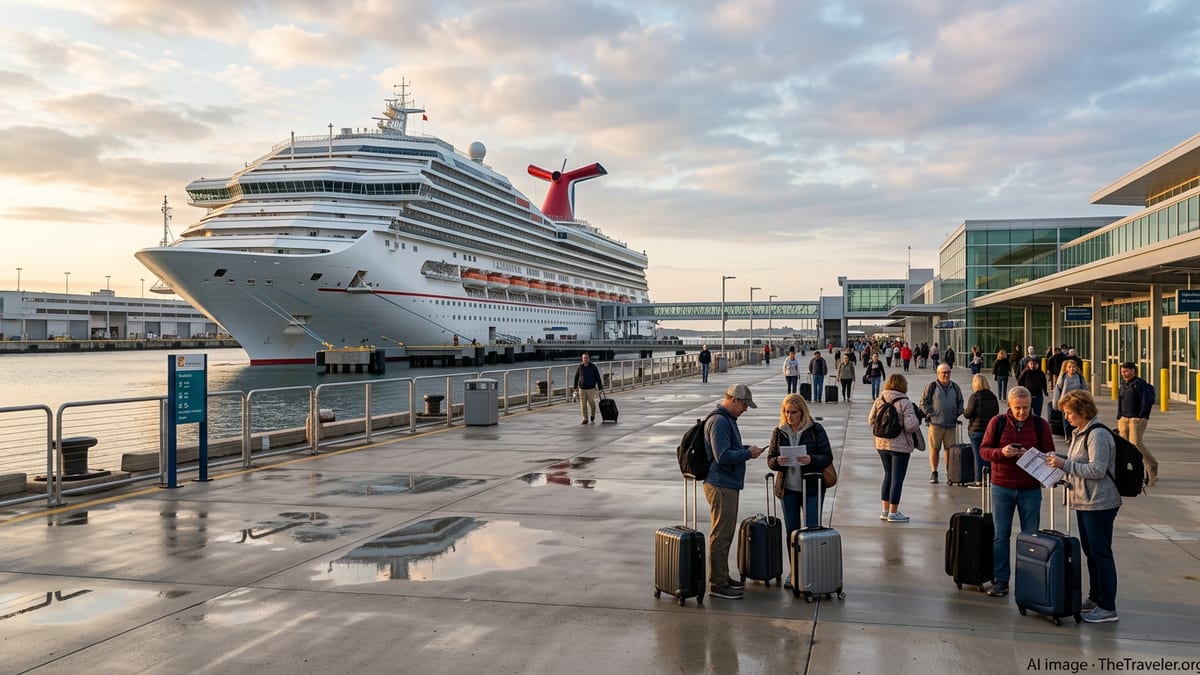
Medical Emergency Shortly After Departure
Reports indicate the medical emergency unfolded on Thursday, July 16, when Carnival Sunrise had recently left PortMiami on a short Bahamas itinerary. The ship was sailing only a few miles northeast of Government Cut, the main shipping channel into Miami, when crew members requested assistance for a pregnant traveler in distress.
Publicly available information shows that a U.S. Coast Guard crew from Station Miami Beach responded to the call and carried out a medical evacuation from the cruise ship. Images released through official channels depict a small Coast Guard vessel coming alongside the larger cruise ship as responders transfer the woman for transport back to shore.
Weather and sea conditions near Miami were reported to be favorable at the time, which likely aided the relatively swift transfer. From the waters off Miami Beach, the patient was taken to local emergency medical services onshore for further care. No updates on her condition or that of the pregnancy have been publicly detailed, with privacy considerations limiting what is shared.
The incident occurred close enough to Miami that a boat transfer was used instead of a helicopter hoist, a reminder that even on routine sailings out of major U.S. homeports, serious medical situations can develop within sight of the skyline.
Carnival Sunrise Voyage Continues After Diversion
Carnival Sunrise, which typically sails short cruises to the Bahamas and the Caribbean from Miami, had only just embarked on a four or five night roundtrip itinerary when the emergency call went out. According to cruise-tracking and schedule data, the ship departed PortMiami in the afternoon with plans to call at popular island ports before returning to South Florida.
After the transfer near the entrance to Government Cut, publicly available tracking information suggests the vessel resumed its scheduled route. There are no broad indications that the voyage was significantly altered for other guests, beyond the temporary slowdown required for the medical operation near Miami.
Medical facilities onboard modern cruise ships are designed to handle a range of urgent issues, but situations involving pregnancy can prompt quicker coordination with shore-based care. In this case, proximity to a major port and the presence of a nearby Coast Guard station enabled the crew to arrange an off-ship evacuation early in the voyage.
The episode underscores how ships sailing from Miami, one of the world’s busiest cruise hubs, routinely work within an established framework of cooperation with local and federal responders whenever life-safety concerns arise.
Pregnancy Policies Under Renewed Scrutiny
The evacuation has drawn renewed attention to pregnancy policies across the cruise industry. Carnival’s publicly posted guidelines state that guests may only sail if they have not entered the 24th week of pregnancy at any point during the voyage. The cruise line also requires a physician’s note for pregnant travelers, confirming both the gestational age and fitness to sail.
These restrictions are broadly similar to those of other major cruise brands, which cite limitations of shipboard medical facilities and the distance from advanced neonatal care as reasons for conservative rules. According to information shared by Carnival and other lines, onboard medical centers are not equipped for premature deliveries or serious pregnancy complications.
While it is not publicly known how far along the passenger on Carnival Sunrise was in her pregnancy, the incident highlights the practical reasons behind such policies. Even a short itinerary out of Miami quickly places a ship hours away from land-based hospitals, especially once it clears the Florida coast en route to the Bahamas or the Caribbean.
For travelers, the event may serve as a reminder to review pregnancy-related fine print closely before booking. Travel agents and cruise-focused consumer sites frequently advise expectant parents to verify gestational cutoffs and to carry detailed medical documentation when boarding.
How Cruise Ship Medical Evacuations Work
Medical evacuations from cruise ships near Miami follow established procedures shaped by geography and traffic patterns at the busy port. When an onboard medical team determines that a passenger needs care beyond what the ship can provide, the captain coordinates with shore-based responders to determine the safest and fastest extraction method.
In the case of the Carnival Sunrise incident, reports indicate that a small response vessel met the ship several miles offshore rather than requiring a full diversion into the cruise terminal. This kind of rendezvous in open water allows the cruise ship to minimize schedule disruptions while still prioritizing the patient’s needs.
For more distant emergencies, helicopters may be dispatched to hoist patients from the vessel, a complex maneuver that depends on weather, sea state, and deck configuration. Near major ports such as Miami, however, boat transfers are often preferred when time and conditions permit, since they avoid the additional risks associated with airborne operations.
Recent transportation safety analyses have noted that rapid communication between ship personnel and shore agencies is critical to ensure that patients with time-sensitive conditions, including pregnancy complications, reach advanced care as quickly as possible.
Travel Implications for Expectant Cruisers
The evacuation near Miami is likely to resonate with travelers who are pregnant or planning to become pregnant around the time of a cruise. Travel-industry guidance consistently suggests that anyone expecting a child should consult a healthcare provider before sailing and carefully consider the timing of a trip relative to due dates and potential complications.
Publicly available commentary from cruise specialists indicates that many expectant guests choose itineraries from major homeports such as Miami precisely because of the proximity to U.S. medical infrastructure at the beginning and end of a voyage. The Carnival Sunrise case illustrates that even with that advantage, emergencies can arise quickly and require off-ship intervention.
For cruise lines, incidents like this underscore the importance of clear pre-cruise communication about medical policies, including pregnancy limitations and documentation requirements. Companies also regularly review cooperation protocols with maritime and local responders to refine how swiftly guests can be transferred ashore when necessary.
As summer sailings continue from PortMiami, the pregnant passenger’s evacuation from Carnival Sunrise stands as a reminder of both the inherent challenges of providing medical care at sea and the complex network of responders that supports the region’s cruise operations.