


For devoted cruisers, the right co-branded credit card can feel like a permanent cabin upgrade. The Princess Cruises Rewards Visa and the Carnival World Mastercard both promise onboard credit, financing perks, and rewards that funnel straight back into future sailings. Yet the details differ in ways that matter when you are standing at the guest services desk asking how far your points will really stretch. This side-by-side look focuses on how each card performs for real travelers planning actual cruises today, not just on paper.
Get the latest updates straight to your inbox!
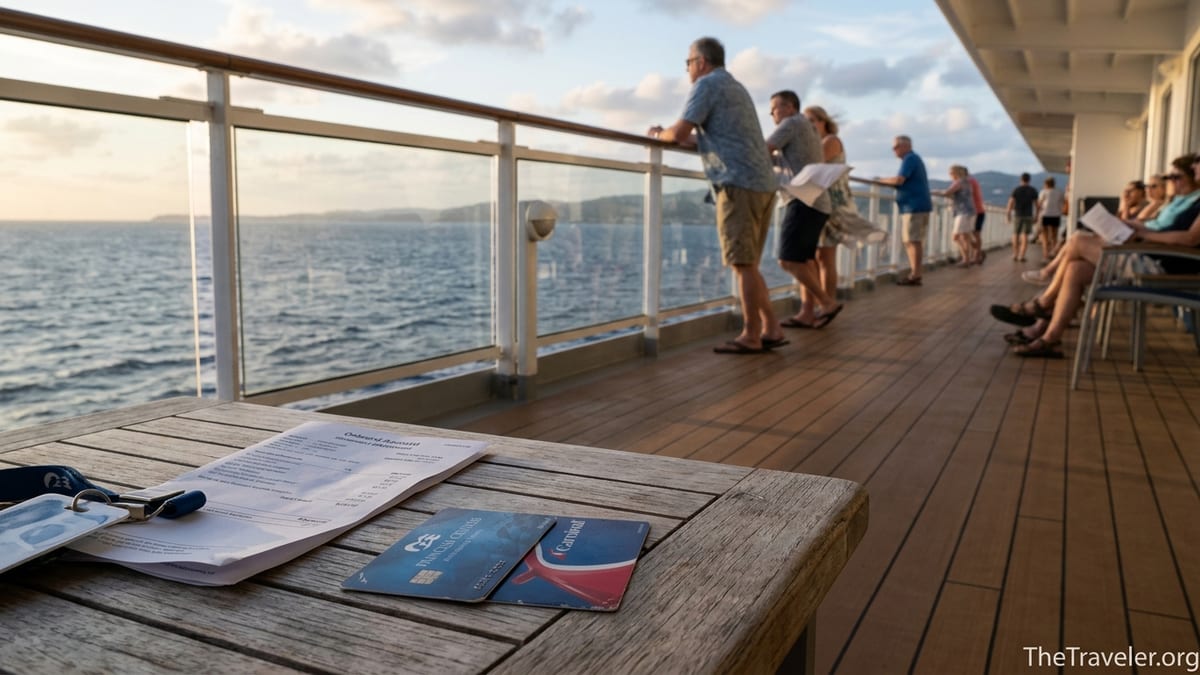
At a Glance: Two No-Annual-Fee Cruise Cards Backed by Barclays
Both the Princess Cruises Rewards Visa and the Carnival World Mastercard are issued by Barclays, have no annual fee, and are designed to reward brand loyalty. For many travelers, that no-annual-fee structure is the first big draw. You can keep the card long term for occasional cruise-related perks without feeling pressure to “earn back” a yearly charge.
The Carnival World Mastercard currently advertises a welcome offer of 30,000 FunPoints after spending a set amount in the first 90 days, enough for about 300 dollars in onboard credit with Carnival. It also offers 0 percent promotional APR for six months on qualifying Carnival cruise bookings and a 0 percent introductory APR window on balance transfers for new cardholders, plus no foreign transaction fees on international purchases. These details can shift, so you need to confirm the exact thresholds and APR ranges at application time.
The Princess Cruises Rewards Visa typically features a welcome bonus in the range of 20,000 points after you meet a relatively modest spending requirement in the first three months, which recent bank and media summaries value around 200 dollars toward Princess purchases or onboard credit. Like its Carnival cousin, it has no annual fee, earns elevated rewards on cruise purchases, and is built to work seamlessly with Princess’s onboard systems and payment processes.
For a traveler who alternates between brands, the overlapping Barclays backend will feel familiar. For someone firmly in one cruise “tribe,” the choice will come down to how the card meshes with your preferred itineraries, onboard spending patterns, and financing needs.
Earning Points: Where Each Card Works Hardest
The Carnival World Mastercard is straightforward: you earn 2 FunPoints per dollar on purchases made directly with Carnival Cruise Line and 1 FunPoint per dollar on all other spending. Put a 2,500 dollar Caribbean sailing for two on the card and you are looking at roughly 5,000 points from the cruise itself, plus additional points from pre-cruise purchases like drink packages or shore excursions bought through Carnival’s site.
The Princess Cruises Rewards Visa offers a similar structure, with 2 points per dollar spent on Princess Cruise Line purchases, including cruise fares and onboard amenities, and 1 point per dollar on all other purchases. A 3,000 dollar Alaska sailing booked directly with Princess would earn 6,000 points, while a 400 dollar spend on spa treatments, specialty dining, or Wi-Fi packages charged to your onboard account would generate another 800 points once the folio closes and posts to your credit card.
Where real-world use diverges is in day-to-day spending. Neither card offers bonus rewards for common travel-adjacent categories such as airfare, hotels, gas, or dining away from the cruise line. If you put a 500 dollar airline ticket to Fort Lauderdale and a 300 dollar pre-cruise hotel stay in Miami on the Carnival card, you earn 800 FunPoints at the base 1x rate. The Princess card works the same way with flights into Seattle for an Alaska voyage or a pre-cruise hotel in Rome for a Mediterranean itinerary.
For frequent cruisers who also hold a general travel card that earns, for example, 3 points per dollar on dining or 2 points per dollar on all travel, it often makes sense to reserve the co-branded card mainly for the cruise fare and eligible onboard spending. That way, you still capture the 2x category bonuses aligned with your favorite line while funneling the rest of your vacation budget through a more broadly rewarding card.
Redeeming Rewards: How Far Do Points and FunPoints Really Go?
Redemption rules are where cruise credit cards can feel less intuitive than general travel cards. With the Carnival World Mastercard, FunPoints are primarily geared toward Carnival-related redemptions: onboard credit, cruise discounts, or statement credits tied to qualifying Carnival transactions. Recent issuer and independent reviews indicate that redemptions for Carnival purchases tend to deliver the strongest value, roughly 1 cent per point, so those 30,000 FunPoints from a sign-up bonus can typically translate into about 300 dollars to spend on drinks, specialty dining, shore excursions, or even partial payment of a future cruise.
In practice, this could look like a family sailing a seven-night Western Caribbean itinerary out of Galveston. They might apply their 300 dollars in onboard credit toward a photo package, a couple of nights at the steakhouse, and all-day passes to the ship’s water park attractions. The key is that the value is locked into the Carnival ecosystem. Redeeming FunPoints for generic statement credits or gift cards away from Carnival often yields a lower effective rate.
The Princess Cruises Rewards Visa offers more flexible redemption options but also more complex rules. Cardholders can redeem points toward onboard credit or as statement credits against eligible travel purchases with Princess Cruises and other cruise brands under the Carnival Corporation umbrella, as well as certain airline purchases over a set dollar threshold. For example, you might return from a 10-night Mediterranean cruise and then apply points within a 180-day window to offset the 1,200 dollar Princess charge on your card, effectively “paying yourself back” using accumulated rewards from previous sailings and routine spending.
That flexibility is particularly useful if your travel style occasionally hops between brands. A couple might take a Princess Alaska voyage one year and a Holland America Panama Canal cruise the next. Because Princess is part of the same parent company group, the card’s redemption rules often allow points to be used across related brands or toward airfare booked separately, which can ease the logistics of multi-year cruise planning. You still need to double-check current reward terms before booking, but the design is friendlier to travelers who see cruises as a pillar of their broader travel strategy rather than a once-every-few-years splurge.
Onboard & Booking Perks: Financing, Fees, and Practical Value
On paper, one of the Carnival World Mastercard’s standout benefits is its 0 percent promotional APR for six months on qualifying Carnival cruise booking purchases. Suppose you book a 2,800 dollar New Orleans to Western Caribbean sailing and would prefer to spread the cost over six billing cycles without incurring interest. Using the Carnival card and paying roughly 467 dollars each month lets you do exactly that as long as you clear the balance before the promotional period ends. For budget-conscious families planning big trips around school breaks, that flexibility can feel like a built-in payment plan from the cruise line itself.
Princess’s card does not currently highlight a comparable promotional APR for cruise purchases in public marketing, so if you are specifically looking for interest-free financing on the fare, Carnival holds the edge. However, many regular Princess cruisers sidestep financing altogether by pairing the Princess Visa with future cruise deposits, shareholder benefits, or targeted onboard credit promotions, effectively reducing how much needs to be charged and carried on the card in the first place.
Both the Princess Visa and Carnival World Mastercard charge no foreign transaction fees, a practical perk given how many cruises depart from or call at international ports. A traveler sailing from Barcelona or Vancouver can use either card onboard and in port shops without worrying about an extra 3 percent fee layered on top of every souvenir or tapas bill. The cards also carry the standard suite of Visa or World Mastercard travel protections, which may include things like travel accident insurance or limited trip protections. The exact mix changes periodically, so it is important to review the current guide to benefits once your card arrives.
In day-to-day onboard life, neither card unlocks elite-style perks such as priority boarding or complimentary specialty dining that some airline co-branded cards offer. There are no exclusive lounges for cardholders or guaranteed cabin upgrades. The real onboard value is in the ability to turn points into credits you see on your folio for Wi-Fi packages, specialty coffees, or that second shore excursion you might otherwise skip.
How They Fit into a Broader Cruise Travel Strategy
Viewed in isolation, both the Princess Cruises Rewards Visa and the Carnival World Mastercard offer solid, if not spectacular, value for fans of their respective brands. The absence of annual fees makes them relatively low-risk additions to a wallet already anchored by a strong general travel card. The question for many travelers is not “which one is best overall” but “where does each card fit into my broader cruise and travel budget.”
Imagine a couple who cruises with Princess every other year and takes at least one land-based vacation annually. They might use a general travel card that earns 2 points per dollar on all travel and dining for flights, hotels, and restaurant bills, saving the Princess Visa for cruise fare, onboard spending, and maybe a batch of airline tickets they plan to redeem against with points later. Over two or three years, this strategy can quietly build a meaningful pool of cruise-offsetting rewards without sacrificing higher earning rates on everyday non-cruise spending.
By contrast, a family that books at least one Carnival sailing each year, often on newer ships with elaborate water parks and entertainment, might lean harder on the Carnival World Mastercard. They could use the card to finance a 2,500 to 3,000 dollar cruise interest-free for six months, then roll any future onboard spending into redemptions funded by their FunPoints. If they are not deeply invested in airline or hotel loyalty programs, this straightforward cruise-centric approach can be easier to manage than juggling multiple bank reward currencies.
For travelers who bounce between Princess, Carnival, Royal Caribbean, and Norwegian depending on price and itinerary, neither card is likely to be the central workhorse. In that scenario, a general travel card with higher rewards across categories and flexible transfer partners often makes more sense, with a cruise card only added once your loyalty to a single line solidifies.
Real Itineraries, Real Numbers: When Each Card Shines
Consider a seven-night Alaska sailing with Princess in June, priced around 3,400 dollars for a balcony cabin for two, plus 700 dollars in onboard spending for excursions in Ketchikan and Juneau and specialty dining. Paying all 4,100 dollars with the Princess Visa yields about 8,200 points. Depending on the prevailing redemption rate, that may offset roughly 80 dollars to 100 dollars of a future Princess charge. If you have previously earned a 20,000 point welcome bonus, you might combine that with these new points to knock 250 dollars to 300 dollars off a future cruise or turn the entire pool into onboard credit for your next sailing.
Now picture a similar seven-night cruise on a newer Carnival ship out of Miami for a family of four, with a fare near 3,000 dollars and onboard spending of about 1,200 dollars on kids’ activities, specialty dining, and gratuities. Putting the entire 4,200 dollars on the Carnival World Mastercard generates roughly 8,400 FunPoints at the blended rate. Paired with the 30,000 point welcome offer, that family could walk onto their next cruise with over 400 dollars in onboard credit, enough to cover Wi-Fi, a drinks package for the adults, and at least one marquee shore excursion.
In both examples, the effective return on spending tends to sit around 1 percent to 2 percent when you redeem strategically for cruise-related expenses. This is competitive with many no-annual-fee cash back cards but falls short of premium travel products that can deliver 3 percent or more in value once you factor in transfer partners and richer category bonuses. The appeal of the cruise cards is not about squeezing out every possible percentage point but about psychological and practical simplicity: your vacation spending feeds directly and visibly into your next voyage.
There are also non-mathematical considerations. Some cruisers like the way their co-branded card looks and feels, especially when it matches the logo on their cruise card or lanyard. Others appreciate dealing with one bank for both their Princess and Carnival cards if they sail both brands under the same corporate umbrella. These softer factors are hard to quantify but do influence how enjoyable and manageable your overall cruise planning feels.
The Takeaway
For travelers deeply loyal to a single line, both the Princess Cruises Rewards Visa and the Carnival World Mastercard can play a useful supporting role in cruise planning. Carnival’s card stands out for its clear 0 percent promotional APR on qualifying cruise bookings, substantial welcome offer geared toward onboard credit, and strong alignment with value-focused family itineraries. It is an appealing option if you cruise Carnival regularly and like the idea of spreading out payments without interest for part of the year.
The Princess Cruises Rewards Visa, by contrast, tends to appeal to travelers who see Princess as part of a broader portfolio of trips. Its redemption options that can apply to Princess and certain other travel purchases, combined with the same no-annual-fee structure, make it a flexible way to feed a steady stream of onboard credit or cruise discounts into a long-term sailing plan. The card rarely delivers best-in-class rewards on everyday expenses, but it does a solid job tying your general spending back to your time at sea.
Neither card is likely to replace a strong general travel credit card that earns elevated rewards on airfare, hotels, and dining. For many cruisers, the most effective setup is a two-card strategy: a broad travel card for most expenses and a cruise card reserved for branded fares and onboard purchases. With that approach, your flights to the port, your pre-cruise stays, and your dinners on shore all earn robust rewards, while your cruise card quietly builds a dedicated balance for your next sailing.
The right choice ultimately depends on where you prefer to sail, how often you cruise, and whether financing flexibility is more important than redemption flexibility. Take a close look at your upcoming itineraries, estimate your cruise-related spending for the next 12 to 24 months, and match that pattern to the card whose strengths line up most closely. Used thoughtfully, either the Princess Visa or the Carnival World Mastercard can turn everyday purchases into sea days, sunsets, and small onboard luxuries that make your time on the water feel just a bit more rewarding.
FAQ
Q1. Does the Carnival World Mastercard offer better rewards than the Princess Cruises Rewards Visa?
The Carnival World Mastercard and Princess Visa offer similar base earning on general purchases and elevated rewards on their own cruise line spending, but Carnival often pairs its card with a larger welcome bonus and a clear 0 percent promotional APR on qualifying cruise purchases, which can make it feel more rewarding for Carnival loyalists.
Q2. Can I use the Princess Cruises Rewards Visa or Carnival World Mastercard to pay for cruises on other lines?
You can use either card anywhere Visa or Mastercard is accepted, including other cruise lines, but you generally earn only the base rewards rate on non-partner purchases and may not get the same strong redemption value as you do with their respective partner brands.
Q3. Are there foreign transaction fees on the Princess and Carnival cruise credit cards?
Recent issuer information indicates that both the Princess Cruises Rewards Visa and the Carnival World Mastercard do not charge foreign transaction fees on international purchases, which is a practical advantage for cruises visiting foreign ports.
Q4. Which card is better if I need to finance a cruise over several months?
The Carnival World Mastercard is usually more attractive for financing because it offers a 0 percent promotional APR for six months on qualifying Carnival cruise bookings, allowing you to spread the cost over multiple billing cycles without interest if you pay the balance before the promo period ends.
Q5. Can I redeem Carnival FunPoints or Princess points for airfare?
Carnival FunPoints tend to deliver their best value when redeemed for Carnival-related charges, while Princess Visa points can often be redeemed as statement credits against eligible airline purchases over a certain threshold, though specific rules and minimums can change and should be checked before booking.
Q6. Do these cruise credit cards help me earn elite status with Carnival or Princess?
Neither card directly accelerates your elite status in the way some airline cards do; your loyalty tier with Carnival or Princess is still based mainly on sailings and nights at sea, though the cards can indirectly make it easier to book more cruises.
Q7. Is it worth getting both the Princess Visa and the Carnival World Mastercard?
Holding both cards only makes sense if you regularly cruise with both lines and can comfortably meet any welcome bonus spending thresholds without overspending; otherwise, one co-branded card plus a strong general travel card is usually sufficient.
Q8. How quickly do points post from onboard spending during a cruise?
In most cases, points from onboard spending post after your final folio closes and the total charge hits your credit card statement, which can be several days after disembarkation, so they will not typically be available to use during the same cruise.
Q9. What credit score do I need to qualify for these cruise credit cards?
Issuers do not publish hard minimums, but both cards are generally targeted at applicants with good to excellent credit; if your score is in at least the high 600s or above and your income and existing debt are reasonable, your chances are usually stronger.
Q10. Should I use a cruise credit card for everyday expenses like groceries and gas?
You can, and you will earn base-level rewards, but many travelers prefer to use a general cash back or travel card that offers higher earning rates on everyday categories, saving the cruise card specifically for cruise fares and onboard spending where its perks are most valuable.