


More news on this day
Travel to Burgundy increasingly rewards slow, deliberate planning, with recent coverage highlighting how timing, transport choices and smarter wine bookings can transform a simple week into a deeply textured stay.
Get the latest news straight to your inbox!
Time your week around seasons, harvest and key events
Recent travel analysis points to autumn, especially September and October, as the most atmospheric time for a week in Burgundy, when vineyards glow gold and harvest activity brings villages to life. Spring offers quieter cellar visits and lower rates, while high summer tends to be busier and warmer, with more visitors on the wine routes. Choosing a season that matches your style, rather than chasing generic “good weather,” is emerging as the new rule of thumb.
Reports indicate that harvest periods now draw more international visitors who want to see grapes being picked and presses running, but this also adds pressure on accommodation and winery calendars. Accommodation in hubs such as Beaune and Dijon can sell out months ahead for peak weekends, while some estates limit visits so staff can focus on the vintage. Travelers planning a harvest‑season week are increasingly encouraged to lock in both rooms and tastings far in advance.
Outside harvest, a growing number of events shapes the calendar for a week‑long stay. Wine‑themed festivals, food markets and cultural programs in towns across the Côte d’Or give structure to itineraries, particularly for first‑time visitors. Publicly available information shows that autumn charity auctions and regional wine celebrations regularly attract global attention, which can add energy to a trip but also requires more advance planning for dining and logistics.
Winter, by contrast, has become a niche recommendation for serious wine travelers seeking quiet tasting rooms and lower nightly rates. Fewer daylight hours and cooler temperatures make it better suited to a cellar‑focused itinerary, with more time spent in Dijon’s museums, Beaune’s historic hospital complex and long lunches in village restaurants rather than extended touring in the vineyards.
Use rail, local bases and bikes instead of constant driving
Current transport guidance emphasizes that visitors no longer need to rely solely on rental cars to make a Burgundy week work. High‑speed rail links from Paris and Lyon into Dijon and Beaune allow travelers to step off a train and begin exploring on foot within compact historic centers. From there, regional trains and occasional buses connect out to satellite towns, reducing both parking stress and time lost in traffic.
Once in wine country, cycling has moved from niche activity to mainstream recommendation. Tourism offices and travel media now highlight Burgundy’s extensive network of signposted cycling routes, with the Voie des Vignes frequently cited as a standout option for a one‑week stay. This vineyard route threads between villages such as Beaune, Nuits‑Saint‑Georges and Gevrey‑Chambertin, offering a car‑free way to link tastings, picnic stops and small family‑run cellars.
Travel features describe how e‑bikes in particular have opened the region to a wider range of visitors, allowing riders to manage hills and distances comfortably while still traveling slowly through the landscape. Several mid‑range and boutique hotels in and around Beaune and Dijon are reported to offer in‑house rentals or guided day rides, which can be slotted into a week‑long itinerary without complex logistics.
For those who do rent a car, recent commentary stresses treating it as a tool for transfers rather than something to use every day. Many travelers now choose one base in Beaune or Dijon for four or five nights, then a second base in a smaller wine village, minimizing hotel changes and driving days. That approach keeps journeys between tasting appointments short and allows for evenings on foot, which matters in a region where wine is central to the experience.
Book tastings smartly and mix iconic names with hidden cellars
Wine travelers increasingly report that the biggest mistake on a one‑week Burgundy trip is assuming wineries will accept walk‑ins. According to recent guidance aimed at visitors, many domaines, especially in the Côte de Nuits and Côte de Beaune, now require appointments and may only host a limited number of tastings each day. Booking two or three structured visits per day, with generous time buffers, is widely recommended as a realistic rhythm.
Advisers suggest balancing marquee names with smaller estates to get a fuller picture of the region. Publicly available resources, including tourism office lists and online booking platforms, make it easier to secure visits with lesser‑known producers that still offer high‑quality wines. These smaller cellars often provide more time with staff and a detailed explanation of how village, premier cru and grand cru sites differ, which can be particularly helpful for first‑time visitors.
Specialists also recommend weaving in at least one independent wine bar in Beaune or Dijon during a week‑long stay. These venues pour flights from a variety of appellations and producers, letting travelers taste widely without crisscrossing the countryside. Pairing an evening at a wine bar with more focused daytime appointments reduces logistics and lets visitors compare bottles from different villages side by side.
Timing matters during harvest, when wineries are at their busiest. Industry commentary notes that appointments during this period often involve less time in the cellar and more restrictions on group size. Travelers are advised to confirm all bookings in writing, arrive punctually and consider scheduling non‑wine activities, such as abbey visits or market strolls, into the same day to avoid last‑minute gaps if an estate reschedules due to picking or pressing.
Anchor your week in Beaune and Dijon, with selective hotel upgrades
Recent coverage continues to position Beaune as the de facto capital for wine‑focused stays, with its concentric ring of vineyards making it a practical base for several days of touring. Dijon, connected by frequent trains and roads, has been highlighted for its growing hotel stock, grand medieval core and increasingly ambitious restaurant scene. Combining both in a one‑week itinerary allows travelers to split time between urban culture and vineyard immersion.
Hospitality reports show that new and refurbished properties have opened in and around Beaune in the past few years, adding to the choice of four‑ and five‑star options alongside long‑standing boutique addresses. In Dijon, adaptive‑reuse projects and branded hotels have broadened the range of price points close to the historic center. These developments give travelers more flexibility to mix one or two splurge nights with simpler stays elsewhere during a week‑long trip.
Analysts suggest booking at least one hotel with strong wellness or spa facilities if the budget allows. After consecutive days of tastings and cycling, access to a high‑quality spa or pool can reset energy levels and keep a busy week feeling restorative rather than exhausting. Several established properties in both Beaune and Dijon now promote wellness as a core part of their wine‑country offering.
Across the region, rooms that combine secure bike storage, flexible breakfast hours and staff familiar with local wine touring logistics are being singled out as particularly valuable for a seven‑day stay. Choosing such properties early, especially for peak autumn or festival periods, can remove logistical friction and free up more time for tasting rooms and countryside excursions.
Balance wine with food, heritage and slow days in the countryside
Travel planners increasingly emphasize that a satisfying Burgundy week should not be a continuous run of tastings. The region’s food culture, historic sites and pastoral landscapes are now viewed as essential counterpoints to the cellar. Traditional dishes such as boeuf bourguignon, oeufs en meurette and epoisses cheese feature prominently in current dining coverage, with many visitors structuring at least one long lunch or dinner each day around regional specialties.
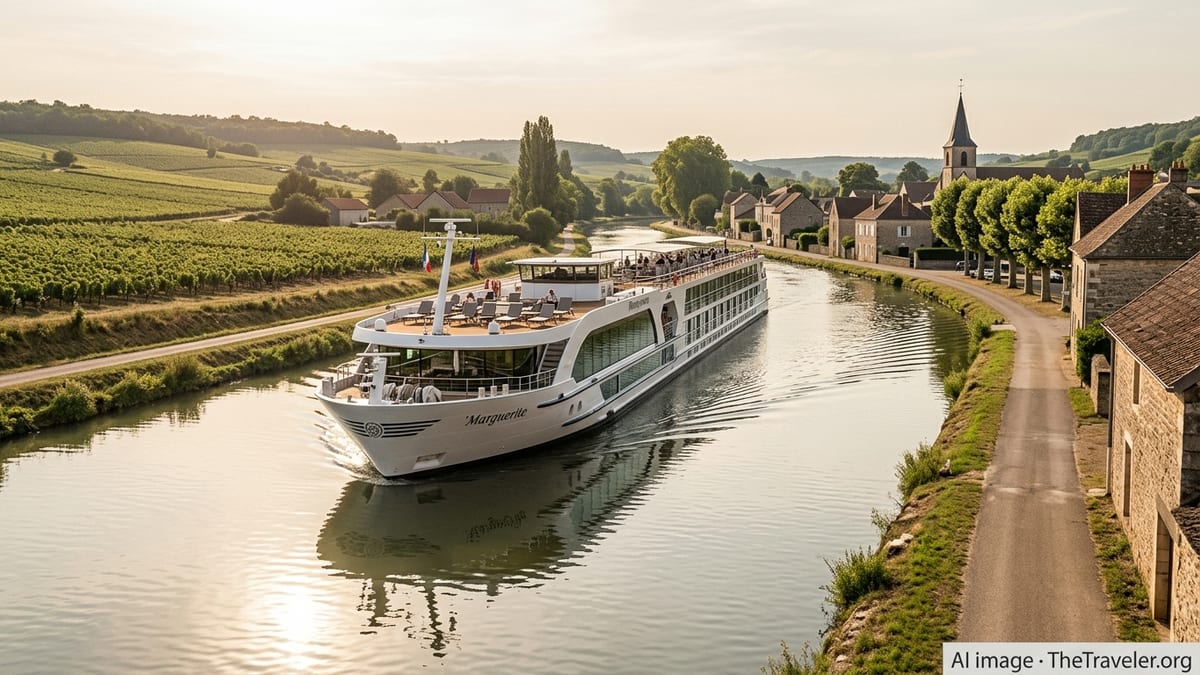
Heritage sites, including medieval town centers, abbeys and canal‑side villages, are widely recommended as day‑trip anchors away from the wine route. Visiting these places on non‑harvest weekdays can deliver quieter streets and a more relaxed pace, giving travelers time to absorb local architecture, markets and riverside walks before returning to their base. This balance helps prevent palate fatigue while deepening the overall sense of place.
Analyses of recent traveler behavior suggest that building at least one “soft” day into a seven‑night itinerary pays dividends. On such days, visitors might limit themselves to a market visit, a picnic among the vines and an afternoon at a spa or hotel courtyard. This approach recognizes that Burgundy is as much about atmosphere as it is about specific tick‑box sights, allowing experiences to sink in rather than rushing from appointment to appointment.
Finally, observers note that many repeat visitors now treat Burgundy as a place to return to, not to cover comprehensively in a single week. Accepting that some villages, cellars or restaurants will wait for next time takes pressure off the schedule. That mindset, paired with thoughtful timing, smart logistics and curated tastings, gives travelers the best chance of making a first week in Burgundy feel both effortless and memorable.