


Public transportation is a central pillar of daily life and mobility in Germany. For potential relocators, the performance of trains, metro systems, and regional services directly affects commuting reliability, access to employment hubs, and the feasibility of a largely car-free lifestyle. Germany remains one of Europe’s most rail-oriented countries, but its network is undergoing capacity stress and modernization, with implications for service quality and predictability.
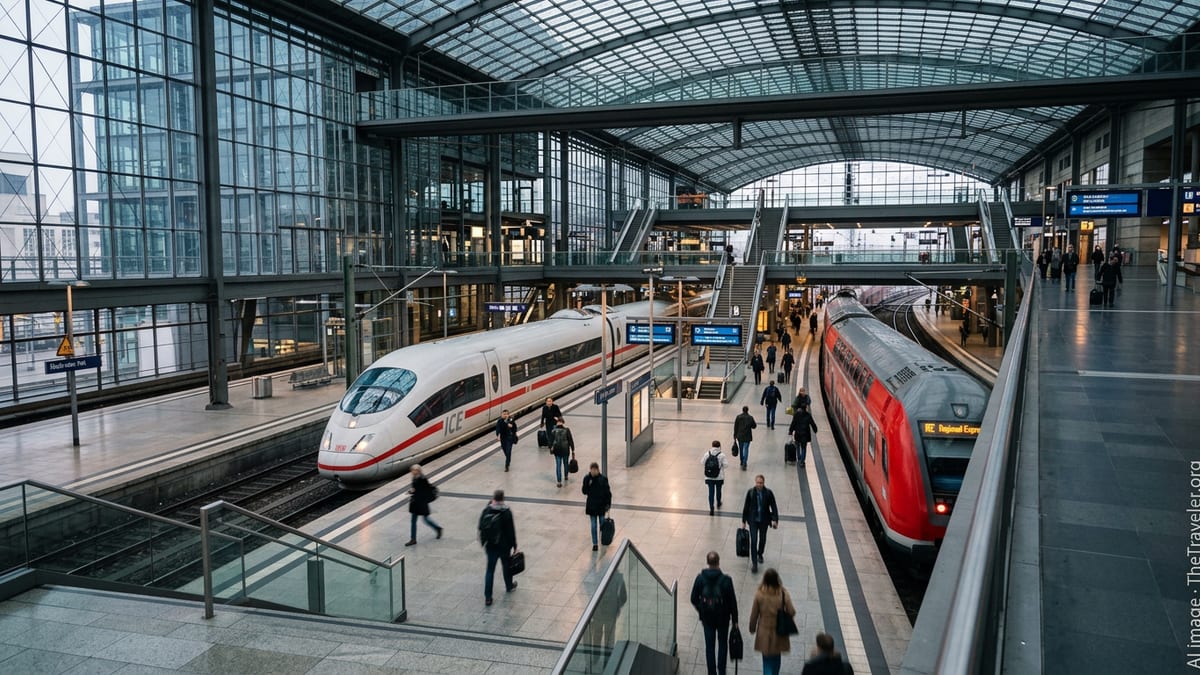
System Overview: Rail-Centered National and Urban Mobility
Germany’s public transportation is built around a dense rail network complemented by extensive urban transit systems. Intercity and high-speed trains connect major metropolitan regions, while regional rail, S-Bahn systems, metros (U-Bahn), trams, and buses provide fine-grained coverage within and between cities. For residents in large metropolitan areas such as Berlin, Munich, Hamburg, and the Rhine-Ruhr region, it is generally feasible to rely on public transport as the primary mode of daily mobility, though service quality and reliability vary significantly by corridor and operator.
Local and regional public transport usage by bus and rail reached roughly 11.5 billion passenger trips in 2024 across Germany, illustrating the central role of public transport in everyday mobility. Average trip distances of around 7 to 8 kilometers point to a primary use case of commuting and routine local travel rather than long-distance journeys. Public transport tends to capture a substantial share of commuting in large cities; for example, estimates for Berlin suggest that public transport accounts for roughly a quarter of work trips, with walking and cycling also playing major roles.
Governance and funding are shared between federal and state levels, with local transport authorities planning and contracting most regional and urban services. This decentralized structure allows tailored local solutions but also results in a patchwork of operators and fare systems that are only partially harmonized. Recent reforms and products, such as the nationwide Deutschlandticket for local and regional services, are explicitly aimed at improving integration and ease of use for residents moving between regions.
For relocators, the key structural takeaway is that rail and metro systems are extensive and widely used, but performance is uneven. Urban coverage is strong in most larger cities and their surrounding regions, while rural areas can exhibit thin frequencies and limited evening or weekend services that may necessitate car ownership.
Long-Distance Trains: Connectivity vs. Reliability Trade-Offs
Germany’s long-distance rail network, primarily operated by the national rail company under the ICE and IC brands, offers high-frequency connections between major cities. Travel times between hubs are competitive with air or car for many domestic routes, supporting rail as a realistic primary mode for business and personal intercity travel. High-speed corridors link cities such as Berlin, Hamburg, Munich, Cologne, and Frankfurt with multiple trains per hour during peak periods on core routes.
However, chronic infrastructure bottlenecks and extensive construction work have led to a deterioration in punctuality. Official data for 2024 and 2025 indicate that only around 60 to 63 percent of long-distance trains arrived within six minutes of schedule, marking the worst on-time performance in decades. Network-wide infrastructure renewal, high capacity utilization on core corridors, and the need to maintain traffic during construction are key drivers of these delays. For frequent users, delays of 10 to 30 minutes are relatively common on busy routes, with occasional severe disruptions.
From a relocation perspective, this means that long-distance rail is generally viable for regular intercity commuting or frequent business travel, but schedule padding is advisable and strict just-in-time connections should be avoided. Residents who must routinely travel long distances for work may need to factor in additional travel time buffers, flexible working arrangements, or alternative modes such as occasional domestic flights on particularly delay-prone corridors.
Despite the reliability challenges, long-distance trains remain central to Germany’s mobility strategy, with multi-billion-euro investment programs currently under way to renew track, modernize signaling, and increase capacity. These projects are expected to improve punctuality over the medium term, but in the near term, relocators should anticipate periods of disruption and temporary rerouting on major lines.
Regional and Local Rail: S-Bahn and Regional Trains
Regional and local rail services form the backbone of daily commuting for many residents outside city centers. Two main categories are relevant to relocators: S-Bahn networks and regional trains (commonly labeled RE and RB). S-Bahn systems provide higher-frequency suburban and regional rail services in metropolitan areas, linking city centers with outlying suburbs, satellite towns, and nearby smaller cities. These networks exist in most large metropolitan regions, including Berlin-Brandenburg, Munich, Hamburg, Rhine-Ruhr, Rhine-Main, Stuttgart, and others.
Regional Express (RE) and Regionalbahn (RB) trains operate beyond the S-Bahn core, connecting small and mid-sized towns with regional hubs and larger cities. Frequencies typically range from every 30 minutes on busy corridors to hourly or every two hours in more rural areas. In many regions, these trains share tracks with long-distance services, which means they can be affected by the same infrastructure bottlenecks and knock-on delays, although scheduled padding often mitigates this partially.
For relocators considering suburban or exurban living, regional rail quality and frequency are decisive factors. In strong commuter regions such as around Munich, Frankfurt, and Hamburg, S-Bahn and RE services generally offer robust peak frequencies, with off-peak and evening services still relatively frequent. In contrast, structurally weaker or more rural regions may offer only hourly or less frequent services, with reduced options late at night or on weekends. Prospective residents should scrutinize specific line timetables, especially if relying on connections for child care pick-up, shift work, or weekend social activities.
Accessibility for regional rail is generally good, with ongoing programs to modernize smaller stations, raise platforms, and install elevators. However, step-free access is not yet universal on older platforms, and rolling stock types vary widely between regions. Individuals with mobility constraints should assess specific stations and train types along their intended routes, as conditions can differ significantly even within the same region.
Urban Metro, U-Bahn, and Tram Systems
Germany’s three largest cities Berlin, Munich, and Hamburg have full metro systems (U-Bahn) as a central element of their urban public transportation. The Berlin U-Bahn covers dense inner-city areas with frequent service, typically every few minutes on core sections. Munich’s U-Bahn similarly supports high-capacity corridors and, in combination with the S-Bahn, enables largely car-free commuting within the metropolitan region. Hamburg relies more heavily on S-Bahn and elevated rail but also operates U-Bahn lines integrated with its wider network.
In addition to U-Bahn systems, many medium and large cities operate extensive tram and light-rail networks that function as partial substitutes for metros. Cities such as Frankfurt, Cologne, Düsseldorf, Stuttgart, Leipzig, Dresden, and others rely heavily on tram or Stadtbahn networks, often with sections running underground through city centers for higher capacity. These systems generally provide short headways in central areas and acceptable frequencies in outer districts during the day, although evening and Sunday services can be less frequent.
Urban public transportation is typically organized through integrated transport associations that coordinate metro, S-Bahn, tram, and bus services under unified fare structures and common ticketing. This coordination simplifies transfers between modes and allows residents to use a single pass across multiple operators within the region. For new residents, understanding the local association (Verkehrsverbund) boundaries is essential, as many season tickets and passes are defined by zones or rings within these structures.
For relocators prioritizing car-free living, neighborhoods with direct access to U-Bahn or S-Bahn stations generally offer the most reliable and frequent service. Tram-served areas can also provide strong connectivity, especially in compact cities. However, outer districts that rely purely on bus services may have longer travel times and less predictable operations, particularly in peak congestion or during adverse weather.
Ticketing, Deutschlandticket, and Fare Integration
Historically, Germany’s fare landscape has been fragmented, with each regional transport association operating its own tariff system. While this remains true at a structural level, the introduction of the Deutschlandticket in May 2023 has significantly simplified everyday mobility across the country for local and regional travel. The Deutschlandticket is a nationwide monthly pass in subscription form that allows unlimited travel on local and regional public transport, including S-Bahn, U-Bahn, trams, buses, and most regional trains, across all participating regions. It does not cover long-distance ICE, IC, or EC trains operated in intercity traffic.
The Deutschlandticket launched at a monthly price of 49 euros. Since then, adjustments to federal and state funding have pushed the monthly price in many offers into the low 60-euro range, with some providers currently advertising around 63 euros per month. The ticket is valid for a calendar month and is typically issued as a digital pass in an app or as a smart card. It is sold only as a subscription, although conditions such as minimum terms, pause options, and cancellation periods vary by provider.
For relocators, the Deutschlandticket materially changes the economics of public transport-dependent living. In many metropolitan areas, it is significantly cheaper than previous local monthly passes that were valid only within a single region. The pass allows flexible travel across nearly all German regions on local and regional services. A resident can, for example, commute within a city, travel to surrounding towns on regional trains, and visit other German cities using slower regional services without purchasing additional tickets, provided they avoid long-distance trains.
Alongside the Deutschlandticket, many regional associations still offer additional products such as job tickets, semester passes for students, or discounted social passes. These often integrate with or are built on top of the Deutschlandticket framework. The overall trend is toward greater national integration and simplified offerings. Nevertheless, individual tariff rules, such as bicycle carriage, companion travel, or extension tickets for special express services, still differ by region, so newly arrived residents should review the conditions of their local association, particularly if commuting across zone boundaries or using park-and-ride facilities.
Service Quality, Punctuality, and Capacity Constraints
Public transport in Germany is widely used and relatively comprehensive, but it is currently characterized by capacity constraints and quality challenges, particularly in rail. Official reports describe a multi-year decline in overall rail punctuality up to 2024, with long-distance services reaching historic lows in the low 60-percent range for on-time arrivals within a six-minute threshold. Regional and local rail services have fared somewhat better but are still affected by infrastructure works, operational disruptions, and high utilization on core corridors.
Urban metro and tram networks generally offer higher reliability than long-distance rail, as they operate largely on segregated rights of way or dedicated tracks, with fewer conflicts with freight traffic or long-distance services. However, peak-hour crowding is a recurring issue in major cities, especially on central S-Bahn trunks and busy U-Bahn lines. In rapidly growing metropolitan regions such as Munich and Berlin, capacity upgrades are lagging behind demand, leading to crowded trains and occasional platform congestion during peak periods.
National and regional authorities are investing heavily in modernization. Large programs focus on renewing aging infrastructure, deploying digital signaling, and expanding high-capacity corridors. These investments are necessary to support rising passenger volumes but also result in short- and medium-term disruptions, including planned line closures and extended replacement bus services on certain routes. For relocators, this translates into a highly functional but occasionally unpredictable system: daily commuting within cities is generally reliable, while medium- to long-distance rail travel requires more contingency planning.
Customer information quality has improved, with real-time apps and station displays widely available. However, the decentralized operator landscape and frequent construction mean that information can be fragmented, and travelers sometimes face short-notice changes or platform alterations. New residents who rely heavily on public transport should familiarize themselves with real-time journey planning tools and consider travel insurance or flexible tickets for critical longer journeys.
Regional Variations and Rural Connectivity
Connectivity levels and service quality vary considerably across Germany’s regions. Large metropolitan areas such as Berlin, Hamburg, Munich, the Rhine-Ruhr conurbation, and the Frankfurt Rhine-Main region offer high public transport coverage, including dense S-Bahn, U-Bahn, and tram networks complemented by frequent buses. In these areas, many households, particularly in central districts, can reasonably dispense with private car ownership, relying on public transport combined with cycling and walking for most needs.
In contrast, rural regions and smaller towns may offer limited public transport options, often concentrated around a single regional rail line with hourly or less frequent service and a modest bus network. Evening and weekend services can be sparse, and first- and last-mile connections from villages to rail stations may depend on school-focused bus timetables or demand-responsive services requiring advance booking. For families and professionals in such areas, a car often remains essential, with public transport functioning as a supplementary option rather than a primary mode.
There are also important east-west and north-south differences in legacy infrastructure and service patterns. Some regions benefit from historic rail density and strong commuter flows, while others have experienced rail line closures in previous decades and rely more heavily on bus networks. Ongoing national policies emphasize rail revival and reactivation of certain regional routes, but implementation is gradual and uneven.
For relocators evaluating specific locations, a granular assessment is indispensable. Prospective residents should review local rail and bus timetables, consider the frequency and timing of services to workplaces, schools, and key amenities, and test typical journeys where possible. Realistic expectations about car dependency in rural and semi-rural locations are essential for an accurate overall relocation feasibility assessment.
The Takeaway
Germany offers one of Europe’s most extensive public transportation systems, with strong structural advantages for residents who prioritize rail and metro-based mobility. Dense urban rail and tram networks, comprehensive regional rail coverage in many corridors, and the nationwide Deutschlandticket for local and regional travel collectively provide a robust framework for car-light or car-free living, especially in major metropolitan areas.
At the same time, the network is under strain. Long-distance rail punctuality has deteriorated in recent years, and ongoing infrastructure renewal generates recurring disruptions. Regional and rural services, while benefiting from the Deutschlandticket in terms of affordability, often lack the frequencies and span of service needed to fully substitute for private cars. For relocators, Germany’s public transport environment is best characterized as extensive and improving in integration, but currently challenged in reliability and capacity.
Decision-grade evaluation should therefore focus on specific, route-level conditions rather than national averages. In large cities and their commuter belts, public transport can reliably support daily life and work, with the Deutschlandticket significantly lowering fare complexity and cost. In smaller towns and rural areas, public transport is valuable but rarely sufficient as the sole mode. Understanding these nuances will enable prospective residents to align expectations and mobility choices with the realities of Germany’s evolving public transportation landscape.
FAQ
Q1: Can a resident in a major German city realistically live without a car using public transportation?
In large metropolitan areas such as Berlin, Munich, Hamburg, and the Rhine-Ruhr region, many residents live car-free using a combination of U-Bahn, S-Bahn, trams, buses, and regional trains. Access to frequent rail-based services significantly reduces the need for a private vehicle, although individual circumstances such as shift work, family logistics, or mobility needs may still make a car useful.
Q2: How reliable are German long-distance trains for time-critical business travel?
Long-distance trains offer fast and frequent connections but currently suffer from relatively poor punctuality, with only around six out of ten services arriving within a narrow on-time window. For time-critical trips such as important meetings or flight connections, it is advisable to build in generous buffers, use earlier trains, and consider contingency plans in case of disruption.
Q3: What does the Deutschlandticket cover, and does it include high-speed ICE services?
The Deutschlandticket is a monthly pass for local and regional public transport across Germany, covering U-Bahn, S-Bahn, trams, buses, and most regional trains. It does not include long-distance ICE, IC, or EC trains, so additional tickets are required for those services.
Q4: How much does the Deutschlandticket cost, and is it available to newcomers?
The Deutschlandticket launched at 49 euros per month and, due to funding and price adjustments, is now typically offered in the low 60-euro range per month. It is available nationwide as a subscription product, and newcomers with a German address and accepted payment method can usually obtain it through regional transport associations or railway apps.
Q5: Are metro and S-Bahn systems accessible for people with limited mobility?
Accessibility has improved significantly, with many U-Bahn and S-Bahn stations equipped with elevators, ramps, and level boarding. However, older stations and smaller stops may still lack full step-free access. Individuals with mobility constraints should review accessibility maps and station information along their specific routes before committing to particular housing locations.
Q6: How crowded are trains and metros during peak commuting hours?
Peak-hour crowding is common in major cities, particularly on central S-Bahn trunks, busy U-Bahn lines, and popular regional rail corridors. Trains can be heavily loaded, with standing passengers typical in the morning and evening peaks. Outside these times, crowding is usually less pronounced, and off-peak travel is more comfortable.
Q7: What is the situation for public transport in rural areas of Germany?
Rural areas often have limited public transport, typically a combination of infrequent regional trains and bus services. Evening and weekend options may be sparse, and first- and last-mile connections can be challenging. In many rural and semi-rural locations, a private car remains practically necessary for everyday mobility.
Q8: How integrated are tickets and fares between buses, trams, metros, and regional trains?
Within each regional transport association, tickets are generally integrated across modes, allowing seamless transfers between buses, trams, metro, S-Bahn, and regional trains. The Deutschlandticket further enhances integration by providing a single nationwide pass for nearly all local and regional services, although certain special services and long-distance trains remain excluded.
Q9: Are there frequent service disruptions due to construction on the rail network?
Yes, Germany is undertaking large-scale rail infrastructure renewal, which results in frequent planned construction works. These can cause temporary line closures, detours, and replacement bus services, especially on heavily used corridors. While works are usually announced in advance, they can meaningfully affect commuting patterns and travel times.
Q10: How should relocators evaluate public transportation when choosing a neighborhood?
Relocators should examine specific routes and timetables from potential neighborhoods to workplaces, schools, and key amenities. Priority factors include proximity to U-Bahn or S-Bahn stations, service frequency throughout the day and week, accessibility features, and resilience to disruptions on key corridors. Testing typical journeys and reviewing peak and off-peak options provides a more accurate picture than relying on general city-level descriptions.