


Public transportation in Mexico is extensive, low cost by international standards, and central to daily life in major cities. For prospective expats, it can be a practical primary mobility option, but quality, safety, and reliability vary significantly by city and by mode. Understanding how the systems work, where they are strong, and where they present higher risks is essential for informed relocation planning.
Overview of Mexico’s Public Transportation Landscape
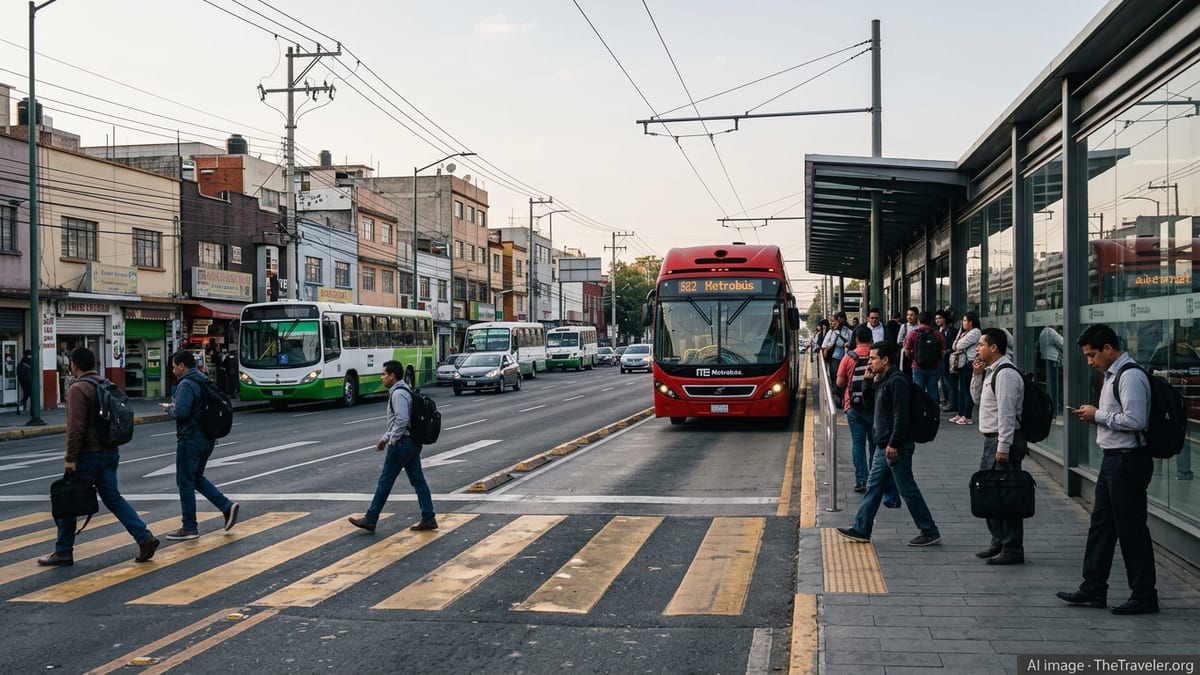
Mexico has one of the largest public transport user bases in Latin America, with tens of millions of daily trips across metro, bus rapid transit (BRT), conventional buses, minibuses, suburban rail, and informal services such as colectivos and combis. Coverage in large metropolitan areas is broad, but formal, high-capacity systems are concentrated in a handful of cities including Mexico City, Guadalajara, Monterrey, León, Mérida, and Puebla.
In practice, public transport in Mexico is a layered ecosystem. Government-run mass transit such as the Mexico City Metro, Metrobús, trolleybuses, cable cars, and light rail coexist with concessioned operators and informal services. For expats, this means there is usually a viable non-car option in major urban areas, but the experience can range from modern and well-organized to congested and uncomfortable, often within the same city.
Outside major cities, long-distance intercity buses form the backbone of public mobility between states and regional hubs. First-class and executive intercity services are generally well regarded for comfort and reliability, while local and second-class buses can be less predictable and more exposed to petty crime and road safety issues.
Overall, public transport can substantially reduce the need for a private vehicle for expats who settle in well-served neighborhoods. However, those considering smaller cities, peripheral suburbs, or late-night work patterns should carefully assess local conditions before relying entirely on public transit.
Major Urban Systems: Coverage, Capacity, and Typical Use
Mexico City has the country’s most complex transit network, combining a metro system of more than 12 lines and over 160 stations, extensive BRT corridors (Metrobús and Mexibús), electric trolleybuses, cable car lines, light rail, suburban rail, and a large fleet of conventional and microbuses. On a typical weekday, the Mexico City Metro alone carries several million passengers, placing it among the busiest systems globally. This high capacity allows expats to cross much of the city at low cost, but also leads to extreme crowding during peak hours.
Other large cities offer more limited but growing systems. Guadalajara operates a light rail network and a certified BRT system under the Mi Macro brand, including Mi Macro Periférico, a long orbital BRT corridor placed in service in 2022. León’s Optibús, launched in the early 2000s, was Mexico’s first BRT system and remains a reference for integrated bus corridors and feeder routes. In the State of Mexico around the capital, the Mexibús BRT lines supplement metro and bus access for peripheral municipalities.
Newer projects continue to expand high-capacity options. Mérida’s Ie-Tram in Yucatán is a fully electric BRT system, reflecting a broader trend toward cleaner and more structured corridors. However, many mid-sized cities still rely mainly on conventional buses and informal minibuses, often with limited real-time information and variable service frequencies.
For expats, the practical implication is that car-free living is most viable in core zones of Mexico City and in central areas of Guadalajara, Monterrey, and a few other regional hubs. Where only basic buses and combis operate, expats often combine occasional public transport with ride-hailing and taxis rather than depending exclusively on the local network.
Modes of Transport and Typical Service Characteristics
Urban public transport in Mexico is delivered through several distinct modes, each with different implications for comfort and predictability. Heavy metro and light rail lines offer fixed rights of way, frequent service, and low fares, but may suffer from crowding and occasional technical interruptions. BRT systems such as Metrobús, Mexibús, Mi Macro, and Optibús use dedicated lanes, off-board fare collection, and platform-level boarding to improve speed and reliability compared with mixed-traffic buses.
Conventional buses and microbuses remain the dominant mode for many urban trips. These vehicles typically share general traffic lanes, so travel times can fluctuate significantly with congestion. Service is usually plentiful on main corridors but may be irregular in low-demand areas, late at night, and on weekends. Vehicle age and maintenance standards vary, which affects ride comfort and sometimes air quality inside the bus.
Minibuses, combis, and colectivos are small, often privately operated vans or microbuses following fixed or semi-fixed routes. They are common in suburban and peri-urban areas where formal systems are sparse. These services can fill network gaps but tend to have more variable safety practices, including inconsistent driver training, minimal seatbelt use, and aggressive driving habits.
Taxis and ride-hailing platforms such as app-based services function as an important complement to public transit rather than a formal part of it. In many cities, expats use a multimodal approach: structured mass transit for predictable commuting corridors and app-based rides for late-night, door-to-door, or higher-risk segments.
Costs, Fares, and Payment Systems
Public transport in Mexico is inexpensive relative to North American and Western European standards. In Mexico City, for example, single metro rides are typically priced in the low tens of pesos per trip, equivalent to well under 1 US dollar at recent exchange rates. BRT and trolleybus fares are similar or slightly higher, while cable cars and suburban rail may cost somewhat more per journey. Conventional city buses and microbuses often charge flat fares collected in cash when boarding.
Many cities are gradually shifting to electronic fare media. Mexico City uses smart cards and contactless systems across the metro, BRT, trolleybuses, light rail, and some contracted bus routes, enabling easy transfers and reducing the need to carry coins. Other cities are at earlier stages, with a mix of cash fares and proprietary smart cards. Interoperability between cities is limited, so expats who move between metropolitan areas typically need separate cards or payment methods.
Long-distance buses are priced by distance, class, and operator. First-class and executive buses, which are the primary recommendation for most expats, can cost a fraction of comparable rail or air fares in developed markets but represent a significant step up from local urban fares. These services usually include reserved seating, air conditioning, onboard toilets, and sometimes Wi-Fi or entertainment systems.
From a relocation budgeting perspective, daily commuting costs for a metro or BRT user in a large Mexican city remain modest. The main financial trade-off is between low public transport fares and the higher convenience and security of taxis or ride-hailing, which cost several times more per trip but may still be affordable compared with car ownership for many expatriate households.
Reliability, Crowding, and Operational Performance
Reliability of public transportation in Mexico is mixed and can vary not only by city but by line and time of day. High-capacity systems in Mexico City, Guadalajara, and León generally achieve short headways during peak periods, sometimes in the range of a few minutes between trains or articulated buses. However, unplanned delays from technical faults, demonstrations, or security incidents do occur, and information for passengers may not always be timely or consistent.
Crowding is one of the most significant qualitative factors expats notice. On Mexico City’s metro and BRT, peak-hour trains and buses can become extremely congested, particularly between roughly 6:30 to 9:30 in the morning and 5:30 to 9:00 in the evening on weekdays. This congestion can be uncomfortable, increase vulnerability to pickpocketing, and reduce the feasibility of carrying large bags or traveling with small children during those periods.
In smaller systems or less dense corridors, crowding is less intense but may still be significant on certain routes. Conventional buses in mixed traffic are also exposed to severe road congestion, which can double or triple travel times compared with off-peak journeys. Expats who need highly predictable arrival times often either depart earlier than strictly necessary or choose BRT and metro lines that bypass major surface bottlenecks.
Weather can influence service quality, particularly in rainy season when street flooding and traffic collisions can lead to route diversions or long delays for surface buses. Rail-based modes and BRT in segregated lanes are less affected but may still experience station crowding if road disruptions push more riders onto mass transit.
Safety and Security Considerations
Safety is a central concern for many expats evaluating public transport in Mexico. The primary risks for regular users are theft, harassment, and in some corridors more serious robberies on-board vehicles or in stations. Surveys and research focusing on metropolitan Mexico City have highlighted elevated levels of perceived and actual victimization on public transit, with minibuses and certain peripheral bus routes showing higher incident rates than the central metro network.
For violent crime, risk is unevenly distributed. Peripheral and less monitored routes, especially late at night, tend to be more exposed to armed robberies and collective theft incidents, while heavily policed central corridors and modern BRT lines have relatively lower frequencies of serious crime. Mexico City authorities and several states have introduced cameras, panic buttons, and increased uniformed presence on some lines, and recent data indicate that assault rates in parts of the Mexico City system have decreased modestly in recent years, although problems persist.
Gender-based harassment and sexual violence on public transport have been widely documented. In response, women-only metro and BRT cars and segregated boarding zones have been implemented in some systems, especially in Mexico City. These measures provide some mitigation but do not fully eliminate risk, and crowded conditions can still facilitate unwanted contact or theft. Expats who are women, non-binary, or LGBTQ+ should factor this into route and time-of-day decisions and consider using segregated spaces where available.
Road safety is another important dimension, particularly on conventional buses, minibuses, and long-distance highways. Aggressive driving practices, high speeds, and limited enforcement of seatbelt use can increase collision and injury risk. Evaluations and practitioner reports typically recommend that higher-income passengers and corporate travelers prioritize first-class and executive intercity buses over second-class services, and avoid overnight highway travel when possible, especially on secondary or mountainous routes.
Accessibility, Inclusiveness, and User Experience
Accessibility for passengers with reduced mobility or other specific needs is uneven across Mexican transit systems. Modern BRT corridors and newer metro stations usually offer level boarding, ramps, and elevators, but legacy infrastructure, especially older metro lines and informal minibuses, can be challenging or functionally inaccessible. Studies of BRT systems such as Metrobús, Optibús, and Mexibús have noted partial compliance with accessibility standards, with gaps in elevator availability, tactile signage, and reliable maintenance of equipment.
For visually impaired and hearing-impaired users, wayfinding tools are gradually improving but remain inconsistent. Some metro and BRT stations provide clear icon-based line maps and audio announcements, which can be helpful for non-Spanish speakers as well. However, signage in English is limited outside key tourist zones, and real-time information screens may be sparse or inoperative in smaller cities.
From a general user experience standpoint, comfort levels depend largely on mode choice and time of travel. First-class intercity buses, electric BRT vehicles, and newer metro trains can be relatively comfortable, with air conditioning and reasonable seating. Microbuses and older buses may lack air conditioning, especially in hot regions, leading to uncomfortably warm journeys during afternoons and in pre-rainy-season heat waves.
Expats with specific health or mobility needs often choose housing along corridors served by higher-quality modes such as BRT, metro, or modern trolleybuses to mitigate accessibility constraints. In neighborhoods where access depends primarily on steep streets, steps, or crowded informal vans, daily commuting may be significantly more demanding for those with limited mobility.
Intercity and Regional Buses for Relocating Expats
For expats relocating within Mexico or traveling regularly between cities, intercity buses are a critical component of the mobility picture. The country has an extensive network of long-distance coach services connecting major urban centers and secondary cities. First-class and executive buses commonly feature assigned seating, air conditioning, reclining seats, on-board toilets, and luggage handling procedures comparable to long-distance bus standards in Europe or North America.
Safety and service reliability are strongly segmented by class and operator. Well-established first-class brands generally maintain stronger maintenance regimes, more rigorous driver scheduling, and better terminal security than low-cost or informal operators. Some reports point out that second-class buses, which make more intermediate stops and sometimes operate at night on secondary roads, are more exposed to opportunistic crime such as theft or occasional bus assaults, especially in regions with elevated security concerns.
From a risk management perspective, many corporate travel policies for Mexico explicitly recommend daytime departures, the avoidance of late-night arrivals in unfamiliar terminals, and preference for first-class or executive services. Expats planning to rely on intercity buses for frequent travel should evaluate typical journey times, highway conditions, and incident trends on specific routes, and align travel patterns with common best practices such as traveling during daylight hours and avoiding isolated roadside stops.
Intercity bus terminals in major cities are usually large, busy facilities with security checks, luggage screening, and ticket offices. However, as with any crowded hub, they can be focal points for pickpocketing and scams. Expats should anticipate additional time for check-in and security procedures and avoid displaying high-value items in terminal waiting areas.
The Takeaway
Public transportation in Mexico offers expats a combination of low cost, extensive coverage in key urban areas, and a wide variety of modes. In major cities, particularly Mexico City, Guadalajara, and León, formal mass transit systems can support a largely car-free lifestyle for residents who live and work along well-served corridors. At the same time, service quality and safety are highly uneven between modes, lines, and times of day.
Decision-grade evaluation for relocation should focus on three core questions. First, does the intended neighborhood have dependable access to high-capacity modes such as metro, BRT, or modern trolleybuses, or will mobility rely mostly on informal minibuses and congested roads. Second, are work and school locations reachable via reasonably direct routes that avoid the highest-risk or most congested segments during peak hours. Third, do personal risk tolerance and household needs align with the realities of crowding, varying security levels, and accessibility constraints on specific systems.
For many expats, a hybrid strategy proves most practical: regular use of metro and BRT for predictable, high-volume journeys; selective use of conventional buses, combis, and intercity coaches where quality operators exist; and strategic reliance on taxis or ride-hailing during late-night hours or on higher-risk routes. With informed planning and realistic expectations, Mexico’s public transportation infrastructure can be a viable, cost-effective pillar of daily life, but it should be assessed carefully as part of any serious relocation decision.
FAQ
Q1. Can an expat in Mexico City live comfortably without a car using only public transport?
In central and well-connected neighborhoods of Mexico City, many residents manage daily life primarily with metro, BRT, trolleybuses, and occasional taxis or ride-hailing. However, in peripheral areas with fewer high-capacity options and at late hours, relying completely on public transport can be inconvenient or increase exposure to safety risks.
Q2. How safe is public transportation in Mexico for daily commuting?
Safety levels vary by city, mode, and route. Central metro and BRT lines in large cities are heavily used and generally manageable during the day, though pickpocketing and harassment are common in crowded conditions. Peripheral bus routes, informal minibuses, and late-night services tend to carry higher risk of theft and, in some cases, on-board robberies.
Q3. Are women-specific spaces on public transport effective in Mexico?
Women-only cars on some metro and BRT systems, along with segregated boarding zones, provide a degree of additional protection and comfort, particularly during rush hour. They reduce but do not fully eliminate harassment or unwanted contact, so users should still remain attentive to surroundings and choose travel times and routes accordingly.
Q4. How reliable are timetables and schedules on Mexican public transit?
High-capacity systems such as metro and BRT tend to operate at short, relatively stable headways rather than strict published timetables, so waiting times are often predictable. Conventional buses, minibuses, and some regional services may have less reliable schedules and can be significantly delayed by congestion, weather, or incidents.
Q5. Is public transportation in Mexico accessible for people with reduced mobility?
Accessibility is improving but remains inconsistent. Newer metro and BRT stations, as well as some modern buses, offer ramps, elevators, and level boarding. Many older stations, microbuses, and informal services lack adequate accessibility features, which can make daily commuting difficult for wheelchair users or those with limited mobility.
Q6. What are typical public transport costs for an expat in a major Mexican city?
Urban fares for metro, BRT, and standard buses are generally low, with single rides usually costing a small fraction of typical European or North American city fares. Monthly commuting costs remain modest, and the main budget decisions involve how frequently to supplement public transport with higher-priced but more secure or convenient taxis and ride-hailing services.
Q7. Are long-distance buses a safe option for intercity travel in Mexico?
First-class and executive intercity buses operated by established companies are the preferred option for most expats and business travelers, offering better vehicle standards and terminal security. Lower-tier or second-class services, which make more intermediate stops and sometimes travel overnight on secondary roads, can carry higher security and road safety risks.
Q8. How crowded does public transport get during peak times?
In large cities, especially Mexico City, peak-hour metro and BRT vehicles can become extremely crowded, with passengers standing tightly packed and limited personal space. This affects comfort and increases vulnerability to theft, so many users adjust their schedules when possible to avoid the most congested periods.
Q9. Is it easy for non-Spanish speakers to use public transportation in Mexico?
Basic use is feasible because lines often have clear numbering and color schemes, and metro and BRT systems rely on visual route maps and symbols. However, most signage and announcements are in Spanish, and bus destinations may be displayed only on front windows, so a basic understanding of key terms or the use of mapping apps can be important.
Q10. What practical strategies can expats use to reduce risk on Mexican public transport?
Common strategies include avoiding visibly valuable items, keeping bags closed and in front when standing, choosing busy and well-lit stops, traveling in women-only spaces where eligible, favoring metro and structured BRT over informal minibuses, using first-class buses for intercity trips, and switching to taxis or ride-hailing for late-night journeys or higher-risk routes.