


More news on this day
After weeks of severe disruption triggered by Middle East airspace closures, scheduled air services between Pune and Dubai are steadily returning, restoring a critical corridor for business travellers, tourists and freight moving between western India and the Gulf.
Get the latest news straight to your inbox!
Route Recovery After Weeks of Disruption
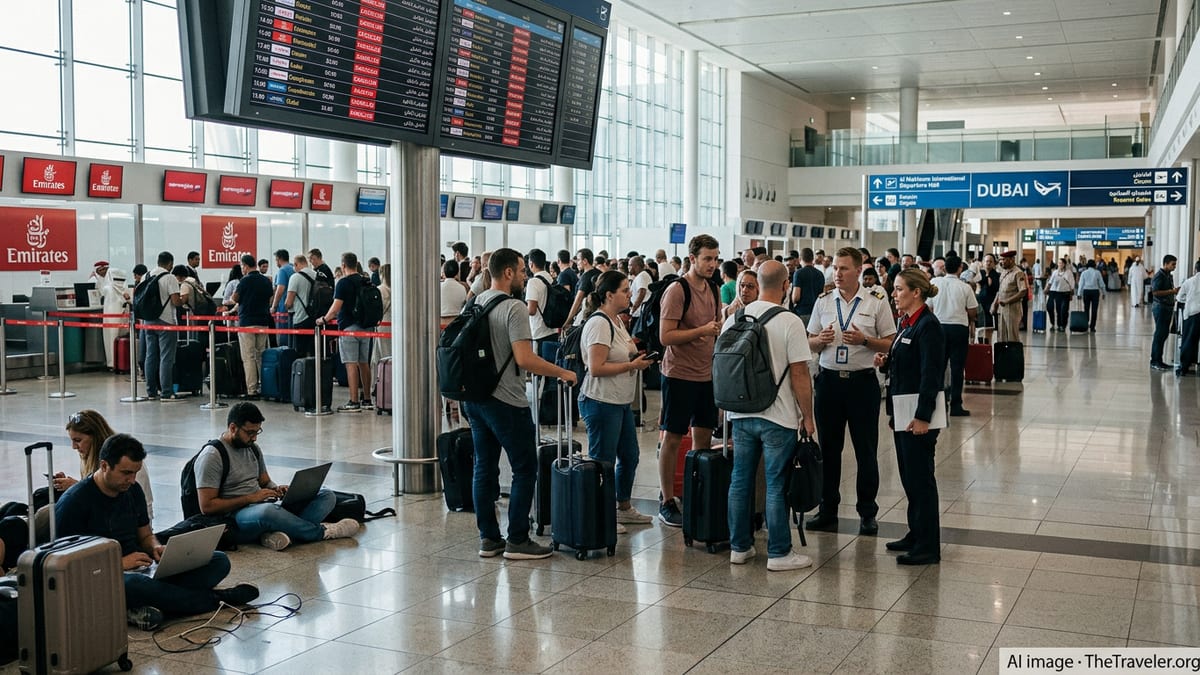
The Pune–Dubai sector was among the Indian city-pair routes hit by cancellations and diversions when conflict-linked airspace restrictions tightened across West Asia from late February 2026. Publicly available information shows that closures and avoidance of key air corridors forced Indian and Gulf carriers to curtail or suspend services, with Dubai International Airport and other regional hubs operating at sharply reduced capacity.
According to published coverage of the disruption, thousands of flights across the wider region were cancelled or rerouted in the first half of March as airlines adjusted to evolving safety advisories. Services linking secondary Indian cities such as Pune to Dubai were particularly exposed, because these routes rely heavily on consistent hub operations and predictable overflight permissions.
Recent scheduling data and airline advisories indicate that most carriers serving the western India–UAE market have now reintroduced a majority of their rotations, including key Pune–Dubai frequencies. While some rerouting and longer flight times remain on certain days, the pattern of operations suggests a shift from emergency response to controlled normalisation.
For travellers, that shift is visible in more stable timetables, fewer last-minute cancellations and an increase in available seats in both directions. Aviation analysts note that as regional airspace becomes more accessible, point-to-point routes such as Pune–Dubai often resume faster than complex long-haul connections that still depend on constrained corridors.
Airspace Relaxation and Operational Safeguards
The gradual restoration of the Pune–Dubai route is closely tied to the easing of specific airspace restrictions that had limited access to segments over parts of the Middle East. International safety advisories have been periodically updated to reflect changing risk assessments, and publicly available notices show a move from blanket closures toward narrower, more targeted avoidance zones.
As overflight options reopen, airlines have been able to redesign flight plans on the Pune–Dubai axis, reducing the need for wide detours that added significant time and fuel burn. This has allowed carriers to move from ad hoc operations to more predictable schedules, a prerequisite for rebuilding passenger confidence and restoring commercial viability on the route.
Aviation authorities and air navigation service providers in the region are coordinating traffic flows through the remaining constrained areas, according to official advisories. These measures include defined routings, altitude separations and traffic management initiatives intended to balance safety with growing demand for Gulf-bound services from Indian airports, including Pune.
While some industry briefings still flag heightened complexity in regional airspace, the current pattern of operations indicates that safety buffers have been embedded into daily planning. As a result, airlines are increasingly able to advertise and operate Pune–Dubai services without the high risk of last-minute reconfiguration that characterised the peak of the disruption.
Passenger Experience and Confidence on the Pune–Dubai Sector
For passengers who faced cancellations, missed connections and long delays in early March, the stabilisation of the Pune–Dubai schedule marks a tangible improvement. Booking platforms and airport departure boards now show a more coherent set of timings, and reports from travellers point to fewer abrupt changes at the gate.
According to publicly available travel advisories, airlines serving the route have encouraged passengers to continue checking flight status close to departure, but the frequency of sweeping schedule revisions has eased. This has helped restore confidence among business travellers who depend on the Pune–Dubai corridor for short, predictable trips linked to trade, technology services and professional assignments in the UAE.
Leisure travellers are also returning to the route as tour operators reschedule packages and group departures that were postponed during the height of uncertainty. With Dubai remaining a key outbound destination from western India, the resumption of direct and one-stop options from Pune reduces reliance on more congested gateways and indirect routings through other Indian cities.
Travel consultants note that fare levels initially reflected the tight capacity environment but are starting to moderate as more seats come back into the market. The expectation in the industry is that, if current operating conditions hold, pricing on the Pune–Dubai sector will continue to stabilise in the weeks ahead.
Freight Flows and Business Connectivity Rebound
The restoration of Pune–Dubai flights has implications beyond passenger travel, particularly for cargo flows linking Maharashtra’s industrial and technology clusters with logistics hubs in the Gulf. During the period of maximum disruption, reduced belly-cargo capacity on passenger flights constrained shipments ranging from automotive components to pharmaceuticals.
According to industry updates, the resumption of regular schedules between Indian cities and Dubai is gradually easing that bottleneck. Pune-origin cargo routed via Dubai to Europe, Africa and North America is regaining access to previously strained connections, helping exporters catch up on backlogs built during the earlier cancellations.
Logistics providers report that transit times for time-sensitive goods have improved as flight connections stabilise, even if some routings still involve modest detours around restricted airspace. For small and mid-sized firms in and around Pune, the return of more predictable uplift on the Pune–Dubai route is viewed as an important step in normalising order cycles and managing inventory.
Business chambers and trade bodies have highlighted the role of the Pune–Dubai corridor as a bridge not only to the UAE but also to broader markets accessible via Dubai’s hub. As connectivity strengthens, attention is turning from crisis management back to expansion plans, including new sector launches and increased travel for investment and partnership meetings.
What Travellers Should Expect in the Coming Weeks
Even as operations between Pune and Dubai are widely described as “fully restored” in current schedules, aviation experts caution that the environment remains more dynamic than before the recent wave of airspace restrictions. Publicly available guidance continues to advise travellers across the Middle East region to remain flexible, monitor advisories and allow additional time at airports.
For the Pune–Dubai route specifically, passengers can expect broadly normal check-in and boarding procedures, with airlines maintaining standard safety and documentation checks. However, some flights may still experience minor delays if upstream traffic flows through constrained corridors ripple into the wider network.
Travel planning tools and airline apps have become central to navigating this period of stabilisation. Frequent updates to flight status, rebooking options and connection windows allow travellers to respond more quickly if schedules are adjusted, even as the overall risk of major disruption on the Pune–Dubai sector appears to be receding.
With key airspace corridors gradually reopening and operational safeguards firmly in place, the Pune–Dubai route is transitioning from recovery to renewed growth. For passengers and businesses alike, the return of reliable connectivity marks an important milestone in restoring the wider India–Gulf aviation ecosystem.