


More news on this day
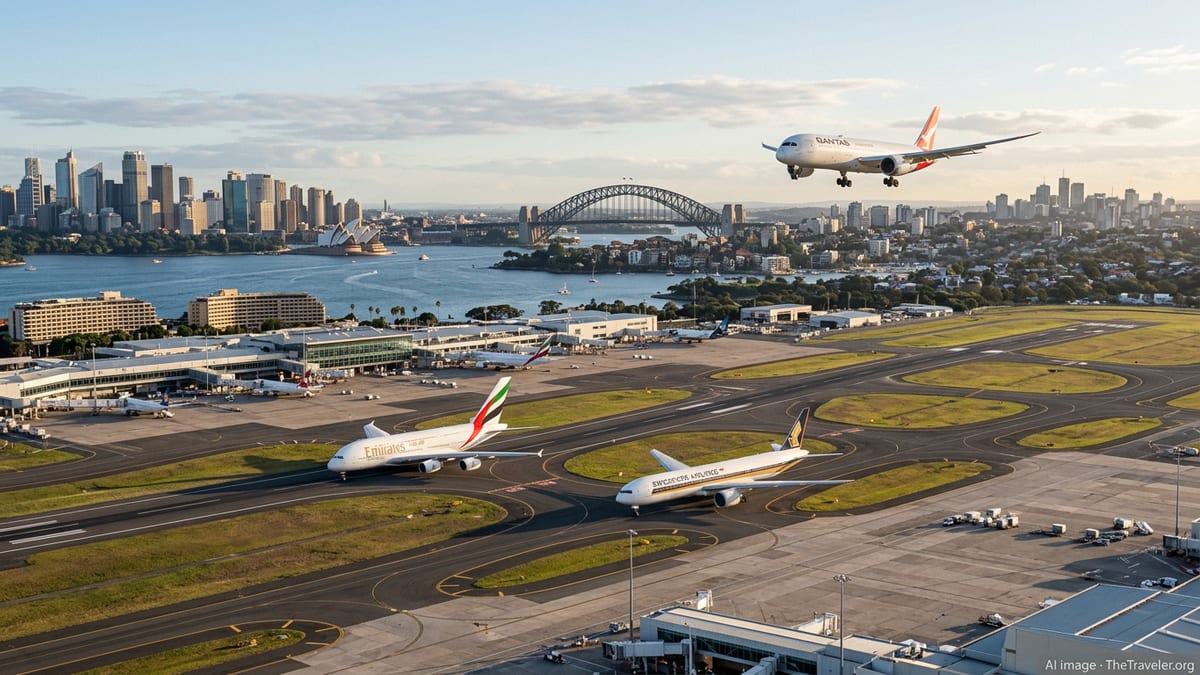
Australia’s travel rebound is accelerating just as Qantas advances one of the most ambitious long-haul expansion plans in its history, with around 20 next-generation widebody aircraft set to connect more cities non-stop and push ultra-long-range flying to new limits.
Get the latest news straight to your inbox!
Tourism Recovery Fuels Demand for Longer, Non-Stop Flights
Publicly available economic data show that Australia’s services exports are being lifted by a robust tourism recovery, with international travel now close to or above pre-pandemic levels across many key source markets. Recent analysis from government-backed trade finance bodies indicates that arrivals from countries such as the United States, New Zealand, South Korea and much of Europe have returned to at least 85 percent of 2019 volumes, even as some North Asian markets lag behind.
This recovery is feeding a clear shift in traveler preferences. Industry reporting points to strong demand for point-to-point, non-stop flights that reduce time spent in transit hubs, especially on long-haul journeys between Australia, North America and Europe. Higher-spending leisure visitors and premium business travelers are showing particular interest in routes that offer both time savings and upgraded onboard comfort.
As inbound tourism grows more valuable to the national economy, airlines are under pressure to provide capacity that can support longer stays and higher per-trip spending. Qantas’ latest fleet and network moves are widely viewed by analysts as a direct response to this structural change in demand, positioning the carrier to capture more of the premium traffic flowing into and out of Australia.
At the same time, the broader global recovery in international tourism is creating fierce competition for long-haul passengers. By betting on cutting-edge aircraft capable of flying further with better fuel efficiency, Qantas is signalling that it intends not only to defend its share of inbound demand but to expand it.
Project Sunrise: A New Era for Ultra-Long-Haul Travel
The centerpiece of Qantas’ long-haul strategy is Project Sunrise, the multi-year program designed to launch non-stop flights from Australia’s east coast to cities including London and New York using specially configured Airbus A350-1000 aircraft. According to manufacturer specifications and airline disclosures, these ultra-long-range jets will be capable of operating flights of around 22 hours, enabled by an additional rear-center fuel tank and weight-optimized systems.
Qantas has a confirmed order for 12 A350-1000 aircraft dedicated to Project Sunrise, with a further tranche of standard A350-1000s earmarked for more conventional long-haul missions such as flights to Asia, North America and other parts of Europe. Aviation industry coverage indicates that the first Project Sunrise A350-1000ULR has now completed its initial test flights from Airbus’ Toulouse base, marking a key milestone in the program’s path toward entry into service.
The airline has already released details of the new cabin layout, which will feature a relatively low total seat count, six first-class suites, an expanded business-class cabin and a dedicated wellness zone designed for stretching and movement during ultra-long sectors. Specialist seating manufacturers have announced contracts to equip the economy cabin with newly developed long-haul seats intended to improve comfort on 20-hour journeys.
Although the original Project Sunrise launch timeline has been revised more than once, recent reporting suggests that non-stop services from Sydney to London and New York are now targeted for a mid to late 2020s debut. Industry analysts expect that, once the initial aircraft are in service, Qantas will consider additional ultra-long sectors to destinations in continental Europe and North America, potentially reshaping how travelers connect between Australia and major global hubs.
About 20 New Widebodies to Reshape the Qantas Long-Haul Fleet
Beyond the 12 A350-1000s tied directly to Project Sunrise, Qantas has committed to a broader long-haul renewal that will ultimately see around 20 new widebody aircraft added for international growth and replacement of older types. Fleet documentation and investor presentations outline a mix of A350-1000s and Boeing 787 Dreamliners as the backbone of this next-generation long-haul fleet.
Reports on fleet planning indicate that Qantas has additional A350-1000s on order beyond the Sunrise subfleet, bringing the total A350 commitment to the mid-20s when standard variants are included. These jets are expected to progressively take over missions now flown by Airbus A330s and, over time, supplement or replace Airbus A380s on busy trunk routes where ultra-large aircraft are becoming harder to operate efficiently.
Alongside the A350s, Qantas continues to expand its Boeing 787-9 fleet and has signalled interest in longer 787 variants for what executives have described in public remarks as “long, thin” routes, where a smaller but efficient widebody can make non-stop services viable. Aviation-focused outlets have also reported that the group is weighing further orders of around 20 widebody aircraft, with both Airbus and Boeing types under consideration, although no formal announcement has yet been made.
For passengers, the combined effect of these orders will be a steady shift toward aircraft with higher fuel efficiency, improved cabin pressurization, lower noise levels and a greater share of premium seating. For the airline, the new widebodies are central to cutting per-seat emissions, lowering unit costs and freeing up flexibility to open or close long-haul routes in response to changing demand.
Global Network Expansion Targets North America, Europe and Regional Gateways
Qantas’ fleet investments are closely tied to a measured but significant expansion of its international network. Recent schedule updates and public route announcements show capacity increases of more than 10 percent to the United States, including added frequencies and the return of Airbus A380s on some transpacific services. The airline has also committed to keeping additional Boeing 787s on North American routes during peak seasons to cope with rising demand.
New and planned routes from Perth, such as non-stop services to Johannesburg and Auckland from late 2025, illustrate how the airline is using Western Australia as a secondary long-haul gateway that can connect southern Africa and New Zealand more directly to the Qantas network. These flights are expected to be operated with 787-9 aircraft and will offer onward connectivity to eastern Australia and selected international partners.
Industry forecasts suggest that, as more A350-1000s arrive, Qantas will gain the flexibility to redeploy 787-9 aircraft currently flying to North America and Asia onto additional long-haul sectors. Observers expect this to translate into new city pairs linking Australia to North America’s west coast and interior, as well as to secondary European cities that can support non-stop services with the improved economics of the latest widebodies.
Regional connectivity is also being strengthened through a separate narrowbody renewal program involving Airbus A321XLR and A220 aircraft. While these jets will not operate the longest intercontinental routes, they will play a key supporting role by feeding passengers from smaller Australian and near-international markets into Qantas’ long-haul hubs in Sydney, Melbourne, Brisbane and Perth.
Implications for Passengers and the Wider Aviation Market
The combination of surging demand for Australia travel and Qantas’ long-haul expansion is likely to reshape competitive dynamics on key corridors such as the so-called Kangaroo Route between Australia and Europe, as well as transpacific links to the United States. Non-stop Project Sunrise services are expected to challenge one-stop offerings via Asian and Middle Eastern hubs by trading slightly higher fares for substantial time savings and a more seamless travel experience.
Analysts note that capacity growth driven by new widebodies could, over time, moderate fares on some routes even as premium pricing remains strong on ultra-long-haul sectors. The introduction of more fuel-efficient aircraft should also support airlines’ sustainability targets, although environmental groups are likely to scrutinize the impact of 20-hour flights and encourage increased use of sustainable aviation fuels and carbon reduction measures.
For passengers, the most immediate changes will be felt in the cabin. Wider seats in premium cabins, redesigned economy seating, expanded in-flight wellness options and updated inflight entertainment systems are all being used to differentiate Qantas’ offering from that of rivals. Frequent flyer communities are already debating which cabins will deliver the best value on flights that may stretch close to an entire day in the air.
For Australia’s tourism sector, Qantas’ expansion represents both an opportunity and a test. If the airline can successfully deploy its new long-haul fleet to open more direct routes and capture high-yield demand, it could help drive a new phase of growth in inbound travel. At the same time, the scale of the investment underscores how closely the recovery of global tourism is now intertwined with the success of a small number of large, long-haul carriers.