


More news on this day
Qantas has delayed the launch of its flagship Project Sunrise nonstop flights from Australia’s east coast to London and New York by approximately four months, as new delivery challenges affecting Airbus A350 production ripple through the airline’s long term fleet plans.
Get the latest news straight to your inbox!
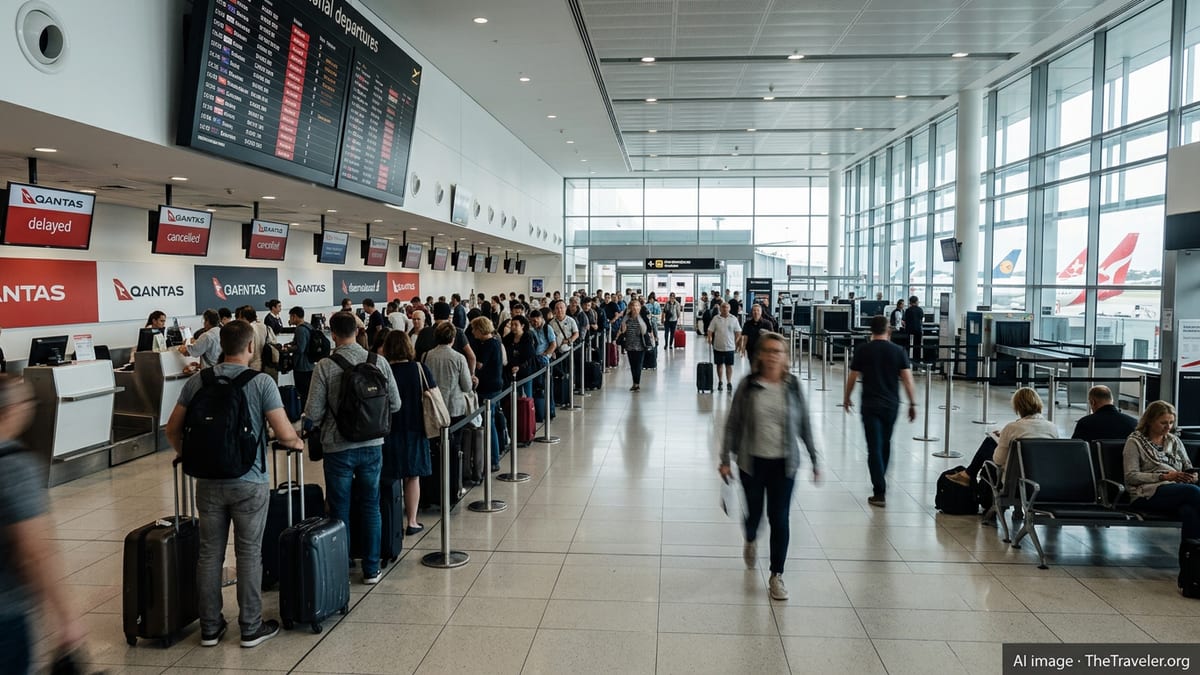
Ultra Long Haul Timeline Slips Again
Project Sunrise has been positioned as a transformational step for Qantas, promising nonstop services of up to 22 hours from Sydney to London Heathrow and New York JFK using a specially configured Airbus A350 1000ULR. The airline had been working toward a start date around the first quarter of 2027, following initial expectations of deliveries from late 2026.
Industry coverage now indicates that Qantas has adjusted that launch window by roughly four months, moving the target from early 2027 further into the year. The change comes as Airbus warns airlines of additional A350 delivery delays through the late 2020s, prompting affected carriers to recheck fleet and schedule assumptions for long haul growth.
Publicly available information on Qantas’ fleet renewal still references first A350 deliveries from the second half of 2026 and commercial Project Sunrise services beginning in 2027. However, the emerging gap between Airbus’ updated production outlook and earlier airline timelines has led analysts to frame the new Qantas start date as a modest but meaningful slippage in a closely watched program.
The revised timeline is the latest adjustment in a project first floated before the pandemic, when Qantas challenged Airbus and Boeing to offer an aircraft capable of reliably operating nonstop missions between Australia and Europe or North America with a commercially viable passenger load.
Airbus Confronts Wider A350 Production Pressures
The four month delay attributed to Qantas’ Project Sunrise schedule is occurring against the backdrop of broader industrial pressures at Airbus. Recent reporting highlights further constraints affecting A350 output, with delivery slots for several carriers shifting later into the decade. Those pressures follow a period in which Airbus has already struggled to match strong post pandemic demand for long haul widebody aircraft.
For the A350 1000ULR variant in particular, engineering steps to reach higher maximum take off weight and the extended ranges required for nonstop Australia to Europe and United States routes have added complexity to the program. Flight testing, certification work and the integration of additional fuel capacity all influence how many airframes Airbus can realistically deliver in any given year.
While Airbus continues to present the A350 as a cornerstone of its long haul product line, supply chain bottlenecks, cabin outfitting backlogs and engine related scheduling all appear to be constraining near term handover dates. These factors collectively narrow the margin for ambitious airline projects that rely on tight delivery windows, such as Qantas’ planned ultra long haul network.
The situation underlines how intertwined airline strategy has become with aerospace manufacturing performance. Even a few months of slippage at the factory level can reverberate across marketing campaigns, crew training programs and slot negotiations at capacity constrained airports.
Impact on Qantas Network and Fleet Strategy
For Qantas, Project Sunrise is not only a prestige initiative but also a key component of a wider fleet renewal that includes A350s for ultra long haul flying and new narrowbodies for domestic and regional services. A delay of around four months to the Sunrise start date does not fundamentally alter the airline’s network vision, but it does require tactical adjustments.
Analysts expect Qantas to lean more heavily on its existing Boeing 787 and Airbus A380 fleets for long haul capacity during the extended transition period. The carrier may continue to focus on strengthening one stop connections via Singapore, Perth and other hubs while it waits for enough A350 1000ULR aircraft to support daily nonstop rotations to London and New York.
Training and familiarisation flying for the A350 fleet, which had been expected to occur on shorter regional or trans Tasman sectors ahead of full Project Sunrise deployment, may also be pushed back marginally. That could influence when customers first encounter the new cabin product that Qantas has designed around higher comfort, increased premium seating and dedicated wellbeing zones for ultra long sectors.
Some aviation commentators suggest that Qantas might use the extra time to refine pricing strategies, loyalty program offers and ground product to support the eventual launch. The airline has indicated in prior public materials that Sunrise services are expected to command a fare premium over traditional one stop itineraries, especially in premium cabins.
Customer Expectations for the World’s Longest Flights
The prospect of flights approaching 22 hours in duration has generated strong reactions from frequent flyers and occasional travelers alike. Supporters view the nonstop routing as a significant time saver and a way to reduce the stress and uncertainty associated with connecting through busy hubs. Critics question whether spending nearly a full day on board a single aircraft will appeal to a broad market, especially in economy cabins.
Qantas has repeatedly framed Project Sunrise as an exercise in rethinking the long haul experience, highlighting research into sleep, lighting, movement and nutrition. The A350 1000ULR cabin is expected to feature expanded premium seating and a lower overall seat count compared with more conventional layouts, trading density for comfort on the ultra long missions.
The additional four month delay may frustrate some travelers who had been anticipating early access to the new services, particularly business travelers on the high yielding Australia to London and New York corridors. However, observers note that for a project designed to operate at the edge of current aircraft performance, ensuring ample testing, crew training and operational reliability could prove more important than launching on the earliest possible date.
As airlines across the world recalibrate growth plans in light of manufacturers’ revised delivery schedules, Qantas’ decision to shift the Project Sunrise start window illustrates how sensitive cutting edge long haul projects are to even incremental changes in the production pipeline.
What the Delay Signals for Ultra Long Haul Aviation
The latest adjustment to Qantas’ Project Sunrise timeline is being closely watched by competitors and regulators, as it offers a real world test case for the commercial viability of ultra long haul flying at scale. A four month deferral is relatively modest in the context of aircraft programs that can span decades, yet it highlights the thin margins on which such ventures operate.
For Airbus, keeping the A350 program on track is essential to maintaining its position in the widebody market and supporting airlines that are designing new route networks around the type’s range and efficiency. Any further delays could push carriers to revisit fleet plans or extend the life of older aircraft longer than previously envisaged.
For Qantas, the delay underscores the balancing act between marketing a high profile innovation and navigating industrial realities outside its direct control. The airline has signaled through previous public presentations that Project Sunrise remains a central plank of its long term strategy, even as timelines have shifted from the original pre pandemic vision.
The coming months will clarify how quickly Airbus can deliver the first fully certified A350 1000ULR aircraft and how soon Qantas can field enough examples to support reliable daily service on the marquee Sydney to London and New York routes. Until then, Project Sunrise remains both a symbol of aviation’s ultra long haul ambitions and a reminder of the complexities involved in turning such ambitions into scheduled reality.