


More news on this day
Travel across Europe faced major disruption on June 27 as a radar failure affecting air traffic control around Athens International Airport led to extensive delays and a small number of cancellations on routes connecting the Greek capital with London, Paris, Rome, Berlin and other cities.
Get the latest news straight to your inbox!
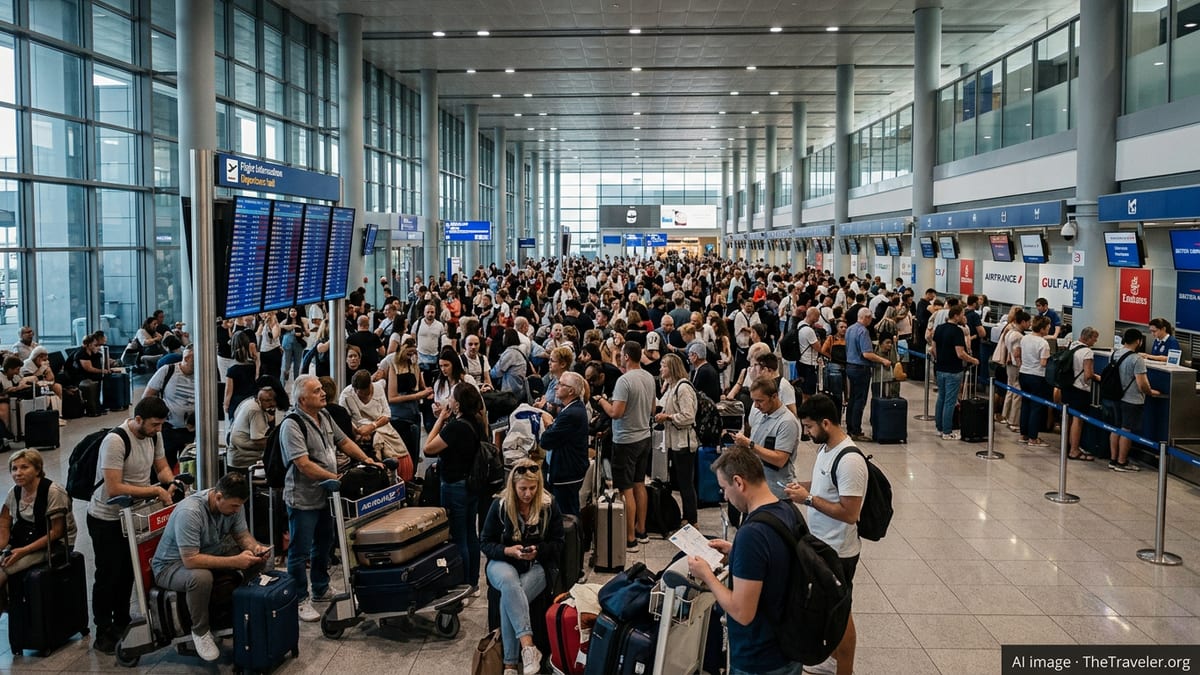
Technical Glitch Slows Traffic Over Athens
According to Greek travel and news outlets, the disruption began on the evening of June 26 when a radar system serving the Athens area experienced a failure, forcing controllers to reduce the rate of arrivals and departures for safety. Published coverage describes a gradual build up of delays that spilled into June 27, as aircraft and crews fell out of their scheduled rotations and slots had to be spaced further apart.
Reports indicate that air navigation services restricted traffic until backup procedures were in place, leading to significant congestion for both incoming and outgoing flights. While airports across Europe regularly manage so called flow restrictions, the sudden loss of a key radar added pressure at the height of the busy summer holiday season.
By Saturday, the knock on effects translated into 327 delayed flights and three cancellations linked to Athens, based on aggregated real time tracking data and airport information. The disruption affected a mix of domestic Greek routes and international services across the continent.
The timing, coinciding with the last weekend of June and the early peak of Mediterranean tourism, meant that even short delays quickly cascaded into missed connections and extended waits for thousands of travelers heading to and from Greece.
Key European Hubs Among Worst Affected
Athens International Airport serves as a major gateway between Greece and the rest of Europe, with dense schedules to primary hubs such as London, Paris, Rome and Berlin. Publicly available timetable and traffic data show that these routes collectively carry well over a million passengers each year, making them highly sensitive to operational disruption.
On June 27, real time tracking platforms showed extended departure and arrival delays on multiple Athens flights to London, including services to Heathrow and Gatwick operated or marketed by Aegean Airlines and partner carriers. Connections to Paris Charles de Gaulle, a key link for both Air France and Aegean, also registered knock on delays as aircraft arriving late into Athens turned back around behind schedule.
Services between Athens and Rome Fiumicino saw similar issues, with late inbound aircraft compressing turnaround times and putting pressure on afternoon departures. Budget and network airlines alike adjusted flight times, and some passengers reported being held on the ground in Athens while air traffic flow toward Italy and central Europe was gradually restored.
Links to Berlin were also affected, including low cost services from Ryanair as well as connections via German hubs used by Lufthansa and its partners. Tracking feeds pointed to longer than usual ground times in Athens and delayed departures across several mid morning and afternoon waves.
Major Airlines Grapple With Knock On Delays
The disruption touched a wide range of airlines that rely on Athens as either a base or a key seasonal destination. Aegean Airlines, Greece’s flag carrier and the largest operator at the airport, saw delays on numerous departures to domestic islands such as Paros and Corfu as well as to major European cities including Frankfurt and Tel Aviv, according to public flight status pages.
Ryanair, which has expanded its presence in the Greek market in recent years, also faced timetable pressure on routes linking Athens with cities such as Berlin and other European points. Flight tracking services showed pushed back departure times and later arrivals as aircraft slotted into the restricted flow around the Greek capital.
Lufthansa and Air France, both of which serve Athens from their main hubs in Germany and France, respectively, experienced schedule disruptions as aircraft running late out of Athens arrived behind plan into Frankfurt, Munich or Paris. That in turn affected onward connections for some passengers traveling beyond Europe’s main hubs.
Other carriers using Athens as a seasonal gateway to Greek holiday destinations likewise adjusted operations, with some swapping aircraft, consolidating services or issuing rolling delay estimates as air traffic conditions evolved through the day.
Passenger Impact and Growing Summer Strain
For travelers, the radar failure translated into crowded departure halls, long queues at check in and security for rebooked passengers, and busy customer service desks as airlines attempted to reroute those with missed connections. Social media posts and traveler forums referenced waits of several hours and concerns over tight links to island flights and cruise departures.
The timing of the incident underlined the broader strains on Europe’s aviation network as the summer season accelerates. Recent performance reports from European air traffic bodies have already flagged Athens and its surrounding airspace as locations experiencing higher than average delays during certain weeks, reflecting heavy demand and complex traffic flows over the eastern Mediterranean.
Travel industry analysts note that technical issues such as radar failures are relatively rare but can have outsized effects when they occur at major hubs with dense summer schedules. When combined with high load factors, limited spare aircraft capacity and busy security and border control facilities, even a short lived technical problem can ripple through the network for many hours.
Passengers booked to travel through Athens in the coming days are being advised, in publicly available guidance from airlines and travel operators, to allow extra time at the airport, monitor their flight status closely and build in longer connection windows where possible.
What Travelers Should Watch in the Days Ahead
While the immediate technical issue affecting radar data around Athens has been addressed, aviation data providers suggest that residual disruption may persist as airlines work aircraft and crews back into their normal rotations. Some early morning departures on subsequent days can still be affected if aircraft and staff remain out of position.
Travel planners recommend that passengers due to fly between Athens and major hubs such as London, Paris, Rome and Berlin in the short term pay particular attention to check in times, gate changes and any revised departure estimates issued by their airline. Those with separate tickets for onward connections, especially to the Greek islands, may want to consider additional buffer time.
Observers also point to the broader trend of increasing summer congestion at European airports, with Athens frequently cited in performance statistics as an airport experiencing mounting delay pressure. The latest incident is likely to feed into ongoing discussions among airlines, regulators and infrastructure providers about capacity, staffing and investment in air traffic management technology.
For now, the radar failure serves as a reminder that even on clear summer days, travel through busy hubs can be vulnerable to sudden technical problems, and that flexible itineraries, travel insurance and real time monitoring tools are increasingly important for passengers navigating Europe’s peak season skies.