


More news on this day
Thousands of air travelers across Asia and South America are facing fresh disruption as major carriers including Hainan Airlines, Japan Airlines, AirAsia, Flybondi and China Eastern collectively cancel 40 flights and delay 964 more, stranding passengers in Beijing, Tokyo, Kuala Lumpur, Buenos Aires and other key hubs.
Get the latest news straight to your inbox!
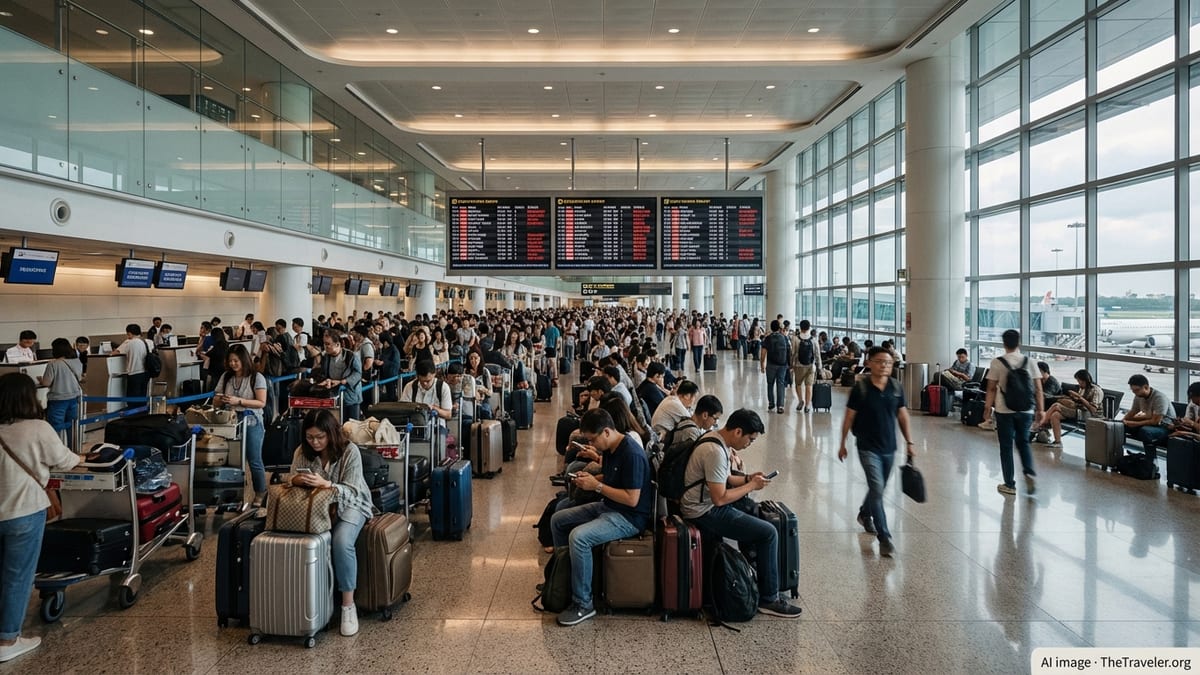
Waves of Disruption From Beijing to Buenos Aires
The latest wave of irregular operations is rippling through some of the busiest corridors in global aviation, with disruptions concentrated in China, Japan, Southeast Asia and Argentina. The affected services cut across both regional and long haul networks, compounding an already fragile operational environment shaped by volatile weather, congested airspace and high demand at the start of the Northern Hemisphere summer travel period.
China Eastern and Hainan Airlines feature prominently in the disruption tallies, reflecting their heavy exposure to China’s major hubs. Recent patterns at airports such as Beijing Capital, Shanghai Pudong and other large Chinese gateways show elevated delay and cancellation rates for several consecutive days, indicating structural strain within the system rather than isolated incidents.
In Japan, Tokyo’s Haneda and Narita airports are again under pressure as Japan Airlines works through knock-on effects from earlier control system issues and tight runway capacity. Publicly available data has repeatedly shown sharp spikes in delayed departures during morning and evening peaks, which can quickly cascade across domestic and international sectors.
In the Southern Hemisphere, Buenos Aires has seen low cost carrier Flybondi grappling with schedule reliability as it shuttles between the Argentine capital and regional destinations. Even a limited number of cancellations and protracted delays can cause visible disruption for point to point carriers with thinner schedules and fewer backup aircraft.
Weather, Congested Skies and Crew Constraints Drive Irregular Operations
Operational summaries and flight tracking dashboards indicate that adverse weather systems, congested routes and crew availability are among the leading drivers of the current disruption. In China, summer thunderstorms have repeatedly affected Beijing and Shanghai, where high traffic density leaves little slack in runway and taxiway capacity when storms move through.
Where flights are forced into extended holding patterns or diverted, aircraft and crew are often left out of position for subsequent rotations. This kind of mismatch can be seen in irregular operations affecting Hainan Airlines and China Eastern, which operate large domestic and regional networks that depend on tight turnarounds in multiple hubs.
In Japan, a recent air traffic control system failure demonstrated how even short lived technical issues can ripple throughout the network for hours. Japan Airlines has had to absorb delays not only on affected routes, but also on later services as aircraft return to schedule and crew duty time limits are approached.
Farther south, carriers such as AirAsia and Flybondi are contending with their own combinations of local weather, infrastructure constraints and rapidly growing demand. With lean fleets and high aircraft utilization, any single technical issue or storm cell can quickly translate into rolling delays throughout the day.
Impact on Passengers in Key Hubs
For travelers, the immediate effect is long queues at check in and transfer desks, crowded gate areas and uncertainty about connections. In Beijing and other large Chinese airports, passenger terminal areas have periodically become congested as delayed flights stack up, with some travelers waiting many hours before receiving updated departure times or rebooking options.
Tokyo’s dual hub system at Haneda and Narita, while generally efficient, is also feeling the strain. When Japan Airlines or its partners experience schedule disruption, passengers connecting between domestic and international services are particularly exposed, as minimum transfer times can quickly be eroded by upstream delays.
In Kuala Lumpur, AirAsia’s extensive short haul network means that a single disrupted aircraft rotation can affect passengers across several countries in the region on the same day. Travelers on multi segment itineraries who rely on tight connections between low cost services are among those most at risk of missed flights and forced overnight stays.
In Buenos Aires, Flybondi passengers are encountering fewer alternative options when their flights are cancelled or heavily delayed, especially on routes where competitors operate limited frequencies. This can translate into extended waits before the next available seat, higher last minute fares on other airlines and unexpected accommodation costs.
How Airlines Are Responding to the Latest Wave of Cancellations
Publicly available notices and prior policy updates from the affected carriers indicate that most are offering a combination of free rebooking, refunds and, in some cases, basic care such as refreshments or hotel accommodation, depending on local regulations and the cause of the disruption. The precise level of support often hinges on whether delays are attributed to weather, air traffic control restrictions, operational issues or other factors.
China Eastern and Hainan Airlines have recently highlighted flexible change and refund policies on selected international routes when extended irregular operations are anticipated. These measures typically allow passengers to adjust travel dates or routing without additional fees within specific time windows, though seats on alternative flights can be limited on peak travel days.
Japan Airlines, AirAsia and Flybondi have similarly signaled in prior communications that they will work with affected customers to rebook on later services or provide refunds when flights are cancelled outright. For low cost carriers, ancillary fees such as seat selection and baggage may not always be automatically refunded, leaving passengers to navigate separate claim processes.
Across the network, recovery operations are being shaped by aircraft availability, crew duty limits and airport operating hours. Late night curfews at some airports restrict the number of extra sections or delayed departures that can be added, prolonging the time it takes to clear backlogs and restore normal schedules.
What Travelers Can Do Amid Ongoing Volatility
For passengers currently in transit or set to travel through Beijing, Tokyo, Kuala Lumpur or Buenos Aires, the latest round of cancellations and delays underscores the importance of close monitoring and contingency planning. Travelers are increasingly relying on airline apps, independent flight tracking platforms and airport departure boards to obtain real time status information as conditions evolve.
Consumer advocacy guidance generally recommends allowing longer connection times when planning itineraries that involve multiple carriers, especially when low cost airlines are involved, as protections on separate tickets can be limited. Where possible, itineraries on a single ticket and within one airline group tend to offer stronger protection for missed connections.
Travelers are also advised in public guidance to keep boarding passes, delay confirmations and receipts for meals or accommodation incurred during extended disruptions. These documents can be important when seeking reimbursement under airline policies or, where applicable, local passenger rights rules.
With the cumulative effect of 40 cancellations and 964 delays spread across several major carriers and hubs, the latest disruption episode highlights how quickly regional operational challenges can escalate into global travel turbulence. For now, passengers moving through China, Japan, Southeast Asia and Argentina face an environment where flexibility, additional time and careful documentation remain essential parts of any long haul journey.