


More news on this day
A radar malfunction affecting air traffic around Athens International Airport on June 26 led to significant delays and schedule disruptions, adding a new chapter to a year already marked by strain on Greece’s aviation infrastructure.
Get the latest news straight to your inbox!
Technical Failure Slows Traffic In and Out of Athens
According to Greek media reports, a problem with a radar installation serving Athens International Airport, also known as Eleftherios Venizelos, was detected on Friday morning, prompting restrictions on takeoffs and landings. The disruption affected flights using the busy hub at the start of the summer holiday period, with some services reportedly held on the ground and others experiencing extended holding patterns before landing.
Early coverage in the Greek press indicated that delays of up to two hours were recorded on some routes as traffic managers adjusted arrival and departure flows. The issue was described as a technical failure linked to equipment used to monitor and manage air traffic in the wider Athens area, rather than a localized glitch inside the airport control tower itself.
Publicly available flight-tracking data showed bunching in the schedule and a spike in late arrivals as the morning progressed, suggesting that controllers prioritized safety margins and spacing between aircraft until the affected radar capability could be stabilized. While no safety incidents were reported in connection with the malfunction, travelers experienced longer waits both in the air and at departure gates.
Passengers Face Knock-on Delays Across Greece and Beyond
The radar outage did not only affect point-to-point services to and from Athens. Because the airport functions as a major gateway for both domestic routes to the Greek islands and international services across Europe and the Middle East, delays quickly rippled through the wider network. Aircraft arriving late into Athens often departed behind schedule on their next legs, creating reactionary delays that stretched into the afternoon.
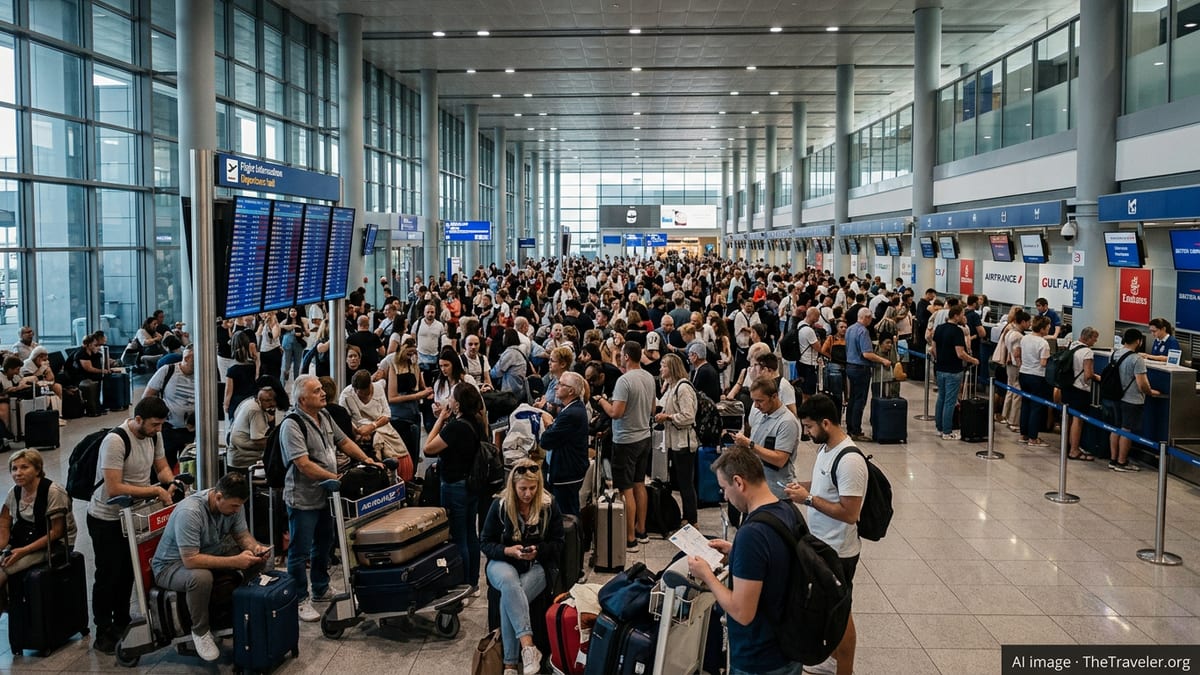
Reports from travel forums and local coverage described crowded departure halls and long queues at customer-service desks as passengers sought information or rebookings. Several services were reportedly rescheduled, while others operated with revised departure times as airlines attempted to recover their rotations.
The timing of the incident, at the cusp of the peak summer holiday season, heightened its impact. Athens International Airport has seen steadily rising traffic so far in 2026, and recent statistics show it among the busiest hubs in southeastern Europe. Even a short-lived radar failure on a day with dense schedules can therefore translate into multi-hour delays for many passengers.
Incident Comes After Earlier Airspace Disruptions in 2026
The radar problem on June 26 follows a series of high-profile technical issues in Greek airspace earlier this year. In January, a communications and navigation failure affecting the Athens Flight Information Region led to a temporary shutdown of Greek airspace, with hundreds of flights disrupted and thousands of travelers stranded across Europe, according to published coverage at the time.
In February, the national association representing air traffic controllers publicly highlighted a separate radar contact loss affecting traffic around Athens, describing it as a serious systems breakdown that forced widespread delays. These events drew attention to the age and resilience of critical surveillance and communications infrastructure supporting flights in and out of the country’s main gateway.
European network data compiled by Eurocontrol for 2025 and the first months of 2026 also show Athens among the leading contributors to air traffic flow management delay in the region, reflecting a mixture of capacity constraints, staffing pressure and technical limitations. The latest radar malfunction is likely to feed ongoing scrutiny of how quickly planned upgrades and maintenance programs are being implemented.
Regulators and Airlines Under Pressure to Strengthen Resilience
While detailed technical findings on Friday’s radar failure had not yet been published at the time of writing, the disruption is expected to intensify debate about the resilience of Greece’s air traffic management systems. Local aviation analysts and industry groups have been calling for accelerated investment in surveillance, communications and backup capabilities after this winter’s airspace shutdown and subsequent incidents.
Publicly available statements from airlines following earlier episodes have emphasized the operational and financial impact of unexpected restrictions in Greek airspace, especially on days with dense holiday traffic. When traffic flow into Athens is constrained by equipment problems, carriers face schedule disruption, crew-hour challenges and potential knock-on delays across their networks.
Passenger-rights advocates in Europe are also closely watching developments. Under European Union rules, travelers may be entitled to compensation or reimbursement depending on the length of delay and its underlying cause. Technical faults within air traffic control infrastructure are often categorized as extraordinary circumstances, which can limit compensation, but travelers are still entitled to care such as meals and accommodation during extended waits.
What Travelers Should Know if Flying Through Athens
For travelers planning trips through Athens in the coming days, aviation data and previous episodes suggest that the immediate disruption from a radar malfunction is often concentrated on the day of the incident, but residual delays can persist while airlines reposition aircraft and crews. Passengers connecting through the airport on tight schedules may be especially vulnerable to missed onward flights if even small holdups accumulate.
Travel planners and consumer organizations typically recommend monitoring flight status through airline channels and flight-tracking platforms on the day of departure, arriving at the airport early, and keeping records of boarding passes and delay notifications. These documents can be important later when submitting claims for out-of-pocket expenses or seeking assistance under EU passenger-rights regulations.
Friday’s radar failure underscores how dependent modern air travel remains on complex ground-based systems, many of which are under mounting strain from rising traffic levels. For one of Europe’s most popular summer gateways, the latest disruption is a reminder that investment in resilient airspace infrastructure will be as critical to the travel experience as new terminals, runways or airline routes.