


More news on this day
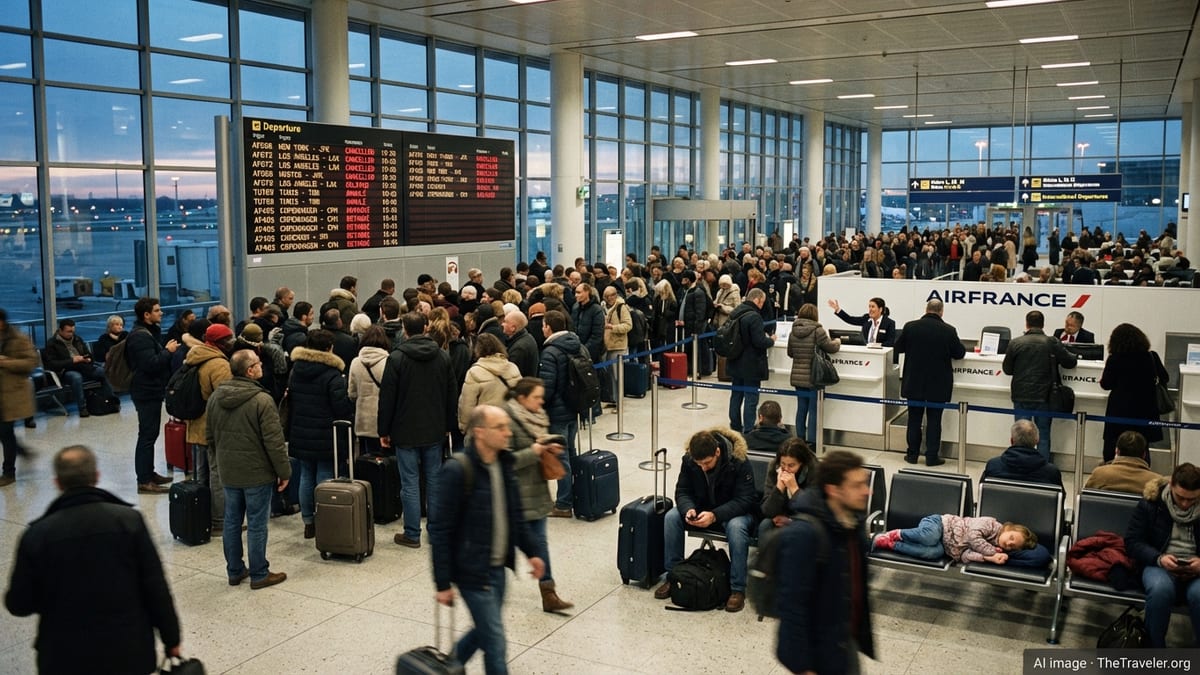
Paris Charles de Gaulle Airport is experiencing another wave of disruption as flight tracking data shows multiple cancellations and hundreds of delays affecting services operated by Air France, British Airways, Air India, Air Canada and other carriers, stranding passengers on key routes between Europe, North America, Africa and Asia.
Get the latest news straight to your inbox!
Fresh Round of Disruptions Hits Europe’s Second-Busiest Hub
Publicly available monitoring from flight-tracking and passenger-rights platforms indicates that operations at Paris Charles de Gaulle have once again been thrown off balance, with at least half a dozen flights cancelled and well over 250 delayed over a short period. The disruption is concentrated around peak departure and arrival banks serving major intercontinental markets, compounding pressure on an airport that is already handling the early-summer surge in traffic.
Data compiled for late June shows a dense cluster of delayed departures from Charles de Gaulle on European feeder routes as well as long-haul services. Flights to destinations such as North American hubs, major African capitals and key Asian cities are among those affected, rippling delays across airline networks as aircraft and crews struggle to recover their schedules.
The latest operational difficulties follow earlier reports this week of widespread schedule issues at the airport, where a mix of adverse weather, airspace constraints and knock-on effects from staffing and technical challenges in the wider European system have increased the likelihood of late departures and missed connections.
Although the precise number of flights affected varies between sources and timeframes, the overall picture is one of significant disruption: a relatively small core of outright cancellations combined with a far larger volume of flights delayed by more than 30 minutes, many of them by several hours.
Air France and Partners Bear Brunt of Delays
As the largest operator at Charles de Gaulle, Air France has been particularly exposed. Schedules and status boards show delays building on short- and medium-haul routes feeding the airline’s Paris hub, including services to cities in Germany, Central and Eastern Europe, and the Mediterranean. These feeder flights are crucial for connecting passengers onto long-haul services to North America, West and Central Africa, the Middle East and Asia.
Publicly available information from flight-status services also points to heavy congestion affecting some long-haul departures, with services to major North American gateways and key African capitals leaving late or being rescheduled. When individual long-haul flights are disrupted, the ripple effect is magnified, as a single widebody aircraft can be responsible for hundreds of onward connections through Paris.
Alliance and codeshare partners are also caught up in the situation. Airlines that rely on Charles de Gaulle as a transfer point for their customers, including transatlantic and African operators, have been forced to rebook passengers or adjust flight timings, adding further strain to customer-service channels just as the European peak season accelerates.
While flight-status feeds indicate that some services are still departing close to schedule, the pattern of scattered punctual flights amid widespread delays has made it difficult for travelers to predict whether their specific departure will be affected until close to boarding time.
International Carriers Cancel and Reroute Key Long-Haul Services
The disruption has not been limited to the French flag carrier. According to route and schedule data, major international airlines such as British Airways, Air India and Air Canada, which all operate high-profile services into Charles de Gaulle or rely on the airport as part of their European networks, have been forced to cancel or significantly delay selected flights.
Publicly available coverage on recent days’ operations highlights cancellations on routes linking Paris with major European and transatlantic hubs, as well as adjustments to flights serving African and Asian destinations. In some cases, aircraft have been rerouted or rescheduled to avoid extended ground time in Paris, with knock-on impacts on departure times from cities as far apart as London, Delhi, Toronto and key African capitals.
For travelers, this has translated into long waits for alternative flights, as airlines juggle limited spare capacity and strong seasonal demand. The combination of full cabins and stretched fleets means that even a small number of cancellations can leave passengers facing rebooking windows of 24 hours or more, particularly on long-haul sectors.
Industry analysts note that the current pattern mirrors wider volatility across the European aviation system this summer, where tight schedules, high utilization and intermittent constraints in air traffic management have left airlines with little margin to absorb disruptions without resorting to cancellations on selected services.
Passengers Face Missed Connections and Overnight Strands
For many passengers, the most immediate consequence of the latest disruption at Charles de Gaulle is the risk of missed connections. With several hundred delayed flights feeding into and out of the hub, travelers on multi-leg itineraries between North America, Europe, Africa and Asia have been especially vulnerable to missed onward departures and unplanned overnight stays in Paris.
Travel accounts circulating on social platforms describe long queues at transfer desks, crowded customer-service lines and difficulty securing timely information about rebooked flights and accommodation. Some customers report being moved onto alternate routings involving additional stops or long layovers, including itineraries that bypass Paris altogether in favor of other European hubs.
Families and business travelers alike have faced challenges in securing hotel rooms near the airport, as delays extending into the evening have created sudden spikes in overnight demand. Passengers whose flights were cancelled late in the day have reported scrambling for remaining rooms or being directed to city-center hotels, adding ground-transport costs and extra travel time to already disrupted journeys.
These conditions have prompted renewed scrutiny of how airlines and airports at major European hubs prepare for and manage days of heavy disruption, particularly when they occur during peak holiday travel periods and coincide with broader operational pressures across the continent.
Rights, Compensation and What Travelers Can Do
With so many passengers affected by cancellations and long delays at Charles de Gaulle, attention has again turned to the protections available under European passenger-rights rules. Public guidance from consumer organizations and legal specialists notes that travelers departing from Paris or any other European Union airport may be entitled to compensation and care in certain circumstances, depending on the cause and length of the disruption and the notice provided.
Under these frameworks, travelers on cancelled flights can often claim rerouting or a refund, along with food, refreshments and accommodation when necessary. For long delays, passengers may be eligible for standardized compensation if the disruption is not caused by extraordinary circumstances and if arrival at the final destination is more than several hours late.
Travel experts advise passengers caught up in the latest disruption at Charles de Gaulle to keep boarding passes and booking confirmations, document the timing of delays and any communication received from airlines, and retain receipts for meals, transport and lodging. These records can help support later claims for reimbursement or compensation where regulations apply.
Given the continuing volatility in operations at major European hubs, specialists also recommend that travelers build extra time into itineraries involving connections through Paris, particularly when linking between long-haul and short-haul flights or when onward journeys include rail or cruise departures that are less flexible than flights.