


More news on this day
Severe rail disruption on routes from London Waterloo on Thursday 22 October 2026 left thousands of evening peak passengers stranded in the capital, pushing many to abandon trains entirely and turn to taxis for journeys of up to 170 miles home.
Get the latest news straight to your inbox!
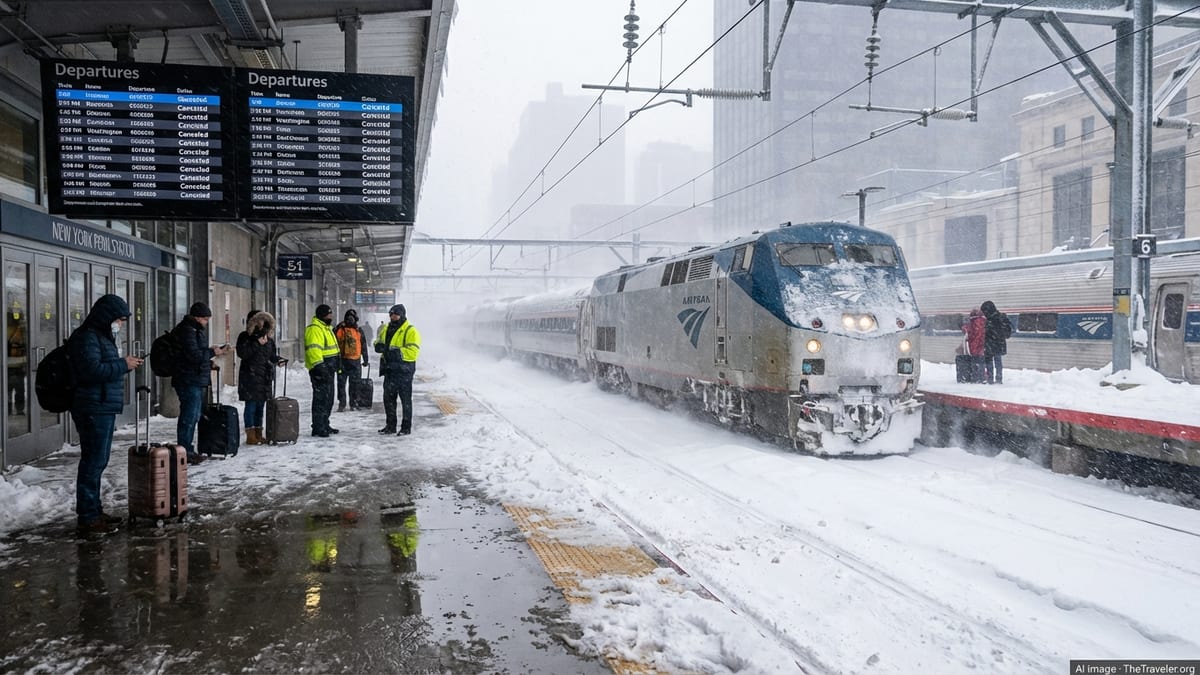
Police incident halts key corridor out of London
Publicly available information shows that the disruption began during the evening peak on Thursday 22 October, when a police incident between Woking and Brookwood in Surrey brought all lines to a halt on one of the busiest stretches of the South Western Railway network linking London Waterloo with Surrey, Hampshire, Dorset and Devon.
According to service updates and media coverage, trains towards major commuter and leisure destinations including Guildford, Basingstoke, Salisbury, Southampton Central, Bournemouth, Weymouth and Exeter St Davids were suspended or severely delayed for hours, trapping large numbers of passengers at Waterloo and at intermediate stations on the route.
National Rail disruption summaries indicate that the lines did not fully reopen until the early hours of Friday 23 October, leaving many travellers who had set out expecting normal weekday services facing the prospect of arriving home well after midnight or not at all that night.
Reports from rail status feeds and passenger forums describe concourses crowded with people seeking information, with departure boards showing repeated cancellations and advice to check with staff about alternative routes via other operators where space was available.
Long-distance taxis authorised as trains grind to a halt
In an unusually far reaching measure, South Western Railway authorised stranded passengers to book taxis at their own initiative on Thursday evening, with public messages indicating that reasonable fares would be reimbursed for journeys between London Waterloo and a list of destinations across the network.
Coverage in national and local outlets highlights guidance allowing taxis to locations including Woking, Guildford, Alton, Basingstoke, Salisbury, Southampton Central, Bournemouth, Exeter St Davids and Weymouth, effectively opening the door to rail funded road trips of more than 150 miles in the longest cases.
One report cited examples of passengers who spent several extra hours travelling after being sent on complex diversions via London Paddington and Reading before eventually reaching their destinations, illustrating why some chose to leave the rail network altogether and head for the taxi ranks outside Waterloo instead.
Alongside the taxi authorisation, information compiled from disruption trackers indicates that replacement buses were arranged from key hubs such as Woking once the immediate safety restrictions eased, providing another route home for those willing to wait for road transport organised by the operator.
Pressure on London’s taxi network around Waterloo
The sudden shift from rail to road placed additional strain on the taxi and private hire system in central and south west London on Thursday evening. Travellers reported long queues for black cabs around Waterloo station, while online ride hailing services showed elevated waiting times and variable pricing as demand spiked.
Transport for London’s taxi and private hire planning documents note that vehicle availability is often tightest late in the day and during major public transport disruption, particularly outside central London. That pattern appeared to play out as passengers attempted to secure rides not just within the capital, but to destinations many miles beyond the Greater London boundary.
Some travellers opted to share taxis to manage costs on long journeys, based on multiple first hand accounts shared on social platforms and travel forums after the incident. Others reported deciding to stay overnight in London rather than attempt to fund a long road transfer, especially where they were uncertain that rail operators would ultimately reimburse a high fare.
The events underscored how quickly demand for taxis can exceed supply during severe rail disruption, a recurring theme in assessments commissioned by the Office of Rail and Road and passenger watchdogs that have examined previous incidents on the London network.
Passenger rights and when taxis must be covered
The scale of Thursday’s taxi authorisation has renewed interest in what rail passengers can expect when disruption leaves them stranded late in the evening. Guidance based on the National Rail Conditions of Travel explains that when a train is cancelled or a journey is otherwise impossible to complete, operators are expected, where reasonably possible, to help travellers reach their final destination.
Public documents from the Office of Rail and Road state that this assistance may involve rerouting passengers onto other train companies at no extra cost, arranging rail replacement buses, providing taxis, or, in some circumstances, booking overnight accommodation if no safe route home exists. However, such measures are not automatic and depend on conditions including the time of day, location and availability of alternative transport.
Recent analysis of major disruption events around London, including incidents that left trains stranded on the approaches to Paddington and on the Elizabeth line, has shown that access to taxis can vary widely. In some cases passengers have been directed to prebooked cabs at stations, while in others they have been told only after the fact that they could have claimed back taxi costs had they paid upfront.
Consumer advice produced by passenger groups stresses that travellers should, where possible, obtain written confirmation of any permission to use taxis, keep receipts for all journeys and be prepared for reimbursement claims to be assessed on what operators deem to be reasonable expenditure in the circumstances.
Growing scrutiny of disruption planning on key commuter routes
The Waterloo incident arrives against a backdrop of wider concern about rail reliability and the treatment of stranded passengers on busy commuter and intercity routes into London. A report commissioned by the Office of Rail and Road in 2024 concluded that there remains a gap between passenger expectations and the reality of how large scale disruption is managed, with particular criticism directed at inconsistent information and support once services collapse.
That study examined previous events where passengers were left for extended periods on stranded trains before being walked along tracks or evacuated into crowded stations, only then to face difficulties securing onward travel or clear guidance on whether taxis would be funded. Evaluations noted that the process of arranging and queuing for taxis at major terminals such as Paddington often added significant time and stress to already delayed journeys.
Against this backdrop, the decision to proactively authorise taxi use from Waterloo on 22 October is likely to be seen both as a practical step to get people home and as a sign of the financial and logistical burden that significant disruption now places on train operators. Industry facing research published in 2025 and 2026 has highlighted the rising costs associated with compensation, alternative transport and reputational damage when incidents bring key routes to a standstill.
For travellers, the latest disruption underlines the importance of checking live information before setting out, understanding entitlements under the National Rail Conditions of Travel and being aware that, in rare but severe cases, rail companies may fund taxis for substantial distances when no reasonable train option exists.