


More news on this day
The United States has renewed its Worldwide Caution alert for citizens abroad, urging Americans to exercise increased vigilance across all international destinations as geopolitical tensions and security risks continue to reshape global travel plans.
Get the latest news straight to your inbox!
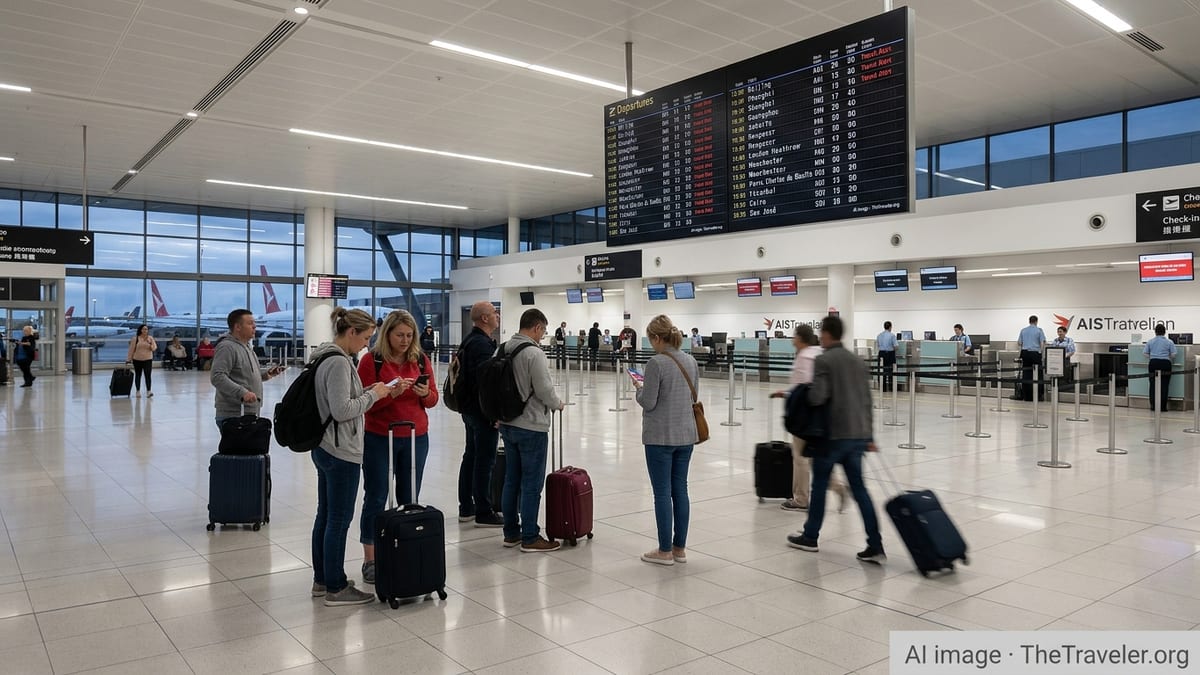
What the New Worldwide Caution Means for Travelers
According to publicly available information on the U.S. Department of State’s travel advisory pages, the latest Worldwide Caution reiterates that Americans should exercise increased caution in all countries, regardless of an individual nation’s advisory level. The alert emphasizes that security conditions can deteriorate quickly and that threats may emerge with little or no warning.
The Worldwide Caution functions as a global overlay on top of the four-level country advisory system. While each destination still carries a specific level ranging from “Exercise Normal Precautions” to “Do Not Travel,” the banner message stresses that Americans everywhere should remain alert to the possibility of terrorism, targeted violence, and unrest linked to ongoing conflicts and political tensions.
Recent updates highlight heightened risks connected to instability in the Middle East, including the possibility of demonstrations, retaliatory attacks, and disruptions that may ripple far beyond the region. Publicly available material notes that U.S. interests and locations associated with Americans, including businesses, educational institutions, and religious or cultural sites, may be viewed as potential targets.
The standing alert does not prohibit travel nor automatically trigger new restrictions for private citizens. Instead, it is framed as a broad security notice intended to inform decision-making, encourage contingency planning, and prompt closer attention to local conditions on the ground.
Heightened Risks Linked to Middle East Tensions
Recent security alerts published by the U.S. government describe a complex risk environment tied to events in the Middle East. Reports indicate concerns about the potential for escalation involving Iran and groups supportive of Iran, as well as other non-state actors that may threaten U.S. interests overseas.
Public information notes that Americans currently in parts of the Middle East are being urged to maintain heightened vigilance and be prepared for rapid changes in travel conditions. This includes potential flight cancellations, sudden airspace closures, and unanticipated airport disruptions that can affect both regional travel and long-haul connections routed through major hubs.
Universities and study-abroad providers referencing the updated Worldwide Caution have echoed these concerns, advising their travelers that localized incidents may have broader travel implications. Guidance circulated within higher-education communities stresses that even destinations outside active conflict zones can experience knock-on effects such as route suspensions, tighter security screening, and temporary restrictions on movement.
Travelers transiting major gateways in the Gulf, Levant, or surrounding regions may face schedule changes at short notice. Publicly available advisories recommend that itineraries through these hubs remain flexible, with travelers monitoring airline notifications and regional news closely during each stage of their journey.
How the Worldwide Caution Interacts With Country-Level Advisories
The Worldwide Caution sits alongside, but does not replace, individual country advisories that classify destinations into four levels based on assessed risk. Official explanatory documents describe Level 1 as the lowest advisory category and Level 4 as the highest, where Americans are advised not to travel or to leave when it is safe to do so. Levels 2 and 3 correspond to “Exercise Increased Caution” and “Reconsider Travel,” respectively.
Travel guidance materials used by universities, insurers, and risk managers explain that a country can carry an overall Level 2 advisory yet have specific regions rated at Level 3 or Level 4. In practice, this means an American traveler may be encouraged to exercise increased caution nationwide while being strongly discouraged from entering particular provinces or border areas.
Since the reissuance of the Worldwide Caution, some institutions have adjusted their internal policies to align with U.S. government messaging. Several universities publicly state that trips involving countries at Level 3 or Level 4 now undergo additional review or require formal approval before students or staff can proceed. These internal thresholds reflect an effort to balance academic or professional objectives with evolving safety considerations.
For independent travelers, the key takeaway is that the Worldwide Caution is a broad signal and not a detailed map. To understand the risk profile of a specific trip, individuals are being directed toward the destination’s dedicated advisory page, which lists security concerns such as crime, terrorism, civil unrest, health risks, and wrongful detention in greater detail.
Practical Steps U.S. Travelers Are Urged to Take
Across government, university, and study-abroad communications, a consistent set of practical recommendations has emerged in response to the Worldwide Caution. Publicly available guidance encourages Americans to enroll in official alert systems so that security messages and emergency information can be delivered directly by email or text while they are abroad.
Travelers are also being advised to maintain flexible itineraries and to budget extra time for security checks at airports, land borders, and transport hubs. Guidance from campus global engagement offices highlights the value of having alternative routing options mapped out in advance in case connecting flights through certain regions become unavailable or are significantly delayed.
Risk management offices at U.S. institutions note that comprehensive travel insurance has become an increasingly important consideration, particularly policies that explicitly address trip interruption, evacuation, or cancellations linked to political instability or acts of war. As insurers may define covered events differently, publicly available resources stress the importance of reviewing the fine print before departure.
Travel safety offices also recommend that Americans share detailed itineraries with family or trusted contacts, maintain access to essential travel documents in both physical and digital formats, and keep communication devices charged and functional. While these steps are standard best practices for international travel, the Worldwide Caution has brought renewed attention to their importance.
What This Means for Future Travel Planning
The renewed Worldwide Caution arrives at a time when international travel has broadly recovered from pandemic-era lows, with tourism boards and airlines reporting sustained demand for long-haul trips. The new alert does not signal a halt to global travel but rather a shift toward more deliberate planning and real-time risk assessment.
Travel industry commentary suggests that many Americans are continuing with international trips while placing a stronger emphasis on flexible bookings, refundable fares, and itineraries that can be adjusted quickly. Some travelers are favoring destinations perceived as more stable or choosing routes that avoid certain transit hubs, while others are moving forward with plans but increasing their reliance on travel alerts and local news.
Analysts of government advisory systems note that Worldwide Caution alerts have appeared periodically over the last several years in response to major geopolitical or security events. The current iteration is being interpreted by many institutions as part of a broader pattern of sustained global volatility, rather than as a short-lived response to a single incident.
For now, publicly accessible guidance points to a central message: international travel remains possible for most Americans, but it requires more preparation, more attention to fast-changing conditions, and a willingness to revise plans if security environments shift. The Worldwide Caution serves as a reminder that even familiar destinations can be affected by distant events, and that informed, adaptable travelers are best positioned to navigate an increasingly uncertain landscape.