


More news on this day
One of Africa’s most popular safari destinations is under renewed scrutiny after the United States raised its Kenya travel advisory to Level 3, telling citizens to reconsider trips because of heightened health and security risks.
Get the latest news straight to your inbox!
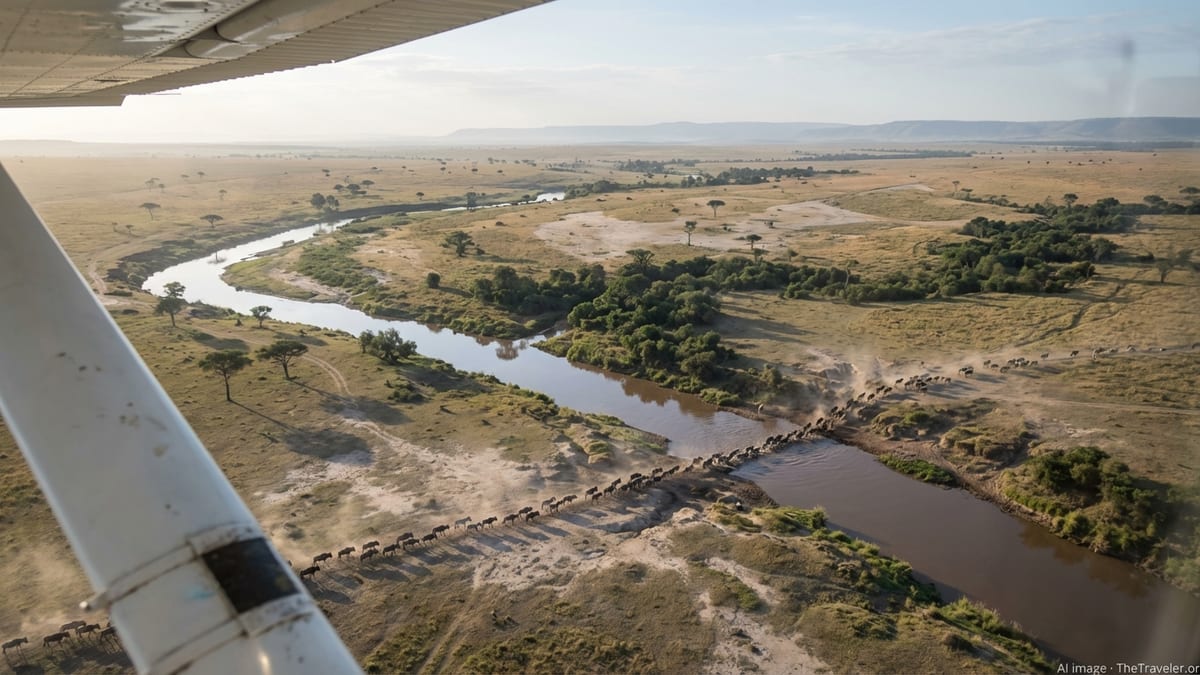
Advisory raised to Level 3 amid Ebola and security concerns
According to updated guidance published by the U.S. Department of State on October 19, 2026, Kenya’s overall advisory level has been increased from Level 2, or “exercise increased caution,” to Level 3, “reconsider travel.” Publicly available information shows that the change is attributed to a combination of health risks, crime, kidnapping, terrorism, civil unrest and traffic safety issues.
The revised advisory follows an Ebola Bundibugyo virus outbreak in Kenya, with media coverage citing eight confirmed cases as of October 19, all linked to an initial imported case. Reports indicate that health concerns were the key factor behind the jump to Level 3, although existing warnings about violent crime and extremist activity in certain regions remain in place.
While the advisory applies to the entire country, the State Department continues to single out specific areas as off-limits, including Nairobi’s Eastleigh and Kibera neighborhoods and several counties near the Somalia border and along parts of the northern coast, where a separate “Do Not Travel” designation is in force. These locations are not traditional safari circuits but remain part of the broader risk picture for travelers transiting through Nairobi and coastal hubs.
The U.S. notice does not close borders or prohibit travel to Kenya. However, as a Level 3 destination, travelers from the United States are now formally urged to reconsider nonessential trips, a signal that can influence travel insurance coverage, tour bookings and corporate travel approvals.
Impact on Maasai Mara and other flagship safari areas
The advisory shift comes at a sensitive time for Kenya’s high season safari market, with the Maasai Mara, Amboseli, Lake Nakuru and Tsavo among the country’s most visited wildlife reserves. These parks are hundreds of kilometers from the northern border zones and urban neighborhoods highlighted as highest risk, and no closure notices have been issued for the major safari conservancies.
Published travel guidance from other governments, including Canada’s advisory updated in mid-October, continues to recognize Kenya’s game parks such as the Maasai Mara and Amboseli as key tourism areas while emphasizing standard precautions for crime and road travel. Industry reports note that tour operators are reviewing client itineraries but have not announced widespread cancellations for safaris already scheduled for late 2026.
Safari itineraries typically route international visitors through Nairobi before onward travel to airstrips serving the Maasai Mara and other reserves. The new U.S. guidance reiterates earlier cautions around night driving, traffic safety and opportunistic crime in the capital, but it does not introduce new restrictions on domestic flights to safari destinations or on operations inside the parks.
Travel sellers and risk consultants say Level 3 advisories often trigger additional questions from clients rather than automatic trip abandonment. In this case, travelers planning high-value safaris are being encouraged by many providers to review detailed route maps, confirm that accommodation is located well away from restricted counties, and discuss health preparedness measures, particularly in light of the Ebola cases.
Health situation: Ebola cases monitored but no broad travel ban
Reports summarizing Kenyan and international health data indicate that all confirmed Ebola Bundibugyo virus cases to date are epidemiologically linked to the first imported patient, with no evidence currently published of sustained community transmission. The outbreak has nevertheless prompted stepped-up screening at some points of entry and renewed attention to infection prevention protocols.
Publicly available documents from international health agencies stress that the risk to most travelers remains low when contact with bodily fluids and affected medical settings is avoided. At this stage, there are no broad international travel bans targeting Kenya, and airlines continue to operate regular passenger services to Nairobi’s Jomo Kenyatta International Airport.
For safari-goers, the practical impact is more likely to be administrative than medical in the near term. Travelers may encounter updated health questionnaires, temperature checks or requests to declare recent travel history, especially if they have transited neighboring countries associated with earlier Ebola activity. Some travel insurance providers are also reassessing coverage language for trips to Kenya while the Level 3 advisory is in place.
Health experts cited in recent media coverage recommend that travelers monitor advisories from their own governments and from Kenyan health authorities, verify that their tour operator has clear contingency plans, and remain prepared for itinerary adjustments should the outbreak evolve.
What the Level 3 advisory means for U.S. safari travelers
The State Department’s four-tier system ranges from Level 1, “exercise normal precautions,” to Level 4, “do not travel.” Level 3 does not prohibit tourism but signals that U.S. citizens should reconsider trips, particularly those deemed nonessential. Governments, universities and companies often use these categories to determine whether official or group travel can proceed.
For individuals planning a Kenya safari from the United States, the new status may affect trip logistics rather than legal ability to travel. Some tour operators require clients to sign updated liability acknowledgments when visiting Level 3 destinations, and a number of travel insurance policies either exclude coverage or impose special conditions once a country reaches this tier. Travelers are being advised in public forums and industry briefings to check policy wording carefully before departure.
The advisory also emphasizes long-standing security concerns. It urges travelers to avoid specific counties along the border with Somalia and parts of the northern coast, to remain alert in urban centers, and to register travel plans through available consular enrollment programs. Within safari areas, publicly available guidance highlights road safety, consistent use of seat belts in game-drive vehicles and cautious behavior around wildlife as ongoing priorities.
Despite the stronger language, Kenya remains categorized below the most severe Level 4 designation that applies to some active conflict zones. For many U.S. safari enthusiasts, the decision now hinges on personal risk tolerance, the flexibility of cancellation terms and the willingness of operators to adjust dates or reroute itineraries if the situation changes.
Tourism industry weighs risks as peak season approaches
Kenya’s tourism sector, a key source of foreign exchange and employment, has faced repeated external shocks in recent years, from pandemic-related closures to regional security incidents. Government publications in late 2025 highlighted efforts to promote the Maasai Mara, Nairobi National Park and coastal destinations to international visitors as arrivals rebounded.
The latest U.S. advisory presents a new challenge just as many travelers were returning to long-haul African safaris. Trade publications and regional news outlets report that local operators are reinforcing safety messaging, emphasizing that most safari lodges and conservancies are far removed from the areas listed under “Do Not Travel” guidance, and that health screening protocols are being closely followed.
Bookings data shared in industry commentary suggest that some prospective visitors from North America are taking a wait-and-see approach for trips in late 2026 and early 2027, asking to retain deposits while monitoring advisory updates. At the same time, there are indications from traveler forums that others intend to proceed with safaris, citing confidence in experienced local guides and the allure of peak wildlife viewing in the Maasai Mara and other reserves.
For now, Kenya remains open to tourism, and its famed safari hotspots continue to operate under heightened scrutiny. How the combination of the Level 3 advisory and the Ebola situation evolves over the coming weeks will be closely watched by travelers, tour companies and destination marketing bodies across East Africa.