


More news on this day
Israel’s Foreign Ministry has issued a travel caution for France, urging Israeli citizens to exercise heightened vigilance and avoid planned protest sites as demonstrations and sporadic riots continue to spread across the country.
Get the latest news straight to your inbox!
Heightened Travel Advisory Follows Week of Unrest
According to publicly available information from Israeli media and government channels, the updated guidance was issued on October 23, 2026, following days of nationwide unrest linked to protests over the cost of living and the state of public services in France. The advisory applies both to Israeli citizens already in France and to those considering travel in the coming days.
Reports indicate that the Foreign Ministry is advising Israelis to avoid areas where demonstrations are announced or underway, even when gatherings appear peaceful. The concern centers on the risk of sudden escalation, with previous protests in mid-October marked by clashes with police, looting of shops and damage to public buildings in several cities.
The advisory does not impose a blanket ban on travel to France but frames the situation as requiring “extreme caution” and heightened situational awareness. Travelers are urged to follow local media, review official updates before moving between cities and reconsider any non-essential presence near political rallies or large marches.
Travel industry reporting suggests that the move is part of a broader pattern of tightened Israeli guidance for destinations experiencing civil unrest, supplementing longer-standing global cautions related to terrorism and antisemitic incidents abroad.
Protests Spread Beyond Paris to Regional Cities
While attention has focused on Paris, French and international coverage show that recent demonstrations have involved multiple urban centers, including Lyon, Marseille and several medium-sized towns. The gatherings draw a mix of student groups, labor unions, cost-of-living campaigners and various political organizations.
In Paris, major thoroughfares and well-known squares such as Place de la République and Bastille have hosted large marches, some of which ended in confrontations with riot police. Video and photo material published by news agencies in recent days depict burned vehicles, damaged bus shelters and boarded-up storefronts in certain neighborhoods.
Beyond the capital, regional authorities have had to contend with nighttime disturbances and looting in parts of the country following daytime rallies. French media reports describe local administrations imposing temporary curfews or movement restrictions in specific districts judged at higher risk of renewed violence.
Travelers heading to smaller cities and suburbs may therefore encounter localized security cordons, spontaneous roadblocks or last-minute changes to public event schedules, even where tourism infrastructure itself remains open.
French Measures Include Protest Bans and Museum Closures
Published coverage in France notes that authorities have responded to the unrest with a combination of large-scale policing and targeted administrative measures. For the weekend of October 24, for example, reports from international news agencies describe the deployment of tens of thousands of officers across the country, with particular concentration in Paris and other major cities.
In the capital, one of the most visible steps has been the temporary closure of high-profile cultural sites on protest days. The Louvre Museum and several other major institutions have announced one-day shutdowns, citing security considerations and the difficulty of operating with large crowds and street closures in the surrounding areas.
Local prefectures in cities such as Lyon have also issued broad bans on public demonstrations for specific dates, arguing that recent events justify exceptional restrictions. French newspapers highlight a growing domestic debate over the balance between crowd control and civil liberties as these measures expand to smaller municipalities.
For visitors, these policies can translate into short-notice changes to opening hours, canceled performances and rerouted public transport. Travelers planning tightly scheduled itineraries that include museums or events on known protest days may encounter last-minute disruptions and should be prepared with backup plans.
Practical Impact on Flights, Trains and Urban Mobility
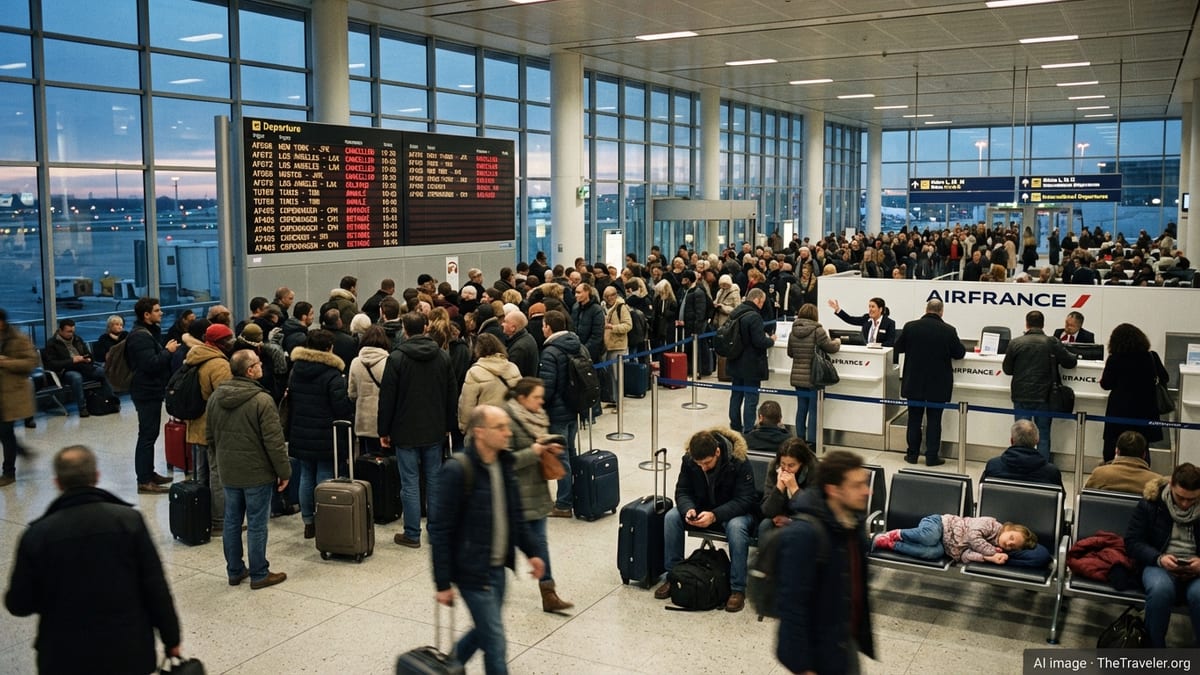
As of October 24, 2026, aviation and long-distance rail links between France and other countries remain broadly operational, with no widespread shutdowns reported. However, international travel advisories from several governments, including Canada, the United Kingdom and the United States, now explicitly reference a heightened likelihood of demonstrations and unrest across France and recommend avoiding protest areas.
Within France, disruptions are more visible at the city level. Travel-focused forums and local media describe intermittent closures of metro stations near major squares, tram and bus diversions around march routes and occasional delays on regional trains when protests pass close to rail corridors. In Paris, visitors have reported crowded trains on certain lines and temporary closures of exits that open directly onto protest sites.
Taxi and ride-hailing services can also be affected when key arteries are blocked or when authorities seal off neighborhoods. Some travelers have noted longer journey times between central districts and major train stations during demonstration days, especially in the late afternoon and evening.
Hotels in central Paris and other large cities continue to operate, but guests may face noise from street gatherings or difficulty accessing properties located near traditional rally points. Booking accommodations slightly away from principal protest corridors, or verifying expected protest locations for specific dates, may reduce inconvenience.
What Israeli and Other Travelers Should Consider Now
In its cautionary guidance, Israel’s Foreign Ministry highlights several practical steps for travelers in France. Publicly available summaries of the advisory recommend avoiding protest locations, allowing extra time for journeys, monitoring potential curfews or movement restrictions and staying alert for sudden changes in crowd behavior.
Travel advisories from other governments echo similar themes, generally classifying France at an “exercise increased caution” level due to a combination of terrorism concerns and civil unrest. These notices stress that demonstrations can be announced at relatively short notice and may affect central tourist areas, even when gatherings are not directed at foreign visitors.
For those who decide to proceed with travel, risk management specialists commonly suggest checking daily updates from local news outlets, confirming museum and attraction opening hours on the day of visit and planning routes that minimize time spent near large political gatherings. Travelers may also wish to review cancellation policies for tours and activities scheduled on dates when major protests are anticipated.
At the same time, many accounts from visitors and residents indicate that large parts of France, including significant swathes of Paris, continue to function normally outside protest zones. Streets a few blocks away from key gathering points often see routine daily life, though the situation can shift quickly when marches move or when authorities adjust security perimeters. For Israeli citizens and other international travelers, the current advisories point to a need for vigilance and flexibility rather than an automatic halt to all non-essential trips.